
Tri Ply Stainless Steel Vs Stainless Steel

Ever stood in the kitchen aisle, staring at rows of gleaming cookware, feeling a little… overwhelmed? You’re not alone! It’s easy to get lost in a sea of fancy materials and technical jargon. But today, we’re diving into a topic that’s surprisingly fun and incredibly useful, especially if you love to cook: Tri-Ply Stainless Steel versus good old-fashioned Stainless Steel. Think of it as a friendly chat about your future kitchen sidekicks, not a complex engineering lesson!
Why is this even a thing to get excited about? Well, your pots and pans are the workhorses of your kitchen. They’re the vessels that transform raw ingredients into delicious meals, the silent partners in your culinary adventures. Choosing the right ones can make the difference between a perfectly seared steak and a slightly burnt disappointment, or a smoothly simmering sauce and a sticky, stuck-on mess. So, understanding these materials isn't just trivia; it's about empowering yourself to create better food, with less fuss. It’s about bringing a little more joy and a lot more success to your kitchen endeavors.
Let’s start with the familiar friend: Stainless Steel. When we talk about "regular" or "standard" stainless steel cookware, we’re usually referring to pots and pans made entirely from this robust alloy. Stainless steel is fantastic for many reasons. It’s incredibly durable, meaning it won’t easily warp, chip, or rust. It’s non-reactive, so it won’t transfer any metallic taste to your delicate sauces or acidic dishes. Plus, it’s a breeze to clean – often just a quick scrub and rinse is all it needs. Many of us have a trusty stainless steel pot or two that has served us faithfully for years. They’re the reliable, no-nonsense members of the cookware family.
However, here’s where things get interesting. Standard stainless steel, by itself, isn't the best conductor of heat. This means that the heat from your stovetop can sometimes create "hot spots" – areas that get much hotter than others. Imagine trying to cook pancakes on a pan with hot spots: you might get a perfectly browned pancake on one side and a pale, undercooked one on the other. It can lead to uneven cooking, which is frustrating when you’re aiming for culinary perfection. While stainless steel is tough and reliable, its heat distribution can sometimes be a bit… temperamental.
Enter the superhero of our story: Tri-Ply Stainless Steel. The "tri" in tri-ply is your big clue – it means three layers! This isn't just plain stainless steel; it's a carefully constructed sandwich of materials designed to overcome the limitations of single-layer stainless steel. Typically, a tri-ply pot or pan features a core layer of aluminum or copper sandwiched between two layers of stainless steel. Think of it like a perfectly engineered multi-tool for your kitchen.
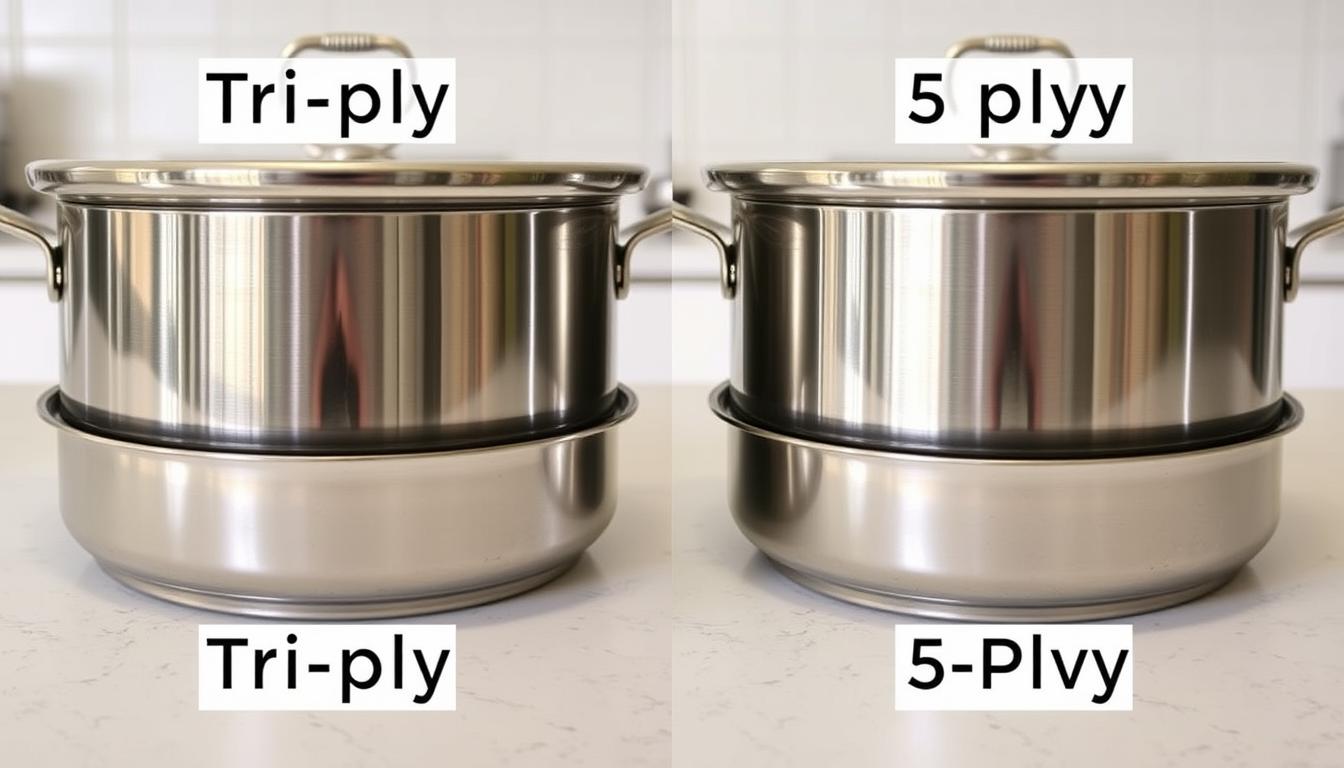
So, what’s the magic behind this three-layer construction? It all comes down to superior heat management. The core layer – that delicious middle filling – is usually made from either aluminum or copper. Both of these metals are excellent heat conductors. This means that when you place your tri-ply pan on the stove, the heat spreads quickly and evenly throughout the entire cooking surface. No more dreaded hot spots! This even heat distribution is a game-changer for cooking. It allows for consistent searing, gentle simmering, and uniform browning every single time. You’ll find yourself achieving those restaurant-quality results more easily, whether you’re caramelizing onions or making a delicate custard.
The outer layers of stainless steel are there to provide the best of both worlds. They offer that classic stainless steel durability, resistance to staining and warping, and that beautiful, reflective finish. They also ensure that your food only ever comes into contact with non-reactive stainless steel, so you get all the benefits of stainless without any metallic tang. It’s the perfect blend of performance and practicality.

The difference isn't just theoretical; it’s in the sizzle, the sear, and the final bite.
When you’re choosing cookware, especially if you’re looking for an upgrade or investing in pieces that will last, understanding tri-ply is key. It’s often found in higher-quality cookware sets and individual pieces, and for good reason. While it might come with a slightly higher price tag than basic stainless steel, many cooks find the investment well worth it for the improved cooking performance and longevity.
Think about it: a standard stainless steel pan might get the job done, but a tri-ply stainless steel pan will help you do it better. It’s the difference between a functional tool and a high-performance tool. If you’ve ever struggled with uneven cooking, noticed food sticking in strange places, or wished your sauces would simmer more gently, a tri-ply option might be your new best friend. It’s a smart upgrade that can elevate your everyday cooking and make you feel more confident and creative in the kitchen. So, next time you’re browsing for new cookware, don’t just look at the shine; look at the layers. Your taste buds will thank you!