
Ultimate Tensile Strength Of Metals
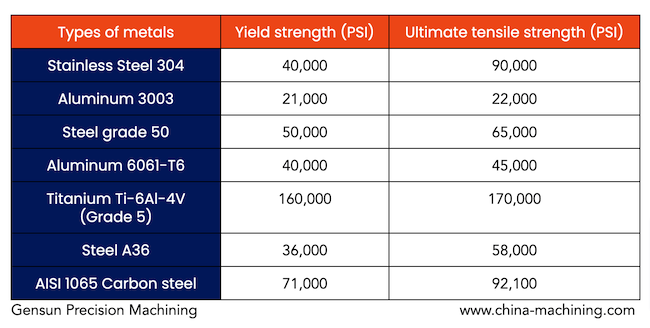
Hey there, metalheads and curious minds! Ever wondered why some metal things are super tough and others, well, not so much? Like, why can a tiny wire hold up a whole bridge (okay, maybe not just a tiny wire, but you get the idea!), while a big, chunky piece of something else might bend like a wet noodle? Today, we're diving into the awesome world of something called Ultimate Tensile Strength. Don't let the fancy name scare you; it's actually pretty straightforward and, dare I say, fun!
So, what exactly is this "Ultimate Tensile Strength" thing? Think of it like this: imagine you have a metal string. You start pulling on both ends, right? You pull a little, nothing happens. You pull harder, still okay. You keep pulling, and pulling, and pulling... eventually, there's a point where, no matter how hard you yank, that string is just going to snap. That breaking point, the absolute maximum amount of pulling force a metal can handle before it says "adios!" is its Ultimate Tensile Strength. It's basically the metal's ultimate "I can't take any more!" moment.
We're talking about tensile strength here, which just means strength when you're pulling on something. There are other types of strength, of course – like compressive strength (pushing) or shear strength (sliding) – but today, our hero is the tensile kind. It’s the one that’s super important for things like cables, wires, screws, and pretty much anything that needs to resist being stretched or pulled apart.
So, How Do We Measure This Metal Muscle?
Scientists and engineers have a pretty cool way of figuring this out. They take a standard-sized piece of the metal they're testing, kind of like a metal hot dog bun, and stick it in a special machine. This machine is designed to do one thing: pull. It clamps down on each end of the metal specimen and slowly, steadily, pulls them apart. As it pulls, it measures the force being applied and also how much the metal stretches.
They create a graph that shows the relationship between the force applied and the stretch. At first, the metal stretches a bit, and when you stop pulling, it snaps right back to its original shape. This is the elastic region. It's like stretching a rubber band – it bounces back. But keep pulling, and you reach a point where the metal starts to deform permanently. This is the plastic region. The metal is changing its shape, and it won't go back to its original size even if you let go.
Finally, the force keeps increasing until BAM! The metal breaks. The highest point on that force-stretch graph, right before the snap, represents the Ultimate Tensile Strength. It's usually measured in units like megapascals (MPa) or pounds per square inch (psi). So, if a metal has an UTS of 500 MPa, it means it can withstand a pulling force of 500 million pascals before it gives up the ghost.
Why Does This Even Matter? (Besides Preventing Hilarious Snap-Back Moments)
This isn't just some abstract scientific concept for dusty textbooks. Understanding UTS is absolutely crucial for engineers when they're designing everything from your car's chassis to the skyscraper you might work in. They need to know exactly how much stress their materials can handle so that their creations don't suddenly decide to become modern art installations (the unplanned kind!).
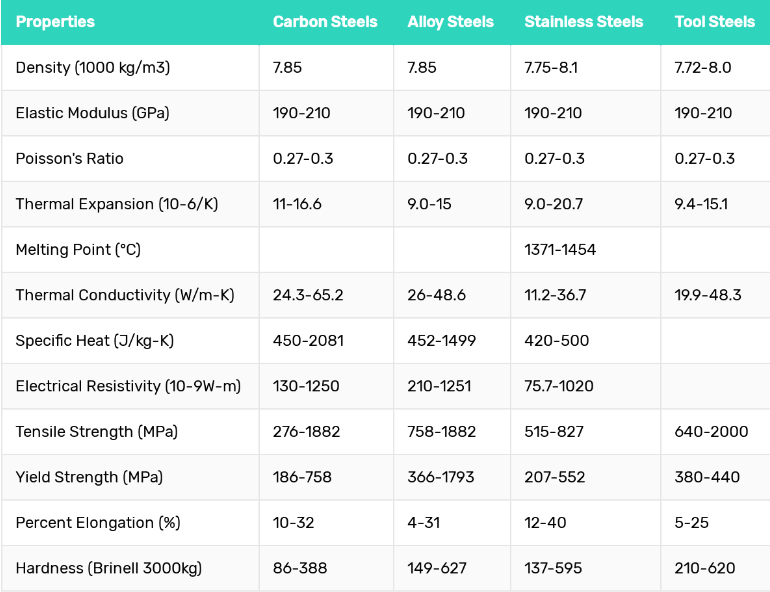
Imagine building a bridge. You need to know the tensile strength of the steel cables holding it up. If the cables can't handle the weight of the traffic, the wind, and even its own weight, well, that’s a recipe for a very bad day. Engineers use UTS values to calculate safety factors, ensuring that the loads placed on a structure are well within the material's limits, with plenty of room for error (because, let’s face it, engineering is all about planning for the unexpected, like a rogue flock of pigeons deciding to have a convention on the bridge).
It also helps us choose the right metal for the job. Why use a super-strong, expensive alloy when a simpler, cheaper one will do the trick just fine? On the flip side, for critical applications, you need the best of the best, and UTS is a key metric for that comparison.
What Makes One Metal Stronger Than Another?
Ah, now we’re getting to the nitty-gritty! The UTS of a metal isn't just a random number. It's influenced by a bunch of things, like a metal's:
- Composition: What elements are in the metal? Pure iron is pretty soft. Add a bit of carbon, and you get steel, which is much stronger. Different alloys (mixtures of metals) have wildly different strengths. Think of it like adding spices to a dish – a pinch of this, a dash of that, and you can completely change the flavor… or in this case, the strength!
- Microstructure: This is about the internal arrangement of the atoms within the metal. Are they neatly lined up like little soldiers, or are they all jumbled up like they’ve just attended a rock concert? The way these atoms are organized (the grain structure, the presence of different phases) has a huge impact on how the metal behaves under stress.
- Heat Treatment: Heating and cooling metals in specific ways can dramatically change their properties. Annealing (heating and slow cooling) can make metals softer and more ductile (easier to bend without breaking). Quenching (rapid cooling) can make them harder and stronger. It’s like giving the metal a spa treatment or a boot camp, depending on what you want!
- Processing: How the metal was formed also matters. Cold working, like rolling or drawing metal at room temperature, can increase its strength. It’s like kneading dough – the more you work it, the tougher it can become.
So, that humble paperclip is made of steel, but it's a different kind of steel, with different processing, than the steel used for a skyscraper. That's why one can bend easily, and the other is built to withstand hurricanes!
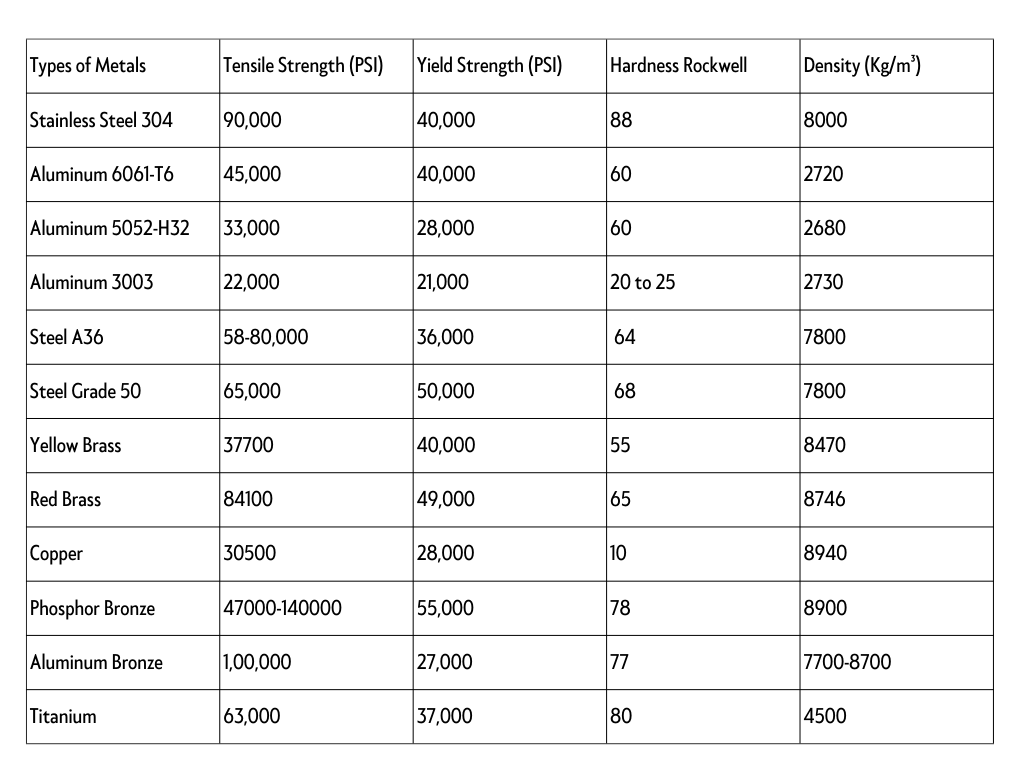
Common Metals and Their Tensile Strength Superpowers
Let's look at a few everyday heroes:
Aluminum: Lightweight and corrosion-resistant, aluminum has a decent UTS, but it’s generally lower than steel. That’s why you see it used in aircraft parts and soda cans – where weight is a big concern, but extreme loads aren’t the primary factor. Typical UTS for common aluminum alloys is around 100-500 MPa. Not too shabby for being so light!
Steel: This is the powerhouse! The UTS of steel varies massively depending on the specific alloy and treatment. Mild steel, used in many general construction applications, might have a UTS of around 400 MPa. High-strength steel, used in things like car frames or suspension bridges, can easily hit 1000 MPa or even more! It’s the workhorse of the metal world.
Titanium: This is the "superhero" metal. It's incredibly strong, lightweight, and resistant to corrosion. It’s used in aerospace, medical implants (because your body doesn't reject it!), and high-performance sporting goods. Titanium alloys can have UTS values ranging from 500 to over 1200 MPa, and they manage to do it while being about half the weight of steel. Talk about a good deal!
Copper: Known for its excellent electrical conductivity, copper isn't as strong as steel. Its UTS is typically in the range of 200-300 MPa. It's great for wires and plumbing, where its electrical and thermal properties are more important than brute strength.
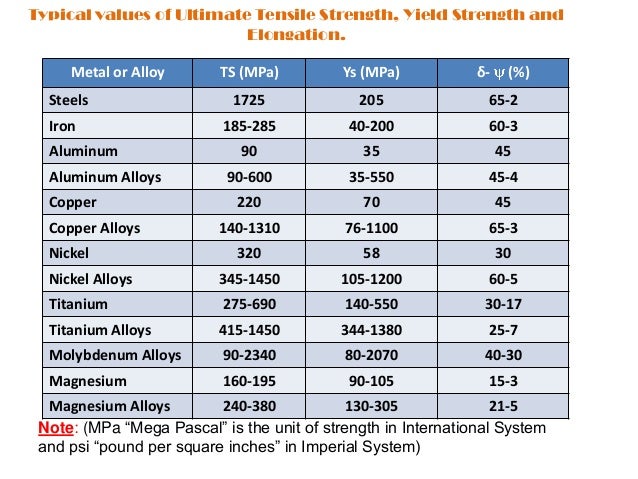
Cast Iron: This one is a bit of a mixed bag. It's strong under compression (pushing), but its tensile strength is actually quite low, usually around 150-300 MPa. This is why cast iron is often used for things like engine blocks or cookware, where compressive forces are dominant, but you wouldn't want to use it for a suspension bridge cable!
Beyond the Breaking Point: Ductility and Brittleness
Now, just because a metal has a high UTS doesn't mean it's always the best choice. We also need to think about ductility and brittleness.
Ductility is a metal’s ability to deform plastically without fracturing. It’s the opposite of being brittle. A ductile metal will stretch and bend a lot before it breaks. Think of soft butter – you can smear it, shape it, and it won’t shatter. This is super important because it gives you a warning before failure. If a structure starts to bend or deform, you know something’s wrong before it dramatically breaks.
Brittleness is the tendency of a material to fracture with little or no prior plastic deformation. Brittle materials snap suddenly. Think of glass or chalk. They might be hard, but they don’t bend; they just break. Some high-strength metals can also be quite brittle, which makes them trickier to design with. Engineers have to be extra careful to ensure that brittle materials are never subjected to sudden, unexpected loads.

So, a metal might have an incredibly high UTS, but if it's also super brittle, it might not be suitable for a dynamic application where vibrations or impacts are common. It’s a bit like choosing a superhero – you want someone strong, but also someone who won't accidentally break the city while saving it!
The Future is Stronger (and Smarter!)
The world of metallurgy is always evolving. Scientists are constantly developing new alloys and processing techniques to push the boundaries of what’s possible. We're seeing metals that are stronger, lighter, more corrosion-resistant, and even self-healing!
We’re also getting smarter about how we use them. Advanced computer simulations allow engineers to test virtual designs under extreme conditions, optimizing material usage and ensuring safety with incredible precision. It’s a beautiful dance between material science and engineering, all aimed at making our world safer, more efficient, and frankly, more awesome.
So, What's the Takeaway?
Ultimate Tensile Strength is the metal's ultimate pulling power – the maximum stress it can endure before saying "that's it, I'm done!" It's a fundamental property that dictates what metals we can use for what jobs, from the smallest screw to the largest bridge. It’s a testament to human ingenuity that we can understand, manipulate, and harness these properties to build the world around us.
The next time you see a sturdy building, a strong car, or even just a well-made piece of cutlery, take a moment to appreciate the incredible science behind the strength of the metal. It’s a quiet, unsung hero, working tirelessly to keep our world together, often without us even realizing it. And that, my friends, is pretty darn cool. So go forth, be strong, and maybe give a little nod to the metals that make it all possible. They’ve earned it!