
Value Of A 1943 Steel Penny
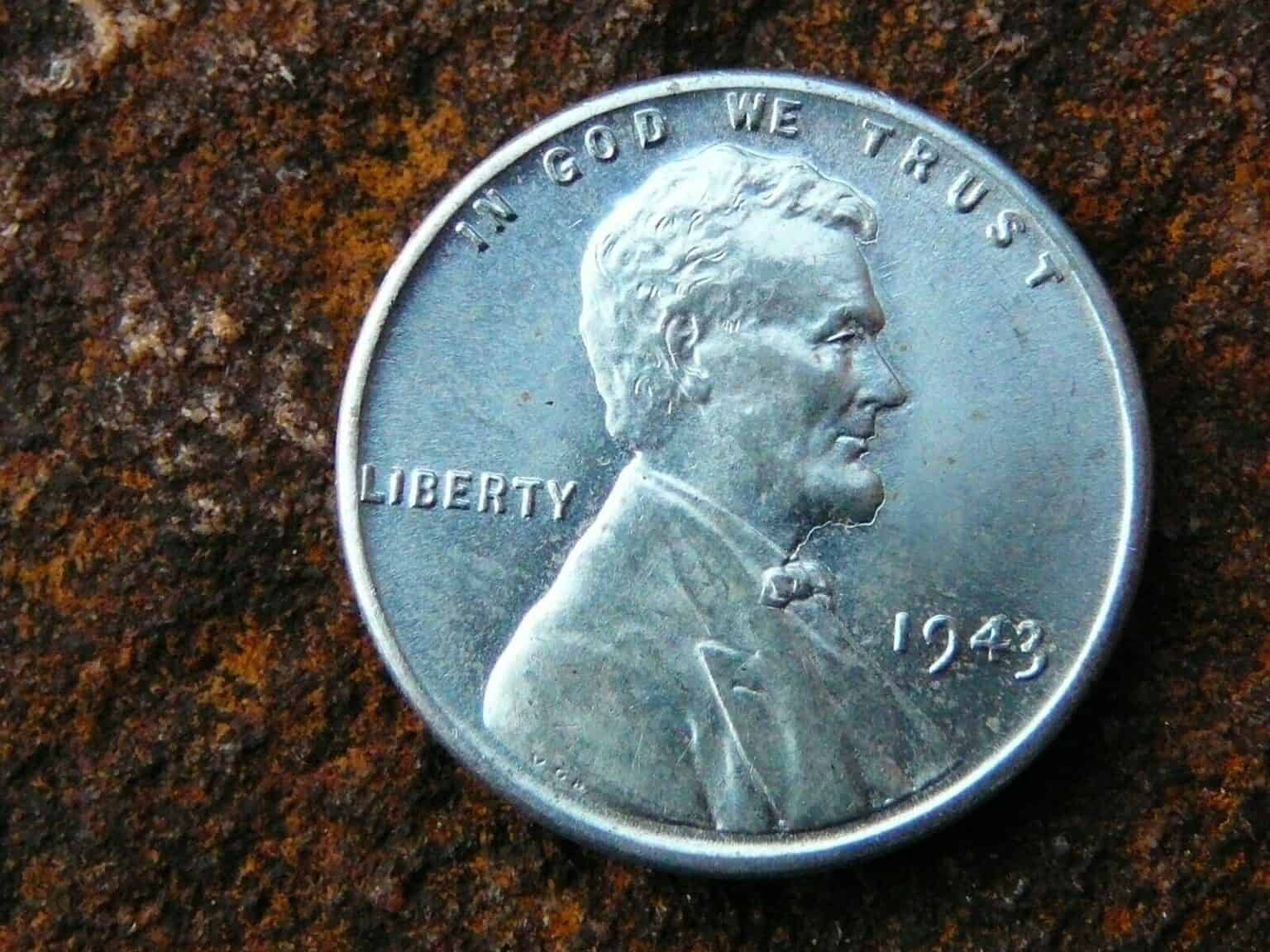
Ever rummaged through a forgotten jar of coins, unearthed from a dusty attic or perhaps just the depths of your couch cushions? It’s a little adventure, isn’t it? You might find a few modern quarters, maybe a suspiciously shiny nickel, but then, just maybe, your fingers brush against something different. Something lighter, grayer, with an almost whisper of its original copper self. You’ve likely stumbled upon a 1943 steel penny. And while it might not be destined to grace the cover of Forbes, this little coin holds a surprisingly interesting story and, for the right collector, a decent bit of value.
Let’s be honest, the idea of a penny being valuable sounds a bit like finding a unicorn in your backyard. We’re used to them being… well, a penny. Pocket change. The smallest unit of currency in the U.S. But the 1943 steel penny isn't your average copper coin. It’s a relic of a time when the world was at war, and even our humble pennies had to pitch in.
A Penny's Wartime Makeover
Picture this: it’s World War II. The year is 1943. Everything that could be used for the war effort, was. Metal was a precious commodity, vital for tanks, planes, ships, and countless other necessities. And what’s a penny made of? Primarily copper. So, the U.S. Mint, in a brilliant stroke of wartime ingenuity (or desperation, depending on how you look at it), decided to switch things up.
Instead of copper, they started striking pennies from zinc-coated steel. This wasn’t a permanent change, mind you. It was a temporary measure, lasting only for that single year. The idea was to free up copper for ammunition, for the very machines of war that were fighting for freedom. It’s a fascinating little piece of American history, minted right there in your palm. It’s like holding a miniature testament to a global conflict, a tangible connection to the sacrifices made by those who lived through it.
The result? A penny that looks and feels different. It’s lighter than its copper predecessors and has a distinct grayish hue. If you’ve ever seen one, you’ll know it. They’re almost magnetic, a little quirk that copper coins don't possess. That magnetic pull is a dead giveaway that you’re holding a steel cent. Think of it like a secret handshake among coins – a subtle nod to its unique composition.
Why the Fuss About This Gray Penny?
So, why is this particular penny worth more than its face value? It boils down to a few key factors: its historical significance, its limited production run, and, of course, the ever-present allure of collectibility.
The 1943 steel penny is a direct product of wartime necessity. It represents a time when national needs trumped the usual production methods. This makes it a poignant reminder of the broader economic and social shifts that occurred during World War II. For many, collecting these coins is a way to connect with that era, to understand the resourcefulness and resilience of a nation under pressure.
And then there's the matter of rarity. While millions of these steel pennies were minted, they weren't intended to be kept. They were meant to be spent, to be part of everyday commerce. Most of them were circulated heavily and, over time, simply worn out or lost. Furthermore, because they were made of steel, they were prone to rusting and corrosion, meaning fewer survived in good condition. So, finding one today, especially in decent shape, is a bit of a treasure hunt.
The Exception to the Rule: A Copper Surprise!
Now, for the really exciting part, the bit that truly cranks up the value: the mythical 1943 copper penny. Yes, you read that right. A 1943 penny made of copper. This is where the value really skyrockets, and it’s the stuff of numismatic legend.
During that single year of steel production, a very, very small number of 1943 pennies were accidentally struck on copper planchets (the blank discs used to make coins). These are incredibly rare. How rare? Estimates suggest there are only about 15 to 20 known examples in existence. Imagine that! In a world of millions, only a handful escaped the steel transformation. These are not just valuable; they are exceptionally valuable, often fetching hundreds of thousands of dollars at auction.
The story behind these copper anomalies is fascinating. It's believed that a few copper planchets were left over from the 1942 production run and, through a mix-up at the mint, ended up being used in the 1943 striking process. It’s a perfect storm of error and rarity, making these copper 1943 pennies the Holy Grail for many coin collectors.
If you happen to find a 1943 penny and it feels unusually heavy, or if it’s a distinct copper color, do not clean it! Resist the urge to polish it up to a shine. This could significantly decrease its value. Instead, carefully place it in a protective holder and consult with a professional coin dealer or appraiser. It might just be your lucky day!
What Makes a Steel Penny More Valuable?
So, you’ve identified your 1943 penny as steel. Great! Now, how do you know if it’s worth more than a few cents? Several factors come into play:

Condition is King (or Queen!)
This is probably the most crucial factor. A 1943 steel penny that looks like it just rolled off the minting press will be worth significantly more than one that’s heavily worn, dented, or corroded. Coin collectors use a grading scale to determine condition, ranging from “Good” (heavily worn) to “Uncirculated” (no wear at all).
Look for clear details. Can you still see the texture of Lincoln’s hair? Is the lettering sharp? Are there any significant scratches or nicks? The less wear and tear, the higher the value. Think of it like buying a vintage car; the more original and well-preserved it is, the more it’s worth.
Mint Mark Matters
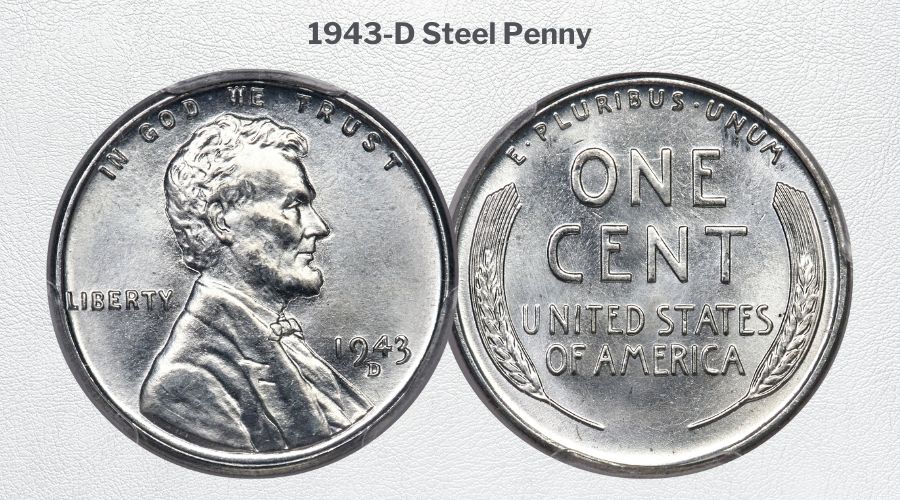
Like many U.S. coins, 1943 pennies were minted at different locations, and each location had a specific mint mark. Pennies from the Philadelphia mint have no mint mark. Those from the Denver mint have a "D," and those from San Francisco have an "S."
Generally, the San Francisco ("S") mint mark and the Denver ("D") mint mark pennies are slightly more sought after than the Philadelphia ones, although the difference in value for steel cents isn't as dramatic as it can be for other coin series. Still, it’s a detail that collectors pay attention to.
Eye Appeal
Beyond just wear, coin experts also consider "eye appeal." This is a more subjective quality but refers to how attractive the coin is to the eye. A coin with pleasing color, even toning, and minimal distracting marks will generally have better eye appeal and therefore a higher value.
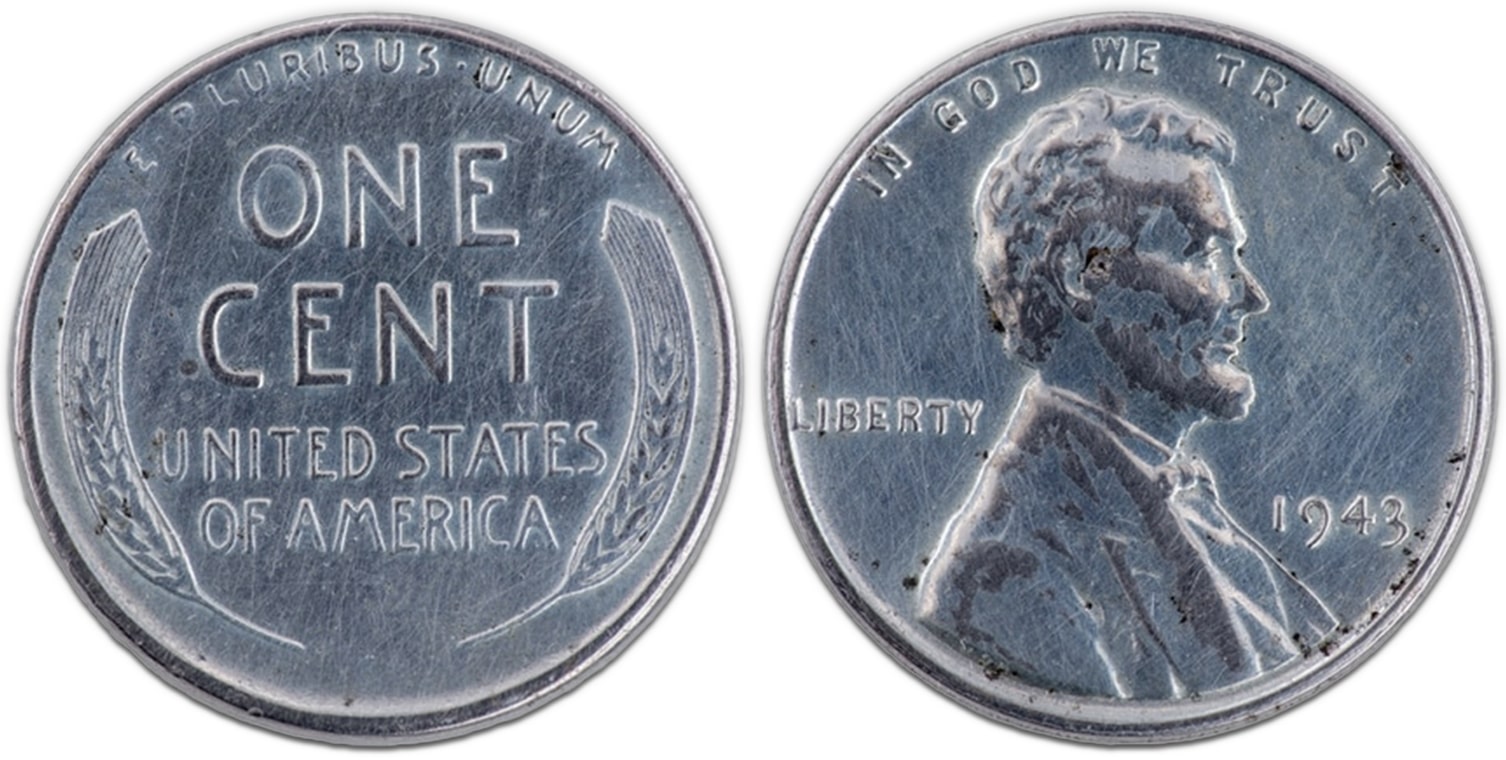
Sometimes, steel pennies develop a rather attractive patina over time. It’s not about being shiny and new, but about having a natural, pleasing appearance that speaks to its age and history.
Where to Find These Little Treasures
Where do these steel pennies typically turn up? They are surprisingly common in circulation, though you need to be vigilant to spot them. Many people still use them in everyday transactions, so a quick sort of your change can sometimes yield a surprise.
Beyond your pocket change, these coins are often found in:
- Old coin collections: Many people inherited coin collections from relatives, and these are prime hunting grounds.
- Estate sales and garage sales: You might find jars or boxes of old coins being sold off.
- Antique shops: Some antique stores have coin dealers or display old coins for sale.
- Coin shows: These events are specifically for buying, selling, and trading coins.
When buying, always try to inspect the coin closely if possible. If buying online, rely on reputable sellers and clear, detailed photos. Remember, condition and authenticity are key.
A Modern Analogy: The "Viral" Penny
You know how some things just go viral online? A funny cat video, a catchy song, a heartwarming story? The 1943 steel penny has a bit of that viral quality in the numismatic world. It’s a story that gets shared, a discovery that people hope to make. It’s not just about the monetary value; it’s about the thrill of the find, the connection to history, and the potential for a significant discovery.

It’s like finding a hidden gem in a sea of ordinary. In a world that’s increasingly digital and fast-paced, holding something tangible that represents a piece of our past can be incredibly grounding. It’s a reminder that history isn’t just in textbooks; it’s in the everyday objects around us, sometimes even in the change we carry in our pockets.
The Fun of the Hunt
Ultimately, the value of a 1943 steel penny, beyond its market price, lies in the experience. It’s the joy of the hunt, the spark of curiosity when you find something unusual. It’s the moment you realize you're holding a piece of history, a coin that tells a story of a nation at war, of resourcefulness, and of ingenuity.
Even if your 1943 steel penny isn't worth a fortune, it's still a fascinating item. It’s a conversation starter. It’s a tangible link to a bygone era. It’s a reminder that sometimes, the most interesting stories are found in the smallest of things.
So, next time you’re sorting through your change, take a moment. Feel the weight, check the color. You might just be holding a little piece of history, a testament to a time when even pennies had a crucial role to play. And who knows? You might even find that mythical copper anomaly. But even if you don’t, the story of the steel penny is a valuable one in itself, a reminder to appreciate the history that surrounds us, even in the most unexpected places.
It’s a little like life, isn't it? We often focus on the grand gestures, the big events. But sometimes, the most meaningful discoveries, the true treasures, are hidden in plain sight, waiting for us to simply pause, look closer, and appreciate the subtle, often overlooked, details. A steel penny is just one such detail, a small gray disc that carries a big, fascinating story.