
What Affects The Way A Projectile Performs

I remember the first time I tried to skip stones at the lake. You know, the classic move: find a flat, smooth stone, flick your wrist just right, and watch it dance across the water. Easy, right? Well, my first few attempts were less 'dance' and more 'plop' followed by a sad little ripple. My dad, bless his patient soul, finally grabbed a stone and showed me. It wasn't just about the flick; it was about the angle, the spin, the kind of stone. Suddenly, my stones were finally skipping, leaving those delightful little rings. It was a minor victory, sure, but it got me thinking: what makes anything fly through the air and perform the way it does? It's not as simple as just chucking it, is it?
And that, my friends, is our jumping-off point into the wonderfully complex, and sometimes surprisingly obvious, world of projectile performance. We're not just talking about skipping stones here, oh no. We're talking about everything that gets launched, thrown, shot, or propelled. From a tiny baseball to a massive cannonball, and yes, even that pesky piece of paper you accidentally crumpled and tossed into the bin from across the room. What makes some things soar, while others just… well, fall?
It All Starts with the Push (or Pull!)
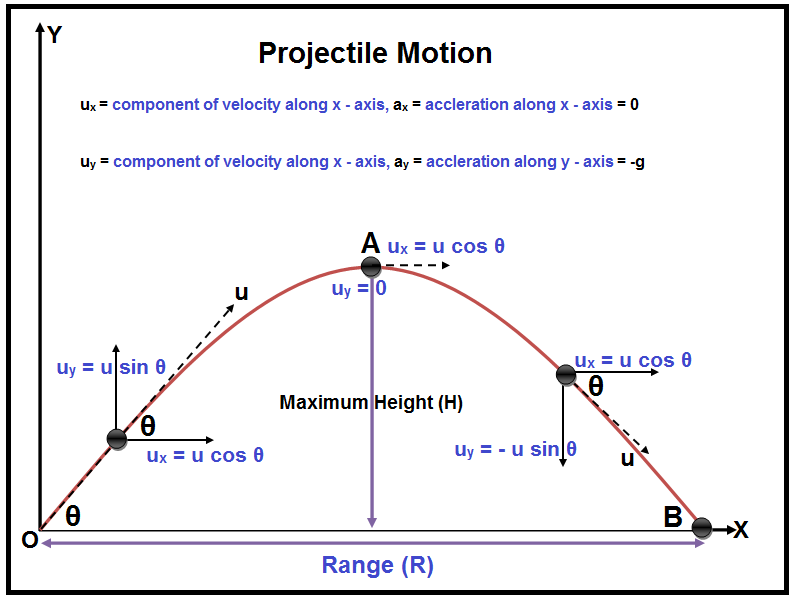
Okay, so the most fundamental thing affecting how a projectile performs is, surprise, surprise, how it gets moving in the first place. This is what we scientists (and, let's be honest, anyone who's ever played catch) call the initial velocity. It's not just about how fast something is going, but also in what direction. Imagine throwing a ball straight up versus throwing it at a 45-degree angle. Different directions, right? And that makes all the difference in the world to where it ends up. So, the speed and the angle at which something leaves your hand (or your catapult, or your rocket launcher) are your VIPs from the get-go.
Think about it. If you kick a soccer ball with a tiny little tap, it's not going to go very far, is it? But if you give it a proper, powerful boot, oh boy, that ball is going on an adventure. That's the initial velocity doing its magic. The stronger the push, the further (generally) it will go. But the angle is just as crucial. Ever seen someone try to throw a football as hard as they can straight up in the air? It comes straight back down on their head. Not ideal for scoring points, I'm guessing. You need that sweet spot angle to get maximum distance. And that, my friends, is often around 45 degrees in a perfect world (we'll get to the 'perfect world' bit later).
The Invisible Hand of Gravity
Now, as soon as that projectile leaves its starting point, there's a force that’s constantly tugging it downwards. You guessed it: gravity. It's like that one friend who always wants to pull you back to earth, no matter how high you're flying. Gravity is the ultimate party pooper for anything trying to escape our planet's embrace. The stronger the gravity, the faster something will fall back down. This is why a meteorite crashing into Jupiter would be a very different spectacle than one landing on our relatively gentle Moon.
So, while that initial velocity is trying to send your projectile zooming off into the cosmos, gravity is saying, "Nah, fam, you're coming with me." This constant downward pull is what causes that beautiful, parabolic arc that most projectiles follow. It's a fight between where you want it to go and where gravity insists it should go. Pretty dramatic, if you think about it. It’s the reason why, no matter how hard you throw a baseball, it’s not going to orbit the Earth. Thanks, Newton!
When Things Get a Bit… Sticky
Ah, but life (and physics) is rarely that simple, is it? If it were just initial velocity and gravity, every projectile would behave identically, all things being equal. But they don't. Why? Because the air is a thing. And it has opinions. I'm talking about air resistance, or as some folks like to call it, drag. It’s like trying to run through a swimming pool versus running on dry land. The water slows you down, right? Air does the same thing, just… less intensely. Usually.

Air resistance is a sneaky devil. It depends on a bunch of things. The first is the shape of the projectile. Think about a sleek, pointy arrow versus a big, bulky boulder. Which one do you think cuts through the air more easily? The arrow, obviously! That's why fighter jets are so aerodynamic. They're designed to minimize drag. Conversely, a parachute is designed to maximize drag to slow you down gently. Clever, eh?
Then there's the speed. The faster something moves, the more air it has to push out of the way, and the more resistance it encounters. So, a bullet traveling at supersonic speeds experiences a lot more drag than a slow-moving raindrop. It's not a linear relationship, either; it gets significantly harder to push through the air the faster you go. It's like trying to push a door open that's already ajar versus trying to push a door that's shut tight – you need way more force for the latter.
And finally, there’s the surface area. A wider, flatter object will experience more drag than a narrow, streamlined one, even if they have the same mass. Imagine a sheet of paper held flat versus a crumpled ball of paper dropped from the same height. The flat sheet flutters and takes ages to fall because of all the air it's catching. The crumpled ball, being more compact, falls much faster. It's all about how much air your object is having to elbow out of the way.
Mass Matters (But Not Always How You Think)
So, we have speed, direction, gravity, and air resistance. What else? Ah yes, the good old mass. You’d think a heavier object would always go further, right? Like, a cannonball versus a pebble. But it's not quite that simple. Mass does play a role, but it interacts with the other forces.
In a vacuum (no air resistance, just pure physics fun), mass becomes super important. A heavier object, given the same initial velocity, will indeed travel further and be less affected by gravity's rate of change in velocity (its acceleration is constant, but its momentum is higher). Think of throwing a bowling ball versus a tennis ball at the same speed. The bowling ball has way more momentum and will keep going with more gusto. It’s harder to stop!
However, when air resistance joins the party, things get fuzzy. A very light object with a large surface area (like that flat sheet of paper) will be slowed down dramatically by air resistance, even if you give it a good shove. A heavier object, while still experiencing air resistance, might be less affected by it relative to its momentum. So, a golf ball, which is relatively heavy and dense, can travel much further than a much lighter feather, even though both are subject to air resistance.
It’s like this: gravity pulls everything down at the same rate (ignoring air resistance). But if something has more mass, it has more 'inertia' – it's harder to change its state of motion. So, while gravity is trying to speed it up downwards, it's also harder for air resistance to significantly alter its path compared to a lighter object. It's a delicate balancing act between being heavy enough to overcome drag and light enough not to be overly impacted by it.
Spinning is Caring (Sometimes)
Now for something a little more niche, but incredibly cool: spin. Have you ever watched a baseball pitcher throw a curveball? Or seen a golf ball with dimples that make it fly differently? That’s spin in action. Spin can dramatically alter the trajectory of a projectile.
When a ball spins, it interacts with the air in a special way. On one side of the spinning ball, the air is moving in the same direction as the ball's surface. On the other side, it's moving against the surface. This creates a difference in air pressure. The side with air moving with the spin has lower pressure, and the side with air moving against the spin has higher pressure. This pressure difference, thanks to something called the Magnus effect, pushes the ball towards the lower-pressure side. Ta-da! A curveball!

This is also why many balls, like golf balls and baseballs, have specific textures or dimples. These aren't just for show; they help create turbulence in the air around the ball, which can reduce drag and, when combined with spin, generate lift. It’s all about controlling that airflow. So, the next time you see a fancy spin on a sports ball, remember it’s not just for aesthetics; it’s a calculated manipulation of physics!
Surface Properties: It’s Not Just About Smoothness
Going back to our initial stone-skipping analogy, remember how my dad picked a specific kind of stone? It wasn't just about shape; it was about the surface too. The surface properties of a projectile can influence how it interacts with the medium it's traveling through.
For a stone skipping on water, a smoother, flatter surface is going to allow for better contact and a more efficient transfer of energy. A rough, uneven surface will create more drag and turbulent water, making it harder to skip. Similarly, the dimples on a golf ball are surface properties that affect its interaction with the air. They create a thin layer of turbulent air close to the ball's surface, which actually helps the main airflow stay attached to the ball for longer, reducing drag and allowing it to travel further.
Even something as simple as the texture of a basketball affects how it bounces and how it's gripped by a player, which indirectly impacts how it's thrown. So, while you might think of a surface as just… the outside, it’s actually a pretty active participant in the whole performance.
The Medium Matters Too!
And finally, let's not forget the stage upon which our projectile performs: the medium. We’ve talked a lot about air, but what if our projectile is traveling through water, or even space? The density and viscosity of the medium play a massive role.
Water is much denser and more viscous than air. This means that anything moving through water will experience significantly more resistance. That's why submarines are shaped the way they are, and why swimming underwater is so much harder than swimming in the air (which, thankfully, we don't do!). A torpedo fired underwater will behave very differently than a bullet fired in the air, even if they have similar initial velocities. The forces are just on a different scale.
And in space? Well, that's where things get truly interesting. With virtually no air resistance, a projectile fired in space would keep going in a straight line at a constant speed forever, until something else intervened. No gravity pulling it down, no air slowing it. It’s the ultimate freedom for a projectile, but also a testament to how powerful those other forces are here on Earth.
Putting It All Together
So, there you have it. From the simple flick of a wrist to the complex engineering of a rocket, what makes a projectile perform the way it does is a fascinating interplay of forces. We’ve got the initial shove (velocity and angle), the constant pull from below (gravity), the invisible friction from the air (air resistance), the sheer heft of the object (mass), any fancy twirls and spins (Magnus effect), the texture of its skin (surface properties), and the environment it’s in (the medium).
It's a recipe, really. You add a dash of initial push, a sprinkle of gravity, a good dollop of air resistance, and maybe a pinch of spin, and you get a unique trajectory. And the beauty of it is, by understanding these factors, we can predict, control, and even manipulate how things fly. It’s why we can send satellites into orbit, why archers can hit targets from incredible distances, and why, with a bit of practice, you too can master the art of skipping stones. It’s all just physics, folks. And it’s pretty darn cool.