
What Are Metal Studs Made Of
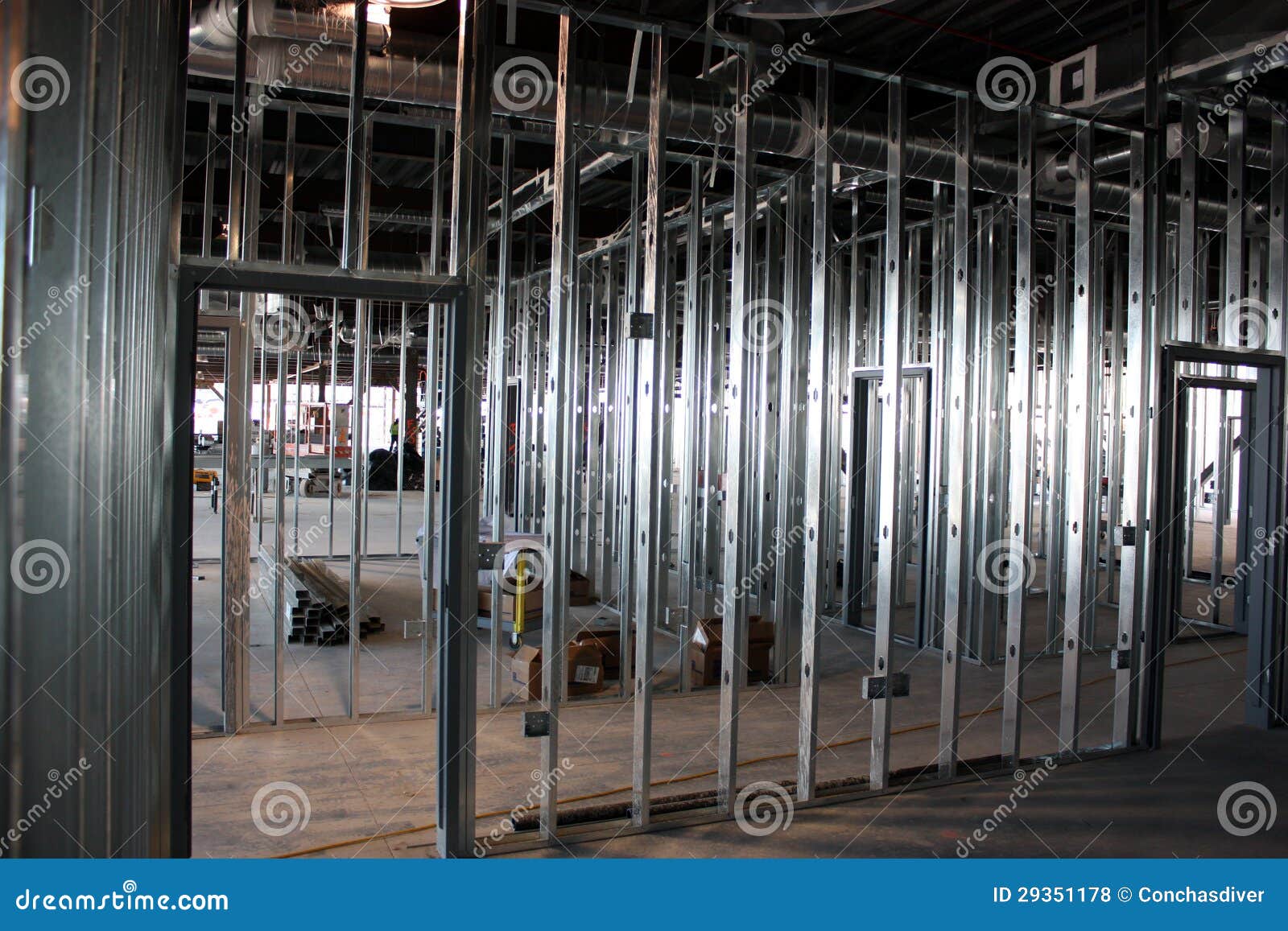
Ever been to a new house and marvelled at how quickly they put it up? Or maybe you've knocked on a wall in your own place, heard that hollow thunk, and wondered what magic is holding it all together? Well, chances are, a whole lot of metal studs are doing the heavy lifting. Think of them as the unsung heroes of modern construction, the shy, reliable types who get the job done without any fuss. They’re not flashy like a marble countertop or exciting like a brand-new smart fridge, but man, are they important!
So, what exactly are these metal studs made of? It’s actually pretty straightforward, and honestly, a little bit… metallic. They’re generally made from galvanized steel. Now, before you start picturing a knight in shining armor sweating it out in a forge, let’s break that down.
The Steel Story: Not Your Grandma's Tin Can
Steel, in its basic form, is an alloy of iron and carbon. It’s tough, it’s strong, and it’s been around for ages, building everything from bridges that span rivers to the needles that mend our clothes. For studs, we're not talking about the super-thick, industrial kind of steel you'd see holding up a skyscraper. These are specifically shaped, typically C-shaped channels, designed to be lightweight yet sturdy enough to frame out walls. Imagine them as a slightly more robust, less bendy version of those metal rulers you used in school, the ones you’d accidentally bend trying to measure something a bit too enthusiastically.
Think about it this way: you know how you can bend a paperclip with a bit of effort? That's not the kind of steel we’re talking about for studs. This stuff is built to take a load. It's the kind of material that, if you tried to bend it with your bare hands, you'd probably end up with blisters and a newfound respect for metallurgy. They're manufactured in long coils and then cut and shaped into the familiar stud profiles. It’s a pretty efficient process, which is why you can get so much framing done so quickly these days.
Galvanized? What’s That All About?
Now for the “galvanized” part. This is where things get a little more interesting and, frankly, crucial. Galvanizing is basically a protective coating applied to the steel. And what is this magical coating? You guessed it: zinc. Yes, the same zinc you might find in a multivitamin or a sunscreen. Fancy that!
So, why do we coat our steel studs with zinc? Think of it like giving them a really good raincoat. Steel, while strong, can be susceptible to rust when it’s exposed to moisture. And in construction, let’s be honest, things can get damp. Think of rain hitting the unfinished house, or even just the humidity in the air. Rust is like the arch-nemesis of metal. It weakens the material, makes it crumbly, and generally turns your sturdy stud into a sad, flaky shadow of its former self. It’s the slow decay, the equivalent of leaving your favorite sneakers out in the rain for a month – not a good look.

The zinc coating acts as a sacrificial barrier. This means that if any scratches or nicks do occur in the steel, the zinc will corrode before the steel does. It’s like having a bodyguard for your studs. The zinc literally sacrifices itself to protect the underlying steel. Pretty noble, right? This process dramatically increases the lifespan of the studs, making them resistant to rust and corrosion. It’s the reason why a house framed with metal studs can stand strong for decades, even in challenging environments.
The "Hot-Dip" Treatment: A Warm Hug for Steel
The most common method for galvanizing is called hot-dip galvanizing. Imagine a giant vat of molten zinc, shimmering and hot. The steel studs are then dipped into this molten zinc. It's like giving them a really, really hot bath. As the steel cools, the zinc adheres to it, forming a thick, protective layer. This isn't just a thin spray-on job; it’s a robust coating that gets into every nook and cranny.
This hot-dip process creates a metallurgical bond between the zinc and the steel. It’s not just sitting on the surface; it’s practically part of the metal. This makes the coating incredibly durable and resistant to peeling or flaking. It’s like a hug that never lets go. This thoroughness is what gives metal studs their reputation for longevity.

Other galvanizing methods exist, like electrogalvanizing, which uses an electrochemical process. Think of it as a more precise, almost electrical bath for the zinc. While it might produce a slightly thinner coating, it’s still very effective and often used for lighter-duty applications or where a smoother finish is desired. But for the kind of structural framing we’re talking about, the hot-dip method is usually the king.
Why Metal Studs? The "Why Not Wood?" Question
You might be thinking, "Okay, metal, zinc, all that sounds fine, but why bother? Wood has been doing the job for centuries!" And you’re not wrong. Wood studs are fantastic! They’re natural, they’re renewable (if managed correctly), and they’re familiar. But metal studs have some pretty compelling advantages that are making them increasingly popular, especially in larger buildings and commercial spaces.
First off, consistency. Wood can warp, twist, and shrink as it dries out. You ever bought a piece of lumber that looked perfectly straight, only to find it’s developed a bit of a banana curve by the time you get around to using it? Or that nail that just won’t go in straight because the wood is too knotty? Metal studs, on the other hand, are manufactured to incredibly tight tolerances. They are perfectly straight, every single time. This makes for a much more precise build and fewer headaches for the installers. It’s like having a set of LEGO bricks for your walls – they all fit together perfectly.

Then there’s the whole fire resistance thing. Wood, as we all know, burns. Metal studs, while they can deform under extreme heat, do not combust. This is a huge advantage in terms of fire safety, especially in commercial buildings where codes are often stricter. Imagine a fire starting; instead of feeding the flames, the metal studs are just… there. Not burning, not contributing to the inferno. It’s the difference between a roaring bonfire and a very, very hot, but non-flammable, metal sculpture.
Pest resistance is another big one. Termites, carpenter ants, those little wood-boring beetles that sound like tiny tap dancers in your walls? They’re not interested in metal. They can’t chew through it, they can’t nest in it. Metal studs are immune to all those creepy crawlies that love to make a meal out of wooden structures. It’s like building your house out of something that’s just too boring for pests to bother with.
And let’s not forget about strength-to-weight ratio. Metal studs can be incredibly strong without being excessively heavy. This can make them easier to handle and install, especially for large projects. Think of it as being able to lift a feather that’s as strong as a brick. Plus, they’re not susceptible to the moisture absorption that can lead to mold growth in wood. They’re essentially impervious to rot and decay.

From Raw Material to Ready-to-Frame
So, how does this all happen? The journey of a metal stud begins with large coils of steel. These coils are typically produced in steel mills through processes that involve melting down iron ore and other materials. Once the basic steel is created, it's then sent to a galvanizing facility. Here, it undergoes the hot-dip or electrogalvanizing process as we discussed. After being coated in zinc, the galvanized steel coils are then fed into specialized roll-forming machines. These machines have a series of rollers that gradually shape the flat steel coil into the desired stud profiles – think of the C-shape or the U-shape (often called tracks). They’re cut to length as they come off the line, ready to be bundled and shipped to construction sites.
It's a highly automated and precise process, ensuring that each stud meets specific industry standards for dimensions, thickness, and strength. This precision is key to why metal-framed walls are so straight and true. There's no "close enough" with metal studs; they are made to exact specifications. It's like getting a perfectly tailored suit versus one that’s just "off the rack" and might be a bit baggy in the shoulders.
The Future is Metallic?
While wood will always have its place in construction, metal studs are becoming increasingly common, especially in situations where durability, fire safety, and pest resistance are paramount. They're the quiet, dependable workhorses that underpin so much of our modern built environment. Next time you’re in a building and you hear that reassuringly solid sound when you knock on a wall, take a moment to appreciate the humble metal stud, probably made of galvanized steel, doing its essential job, keeping things standing tall and strong, year after year.