
What Are Steel Buildings Secondary Frames
Imagine you're building the ultimate fort. Not just any fort, but a super-duper, practically-indestructible fortress for your toys, your bike, or maybe even your prize-winning pumpkin. You’ve got the big, sturdy walls that hold everything up, right? Well, those are kind of like the primary frames of a steel building. But what about all the nooks and crannies, the places where you need extra support to keep things from wobbling like a jelly on a trampoline? That's where our unsung heroes, the secondary frames, swoop in to save the day!
Think of it like this: you’ve got your main superhero, let's call him Captain Steel. He’s massive, he’s strong, and he’s the one doing most of the heavy lifting, holding up the entire roof like it’s a feather. But even Captain Steel needs a little help sometimes. Maybe there are windy days that threaten to tickle the roof off, or perhaps you want to hang a giant disco ball from the ceiling that weighs more than a thousand rubber ducks.
Enter the Secondary Frames! These guys are like Captain Steel’s trusty sidekicks. They might not be as brawny as the main beams, but they are absolutely essential for keeping everything perfectly in place. They are the diligent organizers, the detail-oriented protectors, making sure that every inch of your magnificent steel structure is as solid as a rock, or at least, as solid as a really, really, really solid block of steel.
The Dynamic Duo: Primary vs. Secondary
So, what exactly is the difference between these two awesome teams? Your primary frames are the big hitters, the main structural elements. These are your huge I-beams and columns that define the overall shape and size of your building. They bear the brunt of the weight from the roof and walls, like the sturdy shoulders of a friendly giant.
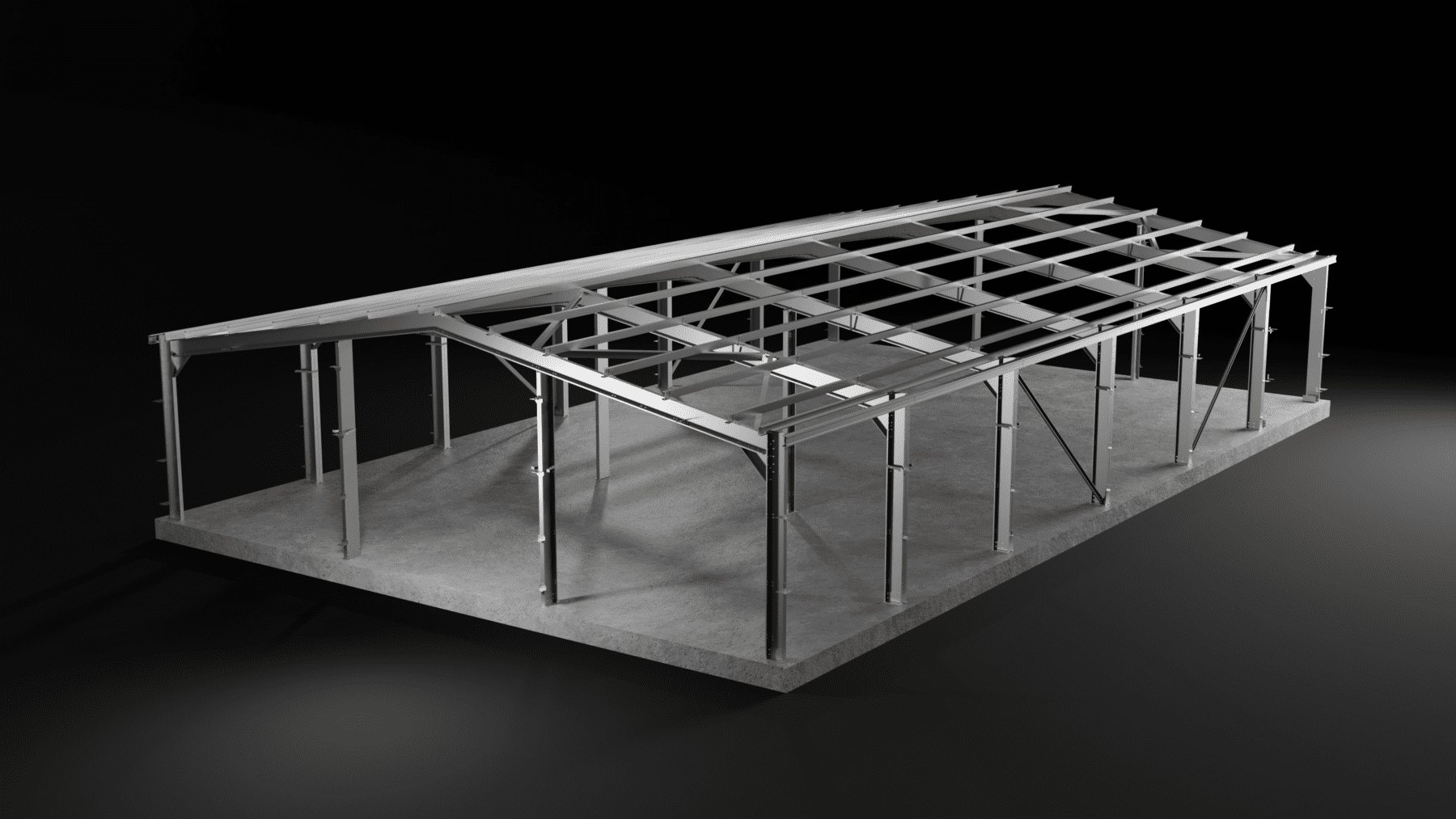
Now, the secondary frames? These are the finer details, the supporting cast that makes the primary frames look even better. They include things like purlins, girts, and eaves struts. Don’t let the fancy names scare you; they're just specialized pieces of steel designed to do specific jobs, like making sure your roof doesn’t sag like a sad balloon or that your walls are perfectly straight and proud.
Imagine building a gingerbread house. The big gingerbread walls and roof are your primary frames. They give it its basic structure. But what about the little candy canes you use to brace the corners or the strategically placed gumdrops holding the roof tiles in place? Those are your secondary frames, adding that crucial stability and making sure your edible masterpiece doesn’t crumble into a sugary heap!

Meet the Star Players: Purlins and Girts
Let’s talk about some of the main players on the secondary frames team. First up, we have the mighty purlins. These are like the horizontal helpers that run along the length of your roof. Their main gig is to support the roof panels. Without purlins, your roof panels would be left to their own devices, probably flopping around like a lost kite in a hurricane.
Think of your roof panels as the glamorous shingles or the shiny metal sheets that make your building look snazzy. Purlins are the unseen but vital scaffolding that holds them all up, ensuring they stay put and don't get any crazy ideas about going on a solo adventure. They distribute the weight of the roof evenly, so no single panel feels like it’s carrying the entire world on its shoulders. It's all about teamwork and load distribution!
Next, we have the equally important girts. These guys are the horizontal supports for your walls. Just like purlins support the roof, girts support the wall panels. They run from column to column, giving your walls the rigidity they need to stand tall and strong, no matter what the weather throws at them.
If your building were a person, the primary frames would be the skeleton. The girts would be the muscles and tendons that keep the skin (wall panels) taut and in place, preventing it from looking saggy or misshapen. They prevent your walls from bowing inwards or outwards, ensuring your building has that perfectly sculpted, statuesque look. It’s like getting a super-powered facelift for your steel structure!

The Eaves Strut: The Corner Protector
And let's not forget the eaves strut! This one is a bit more specialized, and it’s found at the very edge of the roof, where the roof meets the walls. Its job is to provide extra support and stability to the eaves, the overhang part of the roof. It’s like the dedicated bodyguard for the corners, ensuring they don’t get weak in the knees, especially when faced with strong winds or heavy snow loads.
Imagine your building has a fancy hat (the roof). The eaves strut is like the headband that keeps that hat firmly in place, even on the gustiest of days. It prevents the edges of the roof from lifting or buckling, which can lead to all sorts of roofing headaches. This little guy is a silent guardian, watching over the perimeter of your building, providing that extra layer of security.
These secondary components aren't just random pieces of metal welded in haphazardly. Oh no! They are meticulously engineered and precisely placed to work in harmony with the primary frames. They are the master planners of structural integrity, ensuring every connection is strong and every load is managed with superhero-like efficiency. It’s like a perfectly choreographed dance of steel, with each movement contributing to the overall strength and beauty of the final performance.

Why All This Fuss About Secondary Frames?
You might be thinking, "Okay, I get it, they're important. But why do we need to talk about them so much?" Well, my friends, because without these unsung heroes, your magnificent steel building would be… well, a lot less magnificent! They are the silent backbone, the discreet backbone, the backbone that makes sure your building doesn't perform any unplanned interpretive dance moves in the wind.
Think about it: a building needs to withstand a whole lot of stuff. There’s the weight of the roof itself, then potentially piles of snow, the relentless force of wind pushing and pulling, and even things like the weight of equipment you might hang from the ceiling. The primary frames handle the biggest loads, but the secondary frames distribute those loads and add crucial stiffness. They prevent excessive movement and deformation, ensuring your building remains as steadfast and reliable as a best friend.
Without the purlins, your roof might sag so much it looks like it’s trying to give the ground a hug. Without the girts, your walls might bulge out like overstuffed sausages. And without the eaves struts, those vulnerable edges could be the first to complain about a bit of bad weather. It’s all about creating a unified, robust structure that can stand the test of time and the elements. It’s the difference between a building that’s merely standing and a building that’s thriving.
Plus, these secondary components often provide the attachment points for the exterior cladding – those are the panels that make your building look like, well, a building! So, not only do they provide structural support, but they also play a key role in the aesthetic finishing of your structure. They are the backbone that also holds the skin! It’s efficiency and elegance all rolled into one super-strong package.
The Magic of Metal: How They're Made
These secondary frames are typically made from high-strength steel. They are often fabricated in factories with incredible precision. This means they are cut, bent, and sometimes even pre-drilled with amazing accuracy. This precision is key to ensuring a perfect fit on-site, making the construction process faster and more efficient. It's like building with perfectly shaped LEGO bricks, but on a much, much grander and more industrial scale!
The steel used is often lighter gauge than the primary framing but is incredibly strong for its weight. This smart design ensures that the building remains robust without being unnecessarily heavy or expensive. It’s the smart way to build, maximizing strength while minimizing material. They are the elegant engineers of the construction world.
Once fabricated, these pieces are delivered to the construction site. Then, they are bolted or welded into place according to detailed plans. The whole process is designed to be as smooth and efficient as possible, like a well-oiled machine putting together a masterpiece. And the result? A building that’s not only strong but also beautiful and ready for whatever you throw at it.
So, the next time you see a massive steel building, standing tall and proud, remember the often-overlooked heroes: the secondary frames. They might not be the flashiest components, but they are absolutely crucial to the building’s success. They are the silent guardians, the meticulous organizers, and the essential support system that keeps everything from wobbling, sagging, or generally misbehaving. They are the reason your steel building is a fortress of strength and reliability, a true testament to the power of smart engineering and well-placed steel! And that, my friends, is something to cheer about!