
What Are The Cliffs Of Dover Made Of
:max_bytes(150000):strip_icc()/GettyImages-153589494-0509570292174f2abbd65669f06e428a.jpg)
Ever gazed across the shimmering expanse of the English Channel and found yourself captivated by that iconic, chalky silhouette? We’re talking, of course, about the legendary Cliffs of Dover. They’re not just pretty postcards, oh no. These majestic white guardians have a story etched into every grain of their being, and understanding what they’re made of is like unlocking a little piece of ancient history, delivered in the most stunning natural packaging.
Imagine a world millions of years ago. Not quite the Instagram-perfect beaches we know today, but a vast, shallow sea teeming with life. This is where our story begins, on a much grander scale than you might expect. It’s a tale of tiny creatures, microscopic plankton, and an epic, slow-motion geological ballet.
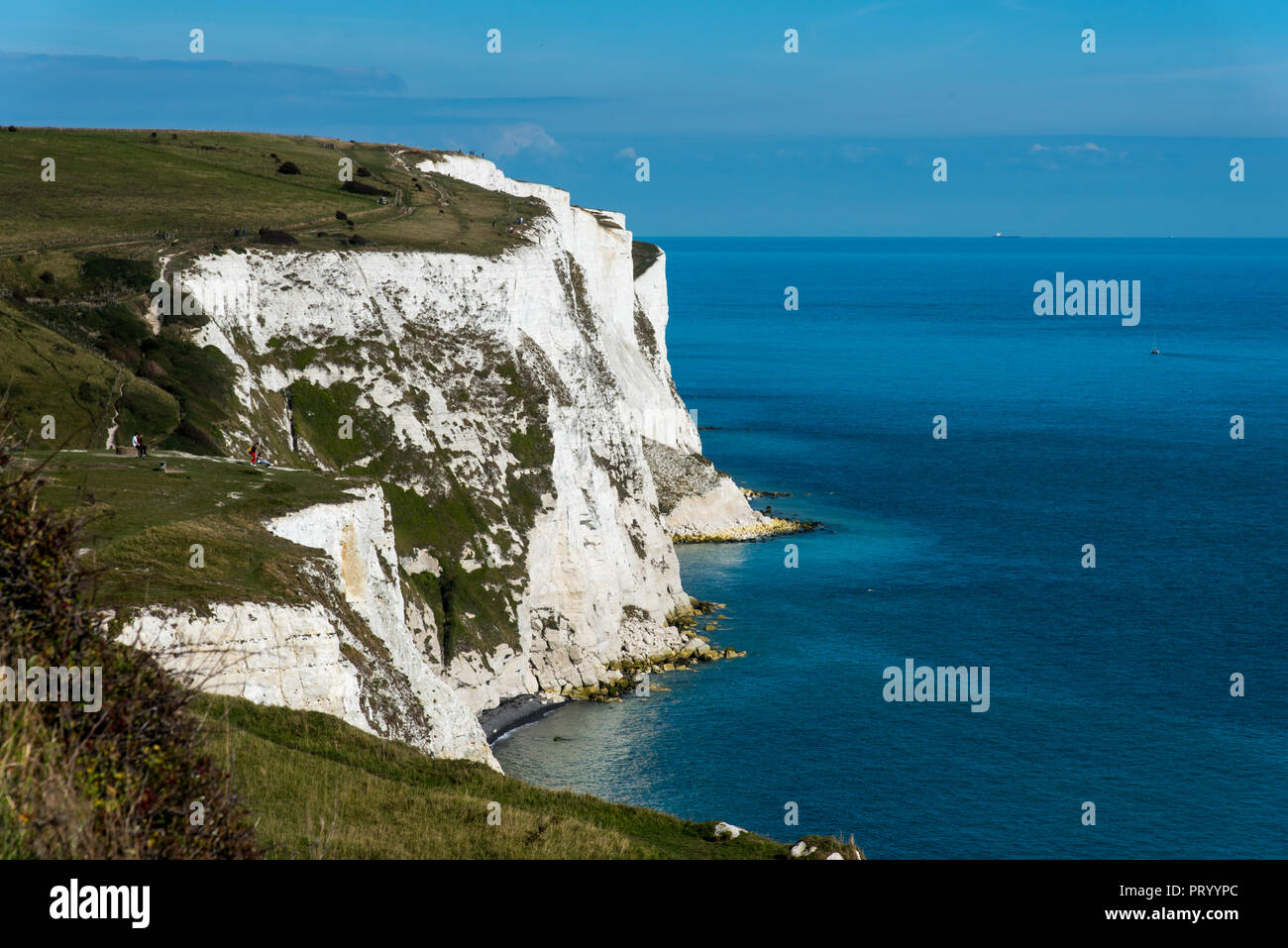
So, what exactly are these striking white faces of England composed of? Drumroll please… they are primarily made of chalk. Now, before you picture dusty blackboard scribbles, let’s dive a little deeper. This isn't just any old chalk; it's a specific type, formed under very particular conditions over an astonishingly long period.
The main ingredient, the star of the show, is the fossilized remains of microscopic marine organisms called coccolithophores. Think of them as tiny, single-celled phytoplankton. These little guys, when they finished their planktonic existence, drifted down to the seabed.
Their secret weapon? Their exoskeletons. These microscopic shells, made of calcium carbonate, accumulated over eons. And when we say eons, we mean eons. We’re talking about the Late Cretaceous period, roughly 100 to 66 million years ago. That’s a timeline that makes even the Roman Empire look like a fleeting blink!
Layer upon layer, these tiny shells piled up, becoming compressed by the sheer weight of the water above and the sediment that joined them on their seabed slumber. This slow, steady process of accumulation and compaction is what transforms a multitude of minuscule skeletons into solid rock.
But chalk isn't just coccolithophores. Over time, other marine debris, like fragments of shells and the skeletons of other sea creatures (think tiny sea urchins and starfish), also got mixed in, adding a bit of variety to the geological recipe. This blend of calcium carbonate from countless tiny organisms, along with other bits and bobs from the ancient seabed, is what gives the Cliffs of Dover their distinctive bright white colour and surprisingly soft texture.
It’s fascinating, isn't it? To think that what stands so resolutely today is actually the silent testament to a thriving, ancient ocean. When you’re standing at the top, feeling that sea breeze whip around you, you’re literally on top of a prehistoric aquarium.

The thickness of this chalk deposit is also pretty mind-blowing. In some places, the Cliffs of Dover reach up to 350 feet (about 107 meters). That’s taller than a 30-story building! And all of that, built from the microscopic. It’s a powerful reminder of how, in nature, the smallest components can, over immense stretches of time, create something truly monumental.
Beyond the White: A Little Geological Spice
While chalk is the undisputed heavyweight champion of the Cliffs of Dover's composition, there are a few other players in this geological ensemble. You might notice darker streaks or patches within the white. These are often due to the presence of flint.
Flint is another form of silica, and it tends to form in nodules or layers within the chalk. Geologists believe flint was also formed from the accumulation of silica-rich microscopic organisms, like diatoms and radiolarians, though the exact processes are still debated. It’s like finding little pockets of volcanic rock mixed into a giant cake – a bit of a contrast, but perfectly natural.
These flint nodules are incredibly hard and have been used by humans for millennia, dating back to the Stone Age. So, not only are the cliffs a marvel of natural history, but they’ve also played a direct role in human development. Pretty neat, right?
The presence of flint also gives the chalk its characteristic texture and can influence how the cliffs erode. It’s a subtle detail, but one that adds to the complexity and beauty of these natural structures.
From the Sea to the Sky: How Did They Get So High?
So, we have this chalky material sitting on the seabed. But how did it end up as towering cliffs visible from miles away? This is where the next act in our geological drama unfolds: uplift and erosion.
Over millions of years, tectonic forces – the slow, powerful movements of the Earth's crust – began to push and fold the land. This process gradually lifted the chalk deposits from the seabed, inch by geological inch, bringing them above sea level.
Once exposed, the cliffs faced their next, relentless sculptor: the elements. Wind, rain, and, most importantly, the sea began their work. The waves crashing against the base of the cliffs relentlessly erode the chalk, carving out coves, arches, and stacks. Rainwater seeps into the chalk, dissolving some of the calcium carbonate and widening any existing cracks.
This constant interplay between the sea's power and the chalk’s vulnerability is what shapes the dramatic, ever-changing face of the Cliffs of Dover. They are not static monuments; they are dynamic landscapes in a perpetual state of formation and, well, a little bit of deconstruction.
Cultural Icons: More Than Just Rock
The Cliffs of Dover aren't just a geological wonder; they're a deeply ingrained part of British culture and identity. For centuries, they’ve been the first and last sight of England for travellers crossing the Channel.
Think of Vera Lynn’s stirring wartime anthem, “The White Cliffs of Dover”. This song, released in 1942, became a symbol of hope and resilience during World War II, representing the safety and beloved homeland that soldiers fought to protect. It’s a powerful reminder of how these cliffs have been imbued with emotional significance beyond their physical presence.
During the war, the cliffs served as a vital lookout point. Their commanding height offered a strategic advantage, and their distinctive white face made them a clear landmark. Imagine being a pilot or a sailor, spotting those familiar white lines after a long, uncertain journey. It would have been a profound moment of relief and homecoming.
The cliffs have also inspired countless artists, writers, and poets. Their stark beauty and symbolic significance have lent themselves to vivid descriptions and powerful imagery throughout literature and art. They represent an unyielding presence, a stoic guardian standing firm against the elements and the passage of time.
Practical Tips for Your Own Cliff Encounter
If you’re planning a visit to witness these magnificent chalk formations for yourself, here are a few tips to make your experience even more enjoyable:
- Wear sensible shoes: The paths can be uneven, and you’ll want to explore comfortably.
- Check the weather: The British weather can be famously unpredictable. Layers are your friend!
- Visit the White Cliffs Visitor Centre: It’s run by the National Trust and offers fantastic insights into the geology, history, and wildlife of the area. You can also grab a decent cuppa there, naturally.
- Look for the local wildlife: The grassy tops are home to a variety of birds, including skylarks and peregrine falcons. And if you’re lucky, you might even spot a seal or two basking in the waters below.
- Consider the ferry: If you're travelling to or from mainland Europe, the ferry crossing offers a breathtaking perspective of the cliffs from sea level. It’s a completely different, but equally stunning, view.
- Don’t forget your camera: Obvious, but essential. The light can change dramatically throughout the day, offering different moods and colours.
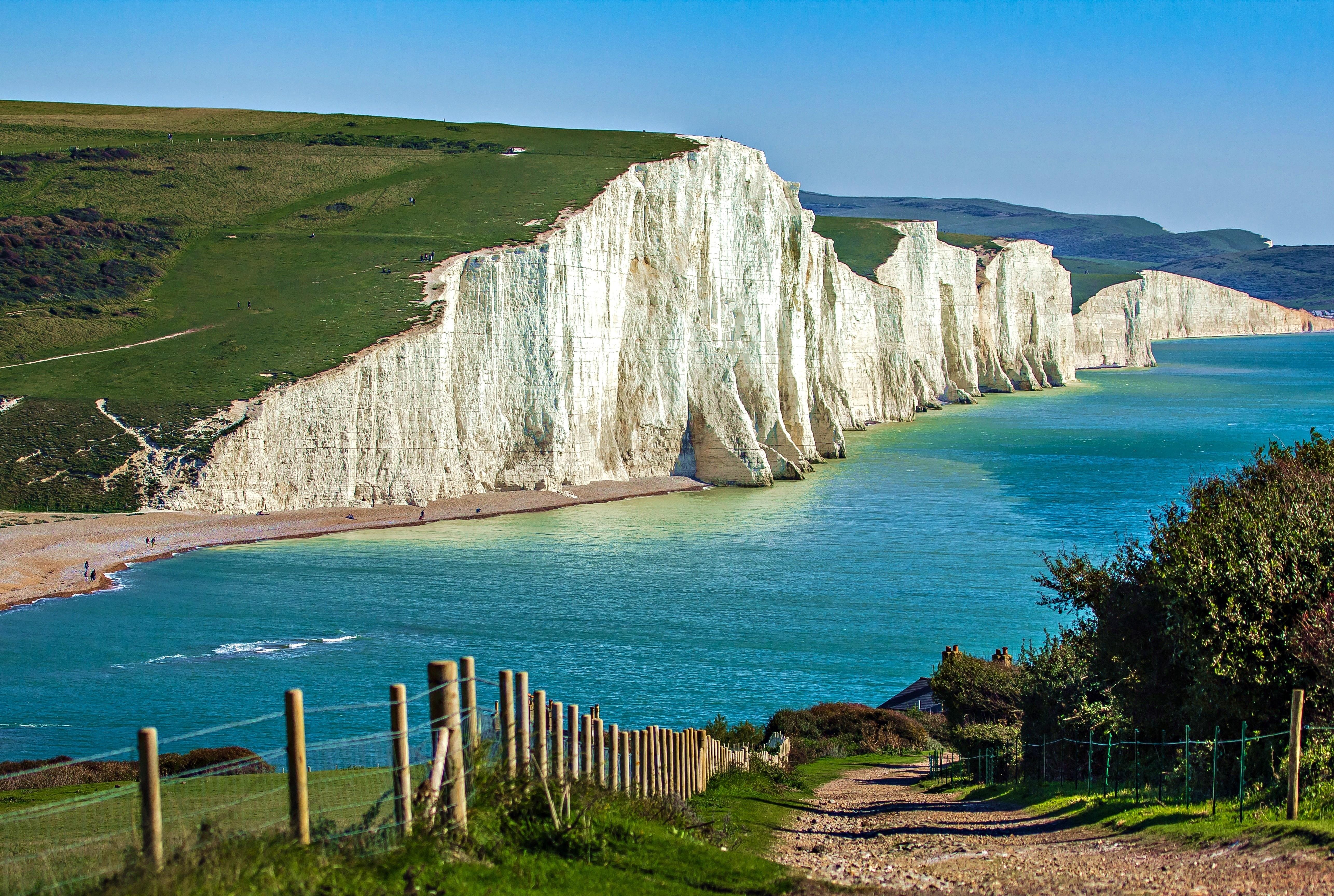
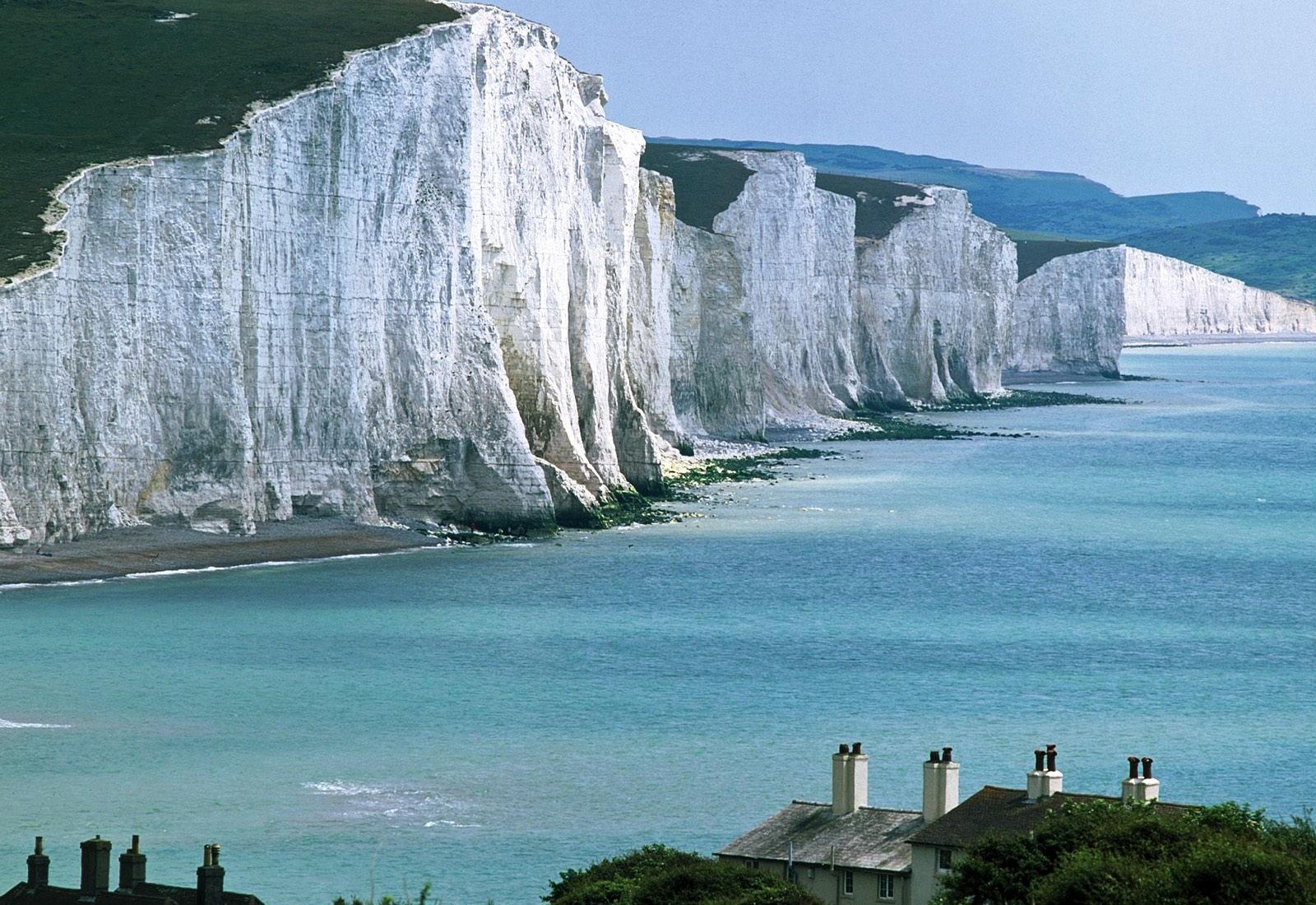
One fun little fact: the chalk cliffs aren’t just in Dover. Similar chalk formations can be found along the coast in other parts of the UK, like the Seven Sisters in East Sussex, and even across the Channel in France, such as the Alabaster Coast in Normandy. It's a testament to the widespread nature of these ancient marine environments.
Another bit of trivia for you: the term "chalk" itself comes from an Old English word, 'cicen', meaning stone. So, in a way, these cliffs are literally the "ancient stones" of England.
The chalk is also porous, which means it’s quite susceptible to erosion. This is why you’ll see the cliffs continually changing. Landslides and collapses are a natural part of their evolution, which is why it's always important to stick to marked paths and obey any safety warnings.
It's this combination of the ephemeral and the eternal that makes the Cliffs of Dover so captivating. They are a constant, yet ever-changing, reminder of the immense power and beauty of our planet.
A Reflection on Our Own Foundations
Thinking about the Cliffs of Dover being made of countless tiny, seemingly insignificant, ancient sea creatures puts things into perspective, doesn't it? It’s a beautiful metaphor for our own lives. We are all built from a series of small moments, experiences, and interactions. Over time, these accumulate, shaping who we are, just as the coccolithophores built those magnificent cliffs.
Sometimes, we might feel insignificant, like a single grain of sand. But when we come together, when our individual contributions are layered over time, we can create something strong, enduring, and beautiful. Whether it’s the bonds of family, the development of a skill, or simply the accumulation of kindness in our daily interactions, we are all, in our own way, building something monumental.
So, the next time you see a picture of the Cliffs of Dover, or perhaps even visit them, take a moment to appreciate not just their grandeur, but also the incredible, microscopic journey that brought them to be. And remember that, in the grand scheme of things, even the smallest among us contribute to the magnificent landscape of life.