
What Are The Three Magnetic Metals

Ever find yourself absentmindedly fiddling with a fridge magnet, or maybe you’ve noticed how certain jewelry pieces just… stick together? There’s a subtle magic at play there, a silent hum of attraction that’s both practical and utterly fascinating. We’re talking about magnetism, of course, and the stars of this show are a select trio of metals. Forget complicated physics lectures; let's dive into the wonderfully magnetic world of these everyday superheroes.
Think of it like this: if the metal world had a celebrity gossip column, these three would be the undisputed A-listers, constantly in the spotlight for their undeniable charm. They’re the ones that make our lives a little easier, a little more organized, and frankly, a whole lot more interesting. So, grab a cozy beverage, settle in, and let’s meet the magnetic trio!
The Unshakeable Trio: Unpacking the Magnetic Metals
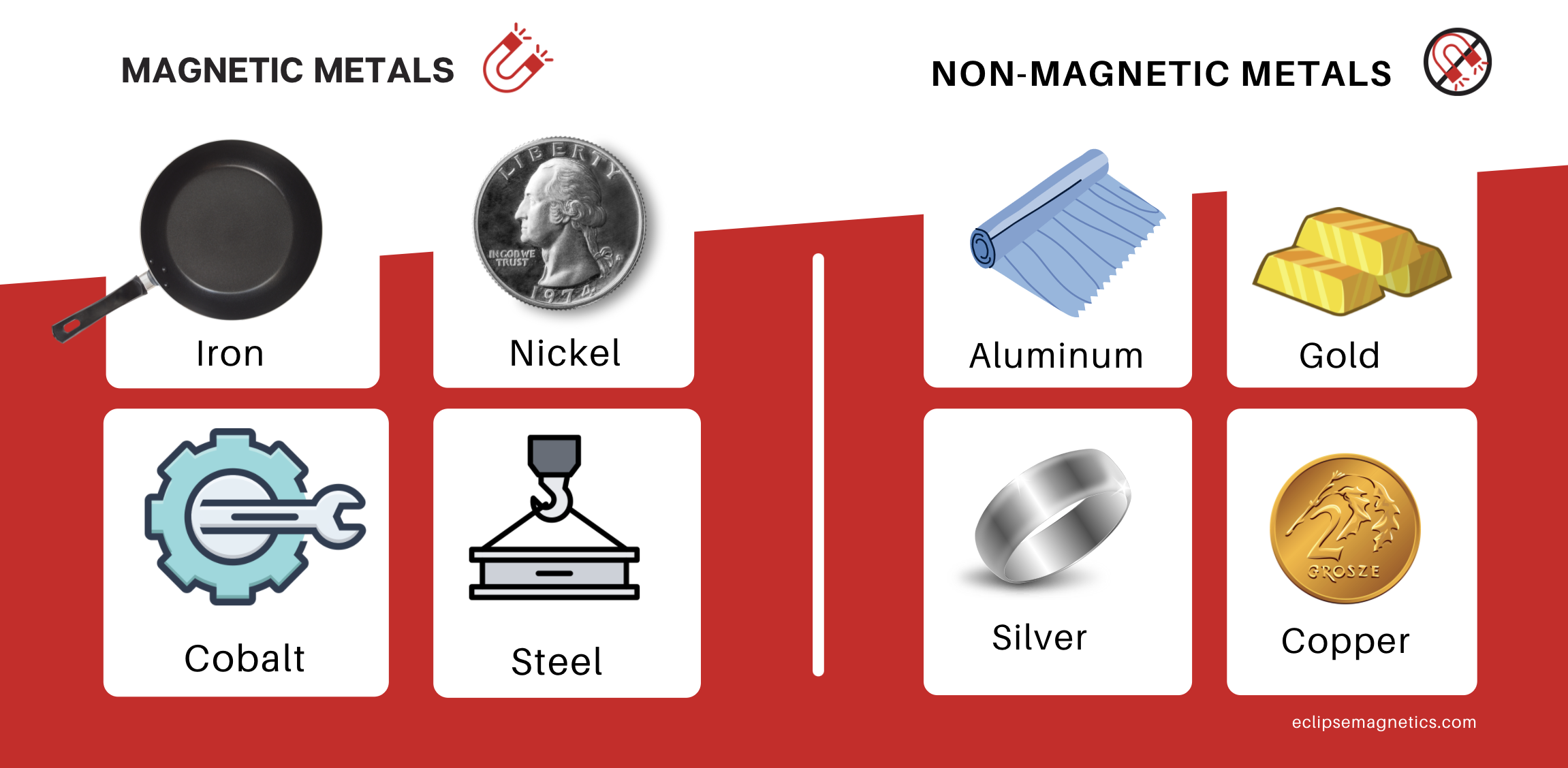
When we talk about magnetic metals, we’re referring to materials that can be magnetized, meaning they can either attract or repel other magnetic materials. This isn’t just some abstract scientific concept; it’s woven into the fabric of our daily lives, from the simplest kitchen hack to the most advanced technology. And at the heart of this magnetic marvel are three particular elements, each with its own unique personality and superpowers.
These aren't just any old metals; they possess a special quality known as ferromagnetism. This fancy term basically means they can become strongly magnetized when exposed to an external magnetic field, and even more importantly, they can retain that magnetism once the field is removed. Think of them as the true, dedicated magnets in the room, not the ones who only show up when it’s convenient.
Iron: The OG Magnet
First up, we have the undisputed king, the OG of magnetism: iron. This is the metal that probably comes to mind first for most people, and for good reason. Iron is the foundational element of so much of our magnetic world. It’s abundant, relatively inexpensive, and incredibly versatile.
In its pure form, iron is pretty darn magnetic. But when it’s alloyed with other elements, like carbon to create steel, its magnetic properties can be enhanced or modified. This is where things get really interesting. The steel in your trusty kitchen knives, the rebar holding up your building, and even the chassis of your car – they all owe a part of their strength and functionality to iron and its magnetic potential.
Fun Fact: Did you know that the Earth’s core is largely made of iron and nickel? That molten iron core is what generates our planet’s magnetic field, shielding us from harmful solar radiation. So, the very ground beneath our feet is a giant, albeit rather hot, magnet!
Culturally, iron has a rich history. It’s been a cornerstone of human civilization for millennia, from the Bronze Age to the Iron Age. Its strength and durability made tools and weapons possible, fundamentally changing how humans interacted with their environment. It's no wonder it's also a key player in the magnetic realm.
Practical Tip: Ever use a magnetic screwdriver to help you with a tricky screw? That’s iron (or steel) at work! It’s a simple yet brilliant application of iron’s magnetic nature. Keep a few magnetized tools handy; they can be a lifesaver for small DIY projects or just tidying up.

Iron is also a vital nutrient for our bodies, found in foods like spinach and red meat. While this isn't directly related to its magnetic properties, it’s a reminder of how pervasive and important this element is in our lives, in both the tangible and the microscopic.
Nickel: The Smooth Operator
Next in our magnetic lineup is nickel. While perhaps not as universally recognized for its magnetism as iron, nickel is a crucial component in many magnetic alloys. It's like the sophisticated cousin in the magnetic family, often working behind the scenes to enhance performance.
Nickel is a silvery-white metal that’s known for its resistance to corrosion, which makes it a popular choice for plating and in the production of stainless steel. But it’s its magnetic properties that make it a star in our discussion. Nickel is ferromagnetic at room temperature, meaning it exhibits strong magnetic effects.
It’s often combined with iron and cobalt in alloys like Alnico (aluminum, nickel, cobalt, and iron), which are known for their powerful permanent magnets. These magnets are used in a wide array of applications, from electric motors and generators to loudspeakers and even in magnetic resonance imaging (MRI) machines. Yes, that complex piece of medical technology owes a debt to nickel!
Fun Fact: The shiny coating on many coins, like the US nickel, is actually a copper-nickel alloy. While not all coins are strongly magnetic, the nickel content contributes to their durability and resistance to tarnish. So, next time you’re jingling your change, you might be holding a little piece of magnetic history!
Nickel’s role in industry is immense. It’s a key ingredient in batteries, high-temperature alloys, and catalysts. But its magnetic contribution is particularly noteworthy. Without nickel, many of the powerful magnets we rely on simply wouldn’t be as effective.

Practical Tip: Looking to upgrade your home entertainment system? The quality of the magnets in your speakers can significantly impact sound. Many high-fidelity speakers use alloys containing nickel for their superior magnetic performance, delivering clearer and richer audio. It's a subtle detail that makes a big difference.
Nickel is also an essential trace element in some biological processes, although its direct magnetic relevance in living organisms is less pronounced than in industrial applications.
Cobalt: The High-Performer
Finally, we arrive at cobalt, the powerhouse of our magnetic trio. Cobalt is a hard, lustrous, silvery-gray metal that’s a bit of a superstar when it comes to magnetism. It’s known for its ability to create very strong and durable permanent magnets.
Cobalt is often alloyed with iron and nickel to produce some of the strongest permanent magnets known, such as those made from Alnico and Samarium-Cobalt (SmCo). These magnets are essential in applications where extreme magnetic strength is required. Think about the tiny, powerful magnets in hard drives that store vast amounts of data, or the magnets used in high-performance electric motors for electric vehicles.
Cobalt’s magnetic properties are enhanced at higher temperatures compared to iron and nickel, making it particularly valuable in demanding environments. It’s also highly resistant to corrosion, adding to its longevity and reliability.
Fun Fact: The vibrant blue color used in stained glass and ceramics, known as cobalt blue, comes from cobalt compounds. While this is a chemical property, it highlights cobalt’s versatility beyond just its magnetic prowess. It’s an element that adds color and strength to our world in more ways than one!

Historically, cobalt has been used for centuries to color glass and pottery. Its discovery as a magnetic metal is more recent, but its impact has been profound, particularly in the development of modern technologies. It’s a metal that bridges the gap between ancient artistry and cutting-edge engineering.
Practical Tip: Consider the magnets in your phone or tablet. These devices rely on incredibly small yet powerful magnets, often incorporating cobalt, to enable functions like haptic feedback (that subtle vibration you feel) and the magnetic clasps that keep cases closed. It's a testament to how even the smallest elements can have a huge impact.
Cobalt is also an important element in vitamin B12, essential for nerve function and the formation of red blood cells. Again, a reminder of its multifaceted importance, extending from our technology to our very biology.
Why Do These Metals Matter So Much?
So, why should we, in our pursuit of an easy-going lifestyle, even care about iron, nickel, and cobalt? It’s simple: these magnetic metals are the unsung heroes behind so much of what makes our modern lives convenient and enjoyable. They’re the silent forces that keep things organized, power our devices, and even contribute to our safety.
From the magnets holding your artwork on the fridge (hello, iron!) to the intricate components of your smartphone (think cobalt and nickel in those tiny, powerful magnets), these metals are everywhere. They enable the technology we rely on, the appliances that simplify our chores, and the transportation that gets us from point A to point B.
Think about the simple act of closing a laptop lid. Often, a small magnet, likely containing nickel or cobalt, snaps it shut with satisfying precision. Or the way your credit card reader works – those tiny magnetic stripes are read by a head that utilizes magnetic principles. It’s a constant, subtle interaction with magnetism, powered by these fundamental elements.
Furthermore, understanding these metals can spark a sense of wonder about the natural world and the ingenuity of human innovation. It’s a reminder that even the most complex technologies are built upon fundamental principles and the unique properties of elements found right here on Earth.
A Touch of Magnetic Magic in Daily Life
Let’s bring it back to the everyday. You might not be forging your own magnets or designing electric motors, but you’re interacting with the results of this magnetic magic constantly. Consider the satisfying thunk of a well-placed fridge magnet holding up your child’s latest masterpiece – pure iron’s magnetic charm.
Or perhaps you’ve noticed how some jewelry clasps have a magnetic pull, making them easier to fasten. Many of these employ nickel-containing alloys for that extra bit of convenience. It's those little touches that make life just a little bit smoother.
Even in the kitchen, magnetic spice racks are a brilliant way to save counter space, all thanks to the magnetic properties of iron. They transform chaotic spice cabinets into neat, accessible displays.
And then there are the more advanced applications: the powerful magnets in electric cars that allow for efficient energy conversion, the magnetic levitation (maglev) trains that glide silently above the tracks. These are the awe-inspiring, high-tech applications that showcase the true potential of our magnetic trio.
A Moment of Reflection
As you go about your day, take a moment to appreciate these often-overlooked elements. They’re not just inert substances; they are fundamental building blocks that empower our lives in countless ways. The next time you open a refrigerator door, use a magnetic closure, or even just admire a piece of technology, remember the humble yet powerful forces of iron, nickel, and cobalt. They are the silent conductors of a magnetic symphony that plays out all around us, making our world a more organized, functional, and yes, a little bit more magical place. It’s a quiet reminder that even the most basic elements can hold extraordinary power and contribute to the ease and wonder of our everyday existence.