
What Are The Three Metals That Are Magnetic

Hey there, science curious friends! Ever found yourself playing with those little fridge magnets, wondering why they stick with such a satisfying thwack? Or maybe you’ve seen a cool science experiment with metal objects leaping towards a mysterious rod? Well, get ready, because we’re about to dive into a super fun world – the world of magnetism! And guess what? It all boils down to just a few amazing metals. Yep, you heard me right. Not a whole bunch, just a tiny, select crew. Isn't that neat?
You see, when we talk about metals that are magnetic, we’re usually talking about materials that can become permanently magnetized, or that are strongly attracted to a magnet. It’s like they have a secret superpower, a hidden charm that makes them irresistibly drawn to their magnetic friends. And while there are tons of metals out there, only a handful truly sing the magnetic song. So, let’s get down to business and meet the rockstars of the magnetic metal world!
The Magnifico Trio: Meet Our Magnetic Heroes!
Prepare yourselves for the grand reveal! The three main metals that are famously magnetic are:
1. Iron (Fe): The Unsung Hero of Magnetism!
Ah, iron! This is probably the metal you’ll encounter most often when you think of magnetism. It's everywhere, from the nails in your walls to the steel in your car. And guess what? Pure iron is ferromagnetic, which is the fancy science word for "super, duper magnetic." How cool is that?
Think about it: without iron, many of the magnetic things we rely on simply wouldn't exist. Your compass needle? Probably iron. The powerful electromagnets used in everything from lifting scrap metal to generating electricity? You bet there’s iron involved. It’s like the reliable best friend of the magnetic world – always there, always ready to stick!
Now, you might be thinking, “But wait, what about steel? Steel is magnetic, right?” And you’d be absolutely correct! But here’s the fun little twist: steel is actually an alloy of iron, usually with carbon. So, while pure iron is the star, steel gets its magnetic properties from the iron within it. It’s like a team effort, but iron is definitely the MVP!
The ability of iron to be magnetized is due to its atomic structure. The electrons in iron atoms line up in a particular way, creating tiny magnetic domains. When these domains all point in the same direction, BAM! You’ve got yourself a magnet. It’s like a whole bunch of tiny compasses all agreeing to point north. Isn’t nature just the most brilliant inventor?

And the best part? Iron isn’t just useful; it’s also found in our bodies! Yes, the iron in your blood is crucial for carrying oxygen. While it’s not magnetically significant in that context, it’s a fascinating thought that this magnetic metal plays such a vital role in keeping us alive and kicking. It’s a humble metal with a truly powerful presence in our lives.
2. Nickel (Ni): The Shiny, Magnetic Sidekick!
Next up on our magnetic marquee is nickel! This silvery-white metal might not be as universally recognized for its magnetic prowess as iron, but it’s a key player nonetheless. Nickel is also ferromagnetic, meaning it’s strongly attracted to magnets and can be magnetized itself.
You’ll often find nickel mixed with other metals to create alloys. For example, the coins in your pocket might contain nickel. While not all coins are strongly magnetic, some denominations, especially older ones or those made with specific alloys, can show a definite magnetic attraction. Isn’t it fun to rummage through your change and test them out? You might discover a hidden magnet!
Nickel plays a crucial role in many industrial applications where magnetism is key. It’s often used in alloys like stainless steel to improve its properties, including its magnetic behavior. Think about those powerful speakers or the motors in your appliances – nickel alloys are often working behind the scenes, making them function beautifully. It’s like the supporting actor who steals the show with their subtle brilliance.
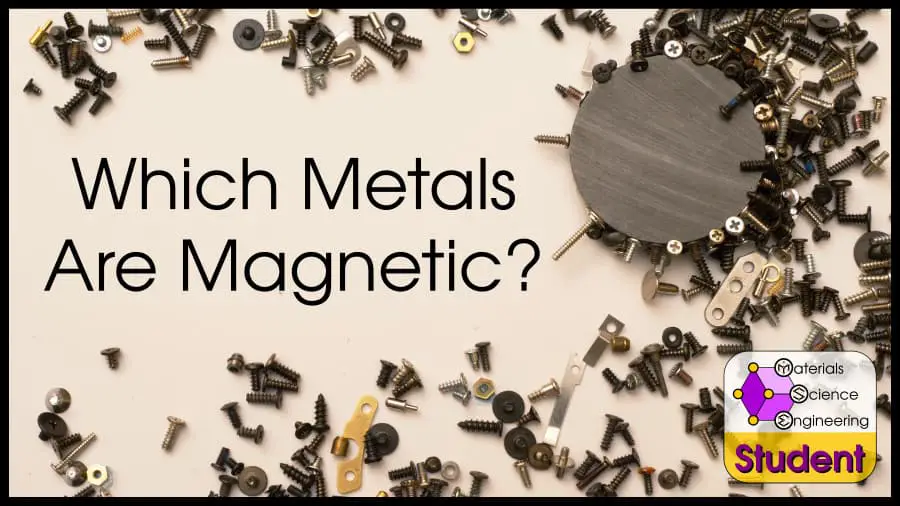
The way nickel’s electrons align is very similar to iron, giving it that characteristic ferromagnetic nature. It’s this property that makes it so valuable in technologies that require magnetic components. So, the next time you see a shiny metal object that sticks to a magnet, there’s a good chance nickel is part of the team!
And here’s a fun fact for you: the Earth’s core is thought to be primarily made of iron and nickel! This giant metallic ball is responsible for generating our planet’s magnetic field, which protects us from harmful solar radiation. So, in a way, nickel is helping to keep us all safe, just by being itself and chilling at the center of our world. How’s that for a cosmic contribution?
3. Cobalt (Co): The Strong, Magnetic Performer!
Finally, let’s give a huge round of applause for cobalt! This hard, lustrous, silvery-blue metal is the third member of our magnetic trio, and it’s a real powerhouse. Cobalt is also ferromagnetic, and it’s known for its ability to create very strong magnets, especially when alloyed with other metals like iron and nickel.
Cobalt is often used in the production of high-strength permanent magnets, like those found in loudspeakers, electric motors, and magnetic storage devices. It’s a metal that really means business when it comes to magnetism. If you need serious magnetic power, cobalt is often the go-to ingredient!

Why is cobalt so special? Its electron configuration allows for the formation of strong magnetic moments, and when combined with other ferromagnetic materials, it can create some of the most powerful magnets known. It’s like the super-hero cousin of iron and nickel, bringing extra punch to the magnetic party.
Cobalt also has a high magnetic coercivity, which means that once it’s magnetized, it stays magnetized really well. This is super important for applications where you need a magnet to maintain its strength over time. Think about the magnets on your fridge that have been there for years, still holding up your kids’ artwork!
Beyond its magnetic talents, cobalt is also a vital component in rechargeable batteries, which power so many of our modern gadgets. It’s another example of a metal that, while perhaps not always in the spotlight, is absolutely essential to the way we live. Cobalt is proof that sometimes, the most impressive feats are achieved by those who consistently perform at a high level.
Why Does This Even Matter? Fun Magnetism Adventures Await!
So, you know the three magnetic metals: iron, nickel, and cobalt. But why is it fun to know this? Because it unlocks a world of curiosity and exploration! Suddenly, everyday objects become potential science experiments.
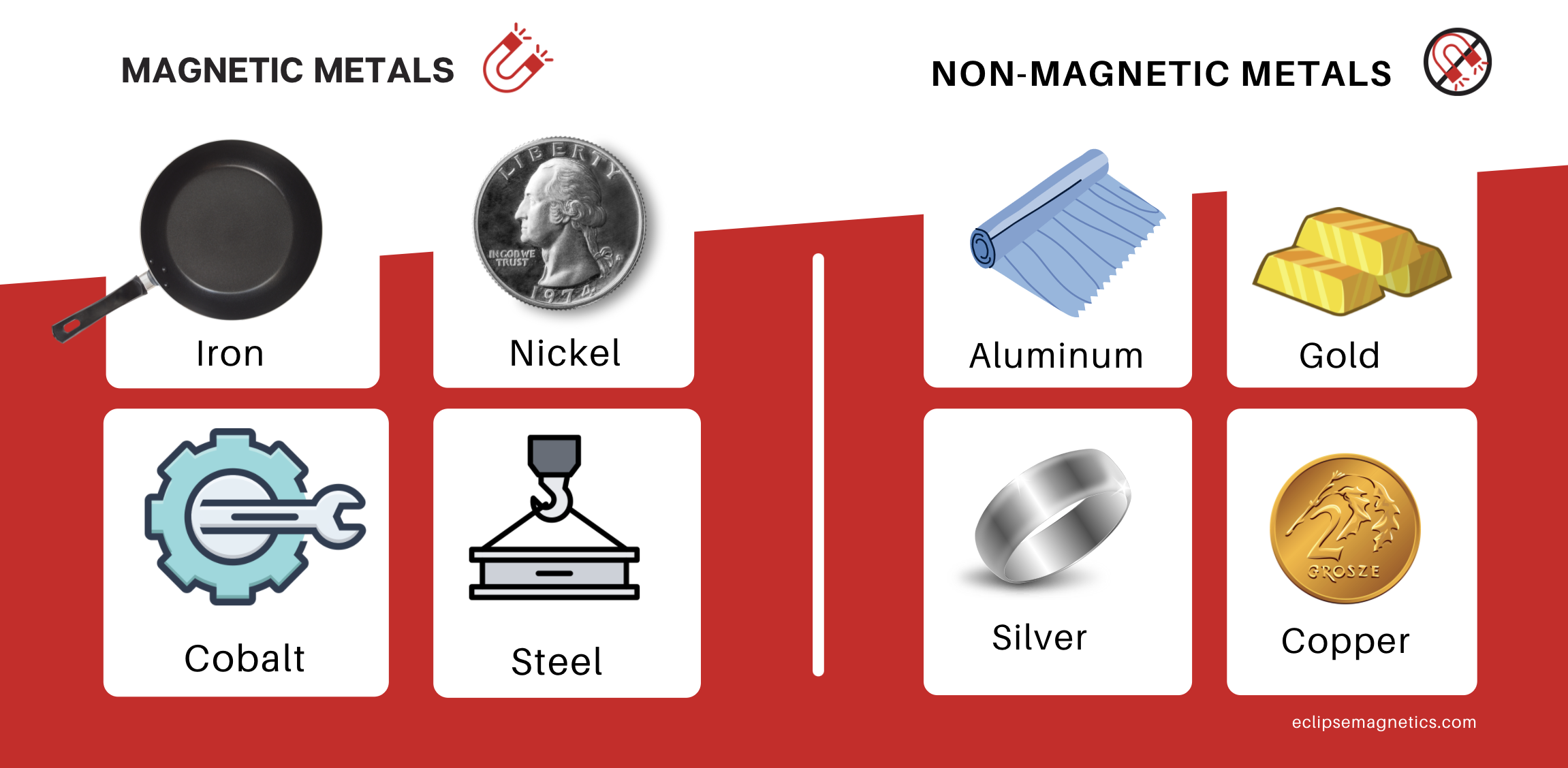
Grab a magnet and start testing things around your house! See if that old kitchen utensil is magnetic. Does that metal toy stick? You might be surprised by what you discover. You can even create your own simple magnetic games. Imagine a treasure hunt where the "treasure" is a magnetic object hidden under a blanket, and the only tool you have is a magnet!
Understanding these three metals also helps you appreciate the incredible technology that surrounds us. From the intricate workings of your smartphone to the powerful engines that move trains, magnetism, powered by these elements, is fundamental. It’s like having a secret decoder ring for the modern world.
And the best part? This is just the tip of the iceberg! Learning about magnetism can lead you down a rabbit hole of amazing scientific discoveries. You can explore electromagnets, magnetic fields, and how these principles are used in everything from medicine to space exploration.
So, the next time you feel that satisfying pull of a magnet, remember iron, nickel, and cobalt. They’re the quiet heroes making our world a more fascinating and functional place. Keep exploring, keep asking questions, and never stop being amazed by the wonders of science. Who knows what magnetic marvels you’ll uncover next? The universe is full of them, just waiting for you to find them!