
What Can A Square Be Classified As

Let's talk about squares. Yes, those familiar, perfectly balanced shapes we see everywhere. They're so common, so… square. But what if I told you that a humble square is actually a bit of a shape-shifter, a master of disguise in the world of geometry? It's like finding out your friendly neighborhood baker is also a secret spy, just cooler and with more straight edges.
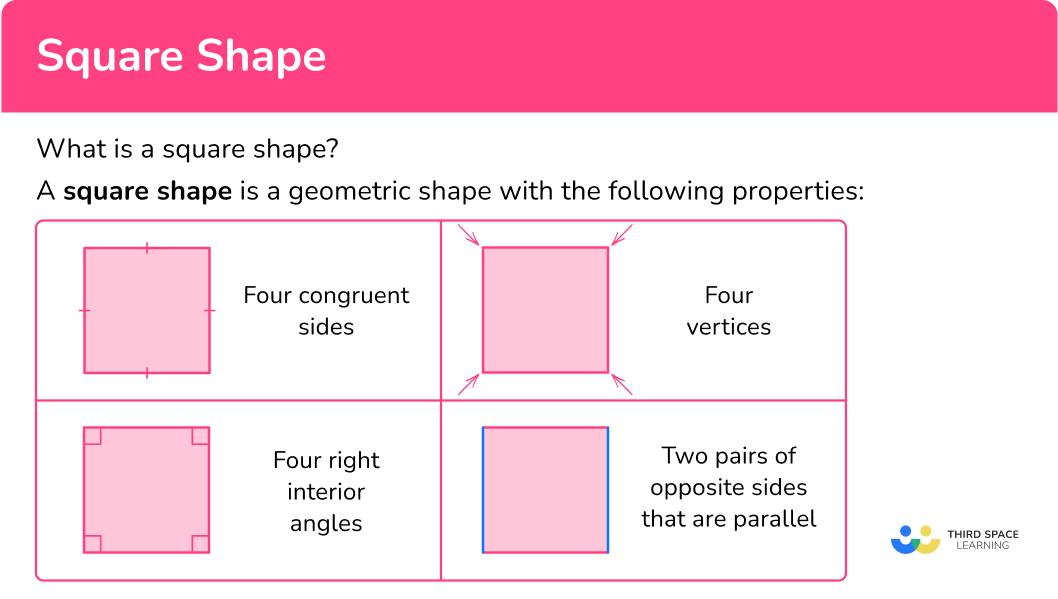
Think about it. When you first learned about shapes, you probably met the square as its own special thing. It had four equal sides and four perfect right angles. It was the star of the show, the definition of "equal and balanced."
A Square's Many Hats
But as you delve a little deeper, you realize the square isn't just a one-trick pony. It’s more like a versatile performer, able to step into different roles with surprising ease. It's the chameleon of shapes, blending in and standing out all at once.
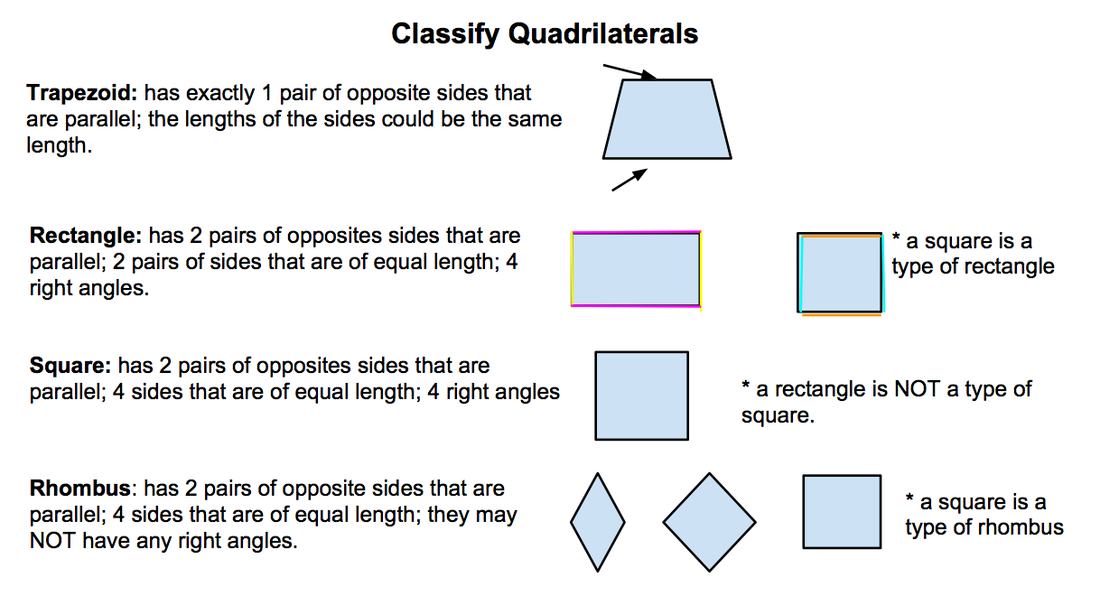
First off, is a square a rectangle? Absolutely! A rectangle is defined as a four-sided shape with four right angles. Now, does a square fit that description? You bet it does.
So, every single square is also a rectangle. But not every rectangle is a square. This is where it gets fun! It's like saying every poodle is a dog, but not every dog is a poodle. The square is the super-specialized, perfectly proportioned version of the rectangle.
Imagine a rectangle as a broad category, like "fruit." Then, a square is like a specific, extra-sweet apple within that category. All apples are fruit, but not all fruit are apples.
This means when you see a perfectly square window, you can confidently say, "Look at that rectangle!" It’s technically correct, and a little bit of a secret wink to anyone who knows the geometric truth.
But wait, there’s more! Is a square a parallelogram? Let’s break it down. A parallelogram is a four-sided shape where opposite sides are parallel.
Think about a square. Its top side is parallel to its bottom side, and its left side is parallel to its right side. Yep, check and check. So, a square definitely qualifies as a parallelogram.
This is starting to feel like a game of nested Russian dolls, isn't it? Each shape is a tiny bit bigger and more general, and the square is nestled perfectly inside. It’s a humble shape, but it’s a member of some pretty impressive geometric clubs.
And what about a rhombus? A rhombus is a four-sided shape where all four sides are equal in length. Does a square fit that? It certainly does.

So, a square is also a rhombus. This is where things get really interesting because a rhombus doesn't necessarily have right angles. It can be a bit skewed, like a diamond on its side. But when those angles decide to be perfect 90-degree wonders, poof! You've got a square.
This is the magic: a square is the perfect intersection of a rectangle and a rhombus. It has all the properties of both. It's like the shape equivalent of a perfectly balanced meal – you get all the good stuff from two different cuisines.
The Ultimate Shapeshifter
So, to recap, a square is:

- A Square (obviously!)
- A Rectangle
- A Parallelogram
- A Rhombus
Isn't that wild? Every time you see a square, you're looking at a shape that could also be called by three other names, depending on the context or who you're talking to. It's like a superhero with multiple secret identities.
Think about a chessboard. Each square on that board is not just a square; it's a rectangle, a parallelogram, and a rhombus, all rolled into one! That's a lot of classification for such a simple-looking piece of the board.
This also means that a square is a type of quadrilateral. A quadrilateral is simply any four-sided polygon. And since our square has four sides, it's a proud member of this very large and inclusive family.
The world of shapes is a bit like a family reunion. You have the big, sprawling family of quadrilaterals, and within that, you have smaller, more specific branches like parallelograms and rectangles. The square is like the perfectly polite and well-behaved cousin who fits in everywhere.
Even more broadly, a square is a polygon. A polygon is any closed shape made up of straight line segments. So, even the simplest square is part of this fundamental building block of geometry.
The beauty of this is that it doesn't diminish the square. It doesn't make it less special. Instead, it highlights its incredible properties. A square is so perfectly balanced, so consistently proportioned, that it meets the criteria for all these other, more general shapes.
It’s like a perfectly crafted piece of furniture. It's a chair, sure, but it's also a piece of woodwork, a functional object, and a part of your home decor. The more ways you can describe it, the more you appreciate its design.
So, the next time you encounter a square, whether it's on a dice, a Lego brick, or a slice of cheese, give it a little nod of appreciation. It's not just a square; it's a shape with a rich and surprising geometric lineage. It’s a rectangle with perfect manners, a parallelogram that always stands up straight, and a rhombus that decided to be extra tidy.
It’s a testament to how simple forms can embody complex mathematical ideas. The square is the everyday hero of geometry, a shape that quietly proves it's more than it appears, much like the people we meet who surprise us with their hidden depths and talents. It's a little piece of perfection, and that perfection allows it to be so many things at once.