
What Do The Alkali Metals All Have In Common

So, picture this: you're a mad scientist, right? Well, maybe not mad, but definitely someone with a penchant for dramatic experiments and a flair for the theatrical. You've got this pristine, silvery chunk of something, and you're about to do something… well, exciting. You cautiously drop it into a beaker of water. And BAM! It erupts. Not with a gentle fizz, but a full-blown, fiery explosion, sending sparks flying and maybe even a little bit of smoke. You might be tempted to think you've stumbled upon some alien artifact, or a secret ingredient from a cartoon villain's lair. But nope, you've just met one of the alkali metals. And trust me, they all have a very similar personality.
It's kind of like knowing your siblings, isn't it? You might have one who’s the life of the party, another who’s always reading in a corner, and a third who’s constantly getting into trouble. But deep down, there are certain things that just make them your sibling. They share your family history, maybe have a similar glint in their eye, or that uncanny ability to finish your sentences. Alkali metals? They're totally like that, but on a much more… explosive level.
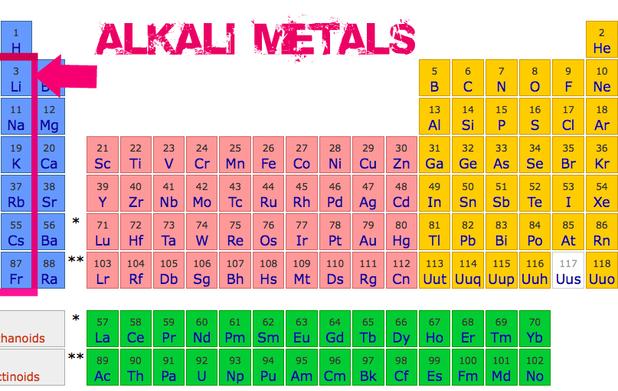
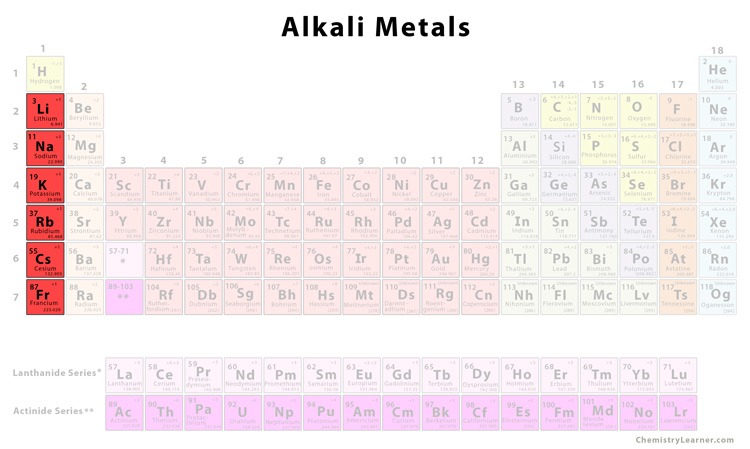
These guys are a whole special little club on the periodic table, chilling out in Group 1, right there at the very edge. And when I say "chilling," I mean that very loosely, because they’re anything but cool and collected when they get a whiff of water. So, what is it that binds this fiery family together? What are their shared secrets, their common traits that make them, well, alkali?
The Silvery Bunch: A Shared Aesthetic
First off, let's talk about looks. If you were to lay out a pristine sample of each alkali metal (and again, please, for the love of all that is holy, don't do this without proper safety gear – I'm not responsible for any singed eyebrows!), you'd notice a striking similarity. They’re all what we call lustrous, meaning they have that beautiful, shiny, metallic sheen. Think of polished silver, but maybe a little less… permanent. These metals are so soft that you can actually cut them with a knife. Yep, a regular kitchen knife. Imagine telling your friends you’ve got metal so soft you can slice it! They’d probably think you’re nuts, but it’s true!
This softness is a direct result of their atomic structure, which we’ll get to in a bit. But for now, just appreciate their understated elegance. They're not flashy like gold or brightly colored like copper. They're more like the quiet, sophisticated members of the metal family. They don't need to shout about their presence; their shine speaks for itself.
However, this beautiful silvery appearance comes with a catch. These metals are highly reactive. That sheen you admire? It starts to fade pretty quickly when exposed to air. Oxygen is their nemesis, and it loves to tarnish them, turning that lovely silver into a duller, often darker, oxide layer. So, that pristine look is a fleeting moment, a testament to their eagerness to interact with the world around them. A bit like that perfect selfie you take that’s already ruined by a smudgy fingerprint. Annoying, right?
The Reactivity Rampage: Water's Worst Nightmare
Now, we get to the juicy part, the stuff of mad scientist dreams and chemistry class legends: their extreme reactivity. This is arguably their defining characteristic. These aren't metals you'd want to use for, say, your cutlery. Unless you enjoy your spoons exploding. And while they do react with air, their most dramatic performances happen with water.
Let’s break down what’s happening. When an alkali metal comes into contact with water, it undergoes a chemical reaction. This reaction produces hydrogen gas and a hydroxide compound. The word "produces" is a bit of an understatement, though. It *erupts. The reaction is so exothermic – meaning it releases a ton of heat – that it can ignite the hydrogen gas that's being produced. And that, my friends, is where the flames and the explosions come in.
The intensity of this reaction increases as you go down the alkali metal group. Lithium, the lightest of the bunch, will fizz and maybe melt the ice it's placed on. Sodium? That’s your classic boom. Potassium is even more enthusiastic, often setting fire to itself. And then you get to rubidium and cesium, which are basically just begging for a fiery water baptism. Seriously, cesium will explode with such ferocity that it can shatter the container. It’s like the universe’s way of saying, "You asked for it!"
Why are they so gung-ho about reacting? It all comes down to their electronic structure. Each alkali metal atom has one electron in its outermost shell. Just one! And this electron is, shall we say, a bit of a free spirit. It's not held very tightly by the atom's nucleus. This single, loosely held electron makes it incredibly easy for the alkali metal to lose that electron and form a positive ion.
When an alkali metal meets something it can react with, like water, it readily gives up that outermost electron. This electron then goes on to do its own thing, often causing the explosive chain reaction we talked about. It's like having one extra key that unlocks a whole lot of trouble. And because they're so eager to get rid of that one electron, they're constantly looking for something to react with. They're the ultimate chemical extroverts!

The Softies: Not Built for Toughness
We touched on it with their appearance, but it’s worth reiterating: alkali metals are incredibly soft. So soft, in fact, that they have very low melting points and boiling points compared to most other metals. Think about iron – you need a blast furnace to melt that beast. Alkali metals? A decent Bunsen burner might do the trick for some, and others will melt at surprisingly low temperatures.
This softness is directly related to their atomic structure and the way their atoms bond together. In a typical metal, the atoms are packed tightly, creating strong metallic bonds. These bonds give the metal its strength and rigidity. But in alkali metals, because they so readily want to give away that single outer electron, the bonds between the atoms are weaker. The electrons are busy being shared and transferred, not really holding the metal structure together with a death grip.
Imagine a group of people holding hands. Some have incredibly strong grips, making it hard to break them apart. Alkali metals are like those people with very gentle handshakes. It's easy to get them to let go. This makes them easy to cut, easy to deform, but also… well, not very durable. They're the butter of the metal world, not the steel.
The Low Density Dwellers: Floating and Flotation
Here's another peculiar trait they all share: low density. Compared to most other metals, alkali metals are surprisingly light for their size. This means they can actually float on water. Yes, you heard that right. A chunk of metal, floating on water. It's counterintuitive, isn't it? We usually associate metals with sinking. But these guys? They're the exception to the rule.
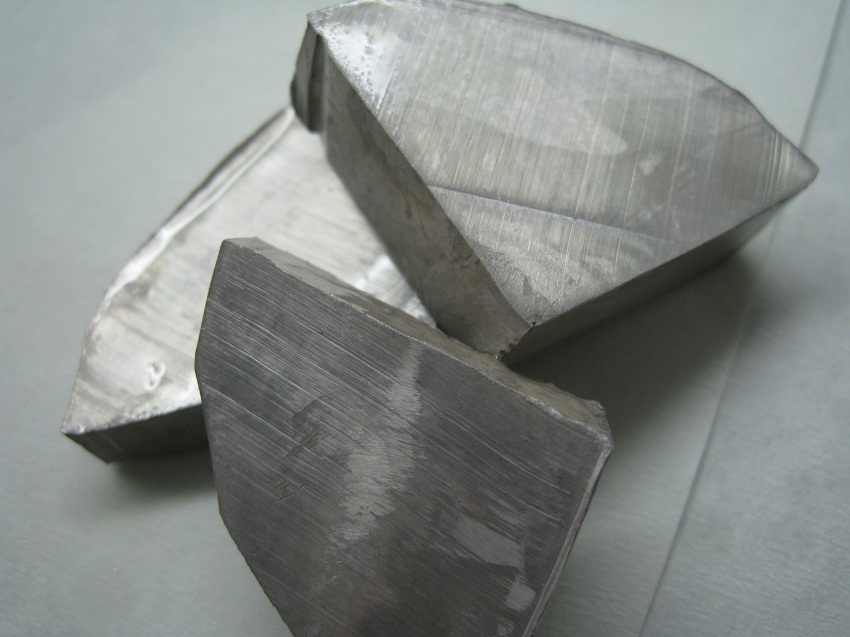
Lithium is the densest of the alkali metals, and even it is less dense than water. Sodium? It definitely floats. And as you go down the group, the density continues to decrease. This is another consequence of their atomic structure. The atoms are larger, and the bonds between them are weaker, meaning there's more empty space within their crystalline structure. Less "stuff" packed into the same volume means less dense.
So, if you ever find yourself in a survival situation and need to make a metal raft out of a silvery, knife-cuttable material that explodes in water, well, you're in a very specific and probably quite dangerous predicament. But the point is, their low density is a shared characteristic that sets them apart from the metal crowd.
The Lone Electron: The Heart of the Matter
We've hinted at it repeatedly, and now it's time to put it center stage. The single electron in their outermost shell is the absolute key to understanding why alkali metals are the way they are. It’s their superpower, their Achilles' heel, their defining feature.
Atoms like to be stable. And for most atoms, stability means having a full outermost electron shell. Think of it as a full set of perfectly matched socks. It's satisfying, it's complete. Alkali metals, with their single, lonely outer electron, are far from this happy state. They have an incomplete outer shell, and it makes them incredibly eager to achieve that full set.
They can achieve this in two main ways: either by gaining seven more electrons (which is a lot of effort) or by losing that one single electron. Losing one electron is much easier. So, they're constantly on the lookout for something to accept their electron. This willingness to donate that electron is what drives their ferocious reactivity with non-metals and even with compounds like water, which contain elements that readily accept electrons (like oxygen and hydrogen).
This one electron is also responsible for their characteristic bright colors when heated in a flame, which is why they’re used in fireworks and flame tests in chemistry labs. Each alkali metal produces a distinct color when burned: lithium glows red, sodium gives off a brilliant yellow, potassium produces a lilac hue, and so on. It's like their way of showing off their individual personalities through a fiery light show, all thanks to that single, influential electron.
The Common Threads: A Family Reunion
So, let's recap. What do lithium, sodium, potassium, rubidium, cesium, and francium (that last one is super rare and radioactive, so you won't be seeing much of it) all have in common?
- Silvery Lustre: They're all shiny metals.
- Extreme Reactivity: Especially with water, leading to dramatic explosions.
- Incredible Softness: Easily cut with a knife.
- Low Density: They float on water.
- The Single Outer Electron: The fundamental reason for all their other behaviors.
It's fascinating how one tiny detail in atomic structure – that solitary electron – can lead to such a consistent set of properties across an entire family of elements. They're the wild, untamed, and brilliantly reactive bunch of the periodic table. While other metals might be content to sit around, being strong and useful for building bridges, the alkali metals are off having explosive adventures. And you know what? There's a certain charm in that, wouldn't you agree?
Next time you hear about a chemical reaction that sounds a bit… energetic, maybe think of the alkali metals. They're the originals, the pioneers of explosive chemistry. Just remember, appreciating them from a safe distance is probably the best approach for all involved!