
What Does Cain Mean In The Bible
Okay, so picture this: I was scrolling through some old family photos the other day, you know, the ones that are slightly faded and smell faintly of attic dust? There was this one of my great-uncle Cecil, looking super grumpy because he’d just been told he couldn’t have a second slice of pie. Honestly, the resemblance to some biblical figures is uncanny sometimes. It got me thinking about those ancient stories, the ones we hear in church or Sunday school, and the names associated with them. Like, have you ever stopped and wondered, what does “Cain” even mean in the Bible? It’s not exactly a name that conjures up images of sunshine and rainbows, is it? More like… shadows.
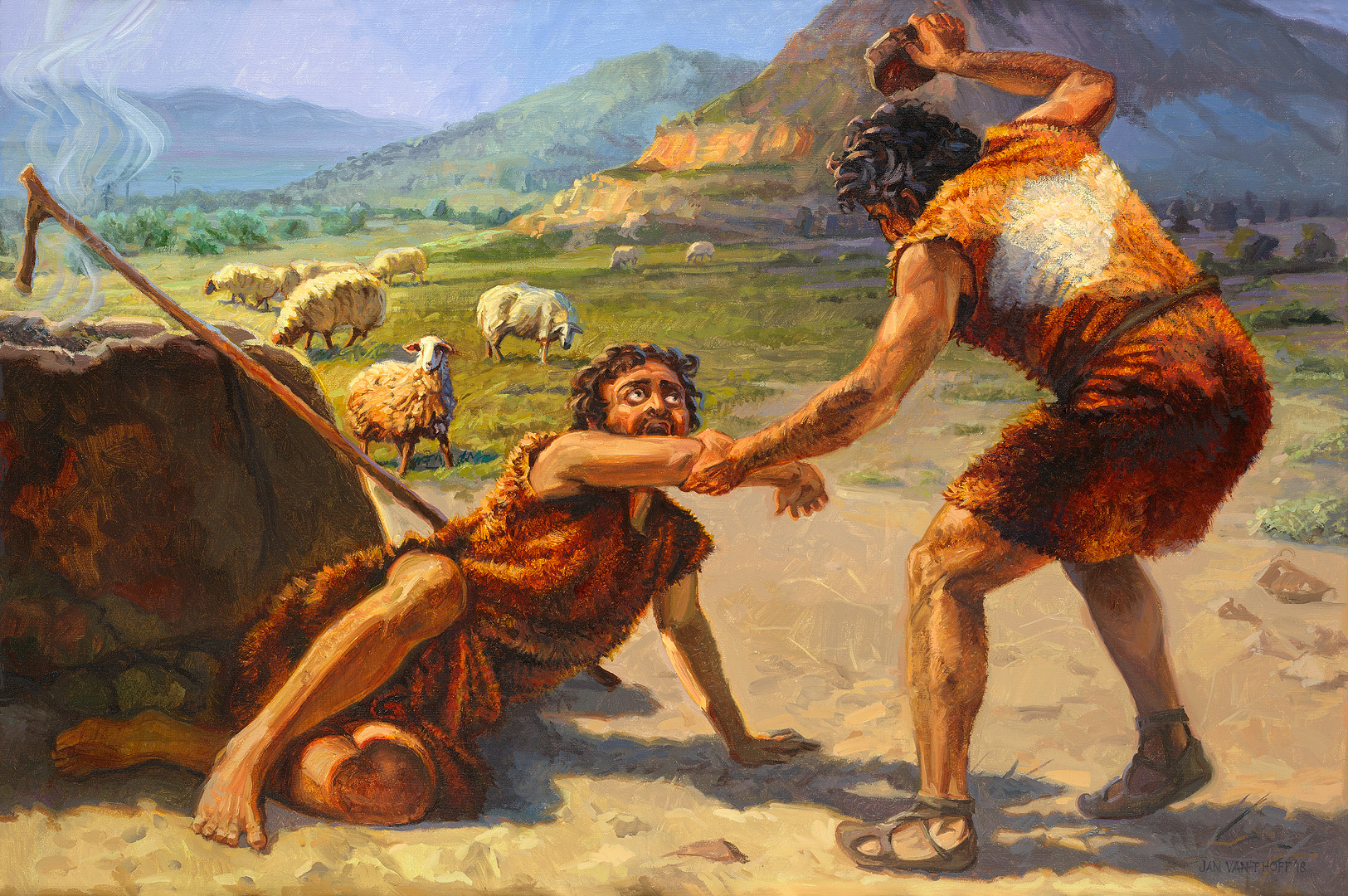
Because, let’s be real, Cain isn’t exactly the hero of Genesis. He’s the guy who commits the first murder. The OG bad guy, if you will. He kills his brother, Abel. Talk about a family feud gone way off the rails. It’s a story that’s pretty stark, pretty brutal, and it sets a dark tone right from the get-go of human history. So, when you hear that name, Cain, it’s almost automatically linked with that act of violence, that primal betrayal. It’s like the name itself carries a weight, a kind of biblical stigma.
The Name Game: More Than Just a Label
You see, in ancient cultures, names weren't just random sounds we assigned to people. They often had significant meanings, reflecting hopes, expectations, or even prophecies about the person. Think about it: in many cultures, even today, parents choose names for their children that they believe will bring them good fortune or embody certain virtues. So, it’s highly probable that the name Cain was given to Adam and Eve’s firstborn son for a reason. And if that reason had anything to do with what followed, well, that’s where things get… interesting.
When we look at the original Hebrew, the name “Cain” comes from the verb qanah (קָנָה). Now, this is where it gets a little nuanced, and frankly, a bit of a linguistic puzzle. The most common and widely accepted interpretation is that qanah means “to acquire,” “to get,” or “to possess.” So, the idea is that Eve, upon giving birth to her first son, felt a sense of acquisition. She had acquired a child, a continuation of humanity, a son from the Lord. Pretty straightforward, right? Except…
There’s this subtle irony that hangs over this meaning, isn’t there? She acquired a son, and what did that son do? He ended up losing everything, and causing his brother to lose everything too. He acquired a life, only to tragically extinguish another. It’s like a cosmic punchline, a dark, prophetic twist of fate. It’s the kind of thing that makes you ponder the nature of free will versus destiny, a debate that’s been going on for millennia, and will probably continue until the end of time. Or, you know, until the next season of whatever show you’re binge-watching.
The Other Side of the Coin: A Different Sound
But here’s where the linguistic detectives among us get a little more excited. There's another, though less common, interpretation of qanah. Some scholars suggest it can also relate to the sound of “acquire” or “create,” but also has a connection to the verb qayin (קַיִן), which sounds remarkably similar. And what does qayin mean? Well, this is where the ironies really start to pile up. Qayin is often translated as “spear,” “smith,” or “worker.”

Now, this might seem like a minor detail, a linguistic quibble. But stick with me, because this is where the story starts to feel even more… deliberate. If Cain’s name is linked to a “smith” or “worker,” it’s a fascinating contrast to his brother Abel, whose name is generally thought to mean “breath” or “vapor” – something fleeting, insubstantial. Abel, the shepherd, with his gentle offering of the firstborn of his flock. Cain, the farmer, with his produce. And if his name hints at being a smith, a craftsman… well, that’s a pretty significant leap from tending crops.
It suggests a certain kind of ambition, a desire to shape and mold, perhaps even to forge something. And what did Cain ultimately forge? A weapon, arguably, in the form of the rage and hatred that led him to kill Abel. Or, in a more literal sense, he forged the first murder weapon, or at least, he was the instigator of the first violent act that would forever scar humanity. The irony, again, is just… chef’s kiss.
The Prophetic Sting of the Name
So, you have these two potential meanings, both laced with a profound, almost unsettling irony. On one hand, “acquisition,” the joy of gaining something precious. On the other, “smith” or “spear,” hinting at creation, at force, at the potential for destruction. It’s as if the very name of Cain was a premonition, a subtle hint from the divine narrative about the tragic trajectory his life would take.

Think about the context. Adam and Eve have just been expelled from the Garden of Eden. They are facing hardship, toil, and the knowledge of sin. Cain is their firstborn in this new, fallen world. Perhaps Eve, in her weary state, clung to the idea of acquisition, of having something good, something to hold onto, to compensate for what they had lost. She acquired a son, a symbol of hope in a bleak new reality.
But the narrative of Genesis doesn't shy away from the darker aspects of human nature. And Cain’s story is a stark reminder that even the most precious gifts can be marred by our choices, our flaws, our… well, our Cain-like tendencies. You know, those moments when you get a little too possessive, a little too jealous, a little too angry about… well, anything really. We’ve all had those moments, admit it. Maybe not to the point of fratricide, but the underlying emotions? Yeah, those are pretty universal.
Beyond the Literal: The Symbolism of Cain
When we move beyond the etymology, the symbolic weight of Cain’s name and his story becomes even more significant. Cain represents a fundamental turning point in the human story. He’s the embodiment of sin’s insidious spread, the way it can corrupt even the closest relationships. The murder of Abel isn't just a personal tragedy; it’s a rupture in the very fabric of human society, a demonstration of how quickly love and brotherhood can devolve into hatred and violence.

And the curse that God places on Cain afterward? It’s another layer of meaning. God marks Cain so that no one will kill him. This is often interpreted as a sign of God’s continued, albeit complex, relationship with humanity. Even after such a horrific act, there’s a measure of divine protection. But Cain is also to be a “fugitive and a wanderer on the earth.” He is ostracized, separated from the community, a living testament to the consequences of his actions.
This wandering motif is powerful. It speaks to a sense of alienation, of being cut off from one’s roots, from belonging. It’s the feeling of being an outsider, even when you’re surrounded by people. And in a way, isn’t that a feeling many people grapple with? The search for meaning, for connection, for a place to call home? Cain’s curse becomes a metaphor for a deeper, existential longing.
The Echoes of Cain in Us All
So, what does Cain mean in the Bible? It means “acquired,” and perhaps, “smith” or “spear.” But more profoundly, it means the first act of fratricide, the first murder, the primal sin that stained humanity. It means jealousy, rage, and the tragic consequences of unchecked anger. It means alienation, the burden of guilt, and the lifelong consequences of our choices.
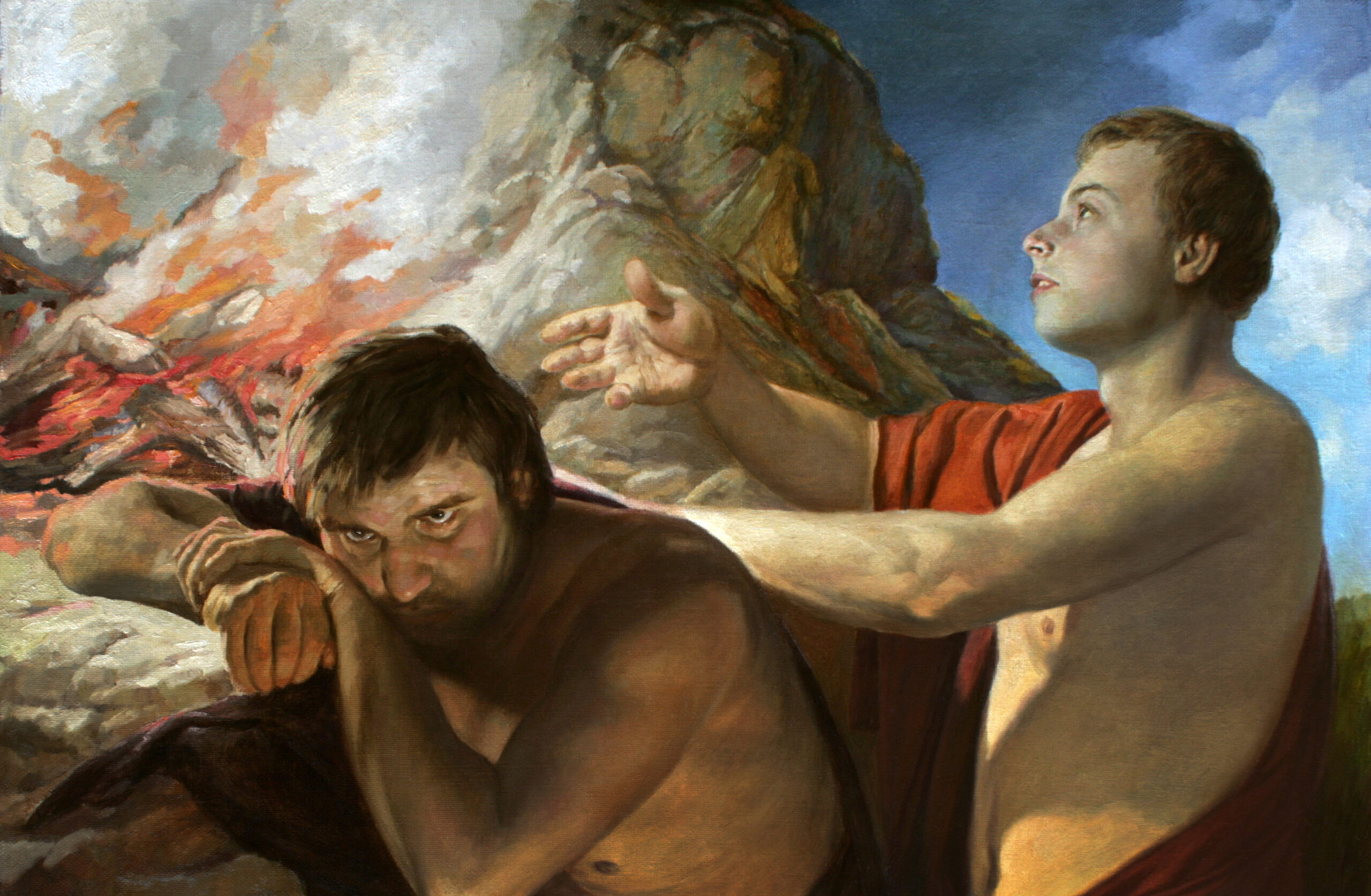
It’s not a pleasant meaning, by any stretch of the imagination. But it’s an incredibly important one. The story of Cain forces us to confront the darker aspects of human nature, both within ourselves and in the world around us. It’s a reminder that the capacity for great good and great evil resides within us all. And the choices we make, the way we treat our brothers and sisters (literally or figuratively), have profound and lasting implications.
When you read that name, Cain, think about that original meaning of acquisition. Think about how something so seemingly positive could be so deeply intertwined with such darkness. It’s a testament to the complex, often paradoxical nature of life itself. And maybe, just maybe, by understanding the meaning and the weight of that name, we can be a little more mindful of the choices we make, and the impact they have. You know, try to be a little less like Cain and a little more… well, a little more Abel. Or at least, not a murderer. That seems like a good starting point, right?
It's a story that’s stayed with us for thousands of years, and for good reason. It’s a foundational narrative that speaks to the core of what it means to be human, with all our potential for both love and destruction. And that, my friends, is a pretty powerful meaning for a single name.