
What Does Knob And Tube Wiring Look Like
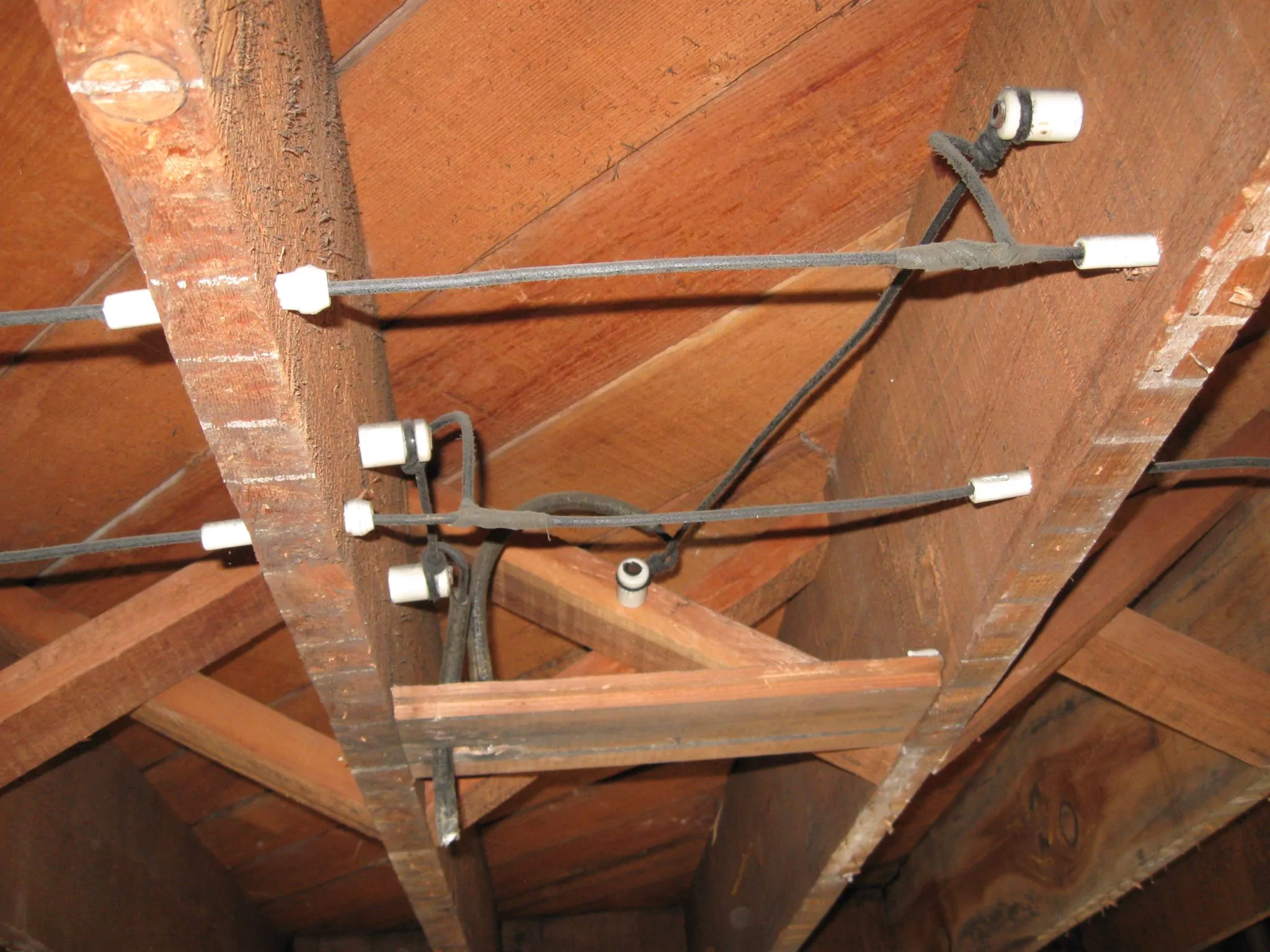
Ever been in an older house and spotted some seriously old-school wiring? Like, really old-school? You know the stuff I’m talking about. It’s not the sleek, modern cables we see today. Nope. It’s way more… interesting.
We’re diving into the wonderful world of Knob and Tube wiring. And trust me, it’s got more character than your grandma’s favorite armchair. Plus, it’s a total blast from the past!
What Exactly IS Knob and Tube Wiring?
Okay, so imagine this. It’s the late 1800s, early 1900s. Electricity is the new hotness. Like the internet of its day, but way more prone to sparks and maybe a dramatic puff of smoke. Homes were getting wired up, but they needed a system. And that system was Knob and Tube.
It’s called Knob and Tube because, well, that’s what it is! Think ceramic knobs and ceramic tubes.
These weren't just random bits of pottery. Oh no. They were the unsung heroes of early electrical safety. Or, at least, the best they had back then!
The Knobs: Your Friendly Neighborhood Supporters
So, what do these knobs do? They’re basically little ceramic buddies holding up the wires. Imagine a tiny porcelain mushroom sprouting from your joists or walls. That’s a knob!
The wires – usually a single conductor, not the pair we’re used to – run over the top of these knobs. They keep the wires spaced out and prevent them from touching anything they shouldn’t. Super important stuff, really.
And these knobs? They’re usually pretty sturdy. Porcelain is a tough cookie. They’ve seen a lot of years, a lot of light bulbs being flicked on and off. They’re survivors!
The Tubes: The Wire's Cozy Passage
Now for the tubes. These are hollow ceramic sleeves. They’re used where a wire needs to pass through a wooden stud or joist. Think of it as a tiny, fireproof tunnel for your electrical highway.

The wire goes through the tube. This stops the wire from rubbing against the wood. Again, preventing friction. And preventing potential fire hazards. Safety first, even back then!
These tubes are usually a bit longer than the knobs are tall. They’re designed to give the wire a nice, protected passage. It’s like giving your electricity a VIP escort through the house’s wooden infrastructure.
So, What Does it ACTUALLY Look Like?
This is where the fun really begins! Forget neat bundles of plastic-coated wires. Knob and tube is… messier. More organic. Almost like a nervous spider web made of porcelain and fabric-covered wire.
You’ll see single wires. Not two or three bundled together. Just one wire. And it’s usually covered in some kind of fabric insulation. Think old-school braided cloth. Sometimes it’s rubber underneath, sometimes just the fabric. It’s got a wonderfully vintage feel to it.
These wires snake around. They’re held up by those ceramic knobs, often spaced quite far apart. Then, where they need to go through wood, they disappear into those little ceramic tubes.
It’s often found in attics and basements. The places where renovations often haven’t touched. The forgotten corners. It’s like uncovering an archaeological dig of your home’s electrical past.

Sometimes, you’ll see the fabric insulation has frayed or worn away. That's when things get a little more… exciting. Or, you know, concerning. But we’ll get to that later. For now, let’s admire the sheer, unadulterated vintage charm!
A Quick Note on the "Knob" Itself
The “knob” isn't always a mushroom shape. Sometimes it's a flat porcelain spool, or a "cleat." But the principle is the same: a non-conductive piece to guide and support the wire.
The "tube" can also vary. Sometimes it's a longer, straighter piece. Other times, it’s a slightly curved or bent piece to navigate around obstacles. These electricians were clearly resourceful!
Why Is This Stuff So Fascinating?
Honestly? It's the sheer age of it. It’s a direct link to a different era of home building and technology. It’s like finding a horse-drawn carriage in your garage.
Plus, it’s just visually distinct. It doesn’t blend in. It stands out. It screams, “I’m old! And I’m still working (mostly)!”
Think about it: people trusted these little ceramic bits to safely deliver power. No fancy plastic sheathing, no ground wires (usually). Just a wire, some porcelain, and a whole lot of hope.

The Quirky Details
Here's a fun tidbit: they often used rubber-sheathed cloth insulation. This was considered pretty advanced at the time! But that rubber? It degrades over time. Turns brittle. And then… uh oh.
Also, remember how I said single wires? That’s because they often used a two-wire system where the second wire was just… the wall itself! Or a metal pipe. The return path was essentially grounded through the building’s structure. Wild, right?
This wasn't ideal. It could lead to some interesting electrical behaviors. Like things getting unexpectedly energized. Fun times!
Is It Dangerous? (The Not-So-Fun Part, But Still Interesting!)
Okay, let’s be real for a sec. While Knob and Tube wiring is historically cool, it can be a safety concern in modern homes. Why?
Degrading Insulation: That fabric insulation? It gets old. It frays. It cracks. This exposes the live wire. Big no-no.
Lack of Grounding: Most Knob and Tube systems don’t have a ground wire. This is a key safety feature in modern electrical systems. Without it, you’re more vulnerable to shocks.

Home Insulation Hazard: This is a big one. If you insulate over old Knob and Tube wiring (like with fluffy modern insulation), it can trap heat. The fabric insulation can be flammable. Think fire starter kit.
DIY Disasters: People try to add onto it. They splice in modern stuff. This can create all sorts of electrical imbalances and risks.
So, while it looks super cool and is a piece of history, it's often recommended to have it inspected by a qualified electrician. And in many cases, upgraded. Safety first, always!
When Might You See It?
You’re most likely to find Knob and Tube in homes built before the 1940s. Think Victorian homes, early Craftsman bungalows, that sort of thing.
It was phased out gradually as newer, safer wiring methods became available. But in older houses, it often remained untouched for decades. It’s a real time capsule!
So next time you’re poking around in the attic of an old house, keep an eye out. You might just spot these charming, albeit slightly alarming, relics of electrical history. It’s like a treasure hunt for electricians… and history buffs!
It’s a little piece of the past, humming along (hopefully) in your walls. And that, my friends, is pretty darn neat.