
What Gas Is In A Fluorescent Tube

Ever find yourself staring up at that long, tubular light fixture, maybe in your kitchen, your garage, or even a trendy bar, and wonder what's actually going on inside? It’s the humble fluorescent tube, a true workhorse of illumination. We’ve all got them, seen them, and probably replaced a flickering one more times than we care to admit. But beyond the bright, often stark, glow, there's a little bit of science happening. And guess what? It’s surprisingly… chill. No complex alien gases or secret government experiments here, folks. Just a clever concoction that makes light happen.
So, what exactly is filling that glass tube, giving you the light you need to find your keys or binge-watch that new series? The answer is a mix of noble gases and a touch of mercury vapor. Think of it as a tiny, sealed rave inside your light fixture, powered by electricity. Pretty cool, right?
The Noble Gasses: The Chill Vibes
First up in our luminous party are the noble gases. These are a group of elements on the periodic table known for being, well, pretty unreactive. They’re like the introverts of the elemental world – happy to exist without getting too involved in chemical drama. The most common noble gas you'll find in a fluorescent tube is argon. Sometimes, you might also find a bit of neon or even krypton thrown into the mix.
Why these guys? Because they're stable. They won't corrode the tube, they won't react with the other components, and they provide the initial boost needed to get things going. Imagine them as the laid-back crowd at a party, providing a steady, unobtrusive atmosphere. They’re essential for creating the environment where the magic truly happens.
The pressure inside a fluorescent tube is also important. It’s kept very low, much lower than the air pressure you’re breathing right now. This low pressure is crucial for the electrical discharge that’s at the heart of how these lights work. It’s like having a very quiet room where subtle whispers can be heard – the electrical interactions need that space to be efficient.
Neon's Little Secret
Fun fact: While argon is the workhorse, neon is famously known for its vibrant red-orange glow when excited by electricity in a gas-discharge tube. You’ve seen it in iconic neon signs, right? Although the primary goal in a fluorescent tube isn't the neon glow itself, its presence, or other noble gases, helps to initiate and sustain the electrical arc. It’s a subtle nod to those classic, eye-catching signs that have lit up cities for decades.
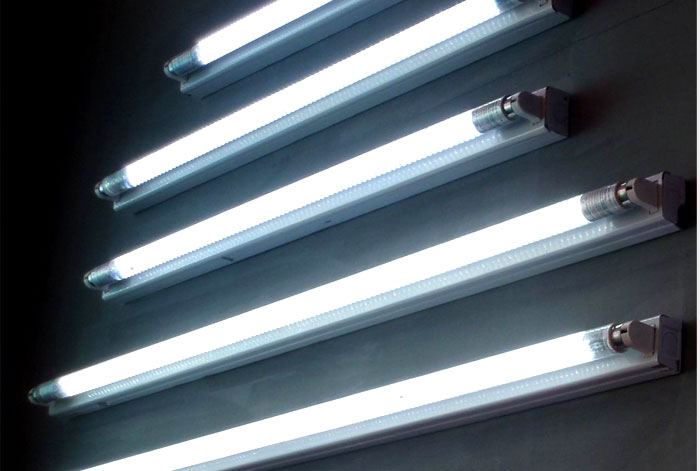
Mercury Vapor: The Star of the Show (Kind Of)
Now, for the element that actually does the heavy lifting when it comes to producing light: mercury. But don’t worry, it’s not in liquid form sloshing around. Inside the fluorescent tube, mercury exists as a vapor. This vapor is released when a small amount of liquid mercury, carefully sealed within the tube, is heated by the electrical discharge.
When the electricity zips through the tube, it excites the argon (or other noble gases). These excited gases then collide with the mercury atoms, giving them a serious energy boost. Think of it like a chain reaction: electricity energizes the noble gases, who then energetically bump into the mercury, making them super energized.
And what happens when mercury atoms get super energized? They emit ultraviolet (UV) light. Now, here’s where it gets interesting. UV light is invisible to the human eye. So, if that’s all that was happening, your room would still be dark, just with a bunch of excited mercury atoms doing their thing invisibly.
The Phosphor Coating: The Glow-Up
This is where the magic really happens, and it involves the inside of the glass tube itself. The inner surface of the fluorescent tube is coated with a fine powder called phosphor. This phosphor coating is a blend of various chemical compounds, and its job is to absorb the invisible UV light emitted by the mercury vapor.

When the phosphor absorbs the UV light, it gets excited and then, in turn, emits visible light. Different phosphor blends produce different color temperatures – from cool, crisp white to warm, inviting yellow. It’s this transformation of invisible UV light into visible light that gives us the familiar glow of a fluorescent bulb. It’s like a talented DJ taking raw sound waves and turning them into music you can dance to.
The type of phosphor used is what determines the "color" of the light. A "daylight" bulb will use phosphors that mimic natural sunlight, while a "warm white" bulb will have phosphors that lean towards red and yellow hues. This is why when you're shopping for light bulbs, you see all those different labels – it's all about the phosphor blend!
How the Arc is Born
So, how does the electricity get things started? It all begins with a ballast. This is a component, either in the fixture itself (older magnetic ballasts) or built into the bulb (newer electronic ballasts), that does two main things. First, it provides a high voltage surge to initiate the arc. Think of it as the initial spark needed to get a campfire going.
Once the arc is established and the mercury vapor is producing UV light, the ballast’s second job is to regulate the current. It prevents the arc from becoming too powerful and destroying the tube. It’s like the conductor of an orchestra, ensuring everything plays in harmony and at the right volume.
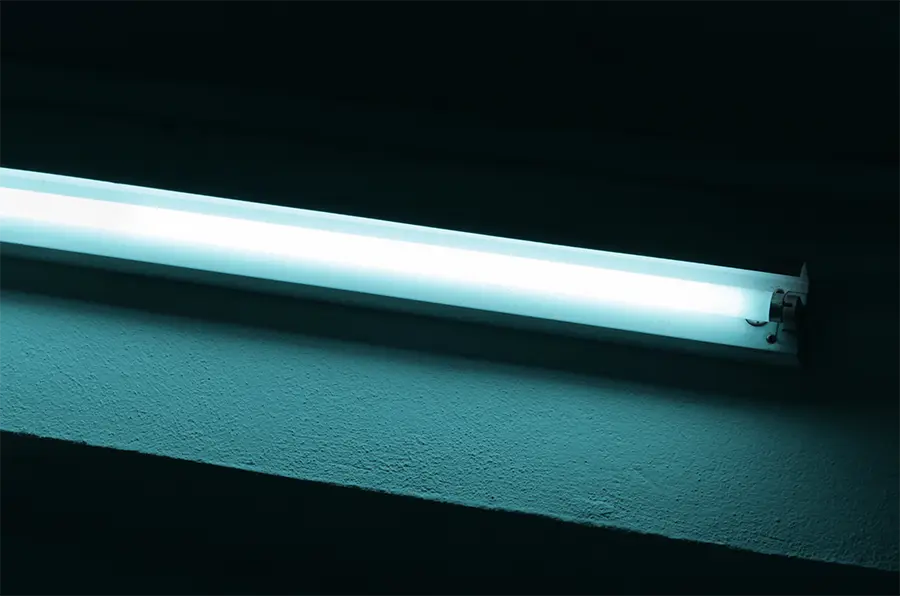
The electrodes at either end of the tube are coated with a material that readily releases electrons when heated. When the high voltage from the ballast is applied, these electrons are pulled across the tube, creating that electrical discharge – the arc – through the low-pressure gas mixture. This arc is the engine that drives the whole process.
Cultural Echoes
Fluorescent lights became incredibly popular in the mid-20th century. They were seen as modern, efficient, and a symbol of progress. Think of old diners, school classrooms, and office buildings of the 50s and 60s – all bathed in that distinctive fluorescent glow. While some now associate them with a slightly sterile or institutional feel, they were revolutionary at the time, offering brighter, longer-lasting light than incandescent bulbs. They’ve been the silent backdrop to countless study sessions, family dinners, and late-night projects.
Even today, despite the rise of LEDs, fluorescent lights are still prevalent. Their low cost and good efficiency make them a practical choice for many applications. And there’s a certain aesthetic to them, too. For designers and artists, the quality of light from a fluorescent tube can be specific and desirable, adding a unique character to a space.
The Complete Cocktail
So, to recap, the gas in a fluorescent tube is a carefully orchestrated blend:
- Noble Gases (like Argon): These provide the low-pressure environment and help initiate the electrical discharge. They're the chill, stable foundation.
- Mercury Vapor: When energized by the electrical arc, it emits invisible UV light. This is the core light-producing element.
- Phosphor Coating: This inner coating absorbs the UV light and re-emits it as visible light. This is the transformer that makes the light usable.
- Ballast: This crucial component starts and regulates the electrical current. It's the conductor of the whole operation.
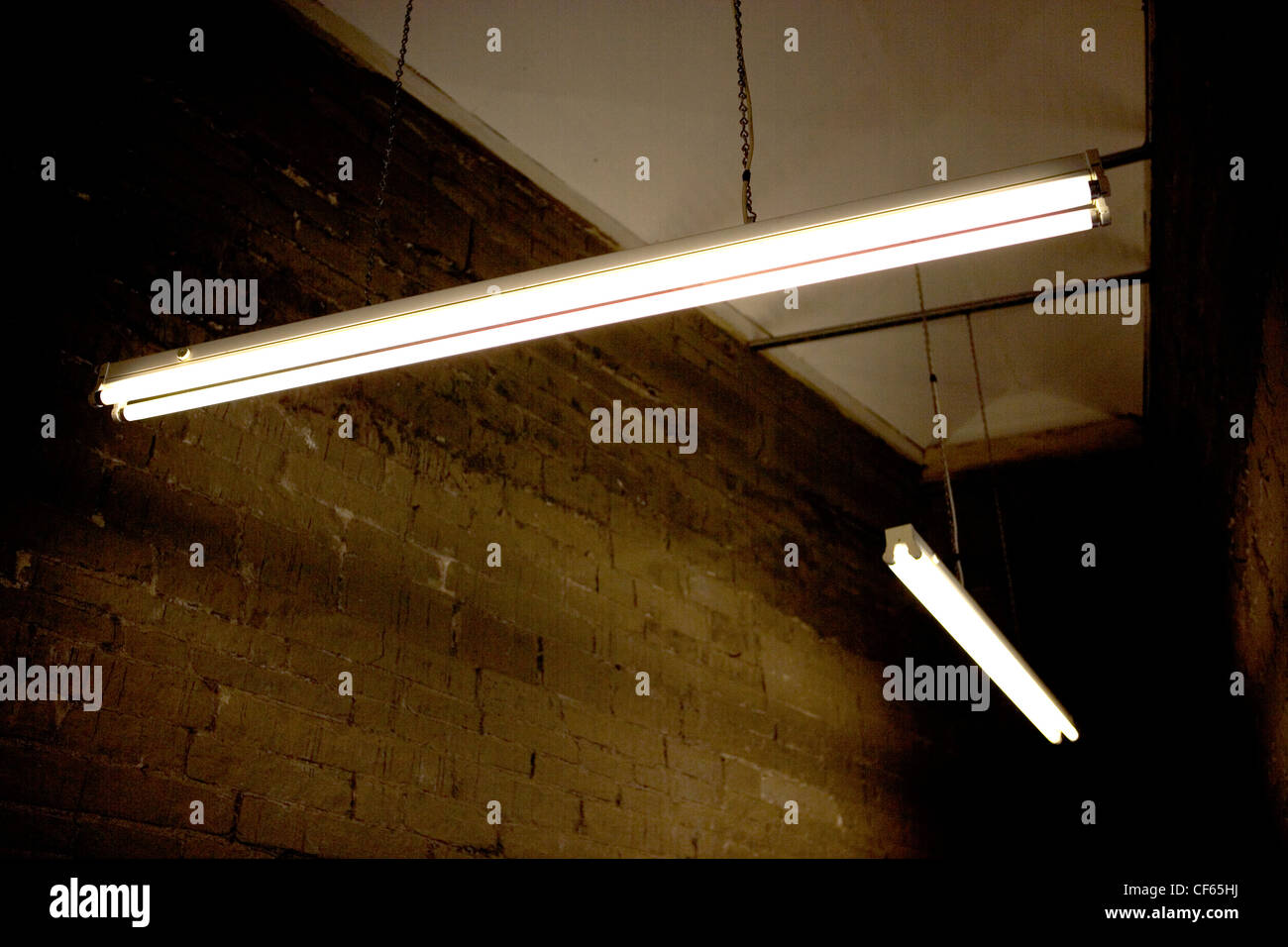
It’s a smart system, really. Instead of trying to directly create visible light (which is harder and less efficient), fluorescent tubes create UV light and then convert it. It’s a bit like a chef preparing ingredients separately and then combining them to create a delicious dish. The elegance is in the transformation.
A Touch of Caution
It’s worth noting that while mercury is essential for the light production, it is also a toxic substance. This is why it’s important to handle fluorescent bulbs with care, especially when they break. Most modern fluorescent bulbs are designed to contain the mercury effectively, but proper disposal is still recommended. Many recycling programs exist to safely handle spent fluorescent tubes.
A Reflection on Everyday Illumination
Next time you’re under a fluorescent light, take a moment to appreciate the little bit of scientific marvel at play. It’s a reminder that even the most common, everyday objects often have a fascinating story behind them. From the stable presence of noble gases to the energetic dance of mercury and the light-transforming magic of phosphor, it’s a whole system working in harmony to bring light into our lives.
These lights have illuminated our homes, workplaces, and public spaces for generations. They’ve witnessed countless conversations, triumphs, and quiet moments. They’re more than just tubes of glass and gas; they’re part of the fabric of our daily existence, silently contributing to the way we live, work, and play. And that, in its own way, is pretty illuminating.