
What Happens To Electrons In A Metallic Bond
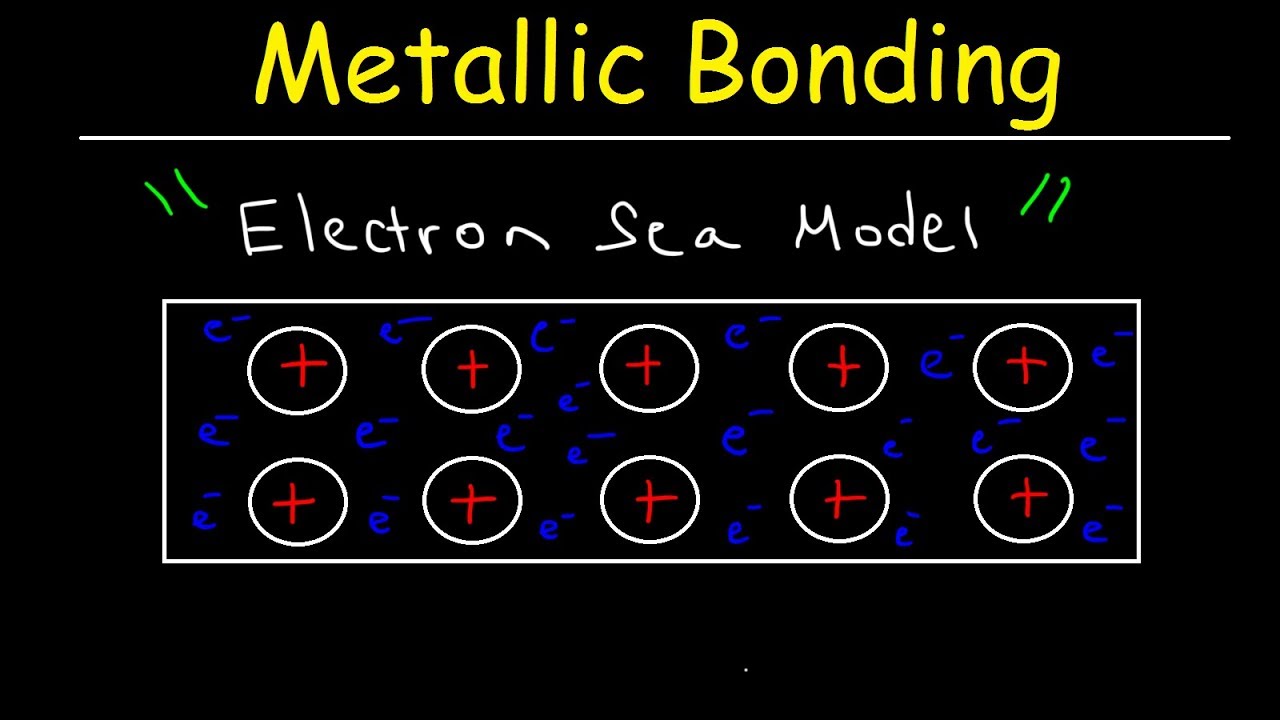
Ever wondered why metals are so shiny and conduct electricity so well? It all comes down to tiny, energetic particles called electrons and how they behave in what chemists call a metallic bond. It sounds complicated, but it's actually a really cool and surprisingly understandable concept that unlocks the secrets of everyday materials. Think of it as the hidden engine behind your smartphone, your kitchen pots, and even the sturdy bridge you cross!
This topic is fantastic for beginners because it’s a fundamental building block of understanding the physical world around us. For families, it's a great way to spark curiosity in kids about science. Imagine pointing to a copper wire and saying, "See those electrons? They're having a party!" Hobbyists, especially those into electronics or crafting with metal, will find this knowledge incredibly useful. Understanding how electrons move helps in choosing the right materials and troubleshooting when things don't quite work as expected.
So, what exactly happens to these electrons? In a metallic bond, metal atoms get together and basically share their outermost electrons in a big, communal pool. Instead of being tied to a single atom, these electrons become delocalized, meaning they're free to roam all over the place! Imagine a classroom where students normally sit at their own desks, but in a metallic bond, all the desks are removed, and everyone can freely move around the entire room. These mobile electrons act like a glue, holding the positively charged metal ions together.
This "sea of electrons" is the secret sauce behind metals’ amazing properties. Because the electrons are so mobile, they can easily be pushed around when an electric current is applied, which is why metals are such excellent conductors of electricity. Think of it like a crowded hallway – if you nudge someone, the movement quickly ripples through the whole group. Metals are also good conductors of heat for the same reason; these free electrons can carry thermal energy. And their shininess? That's because the electrons can absorb and re-emit light in a way that makes them gleam.
Variations in metallic bonding can explain differences between metals. For instance, some metals have more free electrons than others, leading to better conductivity. This is why copper, with its relatively high electron mobility, is a go-to for electrical wiring. Different arrangements of metal atoms also play a role, affecting properties like strength and flexibility. You might even see "alloys," like brass (copper and zinc) or steel (iron and carbon), where mixing metals creates new, often improved, properties due to altered electron interactions.

Getting started with this is simple! Next time you’re near something metallic – a coin, a spoon, a bike frame – take a moment to appreciate the incredible dance of electrons happening within. You can even experiment with simple circuits using batteries, wires, and LEDs to see electricity in action. For a visual, search online for "sea of electrons" diagrams – they’re really helpful! You can also find fun, kid-friendly videos explaining this concept.
Understanding the metallic bond is a small step that opens up a big world of scientific understanding. It's a peek into the microscopic forces that shape the materials we use every single day, making everyday objects and technologies possible. It's a genuinely fun and useful concept to explore!