
What Happens When You Rapidly Cool Hot Metal
Alright, gather 'round, folks, and let's talk about something truly wild: what happens when you take a piece of metal that's hotter than a dragon's breath and shove it into an ice bath. Think of it like this: you've just finished baking a pizza, and instead of letting it cool on the counter, you just chuck the whole darn thing into a snowdrift. Madness, right? Well, metal does something similar, only with a lot more drama and a lot less deliciousness.
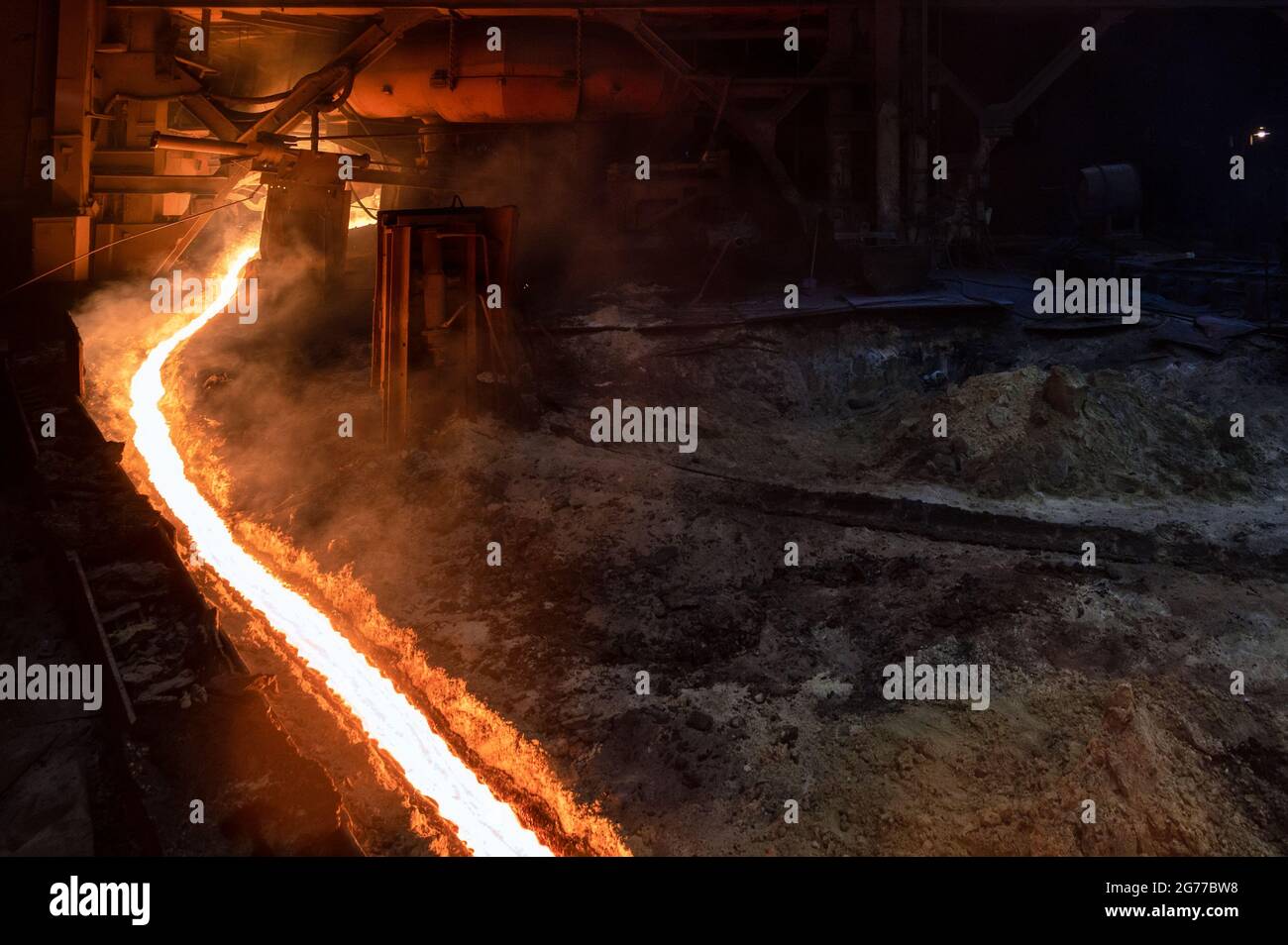
So, picture this: we've got our metal, glowing like a grumpy ember. It's been chilling in a furnace, having the time of its molten life. Then, BAM! It's getting a polar plunge. What's the immediate reaction? Well, it's not exactly a polite "Brrr, chilly!" No, sir. Metal, when it's super hot, is feeling pretty relaxed. Its atoms are doing a happy little jig, zipping around all over the place. It's basically a microscopic mosh pit in there.
Then you introduce the cold. This is like the bouncer at the club telling everyone to calm down. The atoms, caught off guard, suddenly have to freeze their jig. They get bunched up, really close together, like commuters on a packed subway. This sudden packing is what we call contraction. The metal shrinks, and not just a little bit. It's like a balloon deflating, only way more industrial and less squeaky.
But here's where the real fun begins. This rapid cooling isn't just about making the metal smaller. It's about messing with its internal structure. Think of the atoms as tiny Lego bricks. When metal cools slowly, the bricks can settle into neat, orderly rows. This is like a perfectly stacked Lego castle, strong and stable.
However, when you cool it super fast, those Lego bricks don't have time to get their act together. They get slammed into place, all jumbled up and stressed out. This creates tiny imperfections, little cracks and disarray within the metal's atomic city. We call these imperfections microstructure, and in this case, it's not exactly the Hilton.
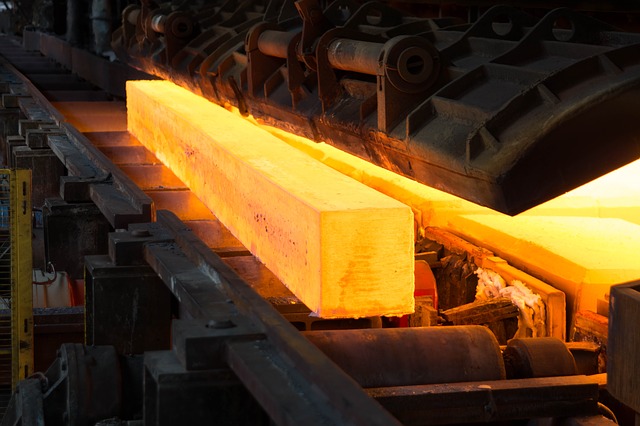
The type of metal matters a ton, by the way. Steel, that trusty workhorse of construction and swords (yes, swords!), is a prime candidate for some dramatic cooling transformations. When you quench hot steel, you're essentially locking those stressed-out atoms into a super-hard, but also super-brittle, structure. Imagine making a glass statue by slamming molten glass into ice. Pretty, but one wrong move and shatter!
This super-hard stuff is called martensite. Sounds like a superhero, right? Well, it can be, in terms of toughness. It's what makes knives so sharp and some tools so durable. But it's also got a temper. If you were to drop a tool made of pure martensite from a reasonable height, it might just decide to impersonate a dropped vase. Not ideal for a hammer, unless you're going for a very specific, very loud, very destructive effect.
So, what do engineers do about this whole brittle situation? They don't just leave the metal in its grumpy, stressed state. After the rapid cooling, they often do something called tempering. This is like giving the stressed-out metal a little spa day. They heat it up again, but not nearly as hot as before. This allows some of those tightly packed atoms to relax just a little bit, easing some of that internal tension.

Tempering is all about finding that sweet spot. You want to reduce the brittleness without losing all that hardness you gained from the quench. It's like a negotiation with the metal. "Okay, okay, you can relax a bit, but you still need to be tough!" The exact temperature and time for tempering depend entirely on what you want the metal to do. Are you building a skyscraper? A paperclip? A really fancy butter knife? Each has its own metal needs.
One of the most dramatic visual effects of rapid cooling can be seen in something called cracking. Sometimes, the internal stresses are so great that the metal just can't handle it. It literally splits apart. Imagine a grumpy teenager being told to clean their room, and instead, they just explode into a thousand pieces. Metal can do that, too, just with more of a sharp ping and less shouting.

This is why blacksmiths, those ancient wizards of metal, are so skilled. They know exactly how hot their metal needs to be, how long to heat it, and what to plunge it into. Water, oil, even salt baths – each has a different cooling rate and thus a different effect on the metal. It's a whole science, disguised as swinging a hammer.
And it's not just about making things hard. Rapid cooling can also change how metal behaves in other ways. For instance, some metals become magnetic or more strongly magnetic after a rapid cool. It's like the metal suddenly remembers its inner superhero and decides to embrace its magnetic powers. Pretty neat, huh?
So, next time you see a sharp knife, a sturdy bridge, or even a well-made car part, remember the dramatic drama that went into its creation. That seemingly solid piece of metal went through a fiery birth and a shocking baptism. It's a story of extreme temperatures, stressed-out atoms, and engineers playing a very high-stakes game of "hot or cold." And honestly, isn't that way more interesting than just saying "it got hard"? I think so.