
What Insects Build Mud Tubes
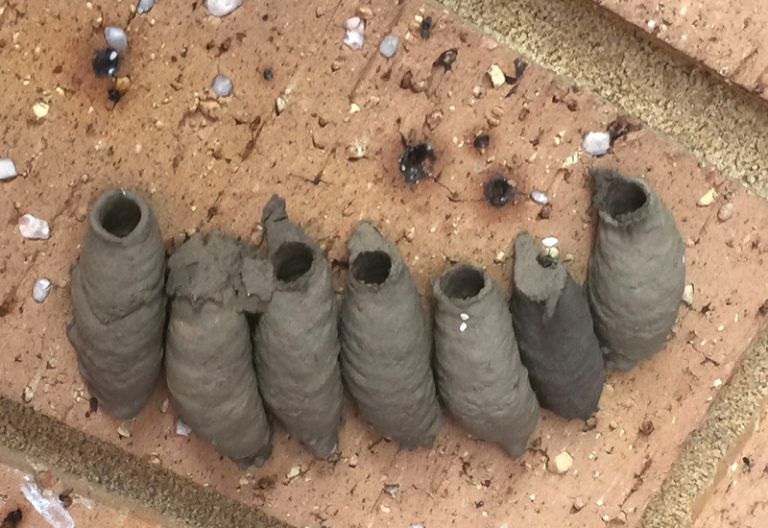
Hey there, fellow curious minds! Ever found yourself staring at a wall, maybe in your garden or on an old shed, and noticed these peculiar, tiny, dirt-colored tubes? They look a bit like miniature works of abstract art, don't they? You might have wondered, "What on earth is going on here?" Well, get ready for a little bit of wonder, because we're about to dive into the fascinating world of who's been playing architect with mud!
It turns out, those charming little structures aren't just random splatters. They're the handiwork of some seriously industrious and often overlooked creatures: insects! And not just any insects, mind you, but some incredibly specialized ones who have mastered the art of building with mud. Isn't that neat? Imagine, these tiny beings, with their minuscule tools (which are, of course, their own bodies and mouths!), creating these intricate homes. It's like a miniature construction crew is hard at work while we're busy with our morning coffee!
Meet the Mud Architects!
So, who are these budding builders? The most famous, and probably the ones you're most likely to spot, are the marvelous mud dauber wasps. Yep, wasps! Now, I know what some of you might be thinking. "Wasps? Are you sure about this? Aren't they supposed to be stinging machines?" And yes, some wasps can sting, but the mud dauber is generally a pretty chill character. Think of them as the quiet, artistic types of the wasp world, more focused on their construction projects than on bothering you.
These wasps are truly incredible. When a female mud dauber is ready to build a nest for her future offspring, she embarks on a mission. First, she needs the raw materials. She'll fly off to a damp spot – a muddy patch near a puddle, a leaky faucet, or even just some wet soil. With her mandibles (that's a fancy word for their mouthparts, folks!), she'll meticulously collect tiny pellets of mud. It's like she's scooping up miniature servings of delicious mud pie, except she's not eating it – she's building with it!
The Art of the Tube
Once she's got her mud cargo, she flies back to her chosen building site. This is often a sheltered spot, like under the eaves of a house, inside a shed, or even on a porch. And here's where the magic happens. She'll start shaping the mud, often with a bit of saliva mixed in, which acts like a natural cement. She'll form long, cylindrical tubes, sometimes single, sometimes clustered together. These tubes are the nurseries for her young!
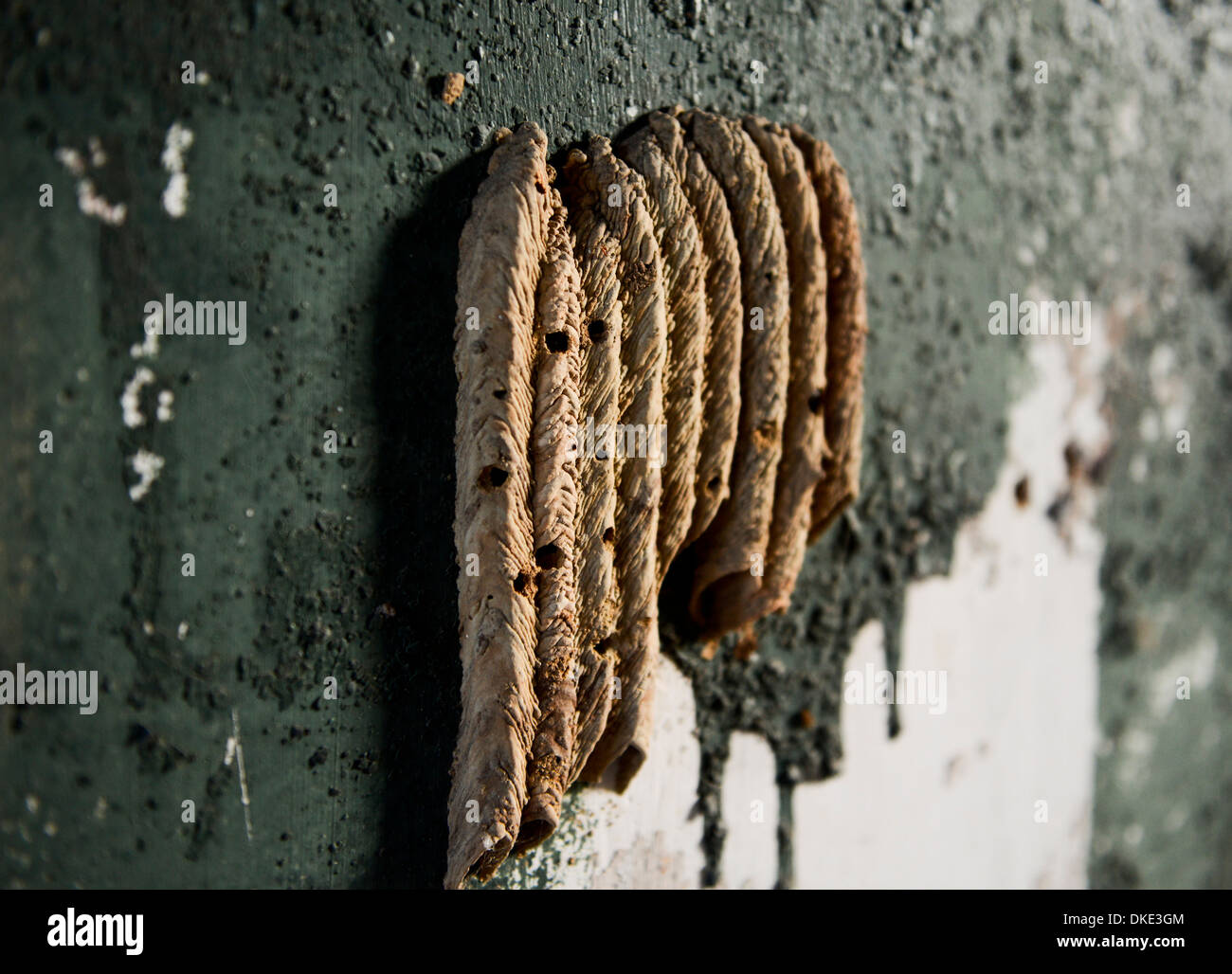
Why the tube shape, you ask? It's brilliant! Once the tube is built, the mud dauber goes hunting. She'll catch small spiders – yes, spiders! – and paralyze them with her sting. She then stuffs these paralyzed spiders into the mud tube. This is super important, because these spiders will become the food source for her larvae when they hatch. Imagine, a ready-made pantry stocked with goodies!
After she's filled the tube with spiders, she lays a single egg on top of the spider meal. Then, she seals the tube with more mud, creating a neat little cap. If she's building a cluster of tubes, she'll repeat this process for each one. It's a systematic and effective way to ensure her babies have everything they need to survive and grow.
And you know what's really cool? These mud tubes are often quite strong and durable. They can withstand a fair bit of weather, protecting the developing wasp larvae inside until they're ready to emerge as adult wasps. It's a testament to the engineering prowess of these tiny creatures.
More Than Just Wasps!
While mud daubers are the most common builders of these distinct tubes, it's worth noting that other insects and even some other invertebrates might create similar structures, though often for different reasons or with different materials. For instance, some caddisfly larvae, which live in water, build protective cases out of sand, pebbles, or bits of plants stuck together with silk. While not exactly mud tubes on a wall, it shows that the instinct to build protective homes is a widespread and ancient one in the insect world.
But back to our mud specialists. Isn't it just fascinating to think that these seemingly simple structures are the result of complex instincts and remarkable behaviors? It makes you look at a wall a little differently, doesn't it? You start to see it not just as a surface, but as a potential canvas for nature's miniature artists.

Making Life More Fun
Now, how does knowing about mud tubes make life more fun? Well, for starters, it's a fantastic way to connect with nature right in your own backyard! Instead of just seeing them as oddities, you can now appreciate the intricate lives of the insects who created them. It's like having a secret decoder ring for the natural world.
Next time you spot a mud tube, take a moment. Observe it. Imagine the industrious wasp who painstakingly gathered each pellet of mud. Think about the incredible journey she’s on, providing for her future generation. It’s a little bit of natural history unfolding right before your eyes. It adds a layer of wonder to the mundane, doesn't it?
Furthermore, it’s a great conversation starter! Imagine pointing out a mud tube to a friend or family member and launching into this mini-lecture on insect architecture. You'll sound incredibly knowledgeable and, dare I say, a little bit cool. Plus, it’s a wonderful way to spark curiosity in children. Suddenly, gardening isn't just about flowers; it's about discovering the amazing lives of the creatures who share our space.

And let’s be honest, in a world that can sometimes feel a bit overwhelming, finding joy in the small, the intricate, and the natural is a truly valuable thing. These mud tubes are a reminder that even the smallest beings can achieve remarkable feats. They are tiny marvels of engineering and perseverance.
Get Inspired!
So, the next time you see those little mud tubes, don't just brush them away. Take a closer look. Appreciate the ingenuity. Marvel at the perseverance. It’s a beautiful example of how nature works in subtle yet spectacular ways. You might even feel a little inspired yourself. Perhaps to learn more about the incredible diversity of insects, or to simply observe the world around you with a renewed sense of wonder.
The world of insects is an endless source of fascination, and the humble mud tube is just one small doorway into it. Who knows what other amazing stories are waiting to be discovered in your garden, your park, or even on that wall you’ve walked past a thousand times? Go forth and explore! Your own backyard might be more exciting than you ever imagined!