
What Is An Inner Transition Metal
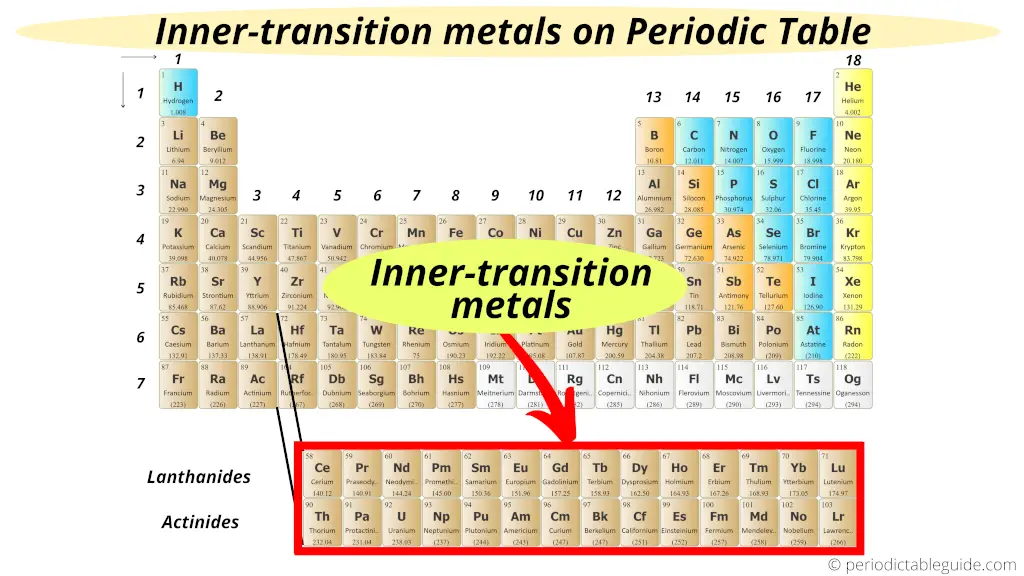
Ever heard of the Inner Transition Metals? They're a super cool bunch of elements hiding out at the bottom of the periodic table. Think of them as the eccentric cousins of the more famous transition metals.
These aren't your everyday metals like iron or copper. Nope, the inner transition metals are a bit more reserved, tucked away in their own little block. It’s like a secret club within the larger metal family.
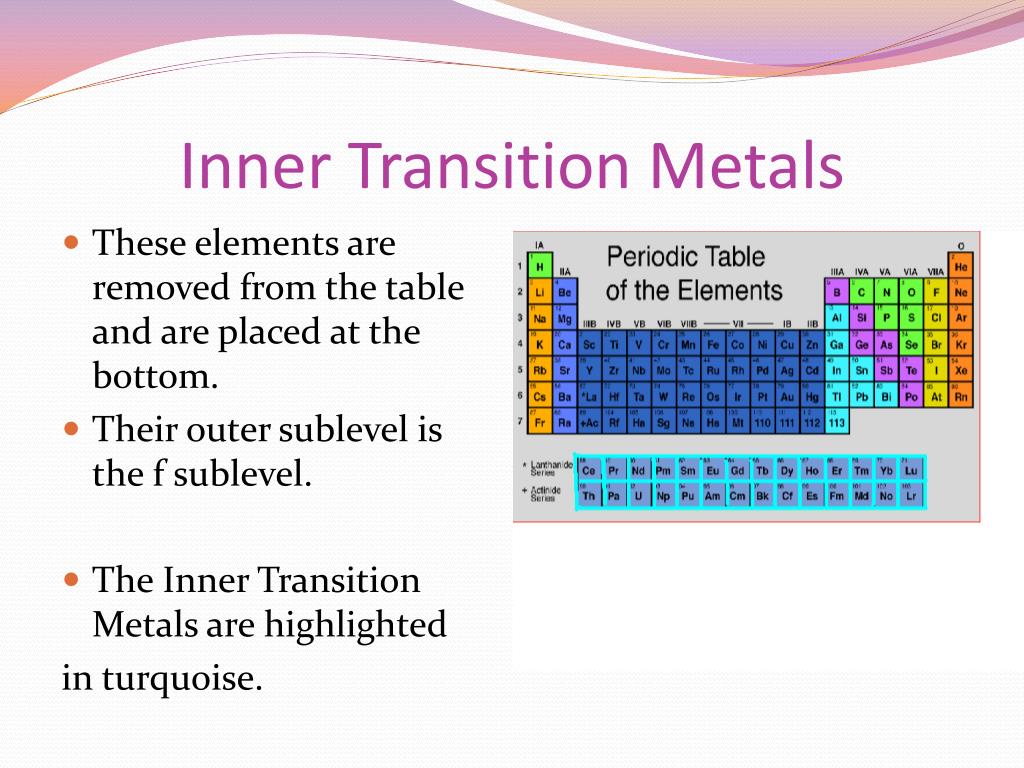
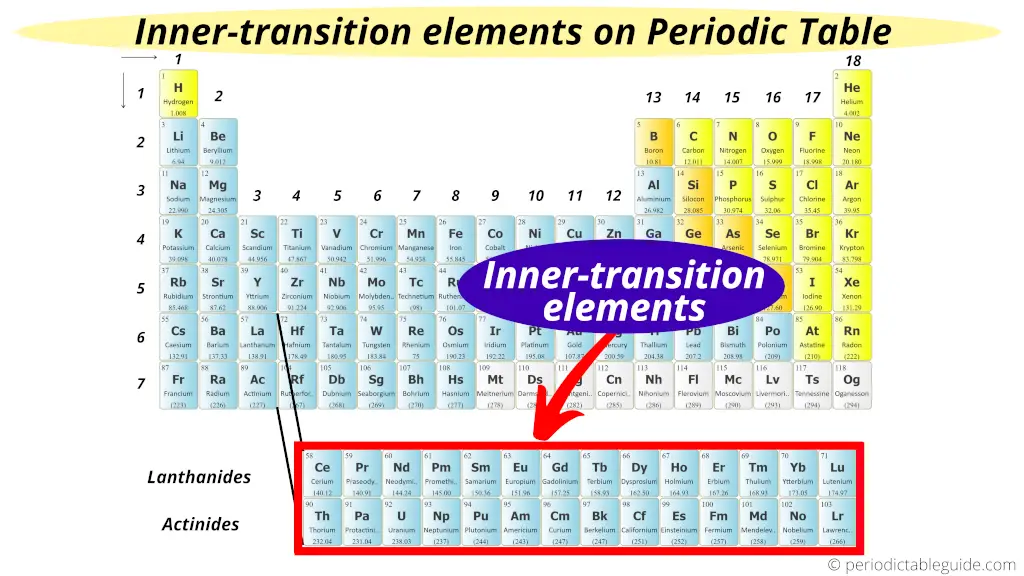
There are two distinct rows of these hidden gems. They're called the Lanthanides and the Actinides. Both are fascinating in their own right.
Let's start with the Lanthanides. They're named after the very first element in their series, lanthanum. This group is often referred to as the "rare earth elements."
Don't let the "rare" fool you too much. Some of them aren't that rare, but they are often found mixed together, making them tricky to separate. It’s like finding a specific Lego brick in a giant bin of mixed Legos.
These lanthanide elements have some seriously unique properties. They can glow in the dark, for starters! That’s right, some of them are phosphorescent.
Think about how cool that is. They absorb energy and then release it as light. It's like they have their own little built-in light show.
Many of them are also super important in technology. We're talking about things like your smartphone screen, those amazing LED lights, and even powerful magnets.
For example, neodymium is a lanthanide that’s essential for making incredibly strong magnets. These magnets are used in everything from electric car motors to wind turbines. Pretty impressive for a metal hiding at the bottom, right?
Then there’s europium. This element is a star when it comes to glowing. It gives off that vibrant red light you see in some TV screens and fluorescent lamps.
Imagine the colors! Europium helps create the dazzling reds that make images pop. It’s like having a tiny artist inside your electronics.
The lanthanides also have a tendency to lose three electrons very easily. This makes them quite reactive, but in a controlled, scientific way. They’re ready to bond with other elements to create awesome compounds.
They all have very similar chemical behaviors. This similarity is what makes separating them such a challenge. It’s like trying to tell identical twins apart if they both love the same hobbies!
Now, let's move on to the other row: the Actinides. These are named after the first element in their series, actinium. This group is a bit more notorious.
Why notorious, you ask? Well, most of the actinides are radioactive. That means they decay over time, emitting energy.
This radioactivity is what makes them both dangerous and incredibly useful. Think about nuclear power and medical imaging. Actinides play a role in both.
The most famous actinide is probably uranium. It’s the fuel for nuclear power plants. It’s a powerful element, no doubt about it.
Then there’s plutonium. It’s also radioactive and has been used in nuclear weapons and research. It’s another element with a lot of power.
But not all actinides are about doom and gloom. Some of them are being researched for potential medical applications. Scientists are always looking for new ways to use these elements.
For instance, americium is used in smoke detectors. Yes, those little devices that save lives! It’s a small but crucial job for this actinide.
The actinides are generally more reactive than the lanthanides. They also tend to have more electrons in their outer shells, which means they can form more complex compounds. It's like they have more tools in their toolbox.
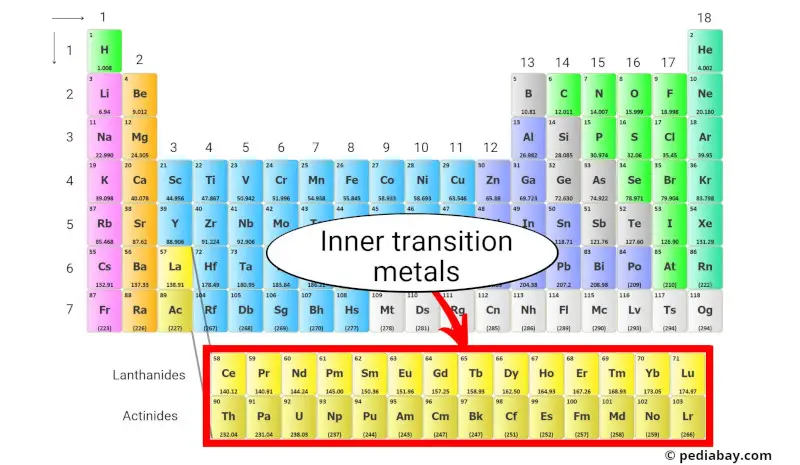
Many of the heavier actinides are synthetic. This means they don’t occur naturally and have to be created in laboratories. Scientists are pushing the boundaries of what’s possible by creating new elements.
So, why are these inner transition metals so entertaining? It’s their sheer variety and the unexpected places you find them. They’re not just theoretical concepts in a textbook.
They are in the phones you use, the lights that brighten your room, and the technologies that power our world. They're the unsung heroes of modern life.
Their properties are so diverse and sometimes downright strange. From glowing to powering reactors, they’ve got it all. It’s like a whole spectrum of amazing abilities.
The chemical behavior of these elements is also a puzzle that scientists love to solve. Understanding how they interact is a constant adventure. It keeps the research world buzzing.
Think of the periodic table as a giant playground. The inner transition metals are the special attractions tucked away in a corner, waiting to be discovered and appreciated.
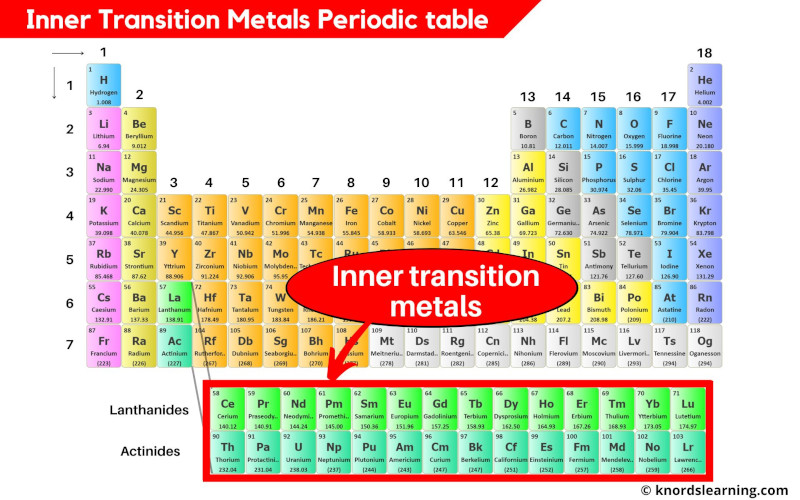
They add so much color and complexity to our understanding of matter. They’re a testament to the incredible diversity of nature.
So, the next time you hear about the Inner Transition Metals, don't just skim over them. Take a moment to appreciate these remarkable elements. They’re a whole world of wonder.
Maybe you’ll even get curious about learning more. Who knows what amazing facts you’ll uncover about these hidden treasures! They’re truly special.
It's their mysterious nature and their essential roles in our daily lives that make them so captivating. They’re the elements that keep on surprising us.
From the vibrant glow of lanthanides to the powerful energy of actinides, these metals are a constant source of scientific fascination. They're the quirky, essential pieces of our material universe.
So, go ahead, peek at the bottom of the periodic table. You might just find your new favorite elements! They’re definitely worth checking out.