
What Is Passivating Stainless Steel

Ever wonder why your stainless steel spoon doesn't get all rusty like some other kitchen gadgets? Or why that fancy patio furniture made of metal still looks so spiffy after a rainy day? There's a quiet hero at play, doing its subtle magic, and it's called passivating. Sounds a bit like something you'd do before a vacation, right? Well, in a way, it is!
So, what exactly is this "passivating" thing? Let's break it down in a way that's as easy as, well, not getting rust on your favorite mug. Think of stainless steel as a bit of a diva. It's got all these awesome qualities – it's strong, it's shiny, it doesn't easily corrode. But it needs a little help to maintain that stellar attitude. Passivating is essentially giving stainless steel a protective shield.
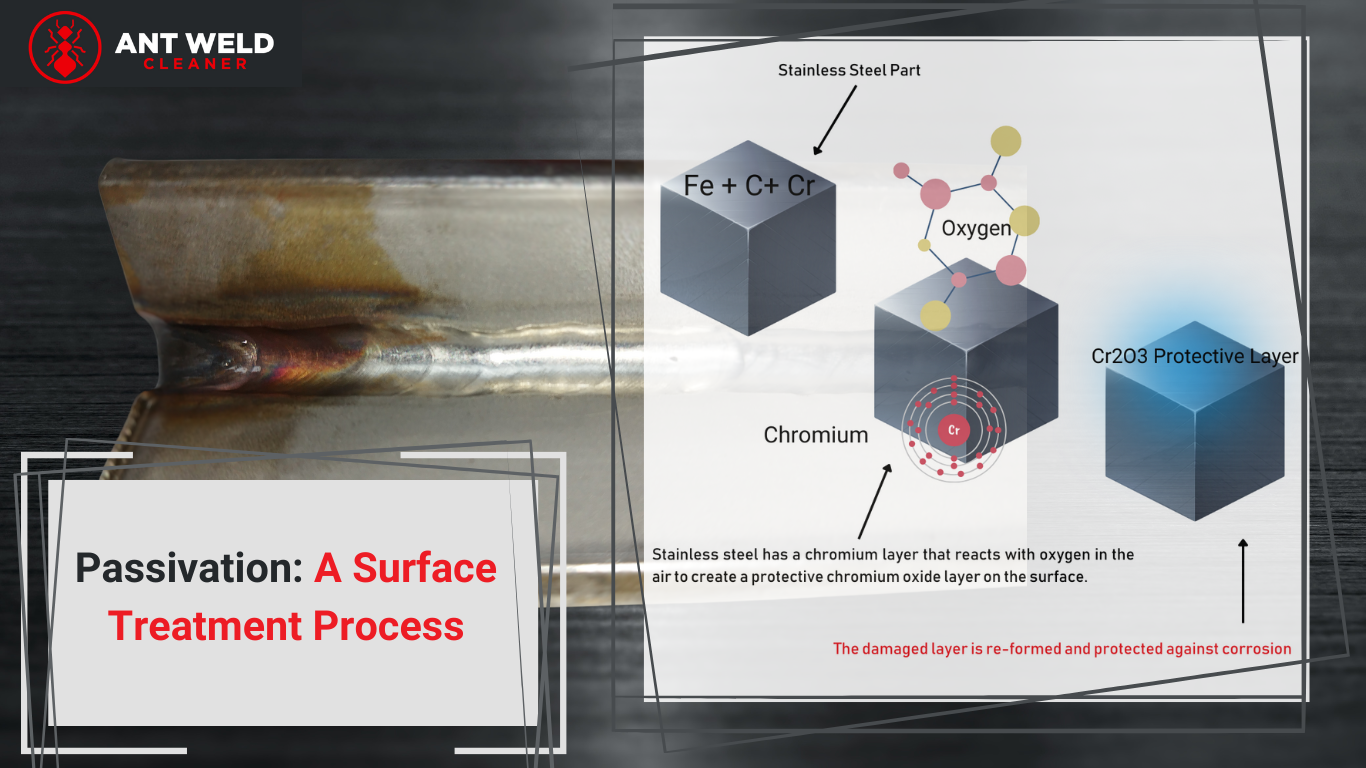
Imagine you have a superhero who's naturally super strong and can fly. That's kind of like the base material of stainless steel. It's got iron, chromium, and other bits and bobs that make it tough. But when it comes into contact with oxygen (which, let's face it, is everywhere), something really neat happens.
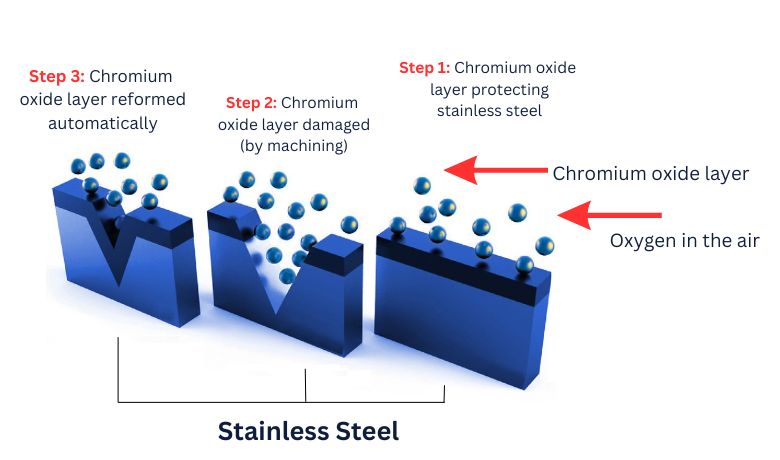
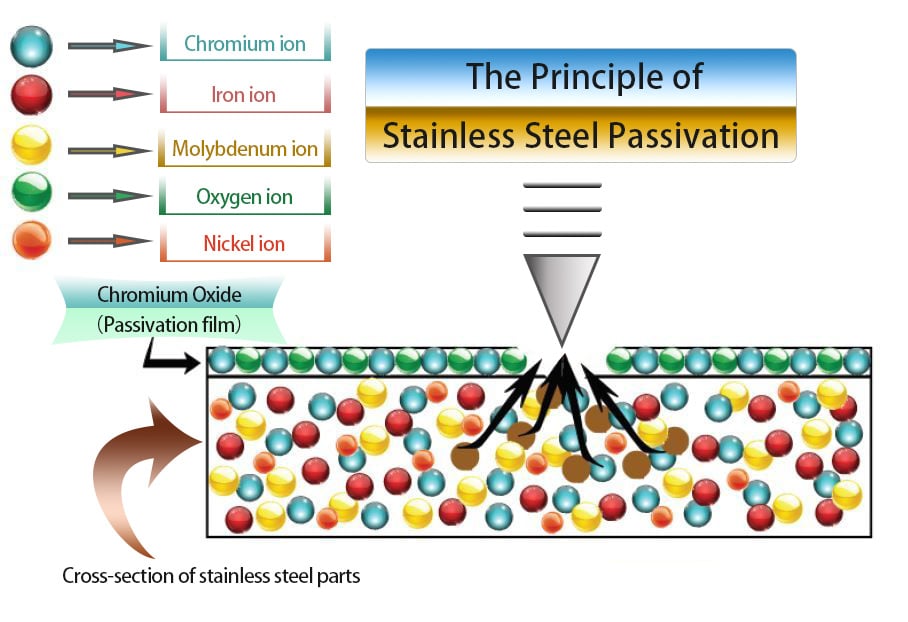
The chromium in the stainless steel gets a little… well, enthusiastic about oxygen. It starts to react and forms a super-thin, invisible layer of chromium oxide. This layer is like a transparent force field, and it’s the star of the show.
The "Invisible Shield" Explained
So, this chromium oxide layer is the secret sauce. It’s so thin you can’t see it, feel it, or even measure it with a regular ruler. But it's incredibly effective. What does it do? It prevents the iron within the stainless steel from directly interacting with oxygen and moisture.
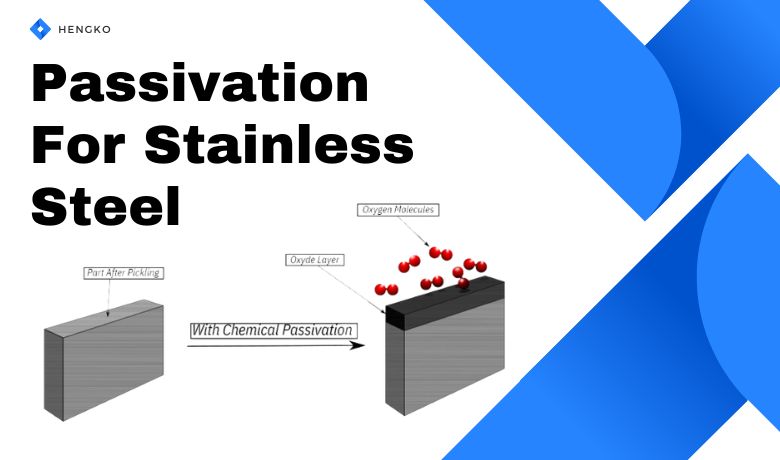
Think of it like this: You know how sometimes you get a tiny scratch on your skin? Your body naturally forms a scab, which is a protective layer to stop infections from getting in and to help the skin heal underneath. Passivating is a bit like that, but for metal. The chromium oxide is the natural, self-healing scab for stainless steel.
Without this shield, the iron in the steel would be exposed. And iron, as we all know, is prone to rusting when it meets oxygen and water. It's like leaving your cookies out on the counter – they eventually get stale and not so yummy. Stainless steel, without passivation, would become… well, stained and rusty. Not so stainless anymore, eh?
Why Is This Even a Thing?
Okay, so we know it forms a shield. But why is this so important? For starters, durability. Passivated stainless steel lasts a whole lot longer. Think about surgical instruments, for example. They get exposed to all sorts of sterilizing agents and fluids. If they weren't passivated, they'd be a rusty mess in no time, and that's definitely not good for your health!
It's also about performance. In industries like aerospace or chemical processing, where things are often exposed to harsh environments, having materials that can withstand the elements without degrading is absolutely critical. A small rust spot on a plane's wing? Probably not ideal.
And let's not forget about aesthetics. Who wants a kitchen full of dull, spotty appliances? Passivating helps keep that beautiful, sleek shine that we all love about stainless steel. It’s like putting a clear coat on a shiny car – it protects the paint and keeps it looking brand new for longer.
How Do We Get This Magical Shield?
Now, here’s where it gets a little more technical, but we'll keep it chill. Passivating isn't just something that happens magically the moment stainless steel is made. Sometimes, the manufacturing process itself can actually damage that initial passive layer or introduce contaminants. Things like welding, machining, or even just handling can leave behind tiny bits of "foreign" iron or other materials.
So, to ensure that super-protective shield is robust and covers every nook and cranny, we often give stainless steel a special cleaning bath. This is the actual passivation process. It typically involves using specific acids (don't worry, they're handled by experts in controlled environments!) that do two main things:
- Clean off any surface contaminants: Think of this as giving the stainless steel a really thorough scrub to remove any unwanted gunk, like those rogue iron particles.
- Enhance the chromium oxide layer: The acid helps to strip away any loosely attached bits and encourages the formation of a thicker, more uniform, and thus stronger passive layer.
It's kind of like giving your superhero a power-up! Instead of just being strong, they get a special suit that makes them even more invincible.
Different Ways to "Power Up"
There are a couple of main ways this happens. One is through acid passivation, which is the most common method. This involves soaking the stainless steel in a solution of nitric acid or citric acid. Nitric acid is like a super-fast, but very effective, cleaning spray. Citric acid is a bit gentler but still does the job really well, and it's often preferred for its environmental friendliness.
Another method, less common for general use but important in some industries, is called electropolishing. This is like a fancy spa treatment for stainless steel. It uses an electrical current and a chemical bath to not only remove contaminants but also to smooth out the surface at a microscopic level. This creates an even smoother and more corrosion-resistant surface. Imagine taking a slightly rough piece of sandpaper and turning it into a mirror finish – that's the idea!
So, the next time you see a gleaming stainless steel appliance, a sturdy metal railing, or even your trusty kitchen knife, take a moment to appreciate the invisible shield of passivation. It’s a testament to clever chemistry and a crucial step that keeps our world looking good and working smoothly. It’s the unsung hero, quietly protecting all that glorious shine! Pretty neat, right?