
What Is Speed Of Light In Water

Imagine you're at the beach, ready for a refreshing dip. The sun is shining, the waves are lapping, and you're about to plunge into that cool, inviting water. But have you ever stopped to wonder what happens to light when it dives in with you?
It's a bit like a super-speedy superhero suddenly hitting a giant, jelly-like obstacle. Light, which zips around at an astonishing pace in empty space, has to slow down when it enters water. It’s not a dramatic, stop-motion kind of slowdown, but a noticeable one!
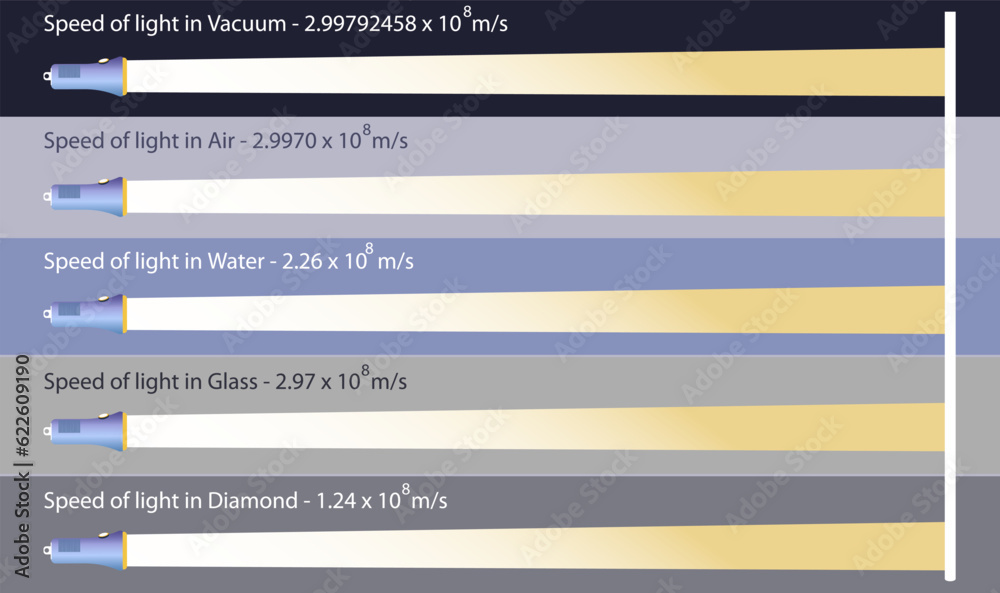
Think about it: in the vastness of space, light travels at about 299,792,458 meters per second. That’s so fast it could zip around the Earth over seven times in just one second! It's the ultimate speed limit of the universe, a cosmic speed limit nobody can break.
But when light dips its toes into water, it’s like it's suddenly wading through molasses, though not quite that thick! The water molecules get in the way, scattering and absorbing some of the light's energy. It’s a gentle nudge, a polite tap on the shoulder, saying, "Whoa there, slow down a bit!"
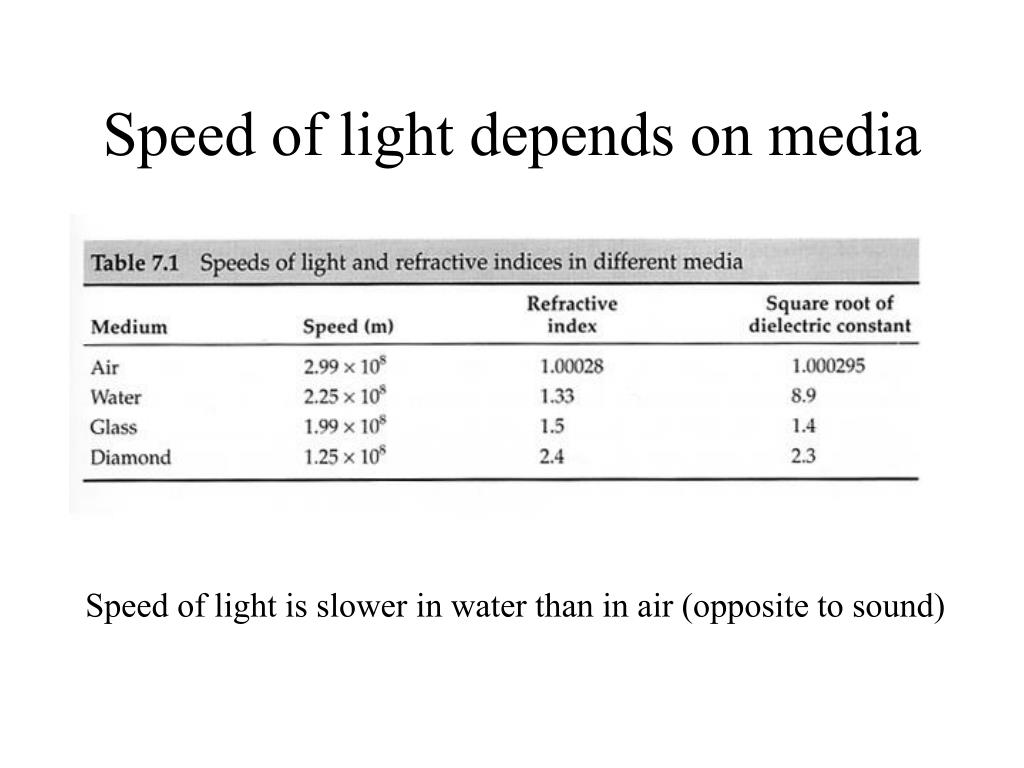
So, what's the new speed of this speedy traveler? In water, light travels at roughly 225,000,000 meters per second. That's still incredibly fast, mind you. It's like going from a Formula 1 race car to a really, really fast bicycle.
This slowing down is due to something called the refractive index. Don't let the fancy name scare you! It's basically a number that tells you how much a material, like water, will bend and slow down light. Water's refractive index is around 1.33.

This refractive index is also why things look a little distorted when you see them through water. Remember looking at your feet when you’re swimming? They might seem a bit bigger or closer than they really are. That’s light taking a detour, bending and changing its path as it enters and exits the water.
It’s a bit like how a straw in a glass of water appears to be bent at the surface. The light rays carrying the image of the straw are changing direction as they move from the water into the air. It’s light’s way of showing off its bending skills!
This phenomenon is super important for so many things we love. Think about your favorite fish tank. The way the light dances and refracts through the water creates that beautiful, shimmering effect that makes the fish and plants look so magical.
And what about snorkeling or diving? The underwater world is brought to life by light navigating through the denser medium of water. The colors you see, the way the sunlight filters down from above, it’s all thanks to light’s adjusted speed and its bending abilities.

It's a little bit of scientific magic happening all around us. Even when you're just enjoying a glass of water, light is playing a game of "slow down and bend" as it enters and leaves. It’s a constant, subtle performance.
Sometimes, when light slows down in water, it can even lead to cool optical illusions. Ever seen a mirage on a hot day? While those are usually related to air density, the principle of light bending due to changes in medium is similar.
The speed of light in water isn't just a number; it's a key player in how we perceive the world. It’s why cameras work the way they do, why our eyes can see, and why that underwater world is so captivating.
It's funny to think that even something as fundamental as light has its own set of rules. It can’t just barrel through everything at its top speed. It has to respect the boundaries and the "personal space" of other materials.
Imagine light as a really enthusiastic runner. In the open track (space), it sprints at its absolute best. But when it hits a crowded park (water), it has to be a bit more mindful of the people and trees around it, slowing down and weaving a little.
This slowing down is also crucial for how we understand the universe. Astronomers use the way light bends and slows down in different mediums to study distant objects and phenomena. It’s like a cosmic detective story, with light as the main clue.
The fact that light slows down in water is a gentle reminder of the physical laws that govern our existence. It's not a flaw or a problem; it's just how things are, and it leads to the beautiful and complex visual world we experience.
So, next time you're enjoying a swim, or just looking at a glass of water, remember the speedy traveler that's visiting. Light, the universe's ultimate speedster, takes a little breather and shows off its graceful bending moves just for you.
It's a secret dance between light and water, happening every single moment, and it’s part of what makes our world so wonderfully visible and vibrant. It’s a little bit of everyday wonder, powered by light taking a leisurely stroll through the liquid world.
The speed of light in water is a tiny, but significant, piece of the grand puzzle of physics. It’s a concept that, when you think about it, makes the world around you even more interesting. It’s like discovering a hidden superpower that light possesses.
And the best part? You don’t need a fancy lab coat or a supercomputer to appreciate it. Just a curious mind and a willingness to see the world a little differently, especially when you’re surrounded by water.
So go ahead, splash around! You're not just playing in the water; you're experiencing a fundamental aspect of how light interacts with the world, a subtle, silent ballet of speed and bending. It's a beautiful, watery dance.