
What Is The Difference Between A Brachiosaurus And A Brontosaurus

Hey there, fellow dino enthusiasts! So, you’re probably wondering, what’s the deal with these long-necked giants? We’ve got the Brachiosaurus, and then there’s the Brontosaurus. They sound pretty similar, right? Like, maybe they were just different names for the same super-duper tall dude? Well, buckle up, buttercup, because the story is a little more interesting than that. It’s got twists, turns, and a whole lot of scientific head-scratching. Think of it like this: you’ve got your favorite type of ice cream, and then someone tells you there’s another one that looks exactly like it but tastes slightly different. Intriguing, eh?
For the longest time, the Brontosaurus was like the undisputed king of gentle giants. You know, the one you pictured munching leaves from the tallest trees, its neck reaching for the heavens. It was a household name! Kids drew them, movies featured them, and everyone agreed: “Yep, that’s a Brontosaurus!” It was the ultimate symbol of prehistoric grandeur.
But then, things got a bit… complicated. Science is cool like that. It’s always questioning, always digging, and sometimes, it upends everything we thought we knew. And that’s exactly what happened with our long-necked pals.
The Case of the Missing Name (and the Reappearing Act!)
So, the story kicks off way back in the late 19th century. Paleontologists were having a field day, unearthing all sorts of amazing fossils. In 1877, Othniel Charles Marsh, a big name in paleontology, described a new dinosaur. He named it Apatosaurus, which, in Greek, means “deceptive lizard.” Ooh, mysterious! He thought it was a pretty neat find.
A few years later, in 1879, Marsh went and did it again! He found another set of fossils, and this time, he was convinced it was something entirely new. He christened it Brontosaurus, meaning “thunder lizard.” Can you imagine? A lizard so big it made the ground rumble like thunder? Awesome! This Brontosaurus quickly became super popular. It was the poster child for gentle giant dinosaurs.
Fast forward a bit to the early 20th century. Paleontology was still a relatively young science, and scientists were piecing together these ancient puzzles with the tools and knowledge they had at the time. They were pretty sure they had two distinct dinosaurs on their hands, each with its own cool name.

But here’s where things get a bit like a detective novel. As more fossils were found and analyzed, and as our understanding of dinosaur anatomy and classification improved, some paleontologists started to notice some similarities between the Apatosaurus and the Brontosaurus. Like, really striking similarities. It was like finding two socks that looked almost identical, but one was labeled “left” and the other “right.”
Then, in the mid-20th century, a prominent paleontologist named Alfred Sherwood Romer took a closer look. He, along with others, began to suspect that perhaps the Brontosaurus wasn’t actually a separate dinosaur at all. Gasp! Instead, they hypothesized that it was just a different specimen – maybe a younger one, or one with some unusual features – of the already-named Apatosaurus. You know, like finding a juvenile version of your pet that looks a bit different but is still unmistakably them.
This was a huge deal. Imagine finding out that your favorite character in a book was actually just a different version of another character you already knew. It’s a plot twist!
So, officially, the scientific community decided that Brontosaurus was a synonym for Apatosaurus. This meant that, scientifically speaking, there was no such thing as a Brontosaurus anymore. It was all Apatosaurus. For decades, this was the accepted truth. The name "Brontosaurus" went into the dinosaur graveyard, so to speak. It was relegated to history books and old dinosaur toys, a name that used to be.
It was kind of sad, right? Like losing a beloved friend’s nickname. Everyone still called them Brontosaurus in their hearts, but the official label was Apatosaurus. It was a scientific “oopsie” that stuck for a long, long time.
Enter the Brachiosaurus: A Different Kind of Tall!
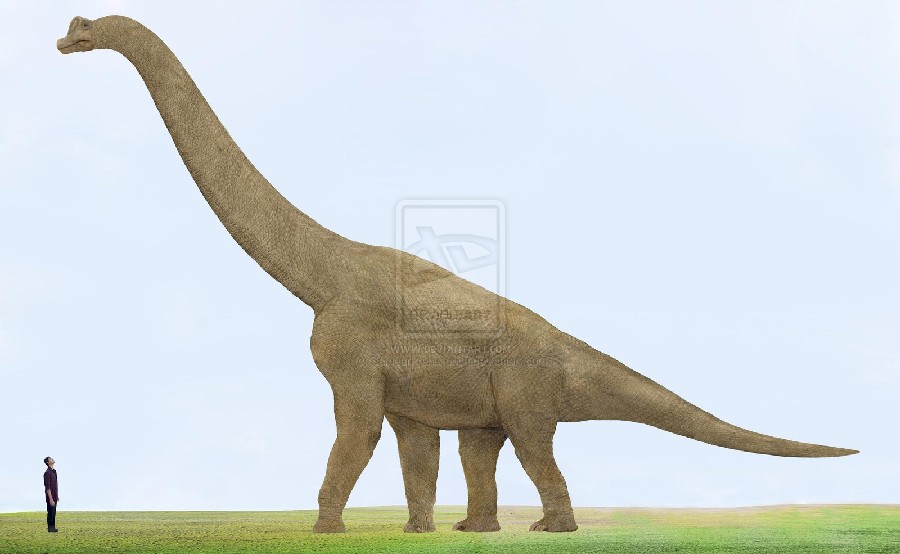
Now, let’s bring in the Brachiosaurus. This one, thankfully, didn’t have such an identity crisis. Brachiosaurus means “arm lizard” in Greek. And why “arm lizard”? Well, get this: its front legs were actually longer than its back legs! Whoa! Imagine a giraffe, but way, way bigger and with a much more substantial body. This gave it a distinctive, sloping posture, with its head held high, reaching for the absolute tippity-top leaves of the tallest trees. It was the ultimate skyscraper of the dinosaur world.
Think about it: while other sauropods (that’s the big group of long-necked, long-tailed dinosaurs) had legs that were roughly the same length, Brachiosaurus was like, “Nah, I’m gonna do things differently.” Its forelimbs were built for reaching, for getting to those prime, untouched salad bars in the canopy. It was an evolutionary innovation, a special adaptation for a specific lifestyle.
So, to recap the key differences:
Physical Shenanigans: The Visual Clues
This is where the fun really starts. When you look at the skeletons (or even good reconstructions), you can see the differences:
- Legs, Legs, Everywhere! The most obvious giveaway is the leg structure. Brachiosaurus had those impressively long front legs, making its back slope downwards from shoulder to hip. It looked like it was perpetually leaning forward, ready to take a bite out of the sky. Apatosaurus (and its supposed former identity as Brontosaurus) had legs that were much more evenly matched in length, giving it a more level stance. Think of Brachiosaurus as a slightly tipsy giraffe, and Apatosaurus as a more stoic, four-square-on-the-ground creature.
- Neck Position: High vs. Mighty. Because of its longer front legs, the Brachiosaurus could hold its head significantly higher than an Apatosaurus. We’re talking serious altitude! It was built to browse the highest branches. While Apatosaurus also had a long neck, its posture and leg structure suggest it might have fed on lower vegetation or at different heights. It’s like the difference between a penthouse apartment view and a really nice balcony view.
- The Tail Tale: While both had long tails for balance, the proportions could vary. The tail of an Apatosaurus might have seemed a bit more robust relative to its body compared to some reconstructions of Brachiosaurus. It’s subtle, but for the dino nerds out there, it matters!
- Skull Stuff: This is where things get really detailed. The skulls of these dinosaurs are crucial for classification. The skull of Apatosaurus and Brachiosaurus, when they were considered separate, had distinct features. However, the problem with Brontosaurus was that its skull was initially unknown when Marsh named it. Later, when a skull was found and attributed to it, it turned out to be very similar to the skull of an Apatosaurus. This was a major clue for scientists questioning the Brontosaurus's separate identity.
The Brontosaurus Revival: Science Gets a Rewrite!
Now, for the plot twist of the century! Remember how I said Brontosaurus was scientifically demoted to Apatosaurus? Well, hold onto your hats, because in 2015, a group of paleontologists did some really in-depth research. They analyzed a bunch of fossil specimens, looking at subtle differences in bones, how they were shaped, and where they were found.
And guess what? They found enough consistent differences between the classic "Brontosaurus" fossils and the "Apatosaurus" fossils to argue that, actually, the Brontosaurus was a distinct genus after all! Boom! Just like that, after decades of being a scientific ghost, the Brontosaurus was resurrected! It was like finding out your favorite childhood cartoon character wasn't cancelled, they were just on a super long hiatus. The scientific community, after much debate and further study, has largely accepted this revival.

So, while Brachiosaurus was always its own distinct dinosaur with its unique long-front-legs-high-head thing going on, the Brontosaurus is now officially back in the game as its own genus, separate from Apatosaurus. It’s a wonderful example of how science isn't static; it's a living, breathing process of discovery and revision. It’s a testament to the fact that we’re always learning, and sometimes, the old stories turn out to be true after all!
So, What’s the Takeaway?
Here’s the simplified version:
- Brachiosaurus: The one with the longer front legs, giving it a distinctive sloping posture and allowing it to reach the highest leaves. Think “skyscraper neck.”
- Brontosaurus (and Apatosaurus): These are now considered distinct, but both were part of the same general group of long-necked, long-tailed dinosaurs. The key difference here is that Brontosaurus was considered a synonym for Apatosaurus for a long time, but has since been resurrected as its own genus. They had more evenly matched legs and a more level stance than Brachiosaurus. Think “gentle giant, but not quite as sky-high.”
Isn't that just the coolest? It’s a reminder that the past is full of surprises, and that even what we think we know can be re-examined and understood in new ways. The world of paleontology is always evolving, always unearthing new secrets, and it’s a fascinating journey to be a part of, even if you’re just reading about it over a cup of coffee.
So, next time you see a majestic long-necked dinosaur, you can marvel at its distinct features. Whether it’s the sky-scraping reach of a Brachiosaurus or the rediscovered glory of a Brontosaurus (or its close cousin, Apatosaurus), remember that these creatures roamed our planet for millions of years, leaving behind a legacy that continues to inspire awe and wonder. And the best part? The story is still being written, one fossil at a time. Keep your eyes peeled, because who knows what other amazing discoveries are waiting to be unearthed!