
What Is The Difference Between A City-state And An Empire
Hey there! Ever been chatting about ancient history and someone drops the term "city-state" or "empire"? You nod along, right? But deep down, you're thinking, "What's the actual difference?" Don't sweat it! It's not just you. These terms can sound super similar, but they're actually worlds apart. And honestly? It's kinda fun to unpack.
Let's dive in! Think of it like this: a city-state is like the cool kid on the block. It's totally self-sufficient. It's its own boss. Picture it: a single, powerful city, and the land immediately surrounding it. That's it. No biggie. It's got its own government, its own laws, its own army, and its own everything.
The Lone Wolf: City-States
Imagine ancient Greece. You've got Athens. You've got Sparta. These weren't just cities; they were their own countries. They had fierce rivalries, sure, but they were independent entities. They didn't answer to anyone else. It was all about their own glory, their own citizens, their own little slice of the world.
Think of it as a really, really fancy, self-contained neighborhood. Everyone knows everyone. They make their own rules. And if they wanna go to war with the next neighborhood over? They just… do it. No permission needed from some distant overlord.
And here’s a fun quirk: some of these city-states were tiny. Like, you could probably walk across them in an afternoon. Yet, they were still considered full-blown, independent states. Talk about punching above your weight!
For example, the ancient city of Rome started as a city-state. Can you believe it? Just a city. And look how that turned out!
The key here is autonomy. Total, complete, "we run things ourselves" kind of autonomy. They had their own kings, or senators, or elected officials. Whoever was in charge, they were in charge of that city and its immediate area. No faraway king taking a cut of their olives.
The Big Boss: Empires
Now, an empire? That's the total opposite. Think of an empire as the ultimate power player. It's not just one city; it's a sprawling giant. It's a collection of many different lands, often with different cultures, languages, and peoples, all ruled by a single, central authority.
Picture it like a massive pizza. A city-state is a single, perfect slice. An empire is the whole darn pizza, plus all the toppings, plus the box, and maybe even the delivery guy who works for the pizza place.
Empires are built on conquest. They expand. They gobble up other places. They extend their influence far and wide. The emperor or empress at the top? They're calling the shots for everyone under their banner.
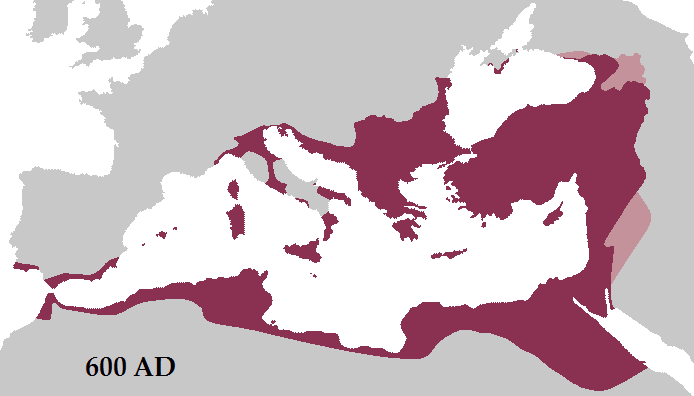
Think of the Roman Empire. Oh yeah, Rome. It went from being a city-state to… well, you know the rest. It took over huge chunks of Europe, North Africa, and the Middle East. All those different peoples, speaking different languages, paying taxes to Rome. That's an empire.
Or the Persian Empire. Another massive one. They had roads, postal services, and a truly mind-boggling amount of territory. All under one roof. Or, you know, one grand palace.
The defining characteristic of an empire is its vastness and its multiplicity of peoples and territories under a single ruler. It’s about control, about dominion, about being the big cheese on the global (or at least regional) stage.
Quirky Empire Facts!
Did you know that empires often had to deal with a lot of different languages? Imagine trying to get everyone to agree on pizza toppings when they speak fifty different tongues! Empires had to figure that out, usually with a common language for administration, like Latin in Rome or Aramaic in some Persian territories.
And the bureaucracy! Empires are notorious for having tons of paperwork. Tax collectors, governors, scribes – a whole army of people just to keep track of everything. It’s like trying to manage a thousand different group chats all at once.
-1757509157932.jpg)
Another fun fact: empires sometimes incorporated the gods of the people they conquered. It was a way to say, "Hey, we respect your traditions… sort of. And also, our god is pretty cool too." It's like adding a new flavor to your pizza, but the flavor is a deity.
So, What's the Big Deal?
The difference is all about scale and power. A city-state is like a star player on a local team. An empire is like a global sports league, with teams from all over the world competing (or, you know, being ruled by) one central commissioner.
City-states are all about being independent. They’re the ultimate self-starters. They focus on their own survival and prosperity. They might form alliances, but they're never truly subservient.
Empires are about domination and expansion. They are the ultimate consolidators. They bring different peoples under one rule, for better or worse. They create vast networks of trade, culture, and, of course, control.

Think about it: a city-state might be like your favorite local cafe. It’s got its own vibe, its own menu, and it’s where you go for your regular fix. An empire is like a massive coffee chain that has branches everywhere, selling the same coffee (mostly) but with a different regional manager in each location.
It’s also about how they interact with the world. A city-state is often looking outwards, maybe for trade or for defense against its neighbors. An empire is looking outwards to acquire more territory, more resources, more influence.
And honestly, the fact that some of the most influential civilizations in history started as tiny, independent city-states is just wild, right? It shows that even the biggest giants can start small. It’s a reminder that power can grow, and sometimes, it grows so big it becomes something entirely different.
So, next time you’re pondering the rise and fall of civilizations, remember this little distinction. Is it a proud, independent city doing its own thing? Or is it a massive, sprawling behemoth ruling over countless lands? It’s a fun way to add a little spice to your historical conversations. And who doesn’t love a good historical chat?