
What Is The Difference Between A Metal And A Nonmetal

Ever looked at a shiny spoon or a piece of chalk and wondered what makes them so different? It's all about being a metal or a nonmetal! Think of the periodic table – that famous chart of all the elements. It's like a big family reunion for atoms, and they're neatly divided into two main groups: the cool kids (metals) and the, well, the other cool kids (nonmetals)!
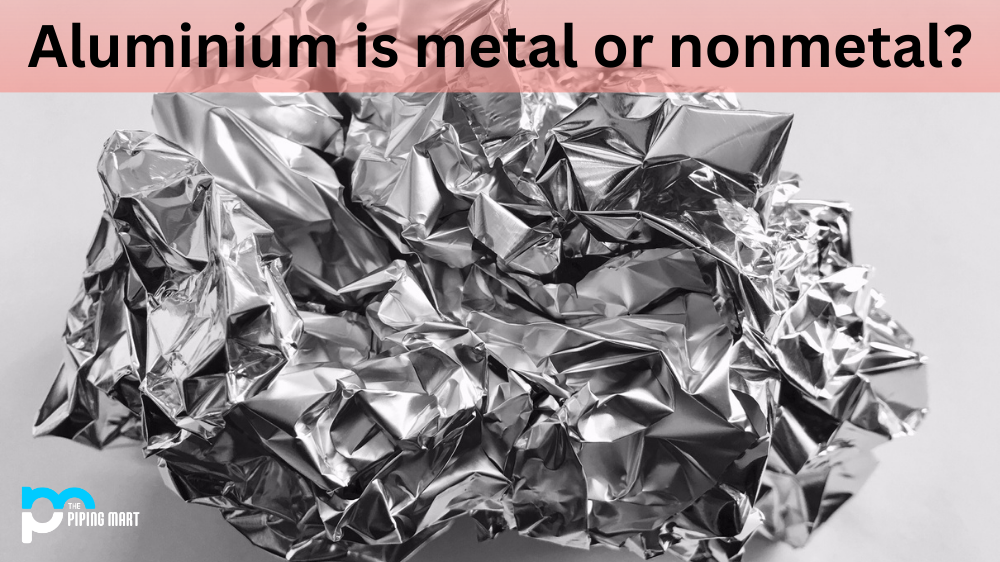
So, what’s the scoop? Metals are like the rockstars of the element world. They love to show off! Most metals are shiny, like a brand new bicycle. They’re also fantastic at conducting electricity and heat. That’s why we use copper wires for our lights and pans made of aluminum to cook our dinner. Copper and aluminum are classic examples of these dazzling performers.
But it’s not just about looks and utility. Metals have this amazing ability to be bent and shaped. Imagine taking a lump of gold, something incredibly precious and beautiful, and hammering it into a paper-thin sheet to decorate a fancy cake. That’s called malleability, and metals are pros at it. They can also be drawn out into long, thin wires. That’s ductility, and it’s why we can have those handy electrical cables.
Most metals are solids at room temperature, but there's a tiny rebel in the family: mercury. This liquid metal is like the eccentric artist, always doing its own thing. You'll find it in old thermometers, looking all silvery and mysterious. It’s proof that even in a well-ordered group, there’s room for a surprise!
Now, let’s talk about the nonmetals. If metals are the flamboyant performers, nonmetals are more like the quiet, essential backbone. They don't always catch your eye with their shine, but boy, are they important! Think about oxygen, the stuff we breathe! Can you imagine a world without it? And carbon, the building block of life itself, found in everything from diamonds to the pencils we doodle with.

Nonmetals are a bit more… diverse in their personality. Some are gases, like nitrogen which makes up most of our air. Others are solids, like sulfur with its distinct yellow color and smell, or that aforementioned carbon. And, as we mentioned, mercury is the only liquid metal, but when it comes to nonmetals, we have things like bromine, a reddish-brown liquid that looks like it belongs in a mad scientist's lab. It’s definitely not as common as your everyday table salt, which is made of sodium (a metal!) and chlorine (a nonmetal!). How’s that for a surprising partnership?
Unlike metals, nonmetals aren't usually shiny. They can be dull, or even transparent. And when it comes to conducting heat and electricity, most nonmetals are quite the opposite of metals. They're insulators! Think of the plastic coating on your electrical cords – that's usually a nonmetal doing its job of keeping you safe. Plastic is basically a fancy arrangement of carbon and hydrogen atoms, both nonmetals.
When you try to bend or hammer a nonmetal, it usually just crumbles or breaks. They're not really into being shaped. They’re more about their own distinct form. It’s like trying to mold clay that’s already perfectly set – it just doesn’t have that same flexibility.

So, why is this whole metal versus nonmetal thing so fascinating? Because it explains so much about the world around us! It's like having a secret code to understand how things work. That spark from your phone screen? That's probably a result of how certain metals and nonmetals interact. The strength of a skyscraper? That relies heavily on the properties of metals like iron.
It's like a constant dance between these two groups. Sometimes they team up to create something entirely new and amazing. When a metal and a nonmetal combine in a specific way, they form a compound. Think of water (H₂O). It’s made of hydrogen and oxygen. Hydrogen is a highly flammable gas, and oxygen is what we breathe to burn things. But put them together, and you get water – something essential for life and incredibly calming!
Even the beautiful, vibrant colors you see in fireworks are often thanks to mixing different metals and nonmetals. The brilliant reds might come from strontium, and the dazzling blues from copper compounds. It’s a spectacular display of chemistry in action!
"The distinction between metals and nonmetals is fundamental to understanding the building blocks of our universe, and it’s a story told in every object we touch and every breath we take."
The periodic table isn’t just a list of names; it’s a guide to these incredible properties. You can actually see the division! On the left side, you've got your metals, all stacked up and ready for action. On the right, you have the nonmetals, with their own unique talents. And right in the middle, there’s a little staircase of elements called metalloids, which are like the fence-sitters, sometimes acting like metals and sometimes like nonmetals. They’re the neutral ground, adding another layer of intrigue!
So, the next time you pick up a coin, admire a piece of jewelry, or even just take a sip of water, remember the fascinating world of metals and nonmetals. They’re not just boring scientific terms; they’re the secret ingredients that make our world so interesting, functional, and yes, even beautiful. It’s a story that unfolds everywhere, and once you start looking, you’ll see it in everything!