
What Is The Difference Between Structural And Behavioral Adaptations
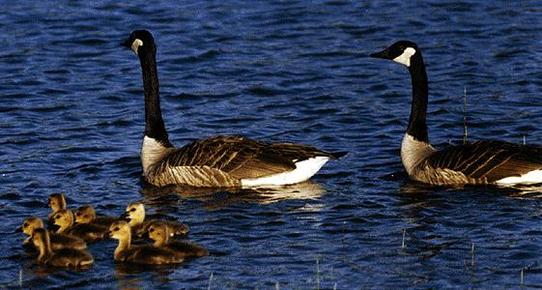
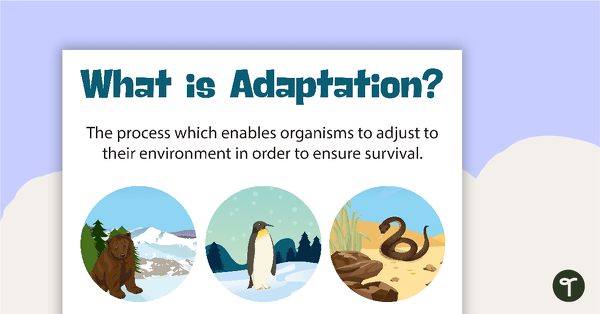
Hey there, fellow Earthlings! Ever wondered why some critters are built a certain way, while others are total drama queens in the animal kingdom? Well, buckle up, buttercups, because we're diving into the super cool world of adaptations! These are the amazing tricks living things use to survive and thrive, and today we're unraveling the mystery between two of the biggest players: structural and behavioral adaptations. Think of it as nature's ultimate makeover contest, and these are the winning categories!
So, let's start with the showstoppers, the ones you can see and touch (if you were brave enough to get close!). These are our structural adaptations. Imagine them as the fancy body parts or the amazing physical features that help an organism live its best life. They're like the built-in superpowers that evolution has handed out.
Think about a giraffe. What's the first thing that pops into your head? That ridiculously long neck, right? That, my friends, is a classic structural adaptation! It's not like the giraffe woke up one day and decided, "You know what? I'm gonna stretch my neck." Nope! It's a physical feature that evolved over millions of years to help them reach those yummy leaves way up high in the acacia trees.
And speaking of reaching, have you ever seen a monkey's prehensile tail? It's like having an extra hand that can grip branches! This amazing appendage is another fantastic structural adaptation, allowing them to swing through the jungle with the grace of a trapeze artist. Imagine trying to do that with just your regular old arms and legs – you'd be toast!
Let's not forget about camouflage! Ever seen a chameleon blend seamlessly into its surroundings? That's not just a fashion statement; it's a life-saving structural adaptation. Their skin has special cells that can change color to match anything from a leafy green branch to a barky brown tree trunk. Talk about stealth mode activated!
What about those ridiculously sharp claws on a lion? Those aren't for knitting sweaters, folks! They are powerful tools for hunting and defense, a prime example of a structural adaptation. They allow a lion to catch its dinner (and fend off its enemies) with impressive efficiency. Imagine trying to catch a gazelle with mittens on – not ideal.

And the mighty whale? Its blubber is a brilliant structural adaptation. This thick layer of fat keeps them warm in the icy depths of the ocean. It's like wearing a built-in, super-insulating onesie that never gets cold. Brrr! Imagine trying to swim in the Arctic without it – you'd be a frozen popsicle in no time.
Even something as simple as the shape of a bird's beak is a structural adaptation. A hummingbird's long, slender beak is perfect for sipping nectar from flowers, while a parrot's strong, curved beak is ideal for cracking nuts. Each beak is a finely tuned instrument, perfectly designed for its specific diet. Nature is so clever with its cutlery!
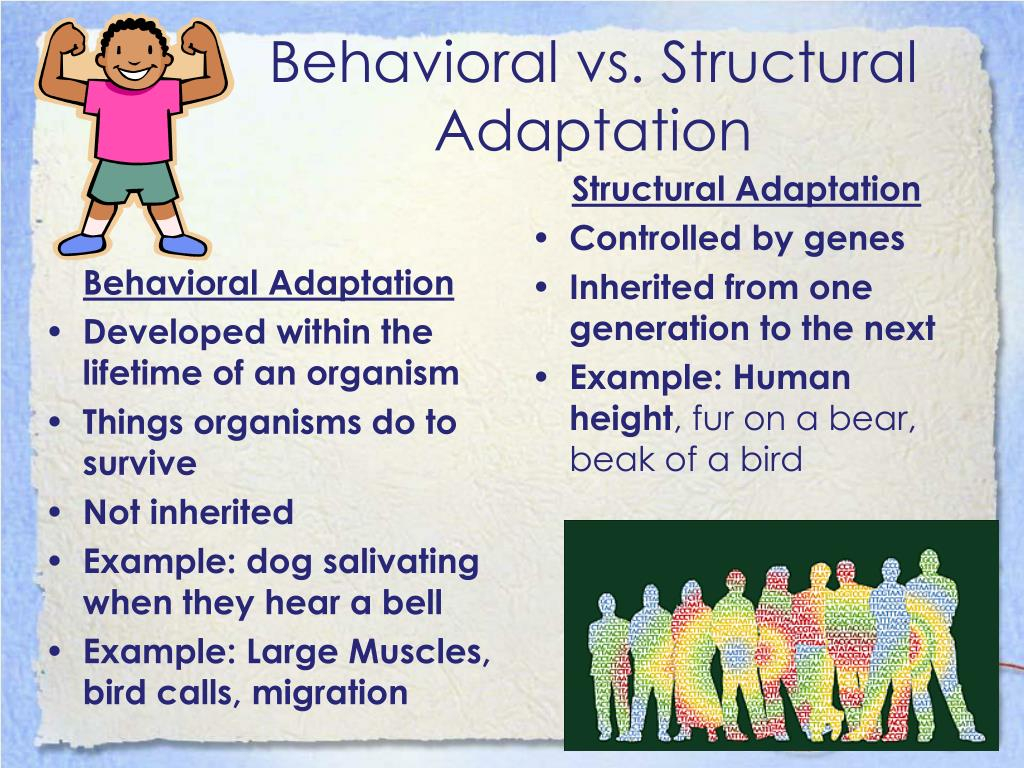
So, to recap, structural adaptations are all about the what – the physical parts and pieces that make an organism what it is. It's the hardware, the tangible stuff. They are the evolutionary blueprints that give creatures their distinct advantages.
Now, let's switch gears and talk about the other side of the coin: behavioral adaptations. These are the how – the actions and ways of living that help an organism survive. Think of them as the awesome routines, the clever tricks, and the daily dramas that organisms perform. They are the software that makes the hardware run!
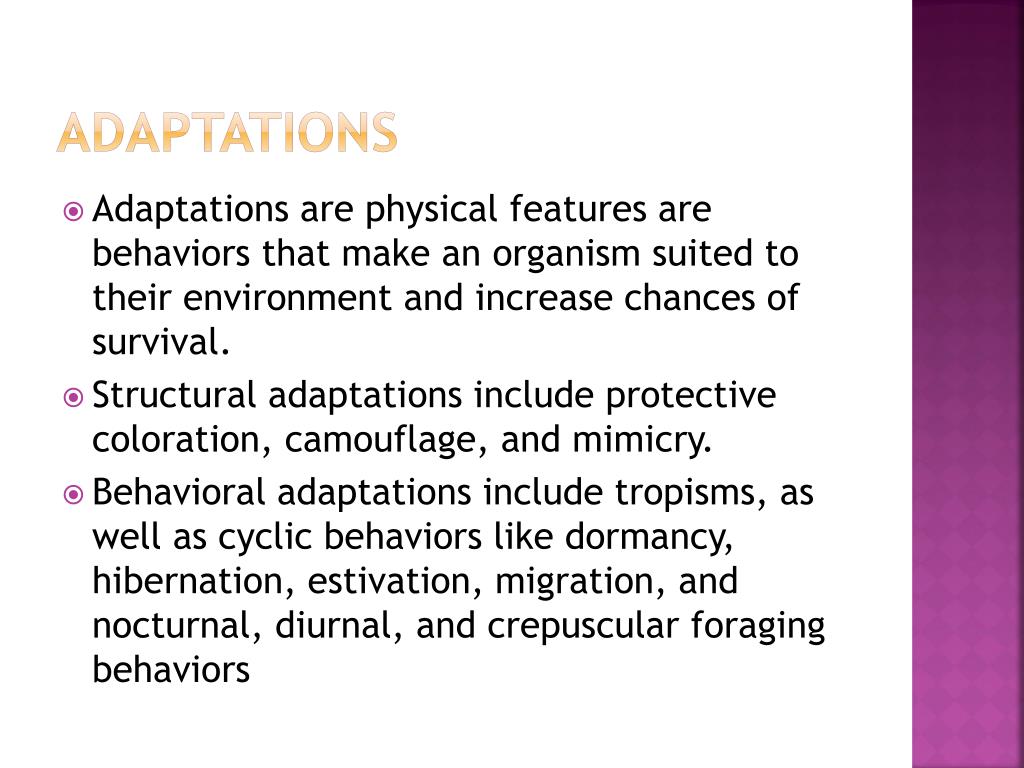
Consider a bird migrating south for the winter. This isn't something they are, but something they do. This incredible journey is a behavioral adaptation that ensures they escape the freezing cold and find plentiful food. It's like packing your bags and heading to Florida when it's snowing outside – smart move!
What about a fox hiding its food? That's a classic behavioral adaptation! It’s a way to ensure they have something to eat later, especially when times are tough. They aren't born with a secret stash compartment; they learn to bury their leftovers. It’s like creating your own personal pantry for a rainy day.
Think about nocturnal animals, like owls. They are most active at night. This is a behavioral adaptation that helps them avoid predators that are active during the day and to hunt prey that is also active in the dark. It’s like having a special night shift that’s perfectly timed for peak hunting opportunities. They're the ultimate night owls, but for survival!
Hibernation is another magnificent behavioral adaptation. During the cold winter months, some animals enter a deep sleep to conserve energy and survive when food is scarce. They aren't literally turning into a rock; they are actively choosing to slow down their bodily functions. It's like hitting the ultimate power-saving mode until spring.
Ants are masters of coordinated effort, and their social behaviors are incredible behavioral adaptations. Working together to build colonies, find food, and defend their territory is crucial for their survival. Imagine if every ant just did its own thing – chaos! Their teamwork is a serious survival strategy.
What about the mating dances of birds of paradise? These elaborate displays are behavioral adaptations designed to attract a mate and pass on their genes. It’s a full-blown performance, a dazzling courtship ritual that proves their fitness. They're basically putting on a Broadway show for love!
And the way a porcupine curls into a ball when threatened? That's a defensive behavioral adaptation. While its quills are structural, the action of curling up to expose those quills is purely behavioral. It's a quick, effective way to say, "Uh-uh, not today!"
So, the main difference? Structural adaptations are the physical features, the body parts, the stuff an organism has. Behavioral adaptations are the actions, the routines, the things an organism does. It’s like comparing a beautifully designed tool (structural) to the skilled way someone uses that tool to build something amazing (behavioral).
Sometimes, these two types of adaptations work hand-in-hand. For example, a polar bear has thick fur and blubber (structural) to survive the cold, but it also hunts seals in the freezing water (behavioral). Its amazing body helps it do its amazing job!
It's pretty mind-blowing when you think about it, isn't it? Every creature on this planet, from the tiniest ant to the biggest whale, has these incredible adaptations that help them survive and reproduce. It’s a testament to the power of evolution and the sheer ingenuity of nature. So next time you see an animal, take a moment to appreciate its structural brilliance and its behavioral brilliance. They’re all doing their best to rock this planet!
Whether it's a frog with sticky toes for climbing (structural) or a dog that wags its tail to communicate happiness (behavioral), these adaptations are what make life so diverse and fascinating. They are the secret ingredients to survival, and frankly, they're just plain cool. So go forth and marvel at the wonders of adaptation!