
What Is The Difference Between The Grassland And Savanna Biomes
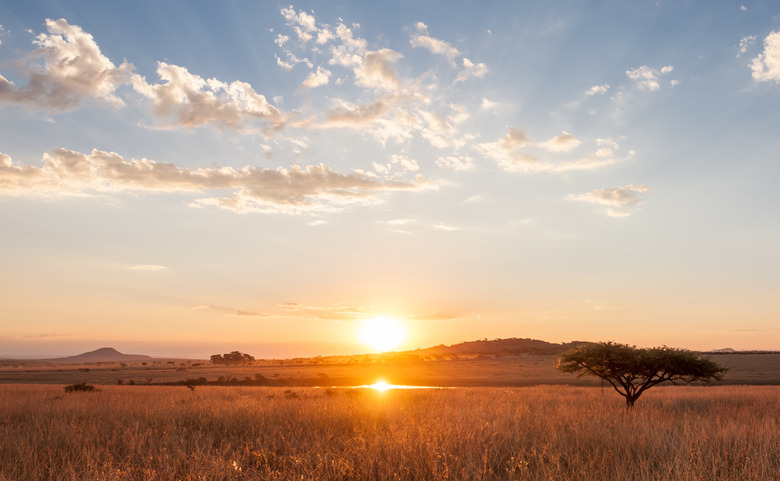
Picture this: I’m backpacking through Kenya, utterly mesmerized. The sun is beating down, a lazy haze hangs in the air, and in the distance, a lone acacia tree stands sentinel against a vast expanse of golden grass. It feels like I’ve stepped onto a movie set, right? But then, my guide, a man whose knowledge of this land seemed as deep as the roots of those ancient trees, points and says, “See that? That’s savanna. Different from the prairies back home, eh?”
And you know what? He was absolutely right. My preconceived notion of “grassland” was this endless, undulating carpet of green, maybe with a few wildflowers thrown in. But this? This was something else entirely. It sparked a question in my mind, one that I’ve been pondering ever since: what’s the real difference between a grassland and a savanna? Are they just fancy names for the same thing, or is there a subtle (or not-so-subtle) distinction?
Let’s be honest, for most of us, “grassland” conjures up images of, well, grass. Lots and lots of grass. And that’s not wrong, per se. But the world of biomes is way more complex than a simple patch of lawn, isn't it? It’s like trying to explain the difference between a perfectly decent sandwich and a gourmet panini – both have bread, but the toppings, the texture, the whole vibe is different.
So, let’s dive in, shall we? Grab a cuppa, get comfy, and let’s unravel this grassy mystery together. I promise it won’t be as dry as, well, a desert. 😉
The Broad Strokes: What’s a Biome Anyway?
Before we get our hands dirty with grass and trees, it’s good to remember what we’re even talking about. A biome, in simple terms, is a large geographical area characterized by specific types of plants and animals that have adapted to that particular climate and environment. Think of it as Earth’s way of sorting its neighborhoods. You’ve got the chilly polar regions, the steamy rainforests, the arid deserts, and yes, the grassy places.
These aren’t just random collections of flora and fauna; they’re intricate ecosystems where life has found a way to thrive under specific conditions. And the key players that define these conditions are usually temperature and precipitation. You know, how much rain falls and how hot (or cold) it gets.
So, when we talk about grasslands and savannas, we're talking about two distinct types of these ecological neighborhoods, both dominated by grasses, but with a crucial difference.
The Grassland: The Unadorned Beauty of Grass
Let’s start with the seemingly simpler one: the grassland. Imagine vast, open plains stretching as far as the eye can see. The dominant vegetation here is, you guessed it, grass. Trees and large shrubs are generally absent, or at best, scattered in very small numbers.
Think of the prairies of North America, the steppes of Eurasia, or the pampas of South America. These are the classic examples of grasslands. What makes them so… grassy? Primarily, it’s the rainfall. Grasslands typically receive moderate amounts of rainfall – enough to support grass growth, but not enough to sustain dense forests.
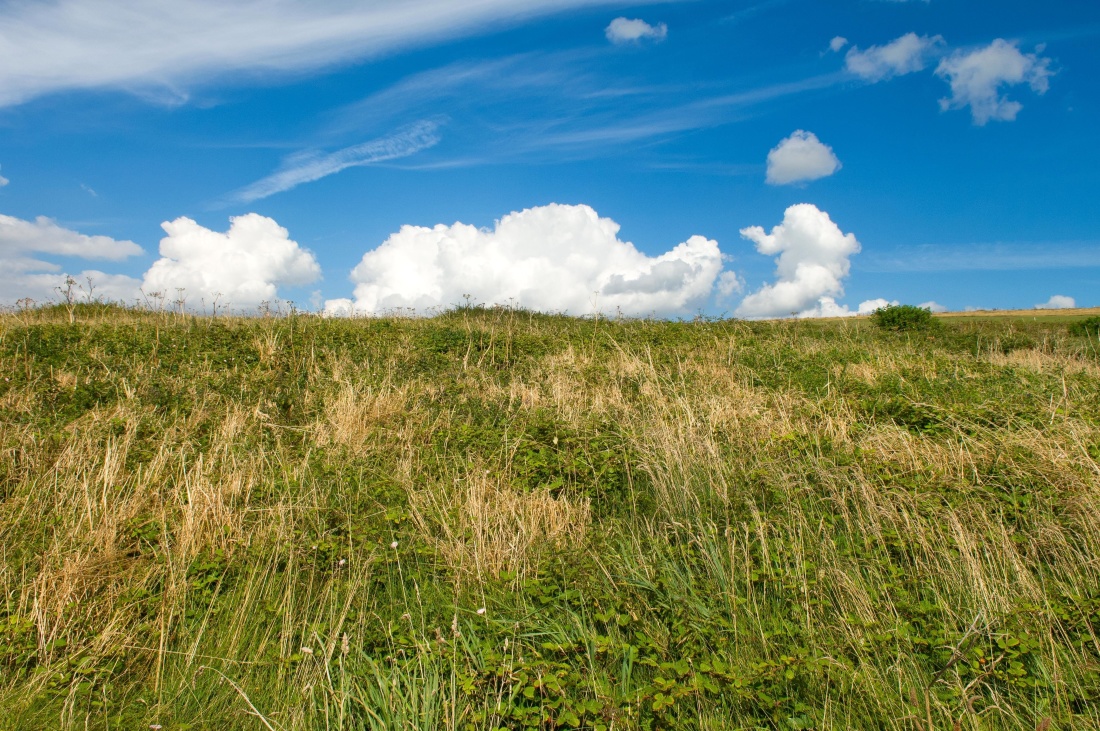
This rainfall pattern is often characterized by distinct wet and dry seasons, but even during the dry spells, the grasses have adapted to survive. They have deep root systems that can reach water far below the surface, and their above-ground parts are often designed to withstand drought and even fire.
Ah, fire! Yes, fire is a really important factor in maintaining grasslands. Natural fires, often caused by lightning strikes, sweep across these dry landscapes. Grasses are remarkably resilient to fire. Their growing points are usually at or below ground level, so when the flames pass over, they can quickly sprout anew. In fact, fire can actually prevent trees and shrubs from taking over. It’s like nature’s way of giving grass a competitive edge.
The soil in grasslands is also typically very fertile, rich in organic matter. This is thanks to all those decaying grasses and the activity of burrowing animals. It's why so many of the world's major agricultural areas are found in former grasslands – think of the breadbaskets of the world!
Animals here are often grazers – creatures that eat grass. Think of bison, pronghorn antelope, prairie dogs, and a whole host of smaller mammals and birds. They’ve evolved to live in open spaces, often with keen eyesight to spot predators and speed to escape them.
So, in essence, a grassland is a biome where grass reigns supreme, thanks to a delicate balance of moderate rainfall, seasonal dryness, and the occasional helping hand from fire. It’s an ecosystem built for open spaces and efficient grazers. Pretty straightforward, right?
The Savanna: Grassland with a Bit of Flair (and Trees!)
Now, let’s talk about the savanna. This is where my Kenyan guide comes in. Savannas are, in many ways, a type of grassland, but with a defining characteristic: the presence of scattered trees and shrubs. It’s like the grassland decided to accessorize!

The key difference, and this is crucial, is the level of woody vegetation. In a savanna, grasses are still the dominant plant cover, but they are interspersed with trees that are widely spaced. You can walk between them without much obstruction, and importantly, sunlight can still reach the ground to support the grasses.
Where do these trees come from? Well, the rainfall in savannas is usually a bit higher than in true grasslands, or at least it’s more consistently distributed throughout the year, allowing trees to establish and survive. However, it’s still not enough to create a dense forest. It’s that perfect sweet spot where both grass and trees can coexist.
But it’s not just about the amount of rain. Savannas often have very pronounced wet and dry seasons. During the long dry season, the grasses might turn golden brown and appear quite parched, while the trees, with their deeper roots, can often remain greener. This is the classic image you see in nature documentaries: vast grasslands dotted with flat-topped acacia trees or the majestic baobab.
Fire also plays a role in savannas, just like in grasslands. It helps keep the woody vegetation in check, preventing the trees from becoming too dense and crowding out the grasses. Many savanna trees are also adapted to fire, with thick bark that protects them from the flames.
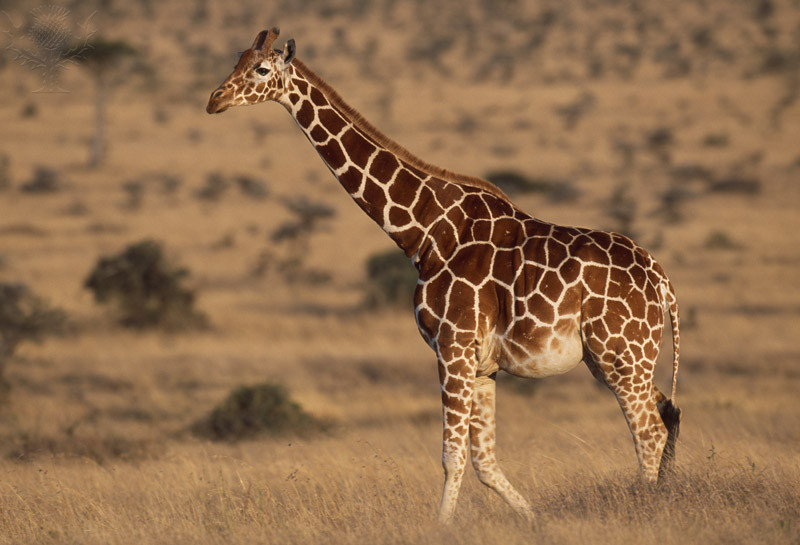
The animals in savannas are often a spectacular sight. Because of the mix of grasses and trees, you get a wider variety of herbivores. We’re talking about iconic species like zebras, giraffes, elephants, wildebeest, and lions. These animals have adapted to both the open grazing areas and the shade and browse offered by the trees.
Think about it: a giraffe can reach leaves high up in the acacia tree, while a zebra grazes on the grasses below. It’s a more diverse feeding strategy, supporting a richer tapestry of life. The presence of trees also offers opportunities for shade, shelter, and nesting for a variety of birds and other creatures.
So, to recap, a savanna is essentially a grassland that has enough rainfall and/or a specific seasonal pattern that allows for the growth of scattered trees and shrubs, alongside the dominant grasses.
The Subtle Nuances: It’s Not Always Black and White
Now, here’s where things get a little blurry, and frankly, a bit ironic. Nature, in its infinite wisdom, doesn’t always stick to neat little boxes. You won't always find a perfectly defined line separating a grassland from a savanna. There’s a bit of a spectrum, a gradient.
Some areas might be classified as “open savannas,” which are very grassland-like but have a few more scattered trees than a true prairie. Others might be “wooded savannas,” where the trees are more numerous, but still not close enough to form a closed canopy. It’s like trying to decide if a light beige is more like cream or more like taupe – there’s a whole lot of in-between!
The classification often comes down to the percentage of land cover occupied by trees and shrubs. If it’s less than 10-20%, it’s generally considered a grassland. If it’s somewhere between 20% and 80%, it’s leaning towards savanna. Beyond that, you start getting into woodlands and forests.
And then there’s the human factor. Humans have a HUGE impact on these biomes. We clear land for agriculture, we graze livestock, and we sometimes plant trees where they wouldn’t naturally grow. This can alter the balance and blur the lines even further. So, what might have once been a classic savanna could be degraded into something more grassland-like, or vice versa.
It’s also worth noting that the term “savanna” is often used more broadly in a global context, especially for tropical and subtropical regions. So, while North American prairies are undeniably grasslands, many African and Australian landscapes, with their characteristic scattered trees and distinct wet/dry seasons, are firmly in the savanna category. It’s a bit of a geographic and climatic dance.
A Quick Cheat Sheet: Grassland vs. Savanna
Let’s boil it down to the absolute essentials, shall we? Imagine you’re taking a pop quiz on biomes (don’t worry, no actual grading happening here!).

Key Characteristics of Grasslands:
- Dominant Vegetation: Grass. That’s the star of the show.
- Trees/Shrubs: Absent or very few and scattered.
- Rainfall: Moderate, supporting grasses but not dense forests. Often distinct wet and dry seasons.
- Soil: Generally very fertile.
- Fire: An important factor in maintaining the biome.
- Animals: Primarily grazers adapted to open spaces.
- Examples: North American Prairies, Eurasian Steppes, Pampas.
Key Characteristics of Savannas:
- Dominant Vegetation: Grass, but with scattered trees and shrubs.
- Trees/Shrubs: Present but widely spaced, allowing sunlight to reach the ground.
- Rainfall: Often higher than grasslands, or more evenly distributed, supporting both grass and trees. Pronounced wet and dry seasons are common.
- Soil: Variable, can be fertile but may also be less so than true grasslands.
- Fire: Important for maintaining the balance between grass and trees.
- Animals: A more diverse range of herbivores, including grazers and browsers, and their predators.
- Examples: African Savannas (Serengeti), Australian Savannas.
See? The core difference boils down to those woody bits. Grassland: no trees. Savanna: trees, but not too many!
Why Does It Matter Anyway?
You might be thinking, “Okay, so there are trees or there aren’t. Big deal.” But honestly, these differences have a huge ripple effect. The type of vegetation dictates the kinds of animals that can live there, the soil composition, the water cycles, and even how susceptible the area is to climate change.
For instance, the biodiversity in a savanna is often higher than in a pure grassland due to the varied habitats provided by both grasses and trees. This impacts everything from insect populations to large mammal migrations.
Understanding these distinctions is also vital for conservation efforts. Protecting a grassland might involve managing fire regimes to prevent shrub encroachment, while conserving a savanna might require managing grazing animals to prevent overgrazing and maintaining the health of the scattered trees. Each biome needs its own tailored approach.
Plus, and this is just a little personal note, it just makes the world a more interesting place, doesn't it? Knowing that the rolling plains I imagined are distinct from the iconic tree-dotted landscapes I’ve seen in documentaries adds another layer of appreciation for the incredible diversity of our planet.
The Takeaway: It’s All About the Trees (or Lack Thereof!)
So, there you have it. The next time you’re looking at a landscape dominated by grass, you can impress your friends (or just yourself!) by knowing whether you’re gazing upon a humble grassland or a majestic savanna. The key differentiator is the presence and density of trees and shrubs. Grasslands are treeless plains, while savannas are open woodlands where grasses are still the dominant ground cover, but trees have found their place.
It’s a beautiful example of how slight variations in climate and geography can lead to vastly different, yet equally spectacular, ecosystems. And it reminds us that even seemingly simple environments are incredibly complex and interconnected. So, next time you’re out in nature, take a closer look. You might be surprised by what you discover!