
What Is The Difference Between Tube And Pipe
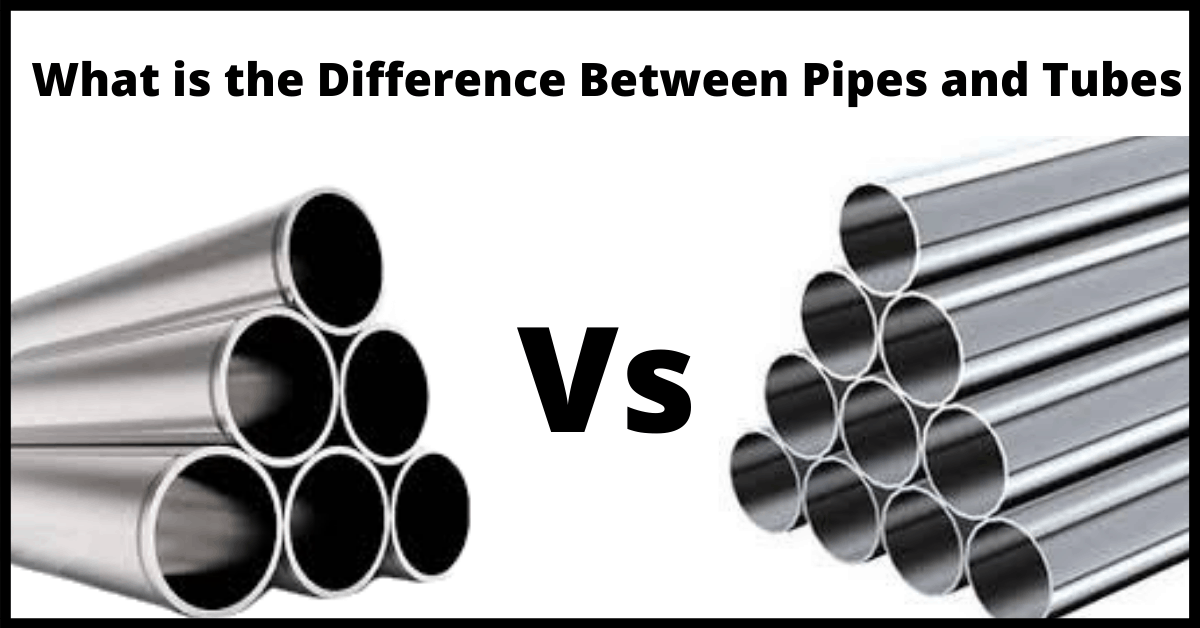
Ever found yourself staring at a long, round, hollow thing and wondering, "Am I looking at a tube or a pipe?" Don't sweat it! You're not alone in this epic quest for cylindrical clarity. It's a question that has baffled philosophers, confused plumbers, and probably caused more than a few DIY disasters.
Think of it this way: the world of hollow cylinders is like a secret society, and tube and pipe are its most mysterious members. They look alike, they act alike, but oh boy, are they different! It’s like the difference between a celebrity and their equally famous, yet distinctly separate, stunt double.
Let’s dive headfirst into this fascinating world, shall we? Get ready to become a certified tube and pipe expert, armed with knowledge that will make you the life of the next hardware store party. Or at least, it’ll help you avoid accidentally buying the wrong thing for that weekend project.
The Majestic Tube: The Underdog Hero!
First up, let's talk about the tube. Imagine a sleek, sophisticated dancer, moving with grace and precision. That's your tube. It’s all about the outside dimensions, the stuff you can actually see and touch.
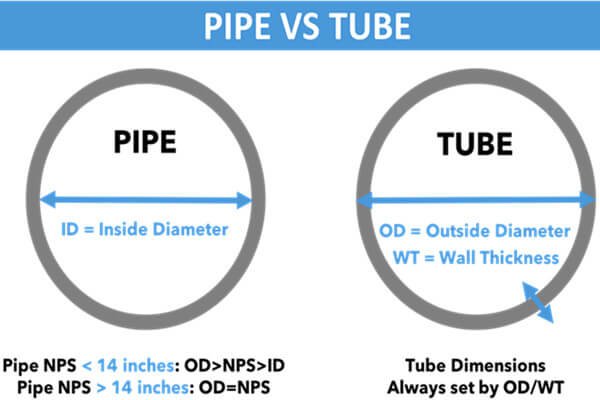
When we talk about a tube, we’re usually referring to its Outside Diameter (OD). This is the big kahuna, the main event! The thickness of the wall is then measured and can vary wildly, giving us a whole spectrum of possibilities. It's like a custom-fit suit; the outside measurement dictates the overall style.
Tubes are the unsung heroes of precision and structural integrity. Think of them in bicycles, where every millimeter of that sleek frame matters for aerodynamics and strength. Or in the intricate workings of a car’s suspension, where exact dimensions are critical for a smooth ride. These aren't just random hollow rods; they're engineered marvels!
You'll find tubes in all sorts of fancy applications. Medical equipment that saves lives? Tubes are likely involved. High-tech aerospace components? You bet! They’re the quiet achievers, the backbone of innovation, always doing their job with quiet dignity.

The way tubes are measured is a bit like a royal decree. The OD is the king, and the wall thickness is the loyal subject. You'll see measurements like "1 inch OD with a 0.120-inch wall," and everyone in the know will nod sagely. It’s a system built on precision, where every number has a purpose.
And the materials? Oh, the materials! Tubes can be made from an astonishing array of substances. Stainless steel for that gleaming, futuristic look, aluminum for lightweight strength, and even exotic alloys for the most demanding environments. They are the chameleons of the cylinder world, adapting to whatever job is thrown their way.
Let’s say you’re building a custom go-kart. You’ll be looking for tubes. You need that specific outer diameter for your wheels to fit perfectly, and a wall thickness that can handle the bumps and jumps without collapsing like a flimsy deck of cards. This is where tube truly shines.
The beauty of tubes lies in their versatility and their commitment to exact specifications. They aren't just about carrying stuff; they're often about being the structure, the conduit, the very essence of a well-engineered component. They are the artists of the hollow cylinder world, creating beauty and function in equal measure.
The Mighty Pipe: The Heavy-Duty Workhorse!
Now, let’s turn our attention to the pipe. If the tube is a graceful dancer, the pipe is a burly construction worker, ready to get the job done, no matter how tough. It’s all about the flow, the volume, the sheer power of what it can carry.
For pipes, the star of the show is the Nominal Pipe Size (NPS). This is a bit of a wild card. It’s not a direct measurement of anything you can easily put a ruler to on the outside. Instead, it’s a standard designation that hints at the internal capacity. Think of it as a nickname that everyone in the trade understands, even if it doesn't literally describe the person.
The important measurement for a pipe is actually its Inside Diameter (ID), which is what really matters for carrying fluids. The wall thickness then determines the overall strength and pressure rating. It’s like a sturdy pipeline designed to transport vast amounts of liquid without breaking a sweat.
Pipes are the backbone of our infrastructure. They bring water to our homes, carry natural gas to our stoves, and transport oil across vast distances. They are the unsung heroes of our modern world, working tirelessly behind the scenes to keep everything running smoothly. You won't find them on a fancy bicycle, but you'll definitely find them beneath your feet!
The measurement system for pipes, especially the NPS, can seem a bit quirky at first. For smaller sizes, the NPS actually corresponds to the OD. But as the pipes get bigger, the NPS starts to represent the ID, and the OD becomes larger than the NPS. It's a historical quirk, a little bit of charming confusion that only adds to its mystique.
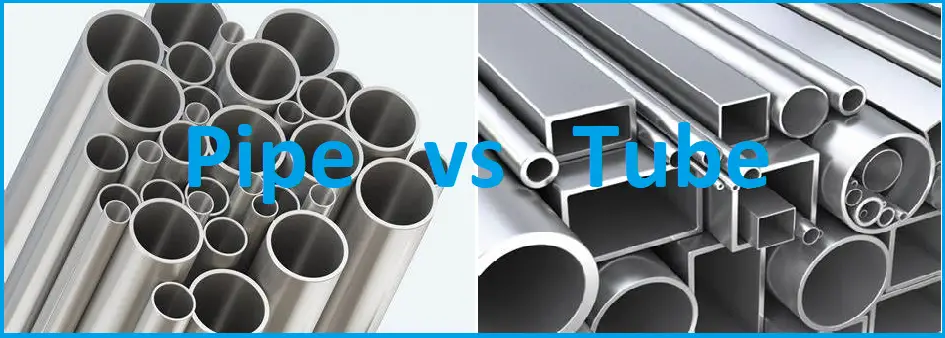
And the materials for pipes? Usually tough stuff! Steel is a common favorite for its sheer brawn, capable of withstanding immense pressures. Plastics like PVC are also popular for their resistance to corrosion and ease of installation. These are materials built to last and to handle the rough and tumble of everyday use.
So, if you’re installing a new plumbing system in your house, you’ll be dealing with pipes. You need them to carry water, not necessarily to be a perfectly smooth, aesthetically pleasing addition to your living room decor. Their job is to be robust, reliable, and to deliver the goods, whatever the goods may be.
Pipes are all about function over form. They are designed for utility, for the heavy lifting, for the unglamorous but utterly essential tasks that keep our society functioning. They are the workhorses, the dependable giants of the hollow cylinder realm.
The Grand Finale: Tube vs. Pipe!
So, let’s recap this epic battle of cylindrical proportions.
Tubes are all about the Outside Diameter (OD) and precise wall thickness. They are the engineers, the precision instruments, the components that demand exact measurements for performance. Think of them as being measured like a fine piece of jewelry.

Pipes are about the Nominal Pipe Size (NPS), which hints at the internal capacity and flow rate. They are the workhorses, the infrastructure builders, designed for carrying substances under pressure. Think of them as being measured for their carrying capacity, like a cargo ship.
Here’s a fun little trick: if you can easily measure the outside and the wall thickness, and those numbers seem to be the primary way it's identified, it’s likely a tube. If you see a mysterious NPS number and it’s primarily used for carrying fluids or gases, it’s almost certainly a pipe.
It's like the difference between a carefully tailored suit (tube) and a rugged, dependable pair of overalls (pipe). Both are useful, both are essential in their own way, but they serve very different purposes and are defined by different characteristics.
So next time you see a long, hollow cylinder, you’ll be able to confidently declare its identity. You’ll be the hero of your own DIY story, armed with the knowledge to choose the right cylindrical companion for your next endeavor. Go forth and conquer the world of tubes and pipes with newfound enthusiasm!
Remember, the world doesn't need you to know the difference, but your projects will thank you for it! And hey, it's pretty cool knowledge to have, right?