
What Is The Difference Between Venom And Poison

Ever get a little confused when folks talk about venomous snakes and poisonous frogs? You're not alone! These words sound so similar, but they're actually quite different. It's like the difference between a sneeze and a hug – both involve interaction, but in totally different ways.
Let's dive into this fascinating world of nature's little chemists and their unique talents. Think of it as a fun science lesson, but with way cooler creatures. We're talking about creatures that have evolved some truly astonishing ways to protect themselves or get a meal.
So, what's the big secret? It all comes down to how the bad stuff gets into your system. It's the delivery method that makes all the difference. Some creatures are like tiny chemists, actively injecting their special sauce, while others are more passive.
Imagine a tiny, incredibly skilled waiter. This waiter brings you a special, potent drink, but only if you try to grab them or they feel threatened. That's kind of like our first category. They give you the business.
This brings us to the star of the show for many: venom. When you think of a venomous creature, what pops into your mind? Probably a snake with fangs, right? Or maybe a jellyfish with its stinging tentacles.
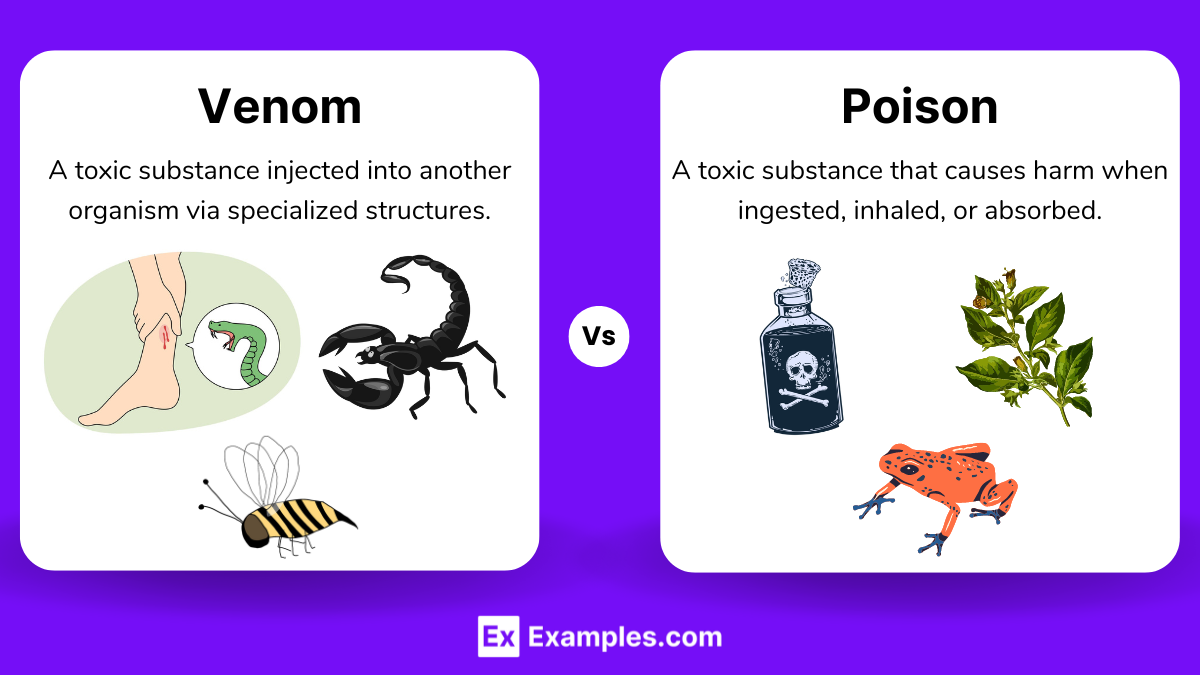
Creatures that are venomous have a special way of delivering their potent substances. They usually have a delivery system, like sharp fangs or stingers. This system is designed to inject the venom directly into the bloodstream or tissues of their target.
Think of a rattlesnake. When it feels threatened, it doesn't just sit there. It has those impressive fangs that are hollow, like tiny straws. These fangs are used to inject venom into whatever is bothering it.
The venom then travels through the victim's body, often causing a whole range of effects. It can paralyze, digest tissue, or cause intense pain. It's a very direct and active process initiated by the creature.
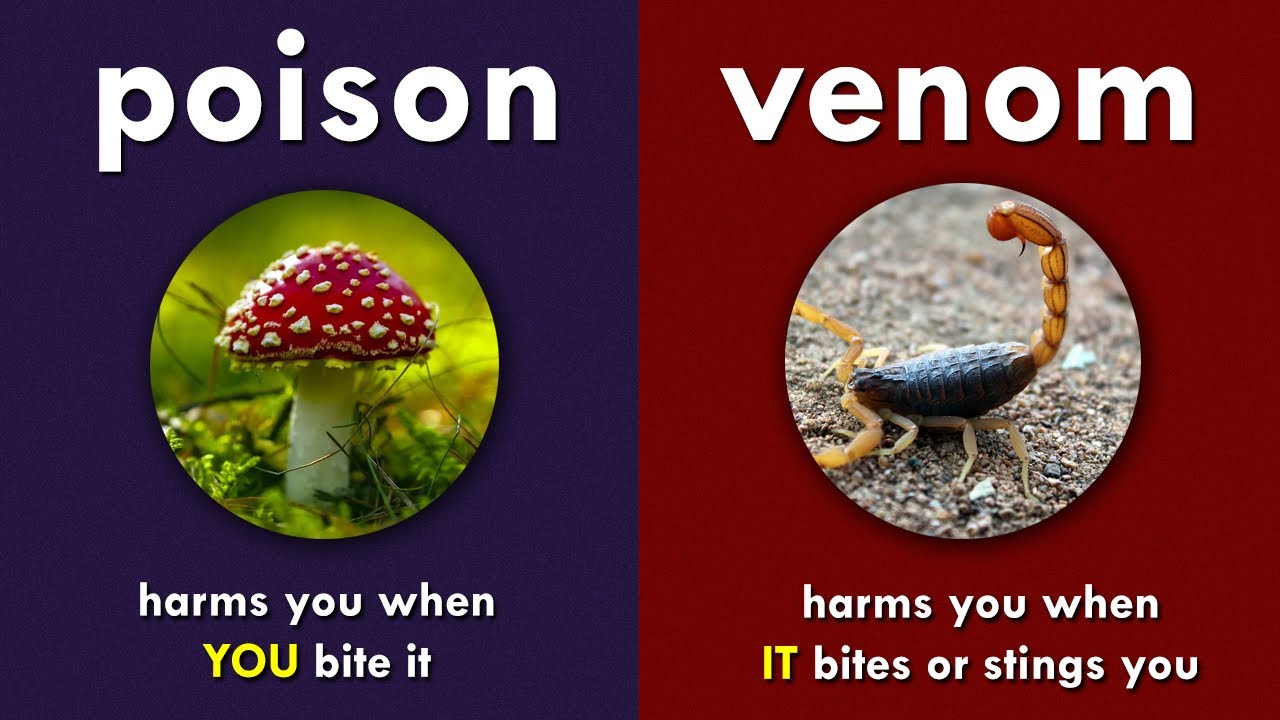
Another great example is the scorpion. That tail isn't just for show! At the end of that segmented tail is a stinger, and inside that stinger is potent venom. When a scorpion stings, it's injecting its venom.
Jellyfish also fall into the venomous club. Their tentacles are covered in tiny stinging cells called nematocysts. When these cells touch something, they fire out microscopic harpoons that inject venom. It's a super-efficient way to catch prey or defend themselves in the vast ocean.
So, the key takeaway for venom is injection. The creature actively injects the toxin into you. It's an offensive or defensive move where the creature is the active agent of delivery.
Now, let's switch gears and think about our second category. Instead of a waiter bringing you a drink, imagine a delicious-looking berry or mushroom. It looks appealing, but if you eat it, you're going to have a bad time.
This is where poison comes into play. Unlike venomous creatures, poisonous creatures don't actively inject anything. You have to come into contact with their toxin in a different way.
The most common way to get poisoned is by ingestion. That means you eat or drink something that contains the poison. It's the passive partner in this toxin game.

A classic example is the poison dart frog. These little guys are incredibly beautiful, with vibrant colors that act as a warning. Their skin secretes a powerful toxin.
If you were to try and grab a poison dart frog, and then, for some reason, touch your mouth or an open wound, you'd be in trouble. The poison from their skin would enter your body through your mouth or a cut. They aren't biting you or stinging you.
Another way to get poisoned is through absorption. This happens when the toxin comes into contact with your skin, especially if it's damaged or you have mucous membranes.
Think about certain types of mushrooms. Some look perfectly edible, but if you eat them, they contain deadly toxins. The mushroom isn't attacking you; you're accidentally ingesting its defense mechanism.
So, the big difference here for poison is that you come into contact with the toxin, usually by eating or touching it. The creature doesn't actively put it inside you. You have to interact with it in a way that lets the poison in.
It's kind of like this: a venomous snake bites you, injecting its venom. A poisonous frog or mushroom you might eat, absorbing the poison. See the difference? One is an active delivery, the other is passive entry.
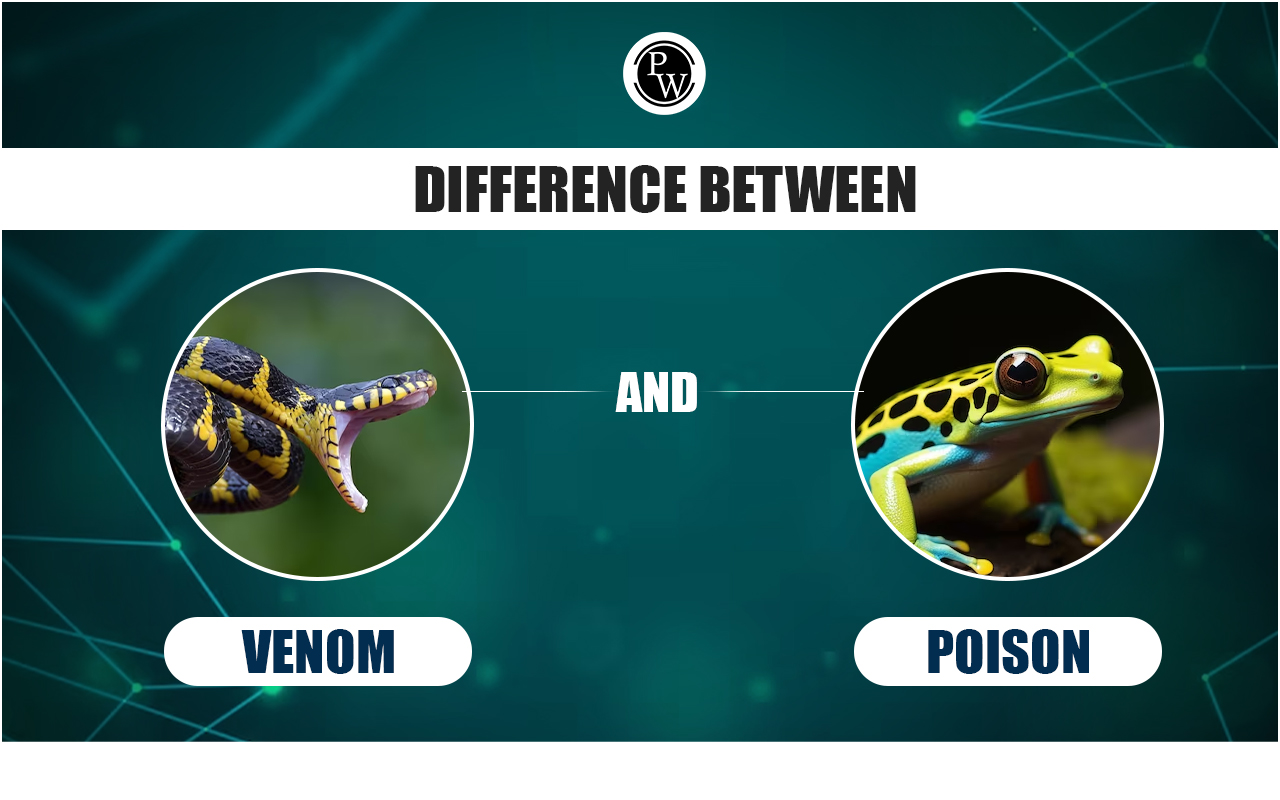
Let's recap with some fun analogies. A venomous creature is like someone who throws a dart at you. The dart contains the toxin, and it’s thrown directly. A poisonous creature is like a plant that secretes a chemical on its leaves. If you touch those leaves and then touch your eyes or mouth, you get the toxin.
It’s amazing how nature has come up with these diverse strategies for survival and hunting. Both venom and poison are incredibly effective in their own ways. They've evolved over millions of years to help these creatures thrive.
The creatures that use venom are often predators. They use their venom to subdue their prey, making it easier to eat. It’s a biochemical tool for dinner.
Think of a spider's bite. The venom quickly immobilizes the fly or insect. It’s a super-efficient way to get a meal without a lot of struggle.
On the other hand, poison is usually a defense mechanism. Creatures that are poisonous often can't escape quickly. So, they rely on making themselves unpalatable or dangerous to eat.
The bright colors of the poison dart frog are a clear signal to predators: "Don't eat me, I'm dangerous!" It’s a visual advertisement of their toxic defense.
It’s important to remember that while these substances can be dangerous to humans, they are also a vital part of the ecosystem. They play crucial roles in controlling populations and keeping nature in balance.
So, next time you hear about a creature that can cause harm, take a moment to consider how it does it. Is it injecting something with fangs or stingers, making it venomous? Or is its body covered in something that's dangerous if you touch or eat it, making it poisonous?
This distinction is not just a fun fact for trivia nights; it helps scientists understand how these animals interact with their environment and with us. It's all about understanding the amazing adaptations of the natural world.
The world of venom and poison is full of incredible creatures with remarkable survival strategies. It’s a testament to the ingenuity of evolution. It’s a reminder that even the smallest creatures have incredible powers.
So, whether it's the striking strike of a venomous snake or the vibrant warning of a poisonous frog, these natural marvels offer a fascinating glimpse into the complex and often dangerous beauty of our planet. They really do make the natural world a lot more interesting, don't they?
It's a fascinating area of study, and the more you learn, the more you realize how much there is to explore. Nature is full of surprises, and these toxins are just one small, but very impactful, part of that story. Keep your eyes peeled, and you might just spot one of these amazing, albeit potentially hazardous, creatures.