
What Is The Julius Caesar Play About

So, you've heard the name Julius Caesar, right? Maybe you picture a guy in a toga with a laurel wreath, looking all important. Well, Shakespeare's play that's named after him is a bit like a dramatic, high-stakes soap opera set in ancient Rome, with a side of political intrigue and some seriously questionable life choices. It’s not just about a famous leader; it's about ambition, loyalty, and what happens when people think they know best.
At its heart, the play is about Julius Caesar himself, a charismatic and wildly popular general. He's basically the rockstar of Rome, and everyone loves him. The people see him as their savior, the one who's going to fix everything.
But, as you might guess, not everyone is thrilled about his success. There’s a group of powerful Roman senators who start to get a serious case of the jitters. They worry that Caesar is getting too big for his boots and might end up making himself king, which, in Rome, was a big no-no.
The main guy leading this worried bunch is Brutus. Now, Brutus is a bit of a complicated character. He’s a good guy, everyone says so, and he genuinely believes he’s doing the right thing for Rome. He’s wrestling with his conscience, trying to decide between his love for his friend Caesar and his duty to his country. It’s like choosing between your favorite pizza topping and a healthy salad, but with way more severe consequences.
Then there’s Cassius, who is definitely more of the "let's stir the pot" type. He's the one who really fans the flames of doubt about Caesar’s intentions. He’s clever and manipulative, and he’s the one who convinces Brutus that something must be done. Imagine him whispering sweet (but poisonous) nothings into Brutus's ear.
The play kicks off when Caesar is returning to Rome after a big victory. The crowds are cheering, throwing flowers (or maybe just whatever they had handy back then), and everything seems like it’s going to be smooth sailing for Caesar. He’s getting offered a crown, and it looks like he might just take it. This is the moment the conspirators have been dreading.
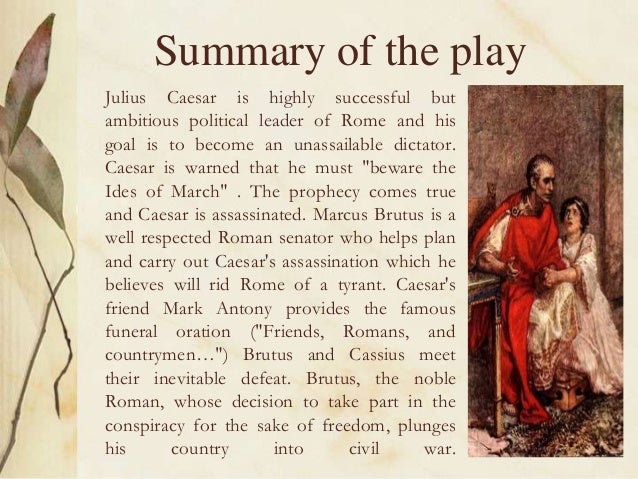
One of the funniest moments, if you can call it that, is when the soothsayer (basically an ancient fortune teller) warns Caesar to "Beware the Ides of March." Caesar, being Caesar, just laughs it off. "He is a dreamer; let us leave him," he declares. It’s that classic movie trope where the hero totally ignores the obvious danger signs.
The conspirators hatch a plan, a secret meeting where they all agree to take action. It's all very hushed whispers and urgent looks. They decide that Caesar must be stopped, and they rope in the conflicted Brutus to be a part of it. Brutus agrees, thinking it's for the good of Rome, which, spoiler alert, doesn't quite pan out that way.
The big, dramatic event, the one everyone remembers, is the assassination of Julius Caesar. It happens right there in the Senate, a public place, a shocking display. Imagine the chaos! It’s a scene that's both horrifying and utterly gripping.
And then, the famous line, the one that probably echoes through history textbooks: "Et tu, Brute?" – "You too, Brutus?" It's Caesar's dying realization that even his trusted friend Brutus is against him. It's a heartbreaking moment, full of betrayal.
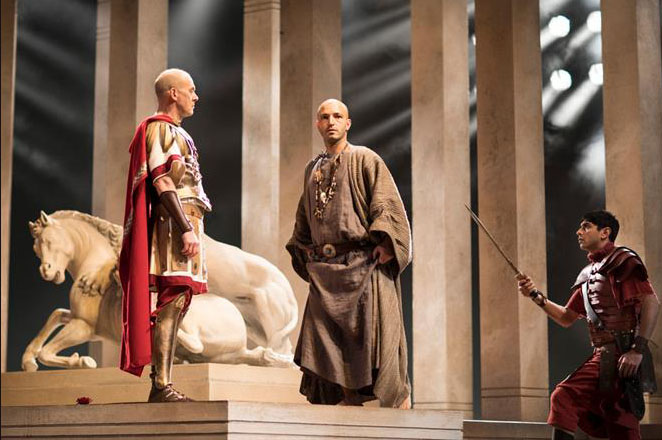
After Caesar's death, things get even more chaotic. Brutus tries to justify their actions to the Roman people, giving a speech that’s supposed to be all about freedom and liberty. He’s trying to convince everyone that they saved Rome from a tyrant.
But then, Mark Antony, Caesar's loyal supporter, steps in. He’s a charismatic orator, and he gives his own speech, using cunning and emotion to turn the crowd against the conspirators. He doesn't directly accuse them, oh no. He just subtly points out Caesar's good deeds and reminds everyone of the blood shed. It’s a masterclass in public speaking and manipulation.
You can almost hear the crowd’s mood shifting like sand. One minute they’re cheering for Brutus, the next they’re baying for blood against the senators. It’s a testament to Antony’s persuasive power and the fickle nature of public opinion.

The play then follows the aftermath of the assassination. Caesar's death didn't bring peace; it brought war. Brutus and Cassius find themselves on the losing side, facing the wrath of Antony and Caesar's adopted heir, Octavius.
There are battles, arguments, and a whole lot of people realizing that maybe, just maybe, they made a terrible mistake. Brutus is haunted by guilt and the ghost of Caesar, which is a pretty dramatic way to get your point across. He’s constantly plagued by his decisions.
One of the more poignant, if sad, moments is when Brutus and Cassius reflect on their situation. They're old friends, but they're also facing overwhelming odds. They even have a heated argument, showing that even in the face of certain defeat, personal tensions can flare. It highlights the human element amidst all the grand politics.
In the end, Brutus, seeing that defeat is inevitable and unwilling to be dragged through Rome in chains, makes a heartbreaking choice. He asks his loyal servant to help him end his own life. It’s a moment of profound sadness and a tragic end for a man who believed he was doing the right thing.

Mark Antony, upon seeing the noble Brutus dead, has a surprising moment of respect. He calls Brutus "the most noble Roman of all," acknowledging that while his actions were misguided, Brutus's intentions were pure. It’s a complex sentiment, recognizing the good in someone who ultimately caused so much destruction.
So, what is Julius Caesar really about? It’s a story about the dangers of unchecked ambition, the corrupting influence of power, and the fine line between patriotism and personal gain. It’s about how good intentions can lead to terrible outcomes and how easily people can be swayed by powerful words.
It’s also a story about friendship and betrayal, about how even the strongest bonds can be tested and broken by political pressures. And, perhaps surprisingly, it's a story that’s still incredibly relevant today. We still grapple with leaders who are too powerful, with the idea of what it means to be a good citizen, and with the consequences of our choices.
Think of it as a cautionary tale, a peek into the messy, complicated world of ancient politics, where heroes can become villains and good intentions pave the road to… well, you know. It’s a play that makes you think, makes you feel, and might even make you question who the real heroes and villains are. And that's what makes it so enduring and, dare we say, fun to watch unfold.