
What Is The Melting Point Of Metal
Hey there, curious minds! Ever look at a shiny spoon, a sturdy bridge, or even your trusty bicycle and wonder… how did this all become metal? It wasn't always like this, you know. It had to go through a pretty wild transformation. And today, we’re diving into one of the most fascinating parts of that journey: the melting point of metal!
Now, you might be thinking, "Melting point? Isn't that just for, like, science nerds in labs?" Nope! Trust me, this is more exciting than you think. It’s like a secret superpower that metals have, and understanding it can totally change the way you see the world around you. Get ready to have your mind slightly blown, in the best possible way!
So, What Exactly IS a Melting Point?
Imagine you’ve got a super-duper cold ice cube. What happens when you leave it out in the sun? Yup, it melts, right? It goes from solid to liquid. The melting point is basically the exact temperature at which that magical switch happens for any given substance.
For water, it's a cozy 0 degrees Celsius (or 32 Fahrenheit). Easy peasy. But for metals? Oh boy, metals play a whole different game. They're a bit more… stubborn.
Think about it. You can leave a steel fork in a hot oven for a good while, and it’ll get warm, sure, but it won't turn into a puddle. That’s because metals need some serious heat to change their minds from solid to liquid. We’re talking temperatures that would make your oven look like an ice cream freezer!
Metals: The Hot Stuff
Let’s chat about some common metals and their epic melting points. Take iron, for instance. The stuff that makes up a lot of our infrastructure? It needs a whopping 1538 degrees Celsius (that's 2800 Fahrenheit!) to melt. Can you even imagine that heat? It’s hotter than the surface of some planets!
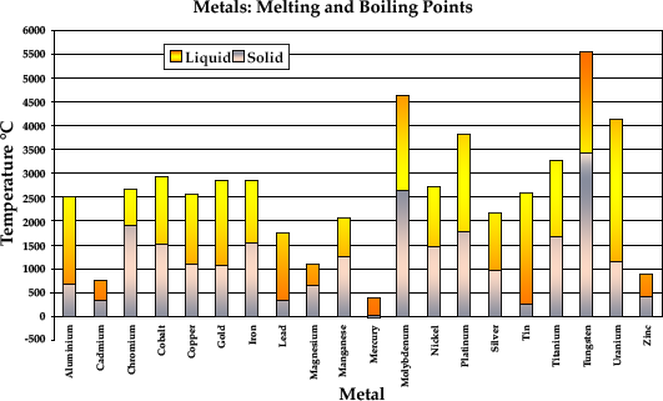
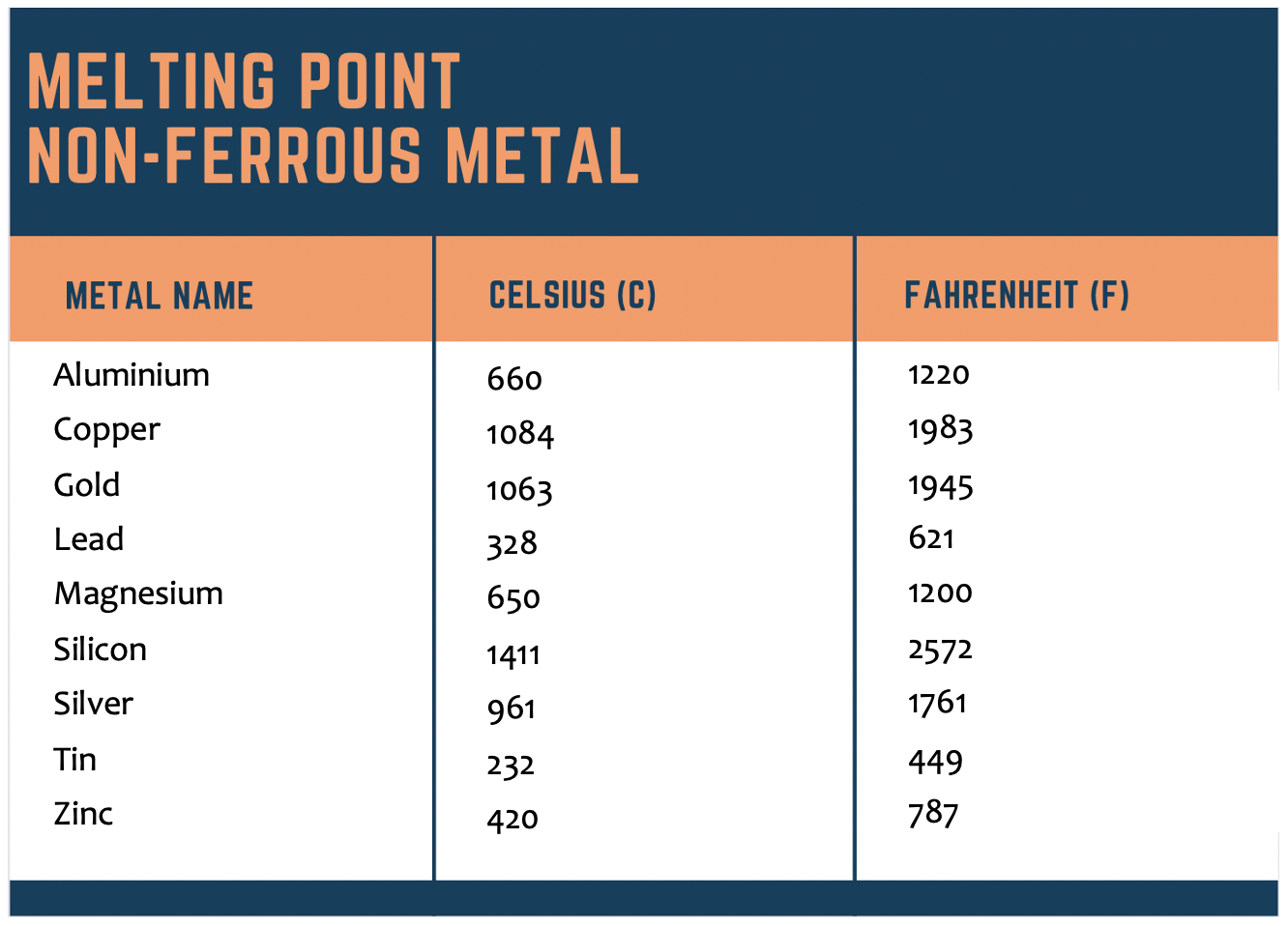
Then there’s aluminum, the lightweight champion of cans and airplane parts. It’s a bit more chill, melting at around 660 degrees Celsius (1220 Fahrenheit). Still pretty darn hot, mind you! You wouldn’t want to dip your finger in that, even for a second.
And what about gold? Our blingy friend? It melts at a comparatively "cooler" 1064 degrees Celsius (1945 Fahrenheit). So, the next time you see a beautiful gold necklace, remember the intense heat it had to endure to become that shiny, precious metal!
These numbers might seem abstract, but they’re actually incredibly important. They’re the secret handshake that metalworkers use, the blueprint for creating everything from intricate jewelry to colossal skyscrapers.
Why Should You Care About These Crazy Temperatures?
Okay, I get it. Numbers. Heat. Big deal, right? Wrong! Understanding melting points is like unlocking a hidden level in the game of life. It helps us appreciate the incredible ingenuity of humans and the amazing properties of the materials we use every single day.

Think about your trusty frying pan. It’s made of metal, right? Its melting point is high enough that it won’t melt when you’re searing that steak to perfection. If it had a low melting point, your dinner would quite literally go down the drain!
Or consider cars. The engines get incredibly hot, but the metal parts inside are designed to withstand those temperatures. It’s all about knowing and using those melting points to our advantage. It’s like having a superpower to control matter!
The Magic of Metallurgy
The art and science of working with metals is called metallurgy. And the melting point is one of its most fundamental tools. Imagine ancient blacksmiths, figuring out how to heat metal until it was malleable enough to shape into swords and armor. They were, in their own way, mastering the concept of melting points, even without fancy thermometers!
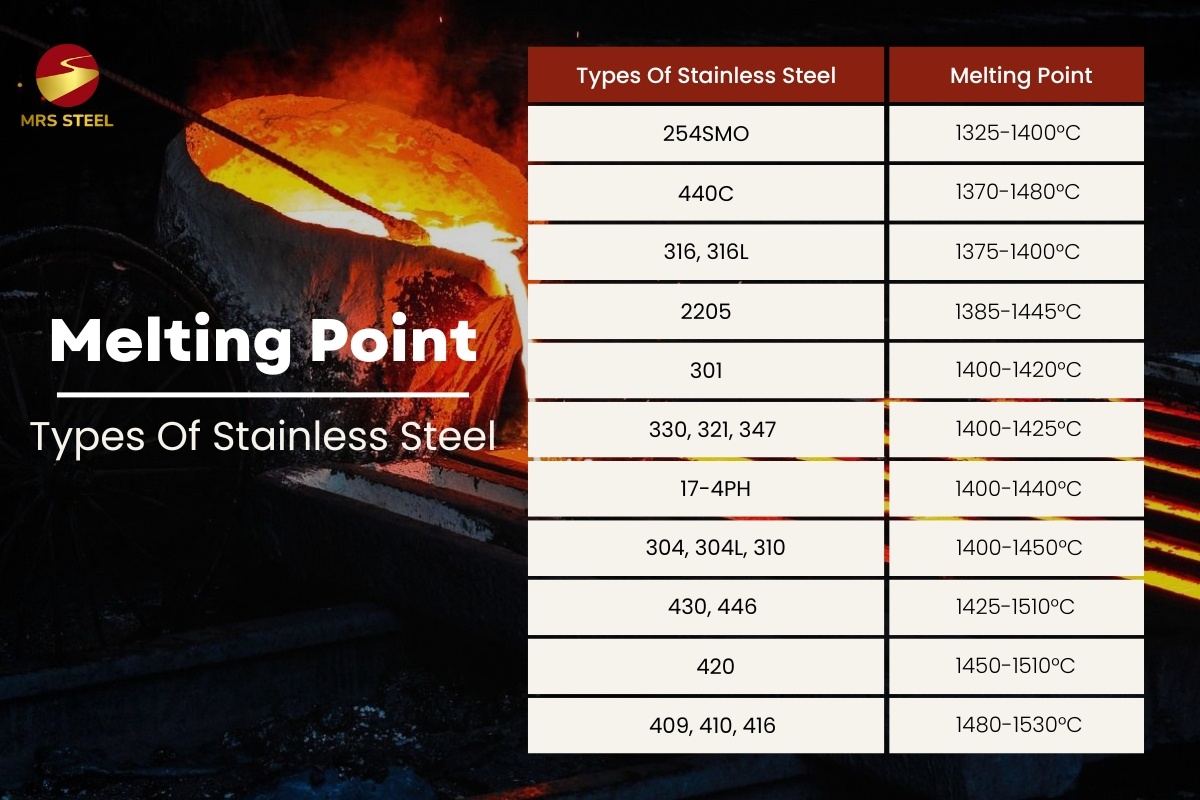
Today, metallurgists use this knowledge to create alloys – mixtures of metals that have even better properties. For example, stainless steel, the superhero of kitchenware, is an alloy of iron, chromium, and nickel. Its melting point is different from pure iron, and it’s this blend that gives it its rust-resistant superpowers.
It’s this constant innovation, this deep understanding of materials, that pushes us forward. It’s how we build faster planes, stronger buildings, and more efficient gadgets. It's all thanks to these seemingly simple, yet profoundly complex, temperature thresholds.
Making Life a Little More Fun
So, how does this make life fun? Well, for starters, it gives you something cool to talk about at parties! "Did you know that aluminum melts at over 1200 degrees Fahrenheit? Pretty wild, huh?" You'll sound like a certified genius, I promise.
But more importantly, it fosters a sense of wonder. When you look at a metal object now, you won't just see metal. You'll see a story of intense heat, chemical bonds, and human ingenuity. You'll see the result of scientists and engineers playing with the fundamental properties of matter.
Next time you’re enjoying a hot cup of coffee, think about the metal components that might have helped heat your water. When you ride your bike, marvel at the strength and durability of its metal frame, a testament to its high melting point.
It’s about seeing the science behind the everyday. It's about appreciating the invisible forces and properties that make our modern world possible. It’s about realizing that even the most mundane objects have a fascinating origin story.
Your Next Adventure in Learning
This is just the tip of the iceberg, my friends! The world of materials science is vast and incredibly exciting. From polymers to ceramics, each substance has its own unique properties that dictate what it can do and how we use it.
So, I encourage you, don't stop here! Dive deeper. Read about different types of metals, explore the concept of boiling points, and discover how scientists are creating new materials with mind-boggling properties.
The universe is a giant laboratory, and the more you learn about how things work, the more amazing it becomes. So go forth, be curious, and let the melting points of metal (and everything else!) spark your imagination. You never know where your next discovery will lead!