
What Is The Modulus Of Elasticity Of Steel
Hey there, ever wonder what makes steel so… well, steely?
We're talking about its ability to bend a bit, then snap right back. Like a super-strong, super-stubborn rubber band, but way more epic.
And the secret sauce? It’s something called the Modulus of Elasticity. Sounds fancy, right? But stick with me, it’s actually pretty cool.
It's All About the Bounce!
Think of it this way: you’ve got a steel beam. You push on it. It wiggles a little. You stop pushing. It goes back to its original shape. No permanent bendy bits. That’s elasticity in action!
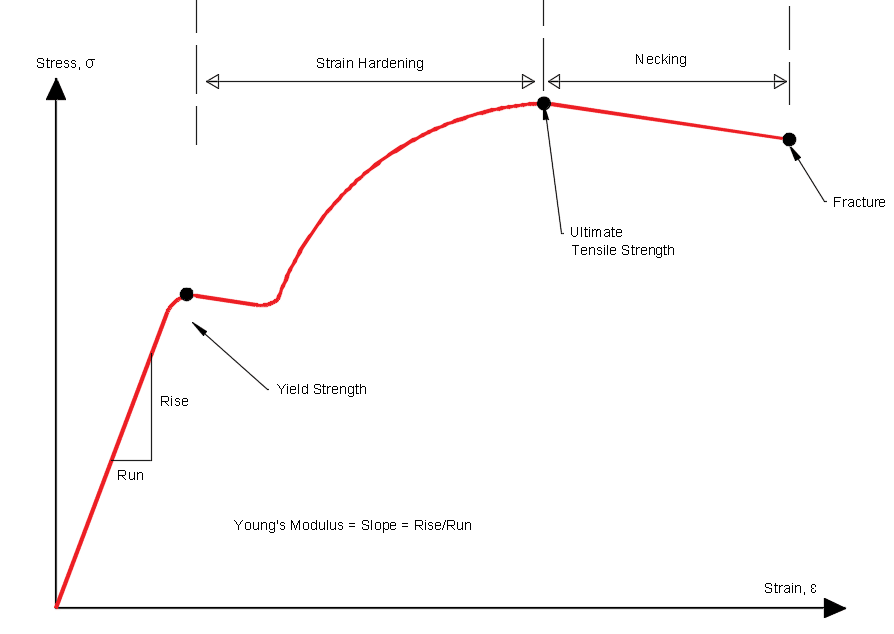
The Modulus of Elasticity, or Young's Modulus (yeah, some guy named Young figured this out), is basically a number that tells you how stiff that steel beam is. How much force does it take to make it deform a little bit?
A high Modulus of Elasticity means it's super stiff. It takes a TON of push to get even a tiny wiggle. Think of a skyscraper’s steel frame. It needs to be incredibly stiff to handle all that weight and wind.
A low Modulus of Elasticity would mean it’s more bendy. Like a spring. Which, sometimes, is also super useful!
Steel's Secret Superpower
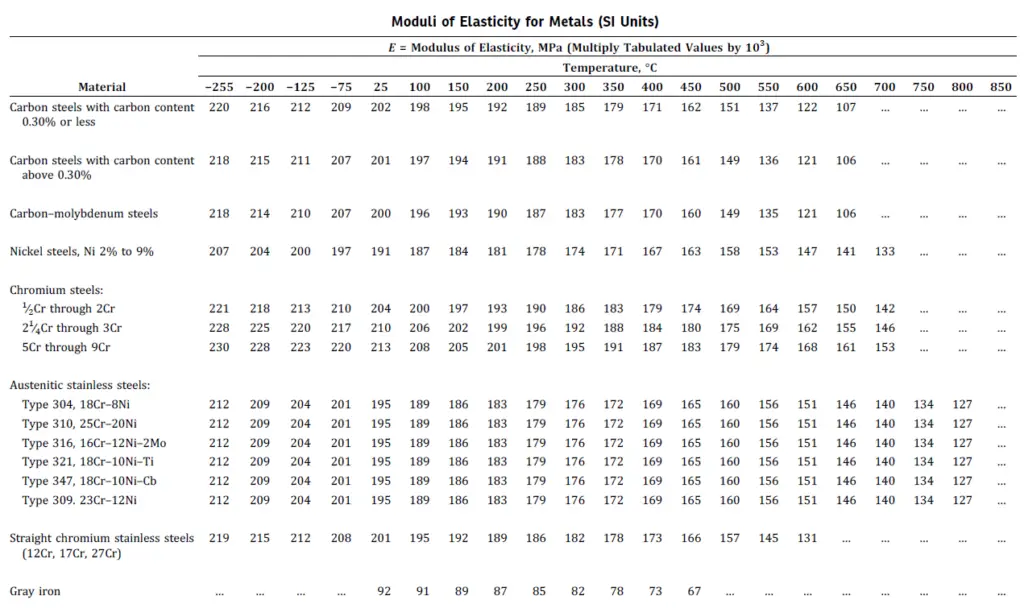
So, what's steel's superpower number? For most common steels, it’s around 200 GigaPascals (GPa). What’s a Pascal? It's a unit of pressure. A GigaPascal? That’s a BILLION Pascals. Yeah, steel is tough.
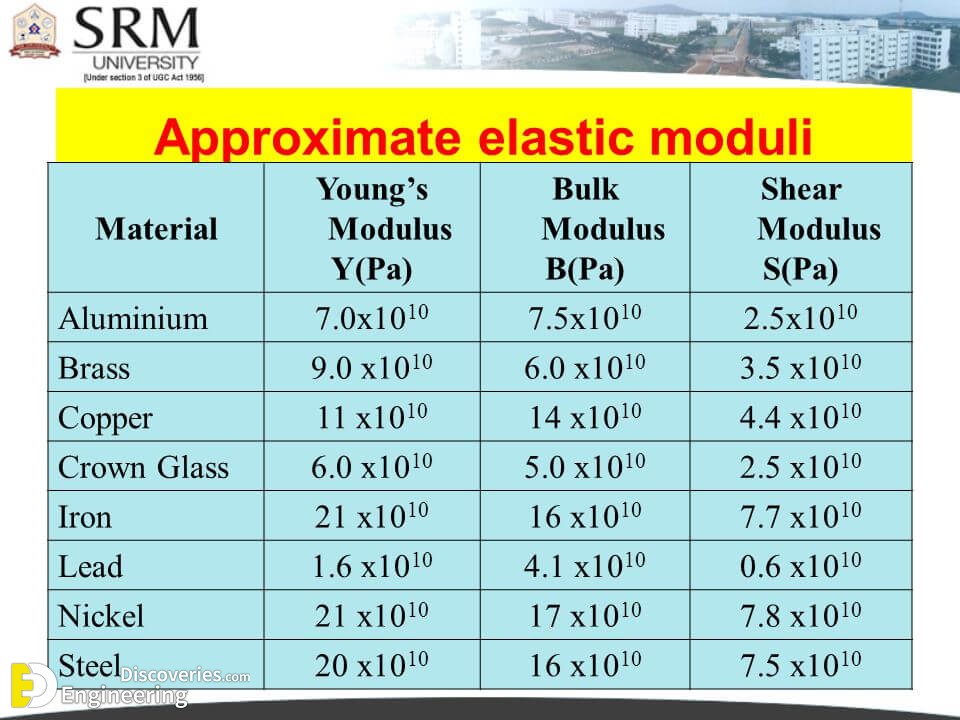
To put that in perspective, 1 GPa is roughly the pressure of 10,000 atmospheres. So, 200 GPa is like the pressure of 2 million atmospheres! Imagine trying to squish steel. You'd need a whole lot of oomph.
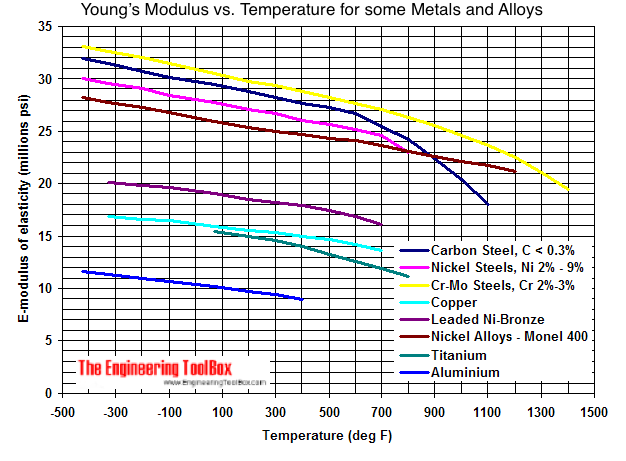
This number is like steel's DNA. It's inherent. It doesn't change much, even if you change the type of steel (stainless steel, carbon steel, etc.). The basic atomic structure of iron and carbon that makes it steel gives it this fundamental stiffness.
Why Should You Even Care? (Besides Being Awesome)
Okay, maybe you're not designing bridges in your spare time. But this stuff is everywhere!
That car you drive? Steel frame. That airplane you fly in? Steel components. Even the forks you eat your spaghetti with? Probably some steel in there. And they all need to behave in predictable ways.
Engineers use this Modulus of Elasticity number religiously. It's like their favorite cheat code for making sure things don't break or bend when they’re not supposed to.
They’re not just guessing. They plug this number into their fancy computer simulations. They predict how bridges will sway in an earthquake, how a car will crumple (safely!) in a crash, or how much a skyscraper will wobble on a windy day.
A Tiny Difference, A Huge Impact
The weird thing? Even small variations in the composition of steel can change its other properties (like strength or hardness), but the Modulus of Elasticity stays remarkably consistent. It's like the universe's default setting for steel's stiffness.
This consistency is a huge deal. Imagine if it varied wildly! Designing things would be a nightmare. You'd have to test every single bolt, every single beam, just to make sure it wouldn't behave unexpectedly.
It's this predictable stiffness that makes steel so reliable. We build our world with it because we know how it's going to react to stress. It's the strong, silent, dependable type of material.
Quirky Steel Facts (Because Why Not?)
Did you know that steel can actually flex quite a bit before it breaks? We often think of it as rigid, but it’s got a surprising amount of give. Up to a certain point, of course.

And when it does break, it often does so with a loud, dramatic *snap! A bit theatrical, wouldn't you say?
Also, the term "elastic" itself is fun. It comes from the Greek god Aeolus, who was the keeper of the winds. Kinda fitting for a material that helps us build things that stand up to the wind, right?
Another fun tidbit: while steel's Modulus of Elasticity is pretty constant, its yield strength and tensile strength can vary a lot depending on how it’s treated. Yield strength is the point where it starts to bend permanently. Tensile strength is the point where it breaks. The Modulus just tells you how it behaves before that happens.
The Modulus is Your Material's Personality
Think of the Modulus of Elasticity as a material's fundamental personality trait. Is it a laid-back, go-with-the-flow kind of guy (like a soft plastic), or is it a rigid, no-nonsense character (like diamond)? Steel is definitely on the "no-nonsense" side.
This number is so important that scientists and engineers have developed all sorts of clever ways to measure it. Sometimes they just pull and push on samples. Other times, they use vibrations! Vibrations! How cool is that?
They can tap a steel rod and listen to the "ring." The frequency of that ring tells them how stiff it is. It's like musical acoustics, but for engineering. Who knew engineering could be so… harmonious?
So, What's the Takeaway?
The Modulus of Elasticity of steel is basically its innate stiffness. It’s a huge, consistently high number (around 200 GPa) that tells us how much force it takes to slightly deform steel.
It's a fundamental property that engineers rely on to build everything from your toaster to the Golden Gate Bridge. It's why steel is so strong, so reliable, and so… steely.
It’s a bit of a quirky, unsung hero in the world of materials. Next time you see a steel structure, give a little nod to its Modulus of Elasticity. It’s the quiet force making sure everything stays put!
And hey, if you ever want to impress someone at a party, drop a "200 GigaPascals" into conversation. They might not know what it means, but they'll definitely think you're smart. Or at least, really enthusiastic about steel.