
What Is The Most Reactive Group Of Nonmetals

Have you ever thought about the ingredients in your everyday life? From the air you breathe to the water you drink, they're all made of tiny building blocks called elements. Think of them like a big, quirky family, and some members of this family are way more "chatty" and eager to make friends than others.
Today, we're going to meet the most excitable bunch of nonmetal elements. These are the ones who just can't sit still, always looking for a chance to jump into action and combine with others. They're the social butterflies of the element world, always ready for a new adventure!
Imagine a party where everyone is looking for a dance partner. Some elements are a bit shy, happy to observe from the sidelines. But this particular group? They're the ones pulling everyone onto the dance floor, no matter who they are!
Meet the Super-Socialites: The Halogens
So, who are these energetic fellows? They go by a rather fancy name: the Halogens. It sounds a bit like something you'd find in a science textbook, but really, they're just a special family of nonmetals.
The word "halogen" actually means "salt-former." Isn't that neat? It tells us something important about what they love to do: make salts! Think about table salt, the stuff you sprinkle on your fries. That's a classic halogen creation!
This group is found on the right side of the periodic table, like a group of friends all hanging out together. They have a common trait that makes them so eager to react. It's like they're all missing one crucial piece of a puzzle, and they're desperate to find it.
The Usual Suspects: Meet the Halogen Crew
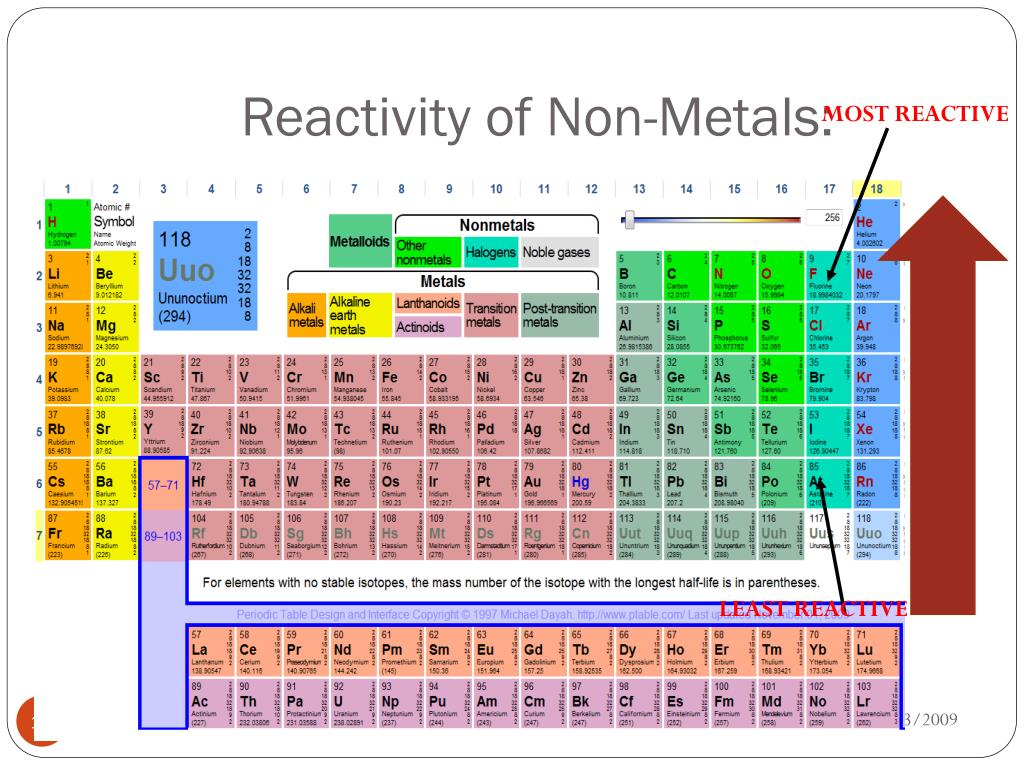
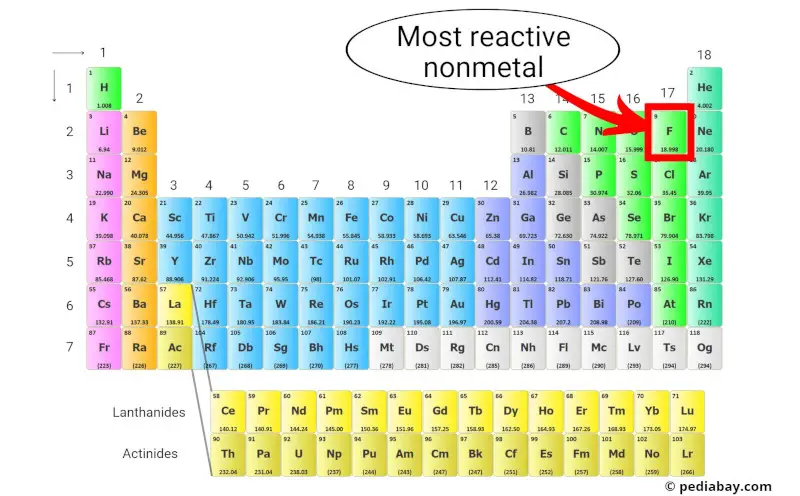
Let's introduce the main members of this lively crew. First up, we have Fluorine. This one is the absolute champion of reactivity, the energetic toddler of the group who wants to play with everything and does it with incredible speed!

Then there's Chlorine. You might know chlorine from swimming pools, where it helps keep things clean. It's also the key ingredient in bleach, showing its powerful cleaning (and reacting!) abilities.
Next, we have Bromine. Bromine is a bit more laid-back than fluorine and chlorine, but it's still very eager to get involved. It's a liquid at room temperature, which is kind of cool and a bit unusual for this family.
After bromine comes Iodine. Iodine is famous for its role in keeping us healthy, especially for our thyroid glands. It’s also used to disinfect wounds, like a gentle but effective superhero.
Finally, we have Astatine. This one is super rare and a bit mysterious. It's so uncommon that scientists haven't had as much time to get to know it as its more common relatives.
Why Are They So Eager to React?
It all boils down to their electron configuration. That sounds technical, but think of it like this: each atom wants to have a perfectly balanced set of outer "pets" (electrons). The halogens are just one pet away from achieving this perfect balance.
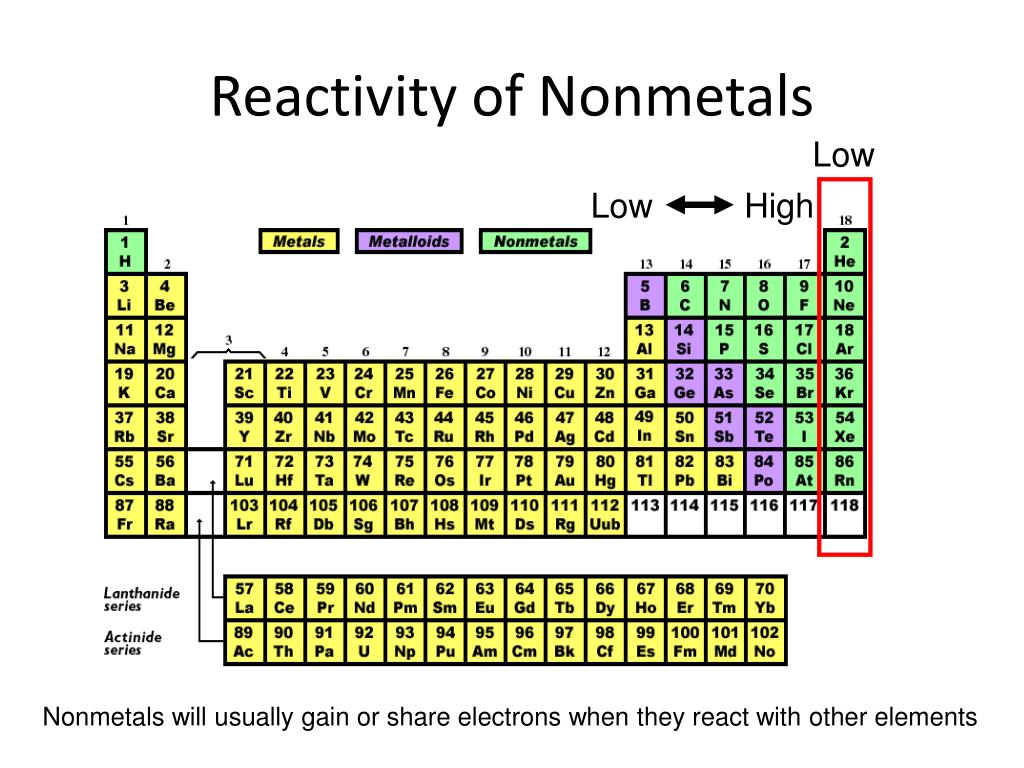
Because they're so close to this ideal state, they are incredibly motivated to grab that missing pet from anyone willing to give it up. They're like a person who just needs one more ingredient to finish a recipe – they'll go to great lengths to get it!
This strong desire to gain an electron makes them super attractive to other elements. They're the ultimate magnet for their electron-loving personalities!
Fluorine: The Undisputed King of Reactivity
If we were to give out a "Most Energetic" award, Fluorine would definitely win. It's the most electronegative element, which is a fancy way of saying it has the strongest pull for electrons. It's like a black hole for electrons!
Fluorine is so reactive that it can even react with noble gases, which are usually considered very unreactive. Imagine trying to get the quietest person in the room to start a loud conversation – that's how surprising Fluorine's reactions can be!
It's so powerful that it needs to be handled with extreme care. In its pure form, it's a real force of nature, but also essential in many applications we use daily, like in our toothpaste to protect our teeth.
The Heartwarming Side: Making Things We Love
While their reactivity might sound a little scary, it's also what makes so many things we use and love possible. Without halogens, our lives would be very different!
Remember that table salt we talked about? That's the result of a reaction between Sodium (a very reactive metal) and Chlorine. Two highly reactive elements coming together to create something essential for life and flavor!
Think about the plastics that make up so many of our everyday objects, from water bottles to computer keyboards. Many of these plastics contain chlorine, giving them their durability and flexibility. It's a hidden superhero working behind the scenes!
Even the bright, vibrant colors in some dyes and pigments rely on the properties that halogens bring. They add a little extra sparkle and stability to the things that brighten our world.
A Touch of Whimsy: Halogens in Everyday Life
It's funny to think that elements known for being so fiercely reactive are also involved in such mundane, yet important, things. They're the unsung heroes of our kitchens, our bathrooms, and even our healthcare.
Consider how iodine is used to sanitize minor cuts and scrapes. It's a gentle reminder that even the most energetic can also be incredibly helpful and caring when channeled correctly.
And the way fluorine protects our teeth from cavities? It's like a tiny shield, working tirelessly to keep our smiles healthy. Who knew such a powerful element could be so good for us?
The Takeaway: A Family Affair
So, the next time you sprinkle salt on your food, or even just take a deep breath, remember the halogens. They are the most reactive group of nonmetals, a family of elements always eager to make connections.
Their drive to react is what makes them so powerful and so useful. They are essential players in the grand chemistry experiment that is our world, creating and protecting in ways we often don't even realize.
They might be the most excitable, but it's their eagerness that adds so much to the tapestry of life. They remind us that sometimes, a little bit of energy and a lot of willingness to connect can create something truly wonderful.