
What Is The Rudder On A Boat

Ever watched a boat glide through the water and wondered how it manages to steer with such grace? It’s not magic, it’s simply the clever design of a boat’s rudder! This unsung hero of seafaring is what allows captains to navigate through choppy waves, dodge obstacles, and arrive at their desired destinations. Forget complex machinery or mystical forces; the rudder is a beautifully simple yet incredibly effective piece of engineering that’s been around for centuries.
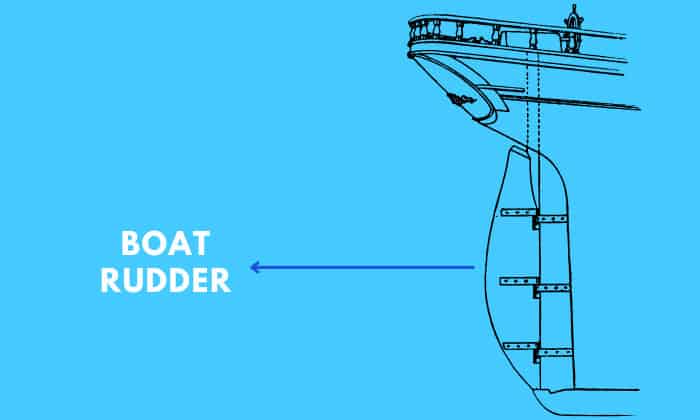
Think of it like the steering wheel in your car, but instead of turning wheels, it pivots a flat blade in the water. This blade, often made of wood, fiberglass, or metal, is mounted on a vertical shaft called the rudder post, typically at the stern (the back) of the boat. When the helm (the steering mechanism) is turned, it rotates the rudder post, which in turn moves the rudder blade. This movement is what directs the flow of water, and consequently, the direction of the boat.
The Magic of Steering
So, how exactly does a simple flat piece of material control something as massive as a boat? It all comes down to hydrodynamics – the study of how water moves and interacts with objects. When the rudder is turned to one side, it forces the water flowing past it to change direction. This deflection of water creates a pressure difference on either side of the rudder blade. The side with higher pressure pushes against the rudder, and since the rudder is attached to the boat, this push translates into a force that turns the entire vessel.
Imagine trying to push a raft by just shoving its side. It’s not very efficient, is it? But if you were to angle a paddle against the water, you could easily change the raft's direction. The rudder works on a very similar principle!
The bigger and deeper the rudder, the more leverage it has and the more effectively it can control the boat, especially in stronger currents or rough seas. Smaller boats might have smaller, simpler rudders, while large ships and yachts often have more sophisticated systems, sometimes with multiple rudders or even integrated rudder designs that work in conjunction with the propeller. This ensures they can maneuver even in tight spots or strong winds.
Benefits Beyond Just Turning
While the primary function of a rudder is to steer, it offers several other crucial benefits:
- Stability: A rudder, especially when moving forward, acts as a stabilizing fin. It helps keep the boat on a straight course and resists sideways forces, making for a smoother and more comfortable ride.
- Maneuverability: In tight spaces like harbors or canals, a well-functioning rudder is essential for precise control. It allows sailors and captains to navigate complex environments without collisions.
- Braking: While not its primary purpose, a rudder can be used for a form of braking. By turning the rudder hard to one side while the boat is moving forward, the boat will slow down as the rudder creates drag and pushes against the flow of water.
- Counteracting Propeller Torque: The propeller on a boat, especially on single-engine vessels, often spins in a way that creates a sideways force, known as torque. The rudder can be used to counteract this torque, helping to keep the boat tracking straight.
Different types of boats utilize rudders in slightly different ways. On a sailboat, for instance, the rudder is often controlled by a tiller (a lever attached directly to the rudder post) or a wheel. The skill of a sailor lies in understanding how wind, waves, and the rudder work together to harness the power of nature for propulsion and direction.

For powerboats, the rudder is usually controlled by a steering wheel connected to a cable or hydraulic system. The responsiveness of the rudder is key to a good sailing or boating experience. A sluggish rudder can make for a frustrating journey, while a responsive one makes steering feel intuitive and effortless.
The evolution of the rudder has been fascinating. From simple wooden planks strapped to the stern of ancient vessels to sophisticated, computer-controlled systems on modern superyachts, the fundamental principle remains the same: using the flow of water to guide the vessel. So, the next time you see a boat leaving a clean wake behind it, remember the humble but mighty rudder working diligently beneath the surface, making every turn and every journey possible!