
What Is The Second Largest Planet In The Solar System
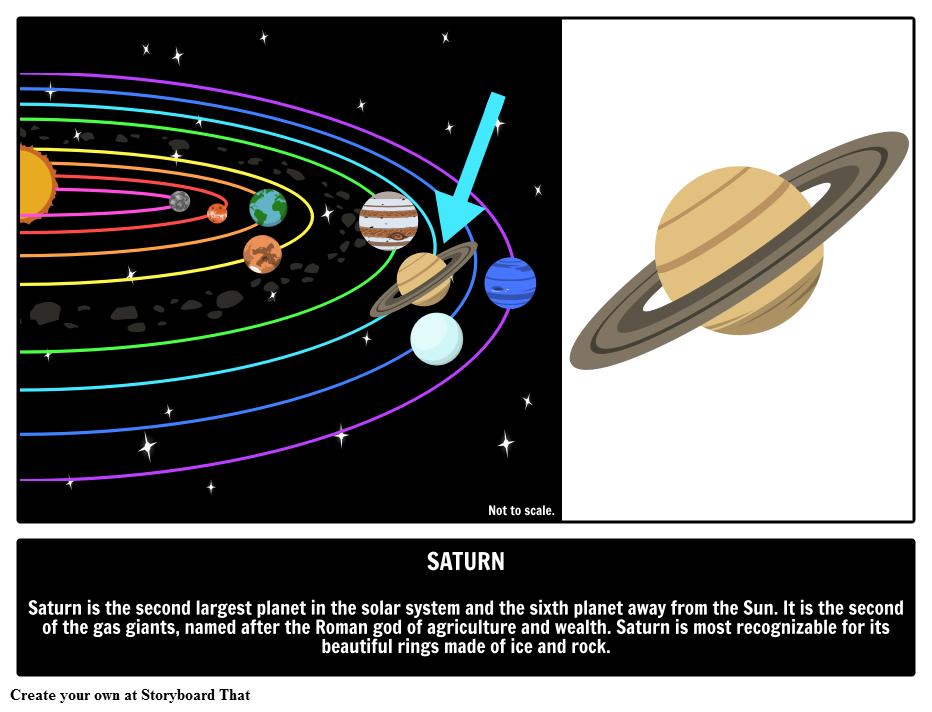
Hey there, cosmic adventurers! So, you’ve probably heard all about Jupiter, right? The undisputed heavyweight champion of our solar system, that big ol' gas giant that makes all the other planets look like little pebbles. But what about its runner-up? The planet that’s almost as massive, but still totally rocks its own kind of awesome? Stick around, because we’re about to dive into the fascinating world of the second largest planet in our solar system!
Now, I know what you might be thinking: "Is it Mars? That red planet we're always hearing about?" Nope, sorry, Mars! You're cool, but you're more of a mid-carder in the planetary size arena. And it's definitely not Earth, our beautiful blue marble. We’re pretty special, but size-wise, we’re more like the charming, cozy cottage next to the sprawling mansion. And Venus? Well, Venus is a scorcher, but it’s also a bit shy when it comes to sheer volume. So, who's the contender for the silver medal?
Drumroll, please… It’s Saturn!
Yep, that’s right. The planet with the most iconic rings, the one that always looks like it’s ready for a glamorous space-party. Saturn is our magnificent runner-up, a true giant in its own right. It’s like the super-cool older sibling who’s incredibly popular but maybe doesn’t need to be the absolute center of attention all the time. Jupiter is the king, and Saturn is the incredibly stylish, incredibly wealthy queen consort, ruling her own magnificent domain.
So, how big are we talking here? Well, Jupiter is so massive that it could fit all the other planets in our solar system inside it with room to spare. Seriously! It's like a cosmic black hole that decided to be a planet instead. Saturn, while not quite that colossal, is still pretty darn impressive. Imagine stacking about 760 Earths on top of each other. That’s roughly the volume of Saturn. It’s mind-boggling, isn't it?
And the mass? Jupiter’s mass is about 318 times that of Earth. Saturn? It’s around 95 times the mass of Earth. Still a hefty chunk of cosmic real estate, wouldn't you agree? It just goes to show how truly gargantuan Jupiter is that it manages to be in a league of its own. But Saturn is right there, breathing down its neck… well, not literally, because it's a planet, and planets don't have necks. You get the idea!
The Ringed Wonder: Saturn's Claim to Fame
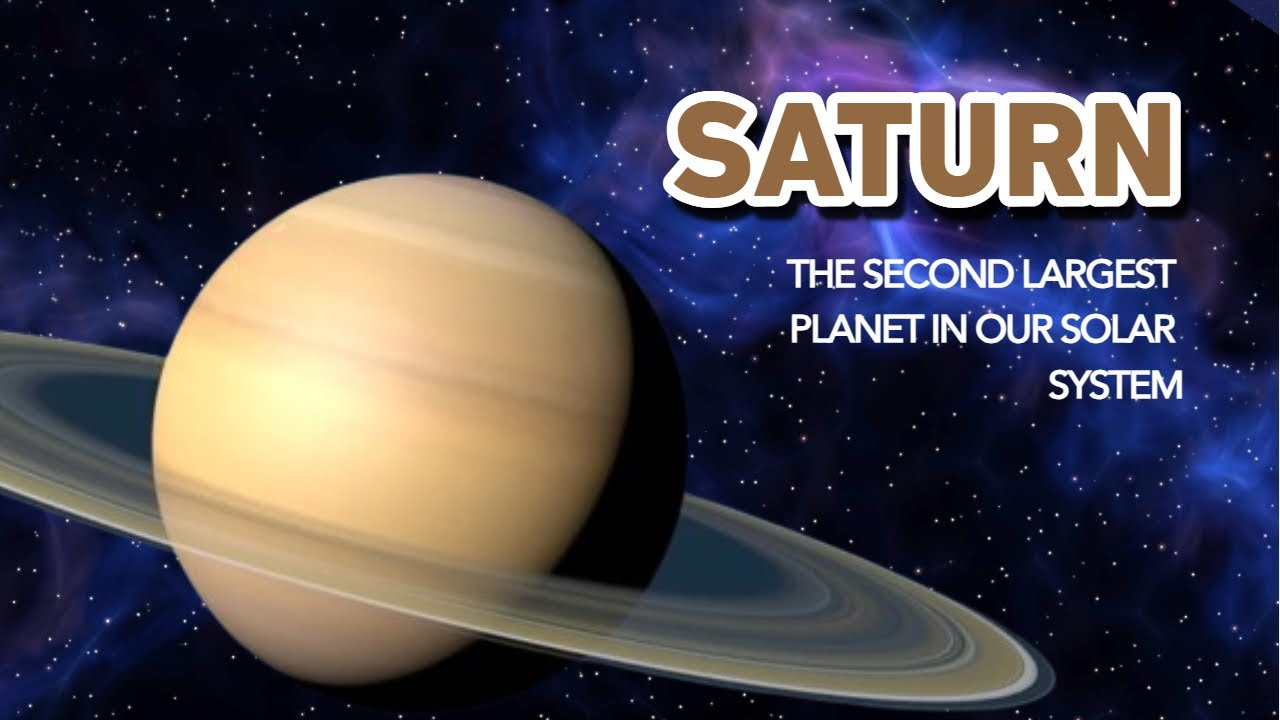
Now, we can't talk about Saturn without talking about its magnificent rings. Honestly, what’s the first thing you picture when someone says "Saturn"? I bet it’s those dazzling, ethereal hoops. They’re like the planet’s signature accessory, its sparkly tiara. While other gas giants do have rings, Saturn’s are on a whole other level. They’re wider, brighter, and so incredibly prominent. They’re what make Saturn instantly recognizable, even from a distance.

These rings aren't solid structures, mind you. They’re made up of billions and billions of tiny particles, ranging in size from specks of dust to chunks as big as houses. They’re mostly made of ice, with a little bit of rock thrown in for good measure. Imagine a cosmic disco ball, but instead of flashing lights, it’s made of shimmering ice and orbiting at incredible speeds. Pretty neat, huh?
The rings are divided into several main parts, often referred to by letters (like the A, B, and C rings, because apparently, astronomers love to keep things organized). And within these main rings, there are countless smaller divisions and gaps, some of which have been given catchy names like the Cassini Division. It's like a cosmic labyrinth made of ice. It’s enough to make your head spin – or maybe just make you want to put on some roller skates and glide through them (don’t try that at home, folks!).
Scientists are still trying to figure out exactly how Saturn got these incredible rings. Some theories suggest they were formed from the debris of a moon that got too close to Saturn and was torn apart by its gravity. Others believe they might be leftovers from the formation of the planet itself. Whatever the origin story, they're undeniably one of the most breathtaking sights in our solar system. They’re the sparkle that elevates Saturn from a mere giant planet to a true celestial icon.
A Gaseous Giant, Just Like Its Bigger Brother
Beyond the bling of its rings, Saturn is also a fascinating planet in its own right. Like Jupiter, it’s a gas giant. This means it doesn’t have a solid surface that you could land a spaceship on and have a picnic. Nope. If you tried to land, you'd just keep sinking and sinking into layers of gas, primarily hydrogen and helium. It’s like trying to stand on a cloud, but a very big, very dense cloud.

This lack of a solid surface is a key characteristic of gas giants. Instead of a rocky core like Earth or Mars, Saturn is thought to have a dense, hot core made of rock and ice, surrounded by a vast ocean of metallic hydrogen, and then enveloped by these thick layers of gas. It's a layered cake of cosmic proportions, but you definitely wouldn't want to take a bite out of it.
The atmosphere of Saturn is a swirling, tempestuous place, much like Jupiter’s. You’ll find bands of clouds that are less colorful than Jupiter’s, usually appearing in shades of yellow, brown, and white. These bands are created by different wind speeds and atmospheric compositions. And let me tell you, the winds on Saturn are no joke. We’re talking about speeds that can reach up to 1,800 kilometers per hour (that’s over 1,100 miles per hour!). That’s faster than the speed of sound on Earth! So, if you ever decide to visit, make sure to pack a very strong windbreaker.
Saturn also experiences some pretty extreme weather. It has massive storms, though they're generally not as visually dramatic as Jupiter's Great Red Spot. You might hear about "Great White Spots" that appear periodically, which are huge storms that can encircle the entire planet. These storms are a testament to the immense energy and dynamics at play within Saturn's atmosphere. It's a world of constant motion and immense power.
The Many Moons of Saturn: A Family Affair
Now, another thing that makes Saturn a super interesting place is its absolutely enormous family of moons. Jupiter has a lot of moons, but Saturn? Saturn is like the ultimate galactic matchmaker, with a whopping over 140 moons! (And that number keeps growing as we discover more, thanks to our ever-improving telescopes and space probes.) That’s more moons than you can shake a stick at… or a very small, very fast spacecraft, I guess.

The most famous of Saturn’s moons is, without a doubt, Titan. Titan is a real rockstar in the moon world. It's the second-largest moon in the solar system (only Jupiter’s Ganymede is bigger), and it’s truly unique. Why? Because it’s the only moon in our solar system that has a dense atmosphere! And it's not just any atmosphere; it's mostly nitrogen, similar to Earth's, but with a smattering of methane and ethane. It's thick enough that you can't actually see the surface from space directly without special infrared cameras. Imagine a cloudy, hazy world!
But the awesomeness of Titan doesn't stop there. It's also the only place in the solar system besides Earth that we know of where liquids flow on the surface. Now, it’s not water, of course. Because of the frigid temperatures, Titan has lakes and rivers of liquid methane and ethane. Picture this: a landscape of rolling hills, with rivers of natural gas flowing into vast methane seas. It’s like a sci-fi movie set come to life, but it’s real!
And then there’s Enceladus. Oh, Enceladus! This little moon is a bit of an underdog, but it’s packed with surprises. It’s covered in ice, but what makes it so exciting is the discovery of water geysers erupting from its south pole. These geysers shoot plumes of water vapor and ice particles into space. This suggests that there’s a liquid water ocean hidden beneath its icy shell. And where there’s liquid water, especially with potential for hydrothermal vents (like on Earth's ocean floor), there’s a chance, however slim, of life! Scientists are buzzing about Enceladus as a prime candidate for extraterrestrial life. It’s like finding a tiny, icy treasure chest with a secret biological heart.
Saturn’s moon family also includes fascinating worlds like Iapetus, with its two-toned surface (one side dark, the other light – talk about mood swings!), and Mimas, famous for its giant, Death Star-like crater. Each moon is a little world with its own unique story and geological history, adding to the incredible diversity of this planetary system. It's like a cosmic zoo, but with more ice and less roaring.
Why Saturn is So Important (Besides Being Pretty)
So, why should we care about the second largest planet? Well, for starters, studying Saturn and its system helps us understand the formation and evolution of our entire solar system. These giant gas planets, the "Jovian planets," are like ancient history books, holding clues about the conditions in the early solar nebula from which everything formed. By examining Saturn’s atmosphere, its rings, and its diverse moons, we can piece together more of that cosmic puzzle.
Also, the discovery of potential subsurface oceans on moons like Enceladus has revolutionized our understanding of where life might exist beyond Earth. It's expanded our definition of "habitable zone" and made us realize that life could thrive in places we never imagined, far from a star's warmth. It’s like finding out that your favorite ice cream flavor can actually be a savory dish – a mind-bending revelation!
Furthermore, Saturn’s rings are a natural laboratory for studying the physics of disk formation and the dynamics of orbiting bodies. They offer insights into processes that are happening throughout the universe, from protoplanetary disks around young stars to the formation of galaxies. It's a cosmic masterclass in orbital mechanics and particle physics, all wrapped up in a beautiful, icy package.
And let’s not forget the sheer wonder and inspiration. Saturn, with its majestic rings, has captivated humanity for centuries. It’s fueled our imaginations, inspired art and literature, and driven our desire to explore. The images we get back from missions like Cassini are not just scientific data; they are breathtaking works of art that remind us of the vastness and beauty of the cosmos.
So, the next time you look up at the night sky, or even just think about our solar system, remember the magnificent Saturn. It may be the second largest, but it’s a giant in its own right, a system teeming with wonder, mystery, and incredible beauty. It’s a reminder that even in the shadow of the biggest star, there’s always room for immense greatness and dazzling individuality. Keep exploring, keep wondering, and keep smiling at the incredible universe we call home!