
What Metal Is The Best Electrical Conductor
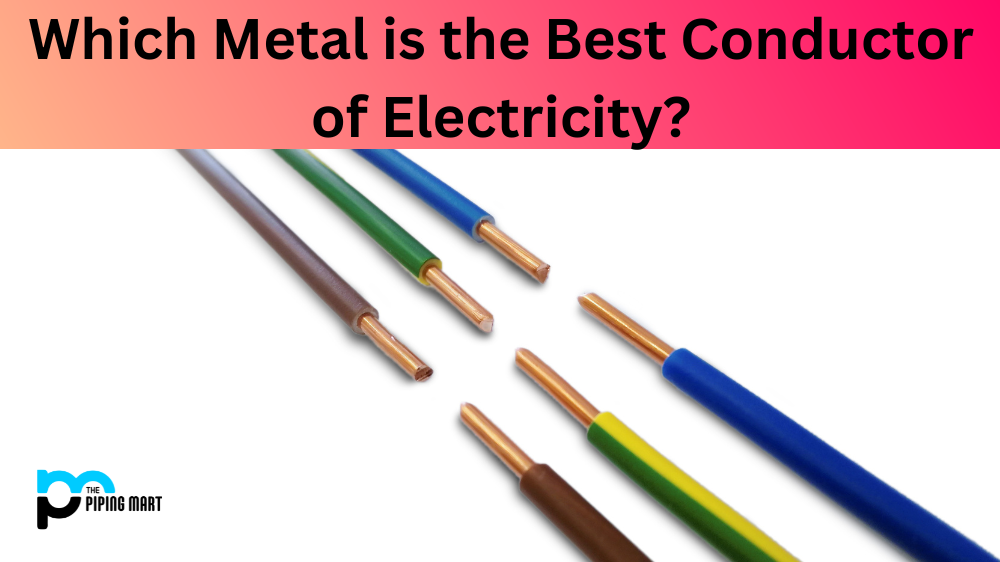
So, you're curious about what metal is the absolute king when it comes to zipping electricity around, huh? Like, if electrons had a race, which metal would win the gold medal? It's a pretty cool question, actually, and one that sparks a lot of debate. Think of it like choosing your favorite superhero – they all have their strengths, but there's usually one that just gets the job done, you know?
We're talking about electrical conductivity here. It’s basically how easily electricity can flow through something. A good conductor is like a super-smooth, wide-open highway for those tiny little electrons. A bad conductor, well, that’s more like a bumpy, traffic-jammed backroad. Not ideal, right?
And when we say "metal," we're opening up a whole treasure chest of possibilities. We've got shiny ones, heavy ones, expensive ones, and some that are just… well, there. But which one is the undisputed champ? The heavyweight champion of electron travel?
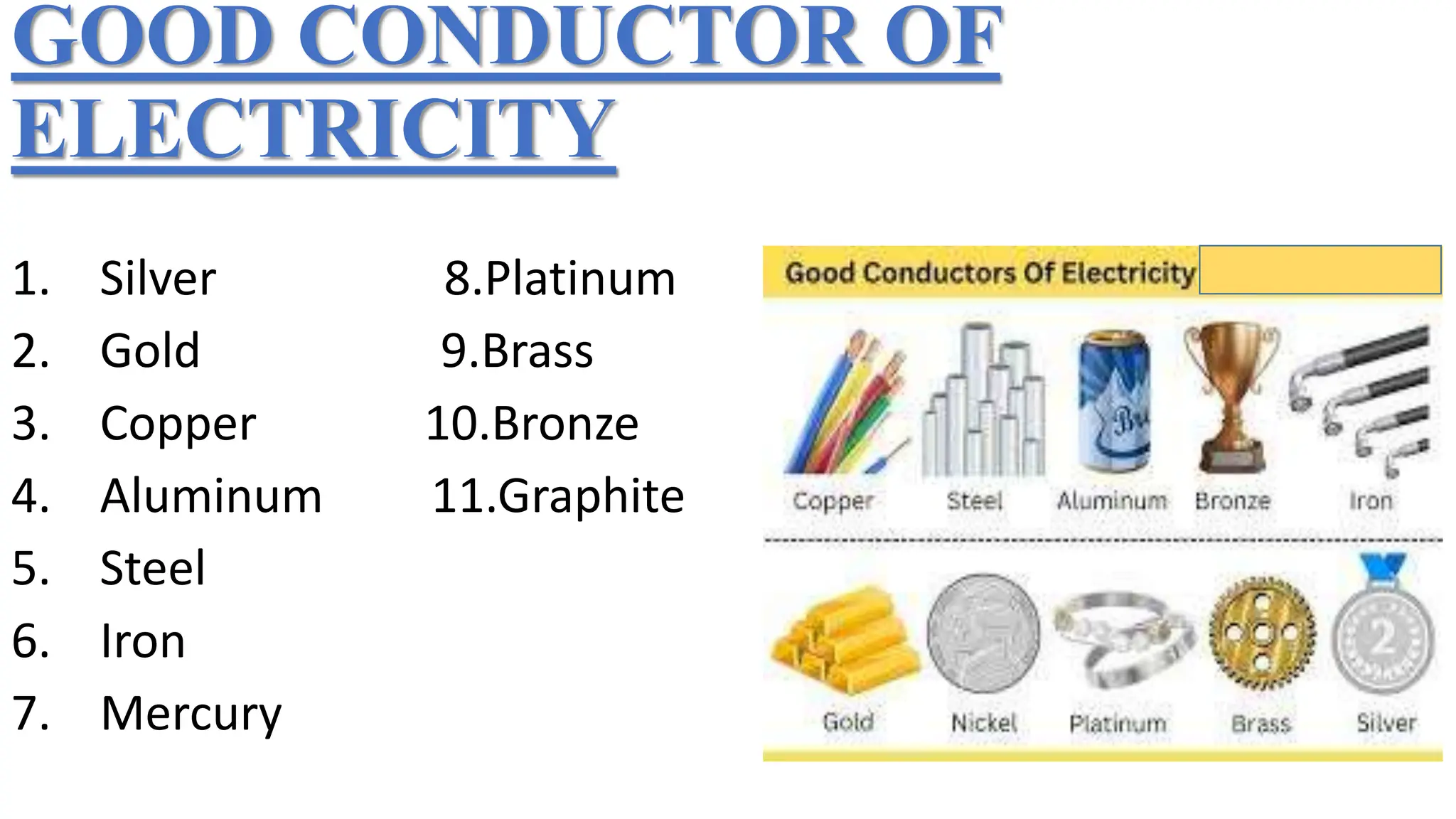
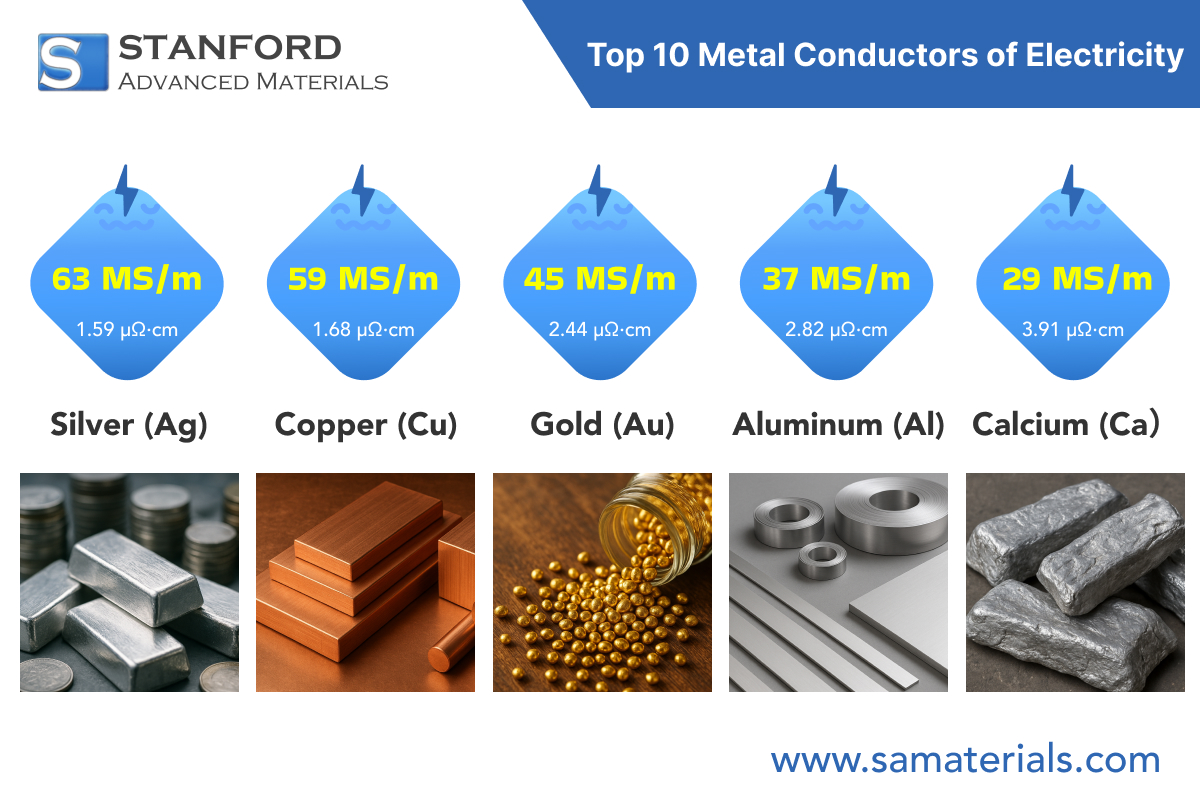
Drumroll, please… it’s silver! Yep, that sparkly stuff you might have in jewelry, or maybe in those fancy forks your grandma uses. Turns out, silver is the undisputed king of electrical conductivity. It’s like the Usain Bolt of the metal world, just zooming past all the others.
Why silver, you ask? It’s all about its atomic structure, my friend. Those little electrons in silver atoms are just itching to get out and play. They’re loosely bound, you see. Think of them as kids on a playground with very little supervision. They’re just bouncing around, eager to move. When you apply a little electrical push, they’re off like a shot!
So, in a pure, scientific sense, if we're talking about raw conductivity, silver takes the cake. No contest. It’s got the lowest electrical resistance of all the metals. That means the electricity doesn’t have to fight its way through. It’s a smooth ride, a gentle breeze, a perfectly paved path.
But here’s where things get a little… practical. Because while silver is the best, is it always the best choice? This is where that coffee-shop chat gets interesting, because reality often throws a wrench in the works. And in this case, the wrench is called money.
Silver, while not as outrageously priced as some other precious metals, is still pretty darn expensive. Imagine trying to wire your entire house with silver. You’d probably need to win the lottery a few times over. Or maybe pawn off your entire vintage comic book collection. Not exactly budget-friendly, is it?
So, while silver reigns supreme in the lab, in the real world, we usually have to make some compromises. We’re looking for that sweet spot between excellent conductivity and a price tag that doesn’t make you weep. It’s like wanting a Ferrari, but settling for a really, really fast and reliable sedan. Still great, just… more sensible.
This brings us to our next contender, and the one you're probably most familiar with: copper. Ah, copper. The workhorse of electrical wiring. The unsung hero of your toaster, your lamp, and pretty much every electronic device you own. Copper is, for all intents and purposes, the everyday champion.
Copper is really good at conducting electricity. Not quite as good as silver, mind you, but damn close. We’re talking about a difference that’s usually negligible for most applications. It’s like the difference between being able to run a marathon in 2 hours and 59 minutes, versus 3 hours. Both are incredible achievements, but one might be slightly more attainable for mere mortals.
And the best part about copper? It’s relatively abundant and significantly cheaper than silver. This is why you see copper wires everywhere. Seriously, go look at any electrical cord, any appliance. Chances are, it’s packed with copper. It's the reliable friend who’s always there for you, without asking for much in return.
Think about it: for the vast majority of electrical needs, copper performs beautifully. It doesn't overheat excessively, it's durable, and it’s easy to work with. Electricians love it, engineers rely on it, and your electricity bill (well, the part related to wiring, anyway) doesn’t skyrocket into the stratosphere.
So, while silver is the academic champion, copper is the undisputed practical champion. It’s the gold medalist in the “most bang for your buck” category of electrical conductivity. It’s the sensible choice that still delivers amazing performance.
Now, what about other metals? Are there any other contenders we should chat about? Well, there’s gold. Ah, gold. Shiny, precious, and… surprisingly, not as good a conductor as silver or copper. What a shocker, right? You’d think with all that bling, it would be zipping electrons like nobody’s business.
Gold is actually the third-best conductor among the common metals. It’s still excellent, mind you. Really, really good. But it loses out to both silver and copper. So, why do we see gold in some electronics, like connectors? Is it just for show?

Well, not entirely. Gold has this incredible ability to resist corrosion. It doesn’t tarnish or rust like some other metals. This is super important for electrical connections that need to be made and broken frequently, or in environments where oxidation could be a problem. Think about those tiny pins in your computer or phone – you want them to stay clean and conductive for a long, long time.
So, gold is more about its durability and reliability in specific situations, rather than pure speed of electron flow. It’s the specialized athlete, the one who’s amazing at a very specific, high-stakes event, even if they’re not the fastest overall runner.
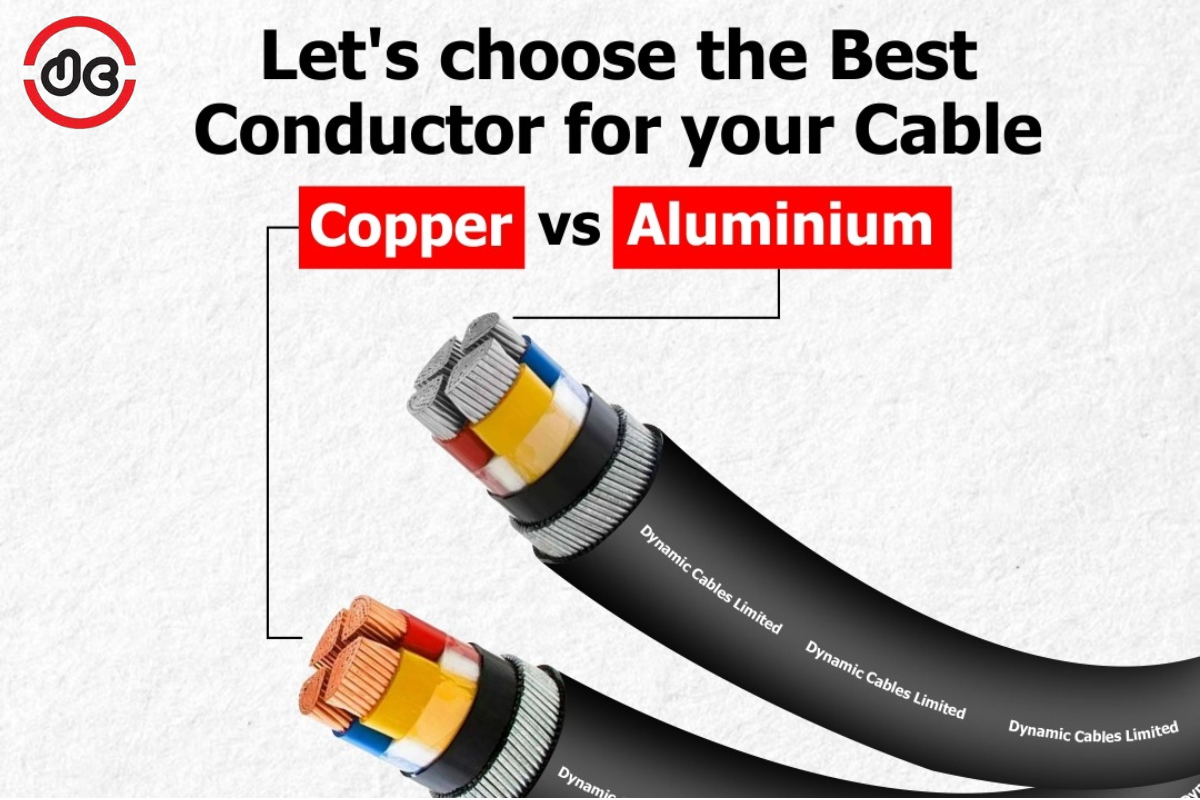
What else is on the conductivity leaderboard? We’ve got aluminum. Now, aluminum is interesting. It’s a pretty good conductor, not quite as good as copper, but it’s much lighter and significantly cheaper. This makes it a popular choice for certain applications, especially in long-distance power transmission lines.
Why aluminum for those massive overhead power lines? Because it’s lighter! Imagine trying to support miles and miles of heavy copper wires high up in the air. That would be a massive engineering challenge, and the sheer weight would lead to more frequent failures. Aluminum, while needing to be a bit thicker than copper for the same conductivity, is still much lighter, making it a practical choice for these colossal undertakings.
However, aluminum isn’t without its quirks. It can be a bit more prone to oxidation than copper, and those connections can sometimes be a little trickier to get right. So, while it’s great for the big stuff, you won’t typically find aluminum wiring inside your house. For that, we stick with the reliable copper.
Then you have metals like iron or steel. These are, let’s be honest, pretty terrible conductors. They’re useful for their strength and magnetic properties, and they’re definitely cheap, but you wouldn’t want to try and run electricity through them for any serious application. They’re like trying to push a shopping cart through a muddy field – it’s possible, but it’s going to be slow and frustrating.
So, to recap our little electrical journey: Silver is the undisputed, pure-performance champion. The Usain Bolt, the Michael Jordan of conductivity. But it’s usually too expensive for everyday use. Copper is the practical, everyday hero. The reliable workhorse that gets the job done for the vast majority of us. It’s the MVP of your home’s electrical system.
Gold is the specialized athlete, chosen for its corrosion resistance and reliability in critical connections. Aluminum is the lightweight champion for long-distance power lines. And then you have the rest, which are generally not great for carrying electricity.
It’s fascinating, isn’t it? How something as simple as a metal’s atomic makeup can have such a massive impact on the technology we use every single day. From the smartphone in your pocket to the lights that illuminate your home, it all comes down to the ability of electrons to travel freely through these amazing materials.
So, next time you flick on a light switch or plug in your phone, take a moment to appreciate the humble metal that’s making it all possible. And remember, while silver might be the king in the theoretical realm, it’s the practical brilliance of copper that truly powers our world. Cheers to good conductors!