
What Planets Are Terrestrial In Our Solar System
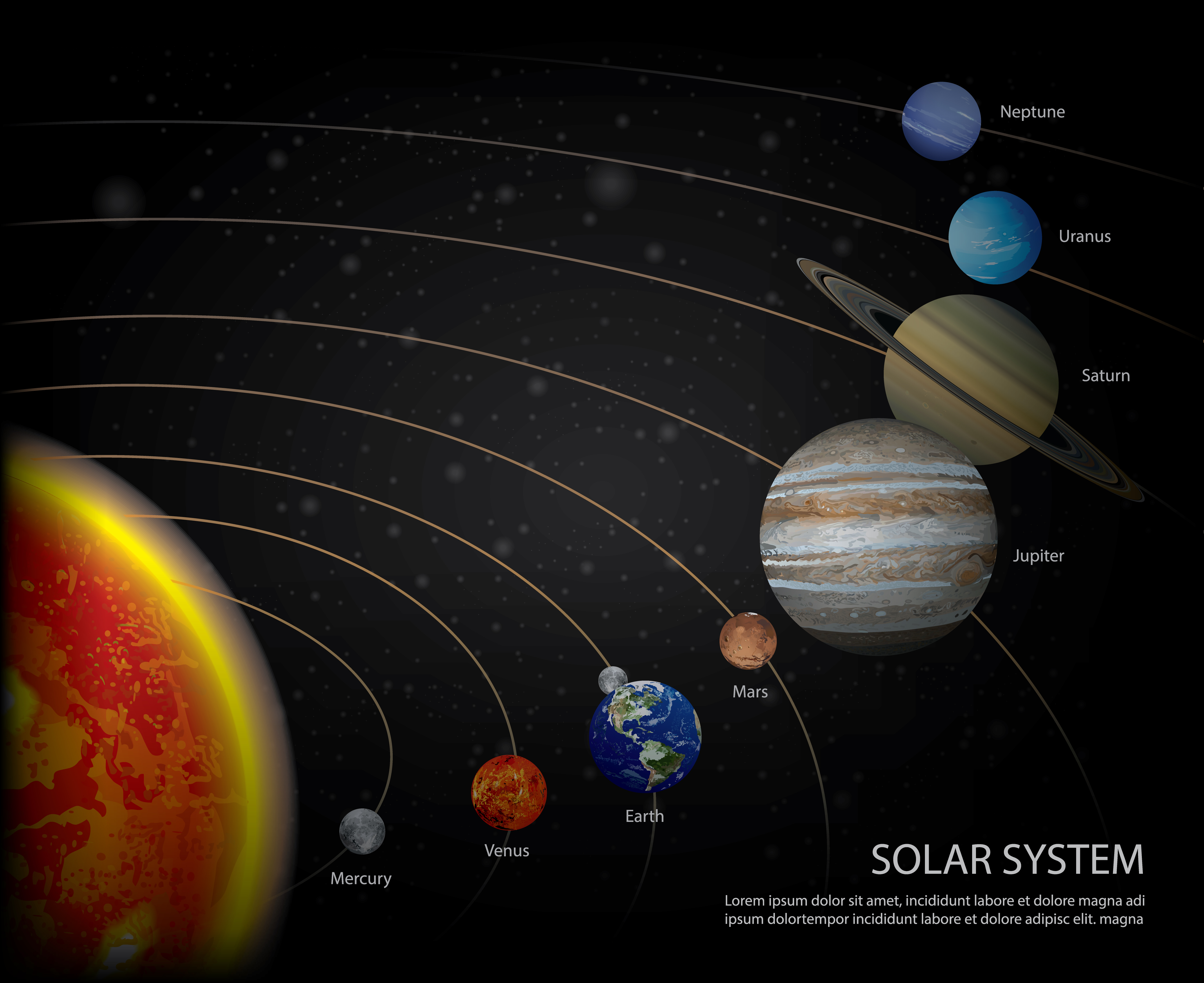
Alright, let's talk about planets. Not the fancy, distant ones that need telescopes to even whisper their names. We're talking about our home turf, our cosmic neighborhood. Our solar system. And specifically, we're diving into a topic that might just tickle your funny bone: the terrestrial planets. Now, you might be thinking, "Terrestrial? Sounds like something you'd find on a fancy menu." Well, not exactly. But it does mean something pretty important about these rocky dudes.
Think of it this way: when you’re packing for a trip, you’ve got your sturdy suitcase for the important stuff. These terrestrial planets? They’re the cosmic equivalent of that trusty suitcase. They're the ones with a solid, rocky surface. The ones you could, hypothetically, land a spaceship on without it just disappearing into a giant, gassy swirl. And honestly, that’s pretty cool.
So, who are these down-to-earth (pun intended) celestial bodies? Let's meet the gang. First up, the undisputed heavyweight champion of being close to the Sun: Mercury.
Mercury: The Speed Demon.
This little guy is zipping around the Sun like it's late for an appointment. It's hot, it's cold, it's got more craters than your grandma's favorite pie dish. But it's solid. You can picture yourself, maybe with a very, very heat-resistant suit, standing on its surface. Just try not to think about the lack of breathable air. Or the extreme temperature swings. Or the general desolation. But hey, it's rocky!

Next, we have the one that everyone thinks is the main character. The one that inspired countless songs and movie plots. Yep, it's Venus.
Venus: The Hot Mess.
Now, Venus is a bit of a drama queen. It’s beautiful from a distance, a lovely white cloud. But get up close? Whoa. It's like a super-hot greenhouse on overdrive. The atmosphere is thick with carbon dioxide, making it the hottest planet in our solar system. Hotter than Mercury, even though it’s further away. Talk about commitment to a theme! But here's the important part: it's got a solid surface. Beneath all those sulfuric acid clouds, there's rock. So, it qualifies. It’s a terrestrial planet, even if it's actively trying to vaporize anything that lands on it.

And then, of course, there’s our beloved Earth.
Earth: The Only One We've Got (So Far).
Terrestrial Planet Solar System

This one’s a no-brainer, right? It's our home! It’s got oceans, mountains, pizza places, and that weird moss that grows on the north side of trees. It's got air we can breathe (most of the time). It's got a stable temperature range (again, mostly). It's the poster child for a terrestrial planet. The gold standard. The one we're all desperately trying not to mess up. It’s got that glorious rocky surface, perfect for building sandcastles and, you know, living.
Finally, the red one. The one we've been dreaming of visiting for ages. Mars.
Mars: The Red Wanderer.
The Solar System - Formation and Configuration

Mars is like Earth’s slightly more rugged, slightly dustier cousin. It's got canyons that dwarf the Grand Canyon, volcanoes that make Hawaii look like a molehill, and polar ice caps. It’s got seasons, a thin atmosphere, and evidence of water in its past. And yes, it has a solid, rocky surface. You can imagine a rover trundling across its dusty plains, looking for ancient microbial life. Or just trying to find a decent Wi-Fi signal. It's a terrestrial planet, and one that holds a lot of our hopes and dreams for future exploration.
So there you have it. The terrestrial quartet: Mercury, Venus, Earth, and Mars. These are the rocky, solid planets in our solar system. The ones that aren’t just giant balls of gas swirling in the void. And while the gas giants like Jupiter, Saturn, Uranus, and Neptune are undeniably impressive with their rings and storms, there’s something special about the terrestrial ones. They feel… relatable. They feel like places you could actually go, even if it requires a bit of technological wizardry and a really good suit.
It’s an unpopular opinion, I know. But sometimes, the simpler things are the most fascinating. These rocky worlds, with their solid foundations, are the bedrock of our solar system. They’re the ones that feel a little bit more like us. And that, in my humble, totally unscientific opinion, makes them pretty darn special. Next time you look up at the night sky, give a little nod to these terrestrial travelers. They’re the unsung heroes of our cosmic neighborhood.