
What Was The Outcome Of The Hundred Years War
Picture this: a chilly evening, a roaring fireplace, and a seasoned storyteller, maybe a bit tipsy, regaling a crowd with tales of daring knights and epic battles. He's probably got a tankard of ale in hand, gesturing wildly as he recounts the legend of a lone English archer, outnumbered but somehow, miraculously, holding the line against a charging French cavalry. The crowd leans in, captivated, imagining the thud of arrows, the neighing of horses, the desperate struggle. It’s the kind of story that gets passed down, embellished with each telling, a romanticized snippet of a much, much bigger picture. And that, my friends, is a little like how we often think about the Hundred Years' War – a series of dramatic clashes, heroics, and probably a lot of muddy fields. But what actually happened after all those years of fighting? Did England end up ruling France, like some folks probably imagined?
Spoiler alert: not exactly. The outcome of the Hundred Years' War is less about a triumphant victor planting their flag on enemy soil and more about a complex, drawn-out reshaping of two major European powers. It’s like a really long, incredibly expensive divorce with a lot of collateral damage. Instead of one side getting everything, both England and France walked away changed, sometimes drastically so. And frankly, it's a lot more interesting than just saying "England lost" or "France won."
So, let's dive in. When we talk about the Hundred Years' War, we're usually looking at the period from 1337 to 1453. That’s a whopping 116 years, give or take a few skirmishes. It wasn’t one continuous, non-stop war, of course. There were periods of uneasy truce, negotiations, and sometimes, just plain exhaustion. Think of it as a really, really long feuding phase between two royal families who just couldn’t agree on who was in charge of what.
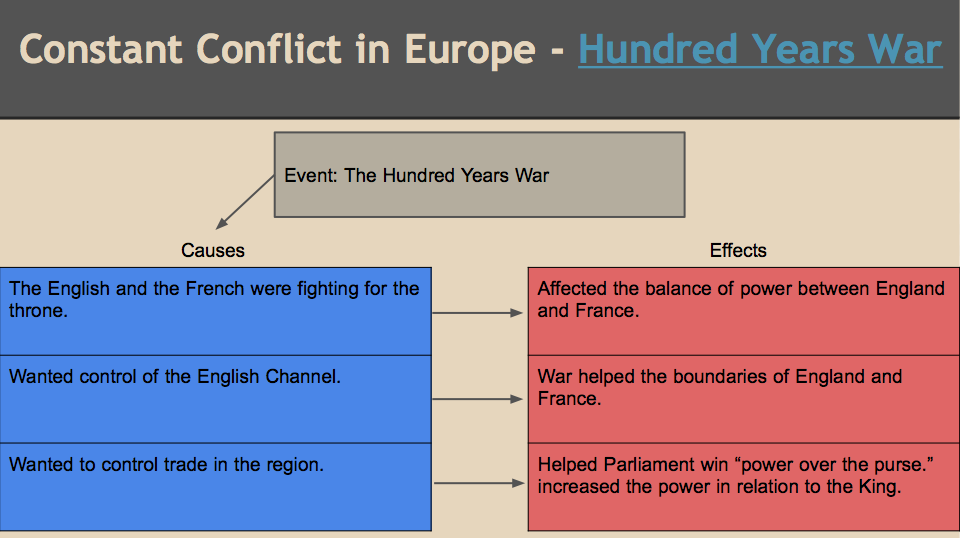
The core of the conflict, at least in the beginning, was pretty straightforward: a dispute over the French throne. Edward III of England had a legitimate claim to the French crown through his mother, Isabella of France. However, French law, or at least their interpretation of it, said that the throne couldn’t be inherited through a female line. So, the French nobility crowned Philip VI instead. And Edward, being Edward, wasn’t having any of that. It’s a classic case of "my inheritance rights are being ignored!" coupled with "we've always had a bit of land over there, so it's ours!"
Now, you might be thinking, "A squabble over a crown? That’s what they fought for over a century?" Well, yes and no. While the succession was the spark, the war also became about something bigger: the growing sense of national identity and the expansion of royal power in both countries. England already held significant territories in France, remnants of the old Norman conquest. These were like perpetual sources of friction. Imagine your neighbor constantly claiming your backyard as part of their property – annoying, right?
The early stages of the war were, to put it mildly, pretty rough for France. England, under kings like Edward III and his son, the Black Prince (yes, that Black Prince, known for his ferocity), racked up some impressive victories. Battles like Crécy (1346) and Poitiers (1356) were stunning examples of English military prowess, particularly the effectiveness of their longbowmen. These weren’t just random villagers with sticks; they were trained soldiers, capable of unleashing a hail of arrows that could decimate charging knights. The French, relying on their heavily armored knights, often found themselves outmaneuvered and overwhelmed. It was a real shock to the established military order of the time.
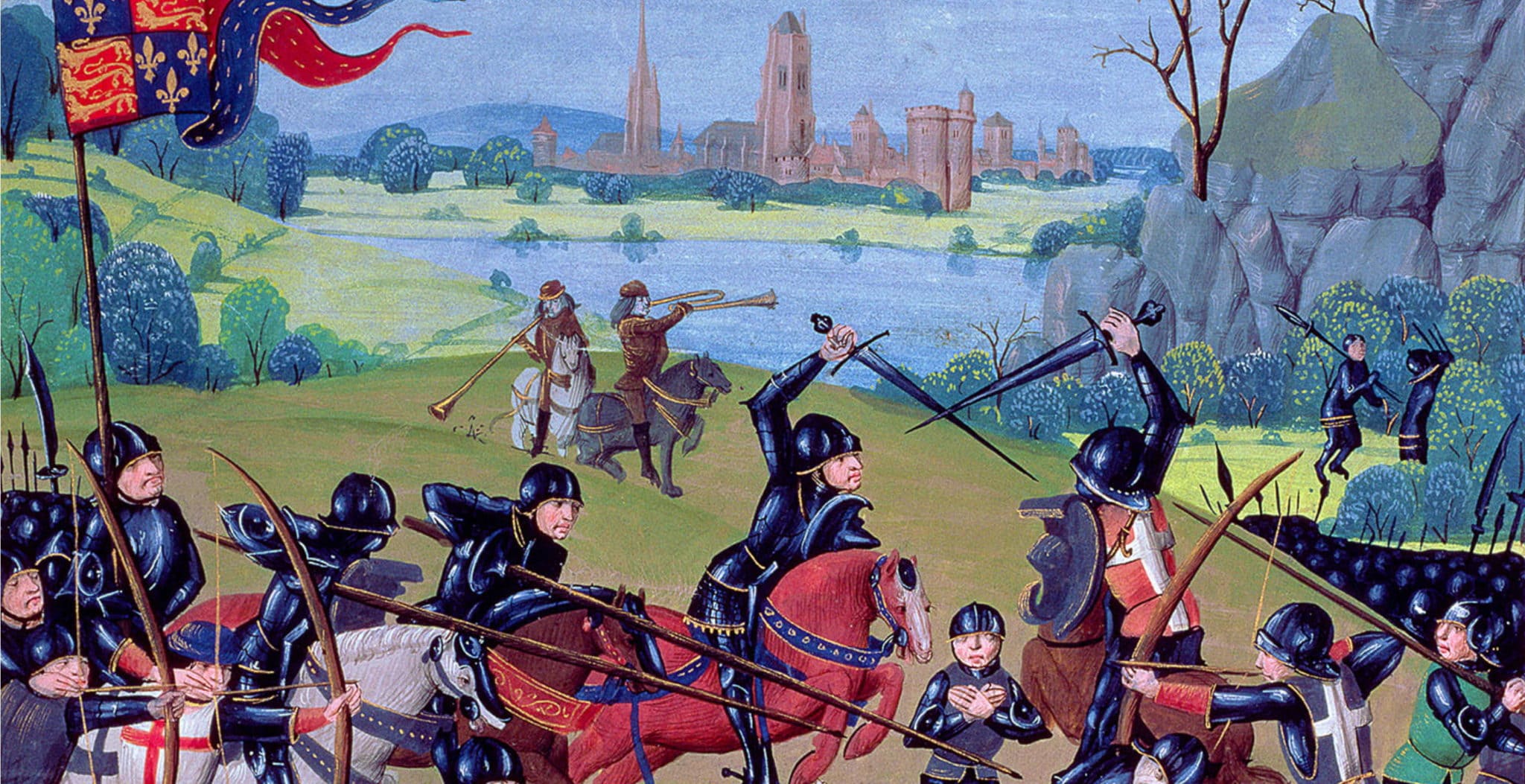
These early English successes led to significant territorial gains. For a while, it looked like England might actually pull off the seemingly impossible: conquering France and placing their king on the French throne. Treaties were signed, like the Treaty of Brétigny in 1360, which granted England vast swathes of French territory in exchange for Edward III renouncing his claim to the throne. It was a moment where England seemed to be winning big. Really big.
But France, oh France, is a resilient beast. They didn’t just roll over. French kings, particularly Charles V, began to reform their military. They adopted more cautious tactics, avoiding large pitched battles and instead focusing on attrition, sieges, and raiding English supply lines. It was less about glorious charges and more about chipping away at the enemy’s strength. It wasn’t as flashy, but it was effective. Slowly but surely, France started to reclaim lost territory.
Then came a really weird period, often called the "Madness of Charles VI." The French king suffered from bouts of severe mental illness, which created a power vacuum. This led to a brutal civil war within France between two powerful factions: the Armagnacs and the Burgundians. And guess who decided to jump back into the fray when France was at its weakest? Yep, England. Henry V, a king with serious ambition and a knack for military leadership, saw an opportunity. He invaded France again, famously winning the Battle of Agincourt in 1415. This battle, much like Crécy and Poitiers, was another devastating defeat for the French, solidifying England's dominance.
Henry V went on to capture Paris and, through the Treaty of Troyes (1420), was named regent of France and heir to the French throne. It truly looked like the English crown was about to become the French crown. His son, Henry VI, was even crowned King of France in Paris. The dream of a united Anglo-French empire seemed within reach. Imagine that for a moment. The English flag flying over Notre Dame. It sounds like something out of a historical epic, right?
But history, as it often does, had other plans. And this is where the outcome gets really interesting, and perhaps a bit ironic. The tide didn't just turn; it crashed. The turning point, the legendary figure who really changed everything, was a young peasant girl: Joan of Arc. Now, I know what you're thinking – a teenager leading armies? It sounds unbelievable, but that's exactly what happened. Joan's arrival on the scene, claiming divine guidance, galvanized the demoralized French forces. Her presence and charisma inspired the French to lift the siege of Orléans in 1429, a crucial victory that turned the war around.
Joan's military successes were remarkable, but her capture, trial, and execution by the English and their Burgundian allies only seemed to fuel French nationalism and determination. It was like a martyrdom that united the country against the invaders. The French, suddenly feeling a surge of national pride and a shared purpose, began to push the English back relentlessly.

The final stages of the war were marked by French military reforms, the increased use of artillery (which was a game-changer for sieges), and a relentless drive to expel the English. The Burgundians, who had been allied with England, eventually switched sides, leaving the English increasingly isolated. The last major battle was the Battle of Castillon in 1453, where the French decisively defeated the English. After this, the English lost all their continental possessions except for the port of Calais. And even that wouldn't last forever, but that's a story for another day!
So, what was the outcome? Well, here’s the punchline: neither side truly conquered the other in the way they might have initially intended. England failed to win the French crown or permanently annex large parts of France. France, however, was left deeply scarred by the conflict, facing immense destruction and loss of life. But it also emerged from the war transformed.
On the French side, the Hundred Years' War was a crucial catalyst for the development of a strong, centralized monarchy and a nascent sense of national identity. The prolonged struggle against a common enemy, the shared sacrifices, and the eventual victory forged a sense of "Frenchness" that hadn’t been as pronounced before. The king was no longer just a feudal lord; he was the embodiment of the nation. They built a more professional, standing army, less reliant on feudal levies, and began to solidify their administrative and tax systems. It was a painful birth, but France came out stronger and more unified.

And England? Well, England experienced its own significant changes. The loss of continental lands was a bitter pill to swallow, but it forced England to focus on its own island identity and its burgeoning naval power. The war also had a profound impact on English society. The reliance on archers and the changing nature of warfare led to a decline in the dominance of the feudal knightly class. There was also a significant economic cost, and the return of soldiers, many injured or disillusioned, contributed to social unrest, which eventually boiled over into the Wars of the Roses.
The Wars of the Roses, that infamous dynastic struggle for the English throne between the Houses of Lancaster and York, can be seen, in part, as a consequence of the Hundred Years' War. The weakened monarchy, the disgruntled nobility, and the returning soldiers all played a role in destabilizing England. So, in a way, the war that started with a dispute over the French throne ended up sparking a civil war in England itself!
It’s fascinating, isn't it? The Hundred Years' War wasn't just about who got to wear a crown. It was about the evolution of nations, the reshaping of military strategy, and the complex interplay of power, identity, and ambition. The romantic tales of knights and archers are part of the story, sure, but the real outcome is much more nuanced, a slow, often brutal, march towards the modern nation-state. England didn't conquer France, but both nations were irrevocably changed, laying the groundwork for their future destinies. And the French? They got their land back, a stronger king, and a much, much bigger sense of who they were. Pretty wild, when you think about it.