
When To Put Purple Martin Houses Up

The other day, I was staring out my window, nursing a lukewarm cup of coffee, when I saw it. A lone robin, looking thoroughly bewildered, was hopping around my empty bird feeder. It was the first day of March, and you’d think by now the robins would know the drill. But no, this little guy looked like he’d just woken up from a long nap and was expecting a buffet. It got me thinking, you know? About timing. About when things should happen. And that, my friends, led me down a rabbit hole of birdhouse timing. Specifically, when to put up those majestic, often slightly comical, purple martin houses.
Now, I’m not going to pretend I’m some sort of avian whisperer. My expertise pretty much extends to recognizing a sparrow and knowing when to refill the suet. But I’ve always been fascinated by purple martins. They’re like the VIPs of the bird world, with their sleek, iridescent feathers and their aerial acrobatics. And those houses! They look like tiny, elaborate condominiums for birds. So, naturally, I started wondering, when do you actually unleash these avian abodes upon the world? Is it a free-for-all? A carefully orchestrated event?
Turns out, there’s a bit more to it than just sticking a pole in the ground and hoping for the best. It’s not quite like putting up Christmas decorations, where you can technically do it on November 1st if you’re feeling particularly festive (and let’s be honest, some of you are). For purple martins, it’s all about their schedule, not ours. And their schedule is dictated by something far more powerful than our desire for pretty birdhouses: the migration.
So, let’s dive into the nitty-gritty, shall we? When is the golden ticket, the prime time, the “martins are coming!” alarm for putting up these swanky bird apartments?
The Great Migration Debate: When the Birds Decide
Here’s the thing: purple martins are migratory birds. This isn't exactly groundbreaking news, I know. But it's the foundation of when you should put up their housing. They spend their winters down in South America, enjoying the tropical vibes and probably sipping tiny bird cocktails. Then, as the days start to lengthen and the weather hints at warmer times, they pack their tiny suitcases and head north. That is when you want your houses ready.
Think of it this way: if you were planning a vacation to a fancy hotel, you wouldn't want to arrive and find out it's still under construction, right? You want your room to be clean, the amenities to be working, and the welcome mat to be out. Birds are no different. They've flown thousands of miles, battled who-knows-what, and they're looking for a safe, established place to set up shop.
So, the million-dollar question: when do they actually arrive in your neck of the woods? This is where things get a little… regional. You can’t just slap a universal date on it. It’s like asking when the best time to go apple picking is – it depends on where you live!

Timing is Everything: Local Clues and General Guidelines
Generally speaking, the earliest you might see purple martins returning to their northern breeding grounds is in late February or early March. Now, I say earliest with a very big, italicized emphasis. For many of us, especially those in more northern climates, that’s still pretty darn cold. Think snow boots and scraping windshields cold. So, while a few adventurous individuals might be scouting ahead, it’s unlikely they’ll be moving into a new house immediately.
A more realistic and commonly cited timeframe for putting up your purple martin houses is in late March through April. This is when the majority of the migration is in full swing for a large portion of the United States. Think of this as the “prime real estate scouting” period for the martins.
Why this window? Well, it gives them time to arrive, survey their surroundings, and find suitable nesting locations. If you put your houses up too early, they might just fly right by. They’re looking for established territories, and an empty, freshly erected house might not scream "established" to them. It's a bit of a gamble, and birds, bless their little feathered hearts, are often creatures of habit and rely on familiar cues.
Irony Alert: You’ll often hear advice that says, “put them up before they arrive.” And while technically true, it’s also a bit like saying, “eat your breakfast before you get hungry.” It's logical, but it doesn't tell you when that magic moment is for you.
So, how do you figure out your local timing? This is where a little detective work comes in.

Become a Local Bird Detective
This is the part I genuinely enjoy. It’s like solving a mystery, but the prize is seeing adorable birds.
1. Consult Your Local Audubon Society or Birding Club: These folks are your Obi-Wan Kenobi. They live and breathe local bird activity. A quick call or email to your local chapter can provide you with invaluable information about typical purple martin arrival dates in your specific area. They might even have resources or forums where people report sightings.
2. Online Resources and Birding Communities: Websites like eBird are amazing for tracking bird sightings. You can look up purple martin sightings in your county or state and see when they typically start appearing. There are also dedicated purple martin forums and Facebook groups where enthusiasts share their knowledge and observations. Seriously, these communities are goldmines!
3. Observe Local Natures: Are other migratory birds arriving? Robins are often a good early indicator. If you’re seeing early migrants like phoebes or swallows, it’s a sign that spring is really getting going and the martins might not be far behind. It’s all about observing the subtle shifts in the natural world around you.
:max_bytes(150000):strip_icc()/GettyImages-1475114455-622955dcb1484acfa0f4c96bb0481653.jpg)
4. Weather Patterns: While not a foolproof method, a mild winter and an early spring can lead to earlier arrivals. Conversely, a harsh winter and late spring might push their migration back. Keep an eye on the weather forecasts, but don't base your entire strategy on them.
The “Why” Behind the Timing: It’s All About Safety and Success
Let’s circle back to why this timing is so crucial. It’s not just about aesthetics or having a cool birdhouse. It’s about giving these birds the best possible chance of survival and successful reproduction.
When purple martins arrive, they are tired and vulnerable. They need a safe place to rest, escape predators, and begin the process of finding a mate and building a nest. If your house isn't up, or if it's still looking a bit… amateurish (you know, not quite ready for prime time), they might move on to a more established or natural nesting site, like a tree cavity or an old woodpecker hole. And those are becoming increasingly rare for them.
Purple martins are what we call "secondary cavity nesters." This means they don't excavate their own homes. They rely on existing cavities or, more commonly these days, on human-provided housing. This reliance makes our role in providing suitable housing even more important.
Putting your house up too late is also a problem. By the time your house is up and decorated, the prime nesting spots might already be taken. This can lead to competition with other bird species, or worse, the martins might miss out on the breeding season altogether. It’s like arriving at a popular restaurant after the last table has been filled – a bit of a bummer.
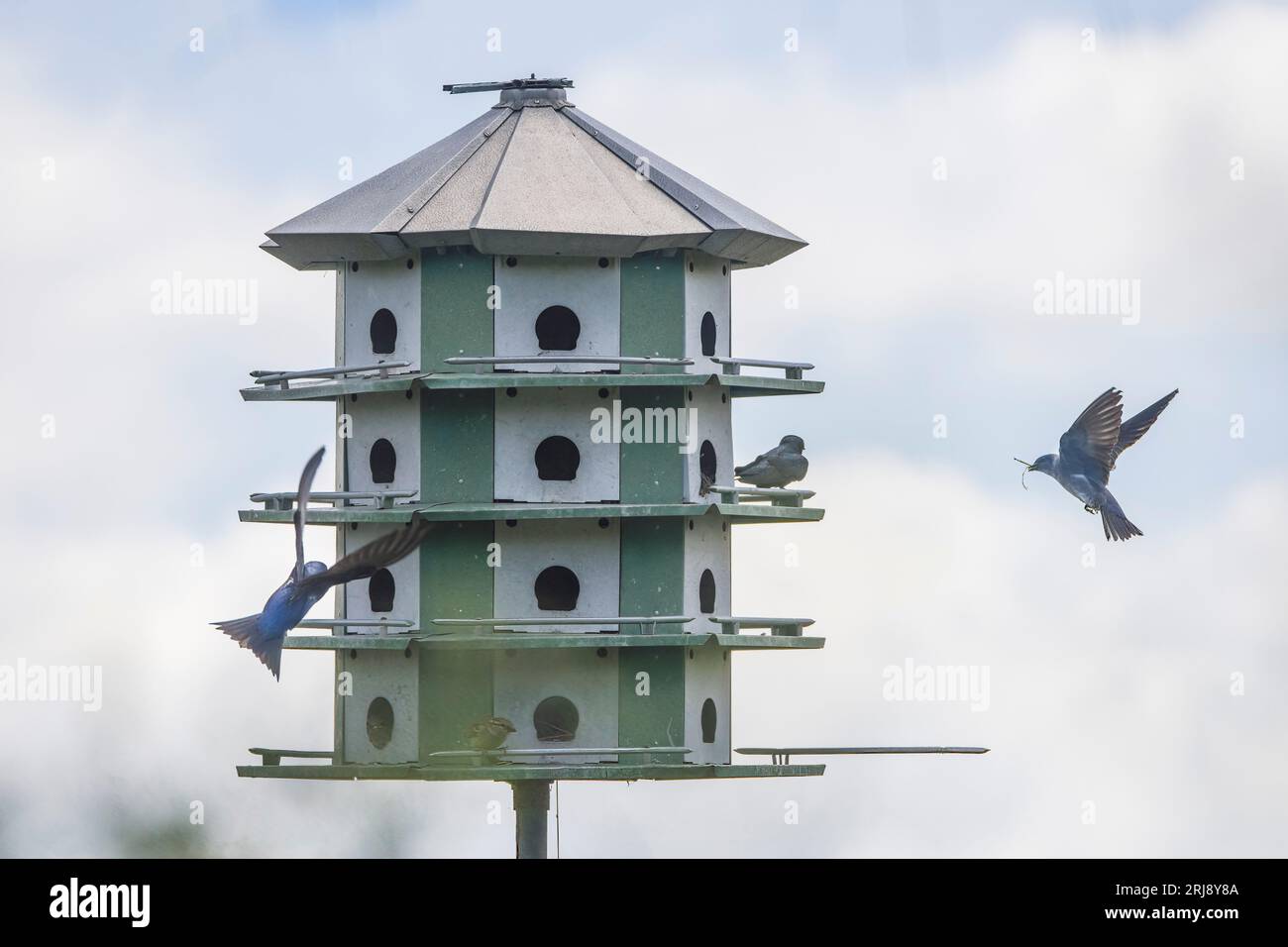
The “Once They’re There” Strategy: Don't Touch!
This is another critical piece of advice that often gets overlooked in the excitement. Once you’ve successfully attracted purple martins and they’ve started nesting, resist the urge to interfere. Seriously. Leave them alone.
This means no peeking in the nest boxes to see how many eggs there are, no trying to get a closer look for photos (unless you’re very discreet and far away), and definitely no trying to “help” them in any way. Your presence can stress them out, potentially leading to them abandoning the nest. Remember, they chose your house for safety and privacy. Give them that!
The exception to this is if you have a system for monitoring and controlling invasive species, or if there's a known issue with predators. But even then, it should be done with extreme caution and ideally by experienced individuals.
So, to Recap (Because I Know You Want a Cheat Sheet)
Putting up your purple martin houses is a rewarding endeavor, but it requires a little bit of foresight and understanding of their migratory patterns. Here’s the simplified version:
- Ideal Window: Aim for late March through April for most of the United States.
- Be Early, But Not Too Early: Putting them up a week or two before you expect them is fine, but don’t rush it if it’s still wintery.
- Know Your Location: Research your local arrival dates! This is the MOST important step.
- Preparation is Key: Make sure your houses are assembled, mounted securely, and ready to go before the birds show up.
- Patience and Observation: Watch for signs of early migrants and check online resources.
- Hands Off: Once they're nesting, admire from afar!
It's a dance, really. A beautiful, feathered dance with nature. By paying attention to the subtle cues and understanding the birds' needs, you can create a welcoming haven for these magnificent creatures. And who knows, you might just find yourself staring out the window with a cup of coffee, a sense of satisfaction, and a sky full of swirling, iridescent purple martins. Now, isn't that a much better sight than a bewildered robin?