
Where Is The San Andreas Fault Line

I remember my first time driving down Highway 1, that iconic California coastal road. The Pacific was a dazzling sapphire to my left, and to my right, these rugged, almost impossibly green hills rose up. I was feeling all sorts of zen, you know, wind in my hair, the smell of salt and eucalyptus, and then my buddy, who’d grown up in LA, just casually points and goes, "Yeah, the San Andreas Fault is probably right under us, or, like, a mile that way."
My zen evaporated. Suddenly, those gorgeous hills looked… a little less stable. A lot less stable, actually. The vastness of the ocean felt less like freedom and more like… well, like it could just decide to go somewhere else, taking a good chunk of California with it. It was a weird thought, one that stuck with me. So, where is this infamous fault line, anyway? Is it a giant, visible crack in the earth, like in the movies? (Spoiler alert: not usually.)
So, What Exactly IS the San Andreas Fault?
Let’s get this out of the way: the San Andreas Fault isn’t a single, neat line drawn on a map. It’s more like a complex system of cracks and fractures that stretch for hundreds of miles. Think of it as a jagged scar across California, a visible reminder that our planet is a very active place. Geologists love to call it a "transform fault," which sounds super technical, but basically means two huge pieces of Earth's crust are grinding past each other.
We’re talking about the Pacific Plate on one side and the North American Plate on the other. They're not exactly best friends. They’re constantly pushing, pulling, and sliding against each other. Imagine two giant tectonic plates doing a really awkward, slow-motion dance. It's this relentless movement that builds up all that pent-up energy, the kind that eventually gets released as an earthquake. Oof.
And when I say "hundreds of miles," I mean it. This thing is a serious geological feature. It's approximately 800 miles long. That’s a heck of a lot of potential shaking!
Okay, But Where Specifically?
This is the million-dollar question, right? Where can you go to (safely, I hope!) see this geological beast? The San Andreas Fault actually runs from:
- The northern end is up near Cape Mendocino, way up in Humboldt County. That’s pretty far north, bordering Oregon.
- It then snakes its way southeast across the state.
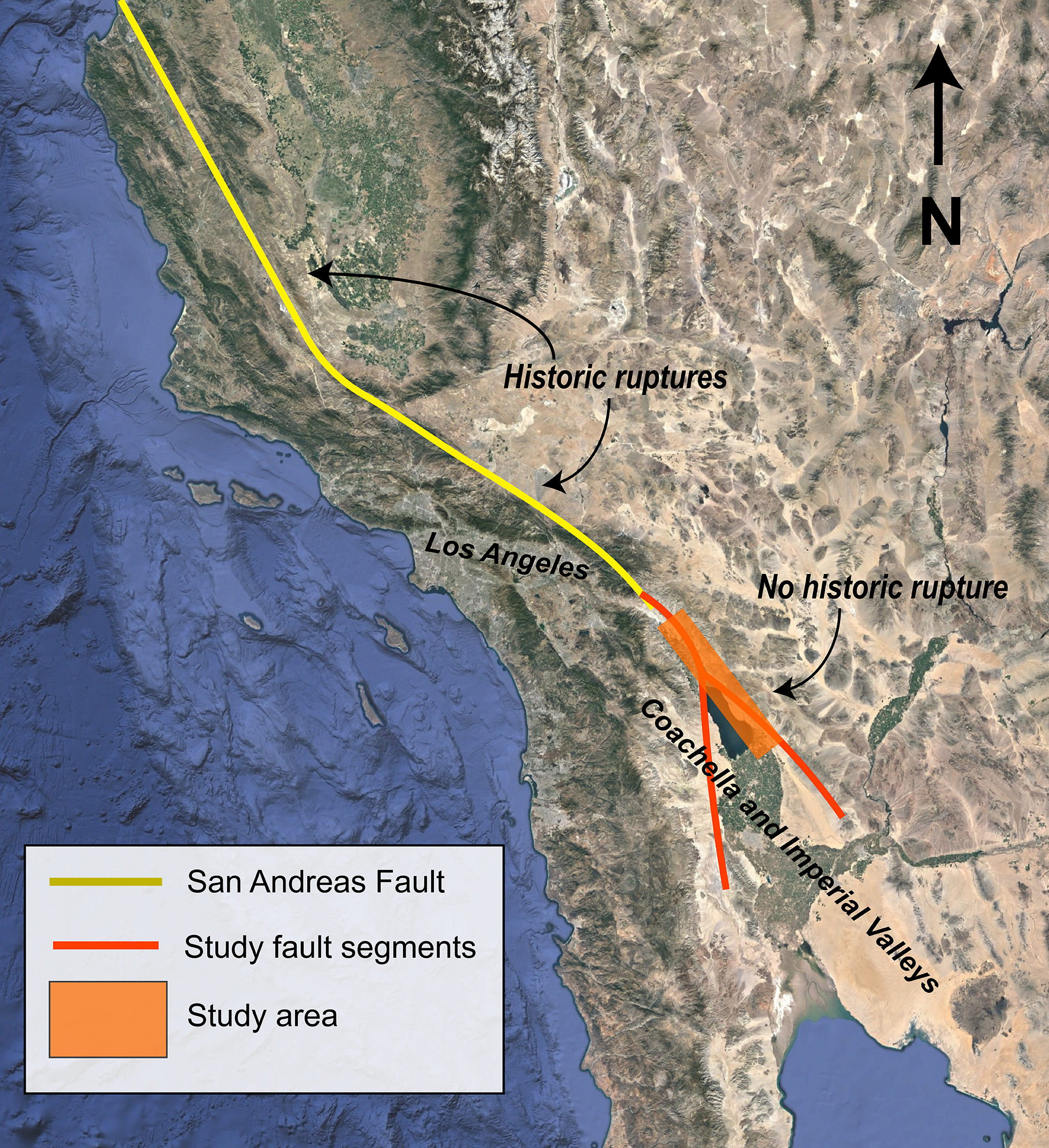
- It passes through or very near major populated areas like Parkfield (which is famously studied because it’s one of the few spots where the fault is more visible), San Bernardino, and even skirts the edge of the Los Angeles Basin.
- It finally peters out in the deserts of Southern California, near Salton Sea.
So, it’s not just a Southern California thing, although that’s where most of the seismic drama tends to happen, and where the most famous parts are. It really slices through a good chunk of the state. It’s like a geological spinal cord for California, if you think about it.
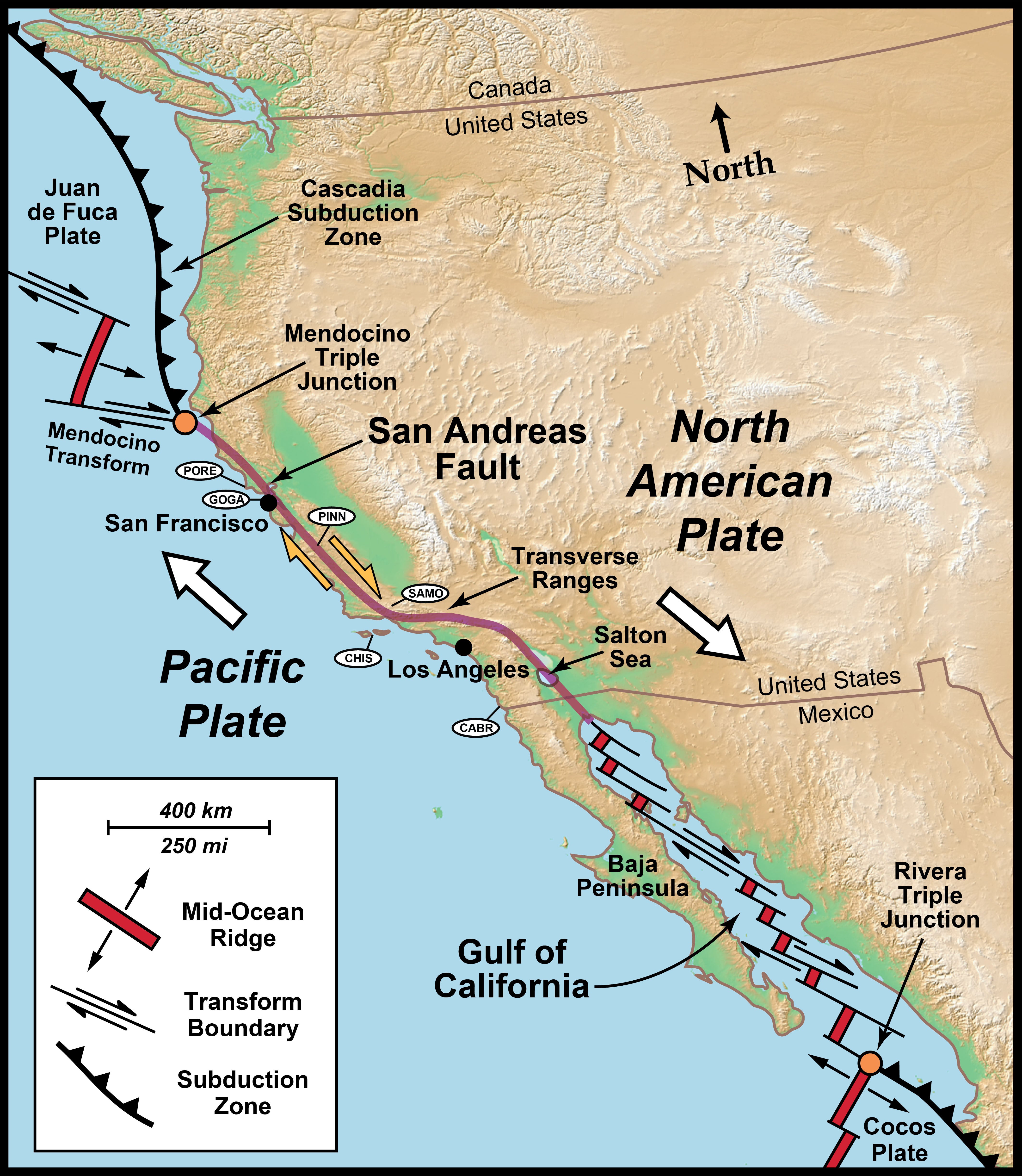
It’s important to remember that the fault line isn’t always a single, obvious rift. Sometimes, the evidence is subtle. You might see changes in the landscape, like a straight stream bed that suddenly jogs to the side, or a distinctive ridge that’s been pushed up over time. Other times, it's marked by more dramatic features like valleys or scarps.
A Walk in the Park (Not Really, But Kinda)
If you’re feeling adventurous and want to see some of the fault’s handiwork up close, there are a few spots that are particularly interesting. Carrizo Plain National Monument, for instance, is a fantastic place. It’s a huge, undeveloped grassland that offers some of the clearest views of the fault's trace. You can literally see where the land has been pushed and pulled over millennia. It’s like a giant, slow-motion geological sculpture garden.
And then there’s Pinnacles National Park. While not directly on the main trace, the geology there is heavily influenced by the fault's activity over millions of years. You’ll see these amazing rock formations that were actually once part of the fault zone and got ripped away and carried northwards by the sliding plates. Pretty wild, huh?
Parkfield, as I mentioned, is kind of the "Earthquake Capital of the World" in terms of seismic monitoring. It's a tiny town that sits right on the fault and experiences frequent, small earthquakes. It’s become a living laboratory for seismologists. If you’re into that sort of thing, it’s a fascinating place to visit, though don't expect any dramatic movie-style fissures opening up.
Why Should I Care About Where it Is?
Well, besides the obvious fact that it’s responsible for, you know, earthquakes, knowing where the San Andreas Fault is located is pretty darn important for anyone living in or visiting California. It dictates building codes, emergency preparedness plans, and even where certain types of infrastructure are built (or not built!).
Think about it: if you’re building a house, or a bridge, or even a major freeway, you absolutely want to know if it’s going to be sitting smack dab on top of a giant geological fault. Engineers have to account for the potential movement. This is why buildings in California often have special earthquake-resistant designs. They’re not just being fancy; they’re being practical!
It also shapes the landscape in profound ways. The fault zone is often characterized by long, linear valleys, sag ponds (depressions that fill with water), and offset streams. These features are direct results of the plates grinding against each other. So, even if you can’t see a gaping chasm, you can often read the story of the fault in the land itself.
The Big One (and Other Ones)
Everyone talks about "The Big One," the catastrophic earthquake that will happen on the San Andreas Fault. And yes, it’s a real concern. The fault accumulates stress over decades and centuries, and eventually, that stress has to be released. Scientists have been studying it for ages, trying to predict when it might happen, but earthquakes are, by their nature, unpredictable.
:max_bytes(150000):strip_icc()/aerial-view-direction-of-view-is-from-the-northwest-to-the-southeast-of-san-andreas-fault-near-taft-california-usa-177242210-57ebfd553df78c690f375ae8.jpg)
The San Andreas Fault is actually divided into different segments, and each segment can have its own rupture behavior. Some segments are more prone to "creeping," meaning they move slowly and continuously, releasing stress gradually. Other segments are "locked" and build up much more stress, making them candidates for larger, more damaging earthquakes. The southern segment, for example, is considered particularly overdue for a major rupture.
It's not just the San Andreas either. It's part of a much larger network of faults throughout California. Think of it as the main highway, but there are all these smaller roads and off-ramps branching off, all capable of causing their own seismic events. The complexity is mind-boggling, and honestly, a little humbling.
Mythbusting: Is it a Giant Crack?
Let’s address the Hollywood portrayal. You know, the one where the ground splits open in a massive, terrifying fissure, and people are swallowed whole. While large earthquakes can cause ground rupture, it's not usually a single, clean, mile-wide chasm. More often, it's a series of cracks and breaks, uplift, and subsidence over a wider area.
The fault line itself is often buried under sediment or disguised by vegetation. The actual rupture surface during an earthquake is usually deep underground. So, while the effects can be devastating, you’re unlikely to see a dramatic, movie-style rift opening up in your backyard. Unless, of course, you live right on top of a major rupture zone during a massive quake, in which case, I’m very sorry.
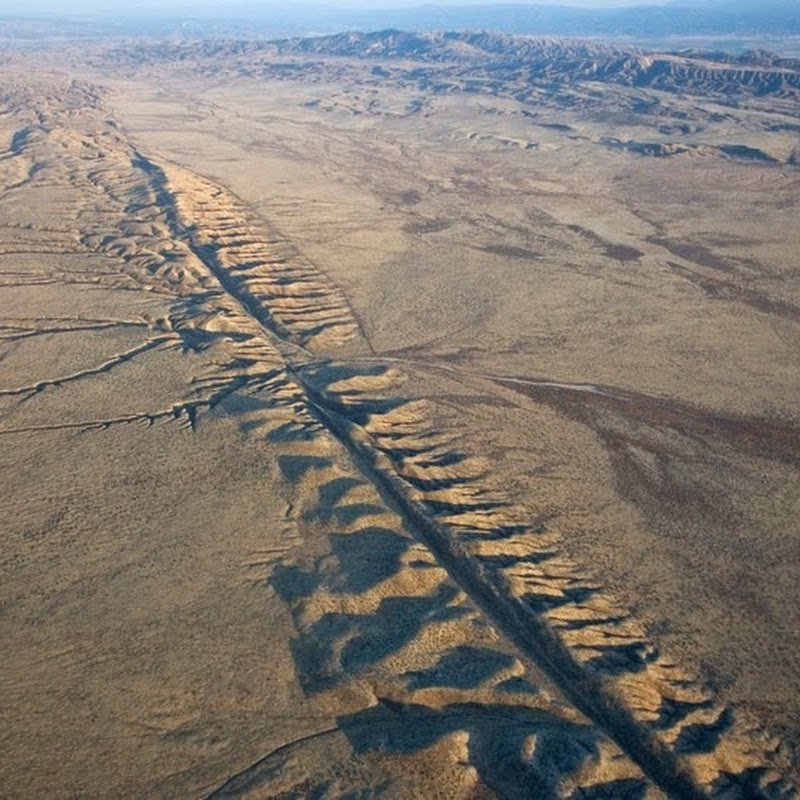
The visual evidence of the fault is more about the cumulative effect of movement over time. It's in the way the hills are shaped, the alignment of the valleys, and the subtle (or not-so-subtle) offsets in the landscape. It’s a testament to patience, geological patience, that is.
Living with the Fault
So, the San Andreas Fault is everywhere and nowhere, all at once. It’s a defining feature of California, a constant reminder of the dynamic forces shaping our planet. It’s what gives the state its dramatic mountain ranges and its fertile valleys, and it’s also what keeps us on our toes when the ground starts to rumble.
For the residents of California, it’s a fact of life. It’s about having an earthquake kit, knowing your evacuation routes, and understanding the risks. It’s about respecting the power of nature and living in a way that acknowledges it. It’s a balance, a constant negotiation between enjoying the beauty of the Golden State and respecting its inherent geological volatility.
Next time you're in California, whether you're cruising down Highway 1, hiking in the mountains, or just enjoying a taco, spare a thought for the San Andreas Fault. It's there, just beneath your feet, a silent giant shaping the land and reminding us that the ground we stand on is never truly still. It’s a humbling, awe-inspiring thought, isn't it? Just try not to think about it too much when you're trying to sleep.