
Which Drill Bit For Metal

Alright, gather 'round, you magnificent metal-mangling marvels! Today, we're diving headfirst into the glorious, sometimes terrifying, world of drilling into metal. Now, I know what you're thinking: "Drilling metal? Isn't that like trying to tickle a dragon with a feather duster?" Well, maybe a little, but with the right tools and a dash of courage (and maybe some safety glasses, because dragons do sneeze), it's totally doable. And the most crucial tool in your arsenal? The humble, yet mighty, drill bit.
Choosing the right drill bit for metal is like picking the right superhero for a specific villain. You wouldn't send Aquaman to fight a fire, would you? (Unless it's a very hot fire, I guess, but that's a whole other story). Similarly, slapping a wood bit into some hardened steel is a recipe for disaster, sparks, and a very sad, snapped drill bit. So, let's shed some light on these little metal titans.
The Usual Suspects: Your Everyday Drill Bits
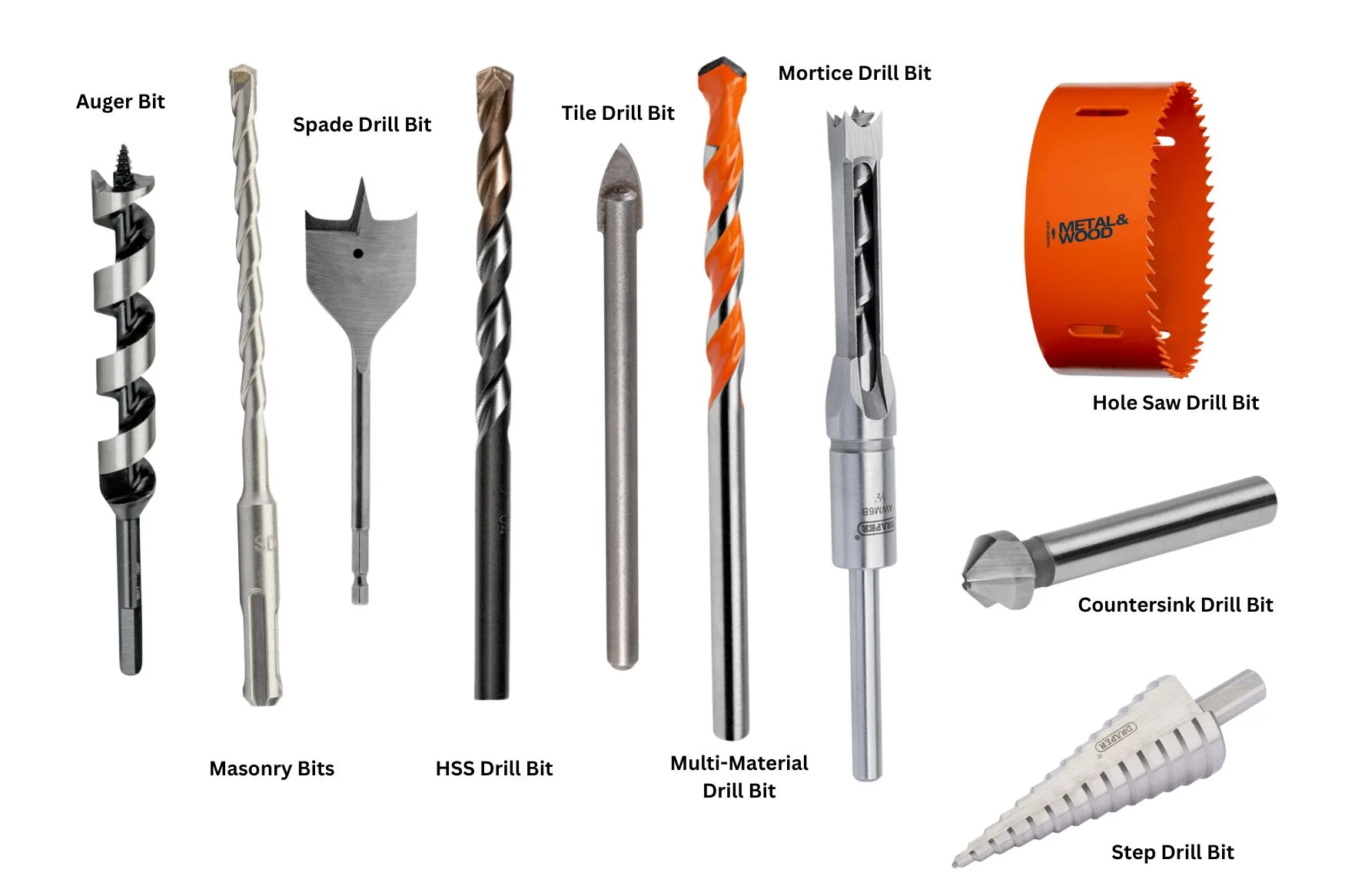
When you think "drill bit," you're probably picturing the standard, silver-colored guy. And you're not entirely wrong! These are often called High-Speed Steel (HSS) bits, and they're the workhorses of the drilling world. Think of them as the reliable, no-nonsense friend who always shows up on time. They're made from steel that can withstand higher temperatures generated by friction – because let's be honest, drilling metal gets hot. Like, "I'm wearing a tiny metal sweater" hot.
HSS bits are great for softer metals like aluminum, copper, and thin steel. They're also relatively inexpensive, which is always a win in my book. They're the gateway drug into metal drilling. You start with a simple HSS bit, and before you know it, you're eyeing up that stainless steel sink you've been meaning to install.
Now, HSS isn't just one thing. You'll see variations. There's plain old HSS, then there's HSS Cobalt. These fellas have a little extra zing thanks to the addition of cobalt. Cobalt makes the bit even harder and more heat-resistant. Think of HSS Cobalt as your HSS friend who secretly moonlights as a ninja. They can handle tougher stuff, like stainless steel and titanium alloys, without breaking a sweat (or melting into a puddle of regret).

And then there's Titanium Nitride (TiN) coating. This isn't a type of bit, but a coating applied to it. It's like giving your HSS or HSS Cobalt bit a fancy, golden suit of armor. This coating further increases hardness and reduces friction, meaning your bit lasts longer and drills smoother. It's the bling of the drill bit world, and it means business. If you see gold, it means "I'm here to get this done, and I look fabulous doing it."
When Things Get SERIOUS: The Heavy Hitters
Okay, so you've got some truly hardcore metal to tackle. We're talking about hardened steel, thick gauge materials, or maybe you just want to drill a hole the size of a quarter through a medieval suit of armor (don't ask me why, just go with it). For these challenges, you need to bring out the big guns.
Enter the Carbide bits. Oh boy. These are the superheroes of the superhero world. Made from tungsten carbide, which is basically the diamond of the drill bit realm (well, almost), these bits are incredibly hard and can chew through just about anything. They're not cheap, mind you. These are the luxury sports cars of drill bits. But if you need to drill hardened steel, cast iron, or other super-tough materials, a carbide bit is your best friend. Just be prepared to treat it with respect; they're not as forgiving of abuse as their HSS cousins.
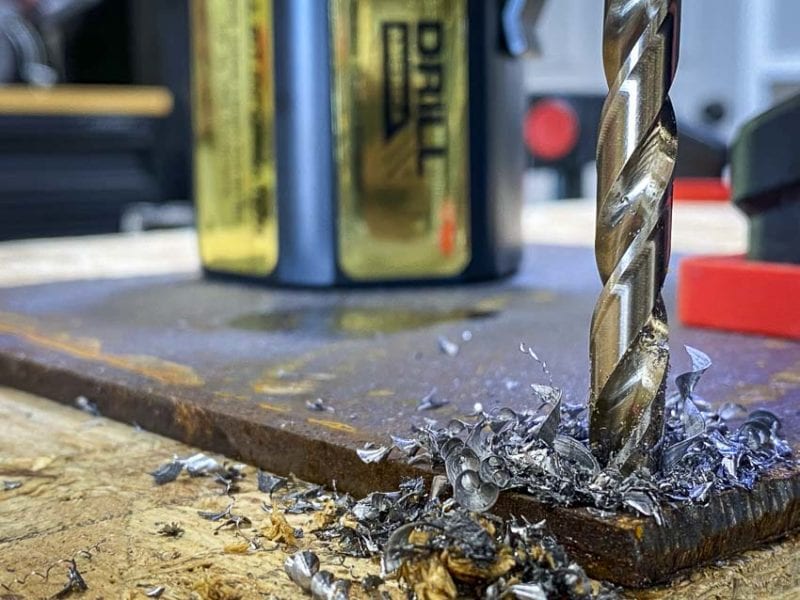
And for the truly adventurous (or those who simply can't find the right size in other materials), there are Diamond-tipped bits. Now, these aren't for drilling through a brick wall like you might imagine. These are typically used for drilling very hard, brittle materials like ceramic tiles, glass, and yes, sometimes very specialized metal alloys where extreme precision and minimal heat are crucial. They work by grinding away material rather than cutting it like a traditional bit. Think of them as tiny, aggressive dental drills for metal. Use them with water to keep them cool, otherwise, they'll get cranky.
The Angle on Angles: Point Types and Their Purpose
It's not just about what the bit is made of; the business end, the point, also matters. Most general-purpose metal drill bits have a 118-degree point angle. This is your standard, everyday driver. It's good for most materials and applications. Think of it as the "just the facts, ma'am" of drill bits.
However, for tougher metals or when you want to drill into rounded surfaces, you might want a bit with a 135-degree point angle. This wider angle provides more cutting edge contact and can help prevent the bit from "walking" – that annoying tendency to wander off your intended mark. It's like a drill bit with a better grip on reality.
And for those really thin, flimsy pieces of metal, or if you're starting a hole without a pilot divot, a bit with a split-point tip is your pal. This design has a notch or groove ground into the very tip, which helps it self-center and immediately start cutting, reducing that pesky walking phenomenon. It's the drill bit equivalent of a GPS system, guiding you straight to your destination.
Don't Forget the Juice! Lubrication is Key
Here's a secret that most people forget: drilling metal is thirsty work! Just like you wouldn't run a marathon without water, your drill bit shouldn't be expected to cut through metal without a little lubrication. This is where cutting fluid or oil comes in. It's not just for show, folks!
The primary job of cutting fluid is to cool the bit and the workpiece. Friction creates heat, and excessive heat can dull your bit faster than a toddler with a crayon attacks a white wall. Lubrication also helps clear away chips and debris, preventing them from jamming up the flutes and making your life miserable. And finally, it helps create a smoother finish on your hole. So, slather it on! Or, you know, drip it on. A little goes a long way.

The type of lubricant you use can depend on the metal. For general purposes, a good all-around cutting oil is fine. For aluminum, a specialized aluminum cutting fluid can be beneficial as aluminum can be a bit sticky. And for stainless steel, something that can handle higher temperatures and pressures is your best bet.
The Moral of the Story (or, How Not to Get a Fiery Divorce from Your Drill Bit)
So, to recap: you've got your trusty HSS for the everyday stuff, your tougher HSS Cobalt and TiN coated bits for when you need a little more oomph, and your super-powered carbide and diamond bits for when you're facing down a metal beast. Don't forget the point angle, and for the love of all that is holey, use some cutting fluid!
Drilling metal can seem daunting, but with the right bit, a little patience, and maybe a good rock anthem playing in the background, you can conquer those metal challenges. Remember, even the most formidable piece of steel can be perforated with the right tool and a bit of know-how. Now go forth and drill responsibly (and perhaps with a safety dance). Your metal projects will thank you!