
Which Element Is The Most Reactive Nonmetal
Ever wondered what makes some things spark and others just… sit there? Well, get ready to dive into a fun little corner of chemistry! Today, we're exploring the world of nonmetals and asking the big question: Which Element Is The Most Reactive Nonmetal? It might sound a bit technical, but understanding this is actually quite fascinating and can give you a whole new appreciation for the stuff all around us!
Why is this topic so cool? Because reactivity is all about how elements like to interact with each other. It’s like the social life of atoms! For beginners, it’s a great way to start thinking about the building blocks of the universe. For families, it can spark curiosity in kids about why certain things happen, like why metal rusts or why we need certain elements in our bodies. And for hobbyists, whether you’re into gardening, crafting, or even just appreciating a good fireworks display, understanding reactivity can offer surprising insights.
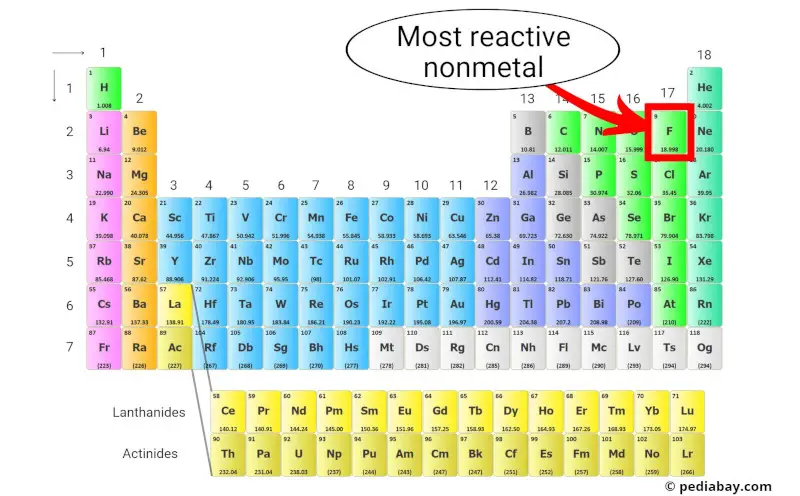
So, who takes the crown for the most reactive nonmetal? Drumroll, please… it’s Fluorine! Yep, this feisty element is like the ultimate social butterfly, but in a very, very intense way. Fluorine is so eager to grab electrons from other elements that it can react with almost anything, even some noble gases which are usually quite antisocial! It's the strongest oxidizing agent in the periodic table, meaning it loves to steal electrons, causing chaos (in a good chemistry way!) with other atoms.
What are some examples or variations we see? While Fluorine is the champion, its close relatives, Chlorine and Bromine, are also highly reactive nonmetals. You encounter chlorine all the time – it’s used in swimming pools to keep them clean and in many household cleaning products (so always use those with care!). Bromine is less common but has uses in flame retardants and even some photography processes. These elements, along with Iodine and the super-reactive Fluorine, belong to a group called the halogens, meaning "salt-formers" because they often combine with metals to create salts!
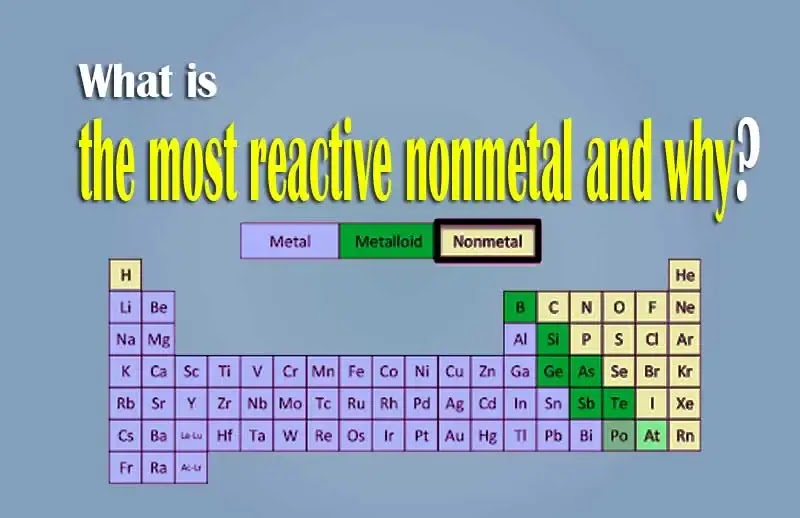
Getting started with this topic is easier than you think! You don't need a lab coat. Start by looking at the periodic table. Notice where the nonmetals are located. Then, do a quick online search for "most reactive nonmetals" and you'll find plenty of simple explanations and videos. For families, consider a simple experiment like observing how different materials react to air or water (with adult supervision, of course!). For instance, you might notice how some fruits brown when exposed to air, which is a form of oxidation.
Understanding elemental reactivity isn't just for scientists; it's a fun way to understand the world around you. From the air we breathe to the food we eat, these elements are constantly interacting. So, the next time you see something change, whether it's a rusting bike or a colorful chemical reaction in a nature documentary, you'll have a little more appreciation for the incredibly reactive, and sometimes surprisingly dramatic, lives of nonmetal elements!