
Which Group Of Metals Are The Most Reactive
Imagine your kitchen drawers. You've got your trusty spoons, your shiny forks, maybe a whiz-bang potato masher. They're all made of metal, right? But have you ever thought about how these metal pals behave when they meet up with other things? It turns out, some metals are total drama queens, while others are happy to just chill.
Today, we're going to meet the rockstars of the metal world, the ones who are always looking for an adventure. These are the metals that don't like to be left alone for long. They're basically the life of every chemical party, always eager to bond with someone new.
The Superstars of Reactivity
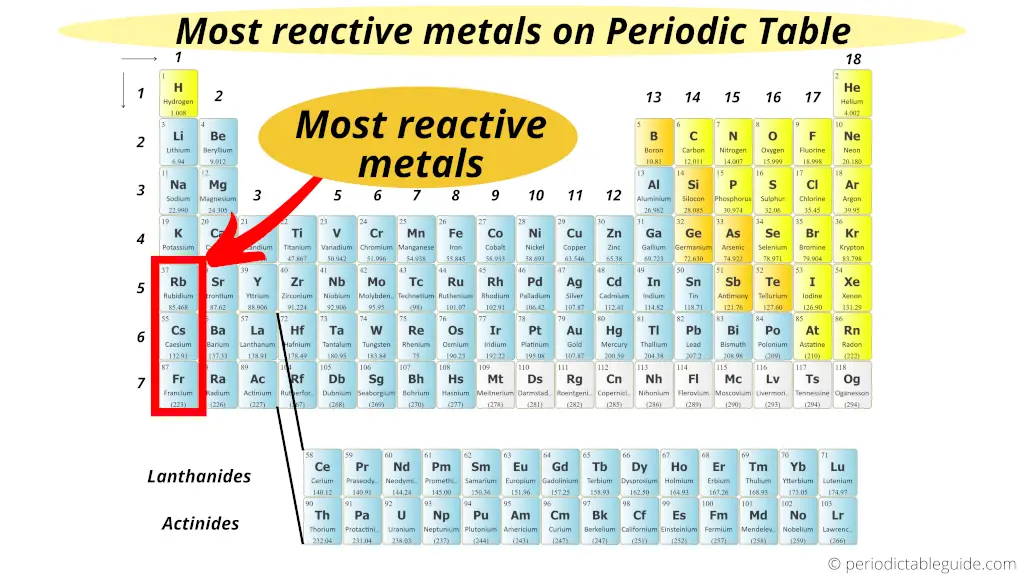
So, who are these enthusiastic metal buddies? We're talking about a special crew called the Alkali Metals. Think of them as the super friendly, slightly hyper Golden Retrievers of the periodic table. They just love making new friends, and they do it with a flourish!
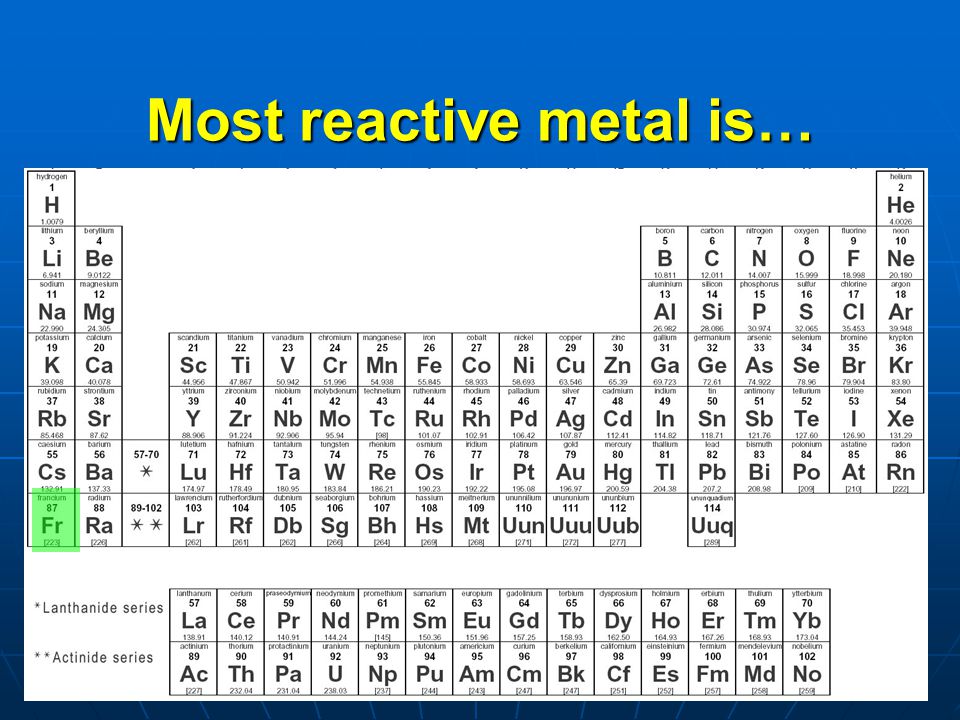
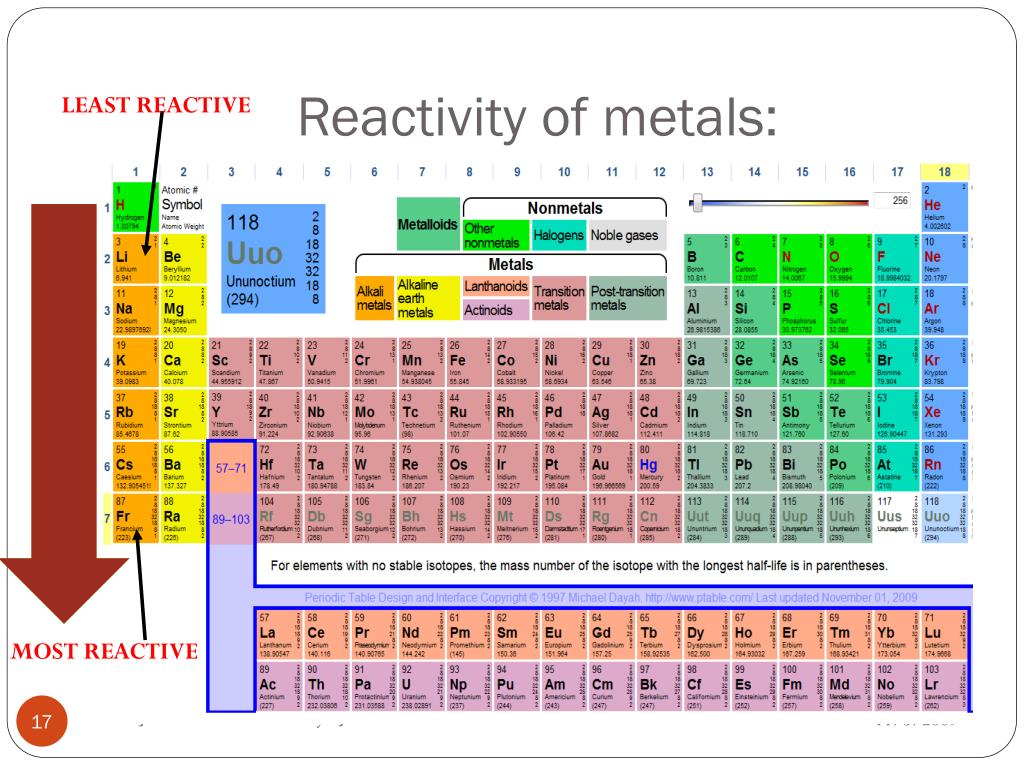
You'll find them all lined up in the very first column of the periodic table. They're like the VIP section, always ready for action. Their names might not be as common as iron or copper, but their personalities are way more exciting.
Meet the Gang: Lithium, Sodium, and Potassium
Let's start with the smallest of the bunch, Lithium. It's the metal that powers your phone, keeping you connected to your friends and family. Pretty neat, huh? Even though it's so small, it's still got that energetic spark.
Then there's Sodium. You know sodium, right? It's the main ingredient in table salt! That's right, your everyday seasoning is made of a metal that's practically begging to react with anything. It's a bit of a wild child, but oh-so-useful.
And don't forget Potassium. This one is super important for keeping your body running smoothly, found in bananas and other healthy foods. It’s another eager beaver, ready to join forces with other elements.

These three are just the beginning. The alkali metals go all the way down the first column, with Rubidium, Cesium, and Francium following suit. They all share that same zest for life, that same desire to connect.
Why So Energetic?
So, what makes these alkali metals so jumpy? It all comes down to their electrons, those tiny little particles whizzing around the outside of an atom. Alkali metals have just one electron hanging out in their outermost shell, like a single sock lost from a pair.
This lonely electron is just itching to find a partner. It's much happier when it can share or give away that one extra electron to feel more complete. It’s like a missing puzzle piece that’s desperate to be slotted in.
When they encounter other elements, especially things like oxygen or water, it’s like a lightning bolt of connection! They readily toss that electron over, and bam – a new compound is formed. It’s a chemical handshake, but a very enthusiastic one.
A Splashy Welcome (Sometimes Too Splashy!)
This eagerness to react can lead to some pretty spectacular shows. If you drop a tiny piece of sodium into water, it's not just going to sit there quietly. Oh no! It's going to zip and zoom around the surface, melting and giving off hydrogen gas.
And if enough hydrogen gas builds up, well, you get a little pop! Sometimes, it's a big pop! It's like a tiny, fizzing fireworks display happening right in your water. It’s both a little scary and incredibly cool to watch.
Lithium is a bit more reserved, but it still reacts with water, just a bit more gently. Potassium, however, is a real show-off. When it hits water, it reacts so vigorously that it can actually ignite the hydrogen gas, creating a little flame!
Imagine a tiny metal nugget throwing a fiery party in a glass of water. That's the kind of energy we're talking about! It’s a reminder that even everyday substances can have surprising, dramatic personalities.
Why We Keep Them Locked Up
Because they're so reactive, we can't just leave these alkali metals lying around. They'd react with the air, with moisture, with pretty much anything they touched! It would be a constant, uninvited chemical reaction.
+1+most+reactive.jpg)
So, scientists and chemists keep them very safe. They’re often stored under a layer of oil or in sealed containers. It’s like putting a rockstar in a VIP lounge, making sure they don't accidentally start a riot!
This careful handling is a testament to their power. They have so much energy, so much desire to change, that we need to be smart about how we interact with them. It’s a sign of respect for their potent chemical nature.
More Than Just Explosions
While their dramatic reactions are fun to think about, the alkali metals are incredibly important in our lives. We already mentioned lithium in our batteries and sodium in our salt.
Potassium is crucial for nerve function and muscle contractions. Without it, we wouldn't be able to move or even think properly! It’s the silent hero that keeps our bodies working.
These metals are also used in a surprising number of everyday items. They help make glass stronger, soaps more effective, and even help in the production of certain medicines.
So, the next time you're enjoying a nice meal, remember the sodium helping to season it. Or when you're scrolling through your phone, give a little nod to the lithium powering it. These super-reactive metals are more than just scientific curiosities; they're fundamental to our modern world.
A Heartwarming Connection
Think about it: these elements, so eager to share their energy, are literally powering our lives and keeping us healthy. It's a kind of heartwarming thought, isn't it? This constant exchange, this giving and taking of electrons, is the very essence of how our universe works.
The alkali metals, with their boundless enthusiasm, remind us that even the most basic building blocks of matter have their own unique personalities and incredible power. They’re not just elements on a chart; they’re dynamic forces shaping our world, one energetic reaction at a time.
So, while they might be a bit too much for a casual meet-and-greet, the alkali metals are truly the dazzling, energetic superstars of the metal world. They’re the ones who show us the exciting, sometimes explosive, but always essential, nature of chemistry.