
Which Is Better Stainless Steel Or Titanium

Alright folks, gather ‘round, grab your lattes and your artisanal croissants, because we’re about to dive headfirst into a debate that’s been silently raging in the hearts and minds of… well, anyone who’s ever bought a fancy water bottle or a durable frying pan. We’re talking about the heavyweight champions of modern materials: stainless steel and titanium. Which one reigns supreme? Is it like choosing between a loyal Labrador and a mischievous cat? Let’s find out, shall we?
First up, let’s give a roaring (or perhaps a polite, clinking) applause to stainless steel. This guy is the workhorse of our everyday lives. It’s in our kitchens, our cars, our buildings… basically, if it’s shiny and doesn’t rust away into a pile of sad orange dust, there’s a good chance stainless steel had a hand in it. Think of it as the reliable, slightly unexciting older sibling who always gets their homework done on time.
What makes stainless steel so… well, stainless? It’s a secret blend, a metallurgical magic trick. Mostly iron, with a generous dollop of chromium. This chromium stuff forms this invisible, protective shield on the surface. It’s like a tiny superhero cape, repelling rust and corrosion faster than you can say “spilled coffee.”
And the best part? It’s relatively affordable! You can get a decent stainless steel pot for less than a month’s worth of oat milk lattes. It’s the material that says, “I want my stuff to last, but I also want to eat this month.” A true hero for the budget-conscious and the practically-minded.
But wait, what about its downsides? Well, while it’s strong, it’s not exactly light as a feather. If you’re trying to pack for a backpacking trip and every ounce counts, lugging around a full stainless steel canteen might feel like you’ve accidentally filled it with rocks. And while it’s tough, it can get scratched. Think of it as the material that will gracefully age, but might show a few battle scars along the way.

Now, let’s shift gears and introduce the enigmatic, the alluring, the wow-that’s-expensive material: titanium. This is the material that whispers tales of aerospace engineering, of high-tech gadgets, and of people who’ve clearly made some very good financial decisions. Titanium is like the cool, mysterious cousin who shows up in a sports car and knows how to surf.
Titanium’s claim to fame is its incredible strength-to-weight ratio. This means it’s ridiculously strong, like, “hold-up-an-airplane-wing” strong, but also surprisingly light. Imagine a frying pan that could survive a meteor shower but wouldn’t break your wrist when you flip a pancake. That’s titanium for you.

It’s also incredibly resistant to corrosion. We’re talking, like, “you could probably leave it in the ocean for a decade and it would still look brand new” resistant. It doesn’t react with much, which is why it’s a favorite for medical implants. Yep, they literally put this stuff inside your body. If that’s not a testament to its awesomeness, I don’t know what is. Your replacement hip might be cooler than you are.
And the look! Oh, the look of titanium. It has this subtle, almost matte sheen that screams sophistication. It’s the kind of material that makes you feel like you’ve achieved peak adulting, even if you’re just drinking water from a titanium mug. It’s the material equivalent of a perfectly tailored suit.
But here’s where the fairy tale gets a little… pricy. Titanium is not your casual kitchen drawer material. It’s expensive. Like, “sell-a-kidney-for-a-titanium-spork” expensive. This is why you don’t see titanium toilet bowls (yet, give it time). The cost of extracting and processing this magical metal means it’s reserved for things where its extreme properties are truly needed, or for those who want to flash a little metallic bling.
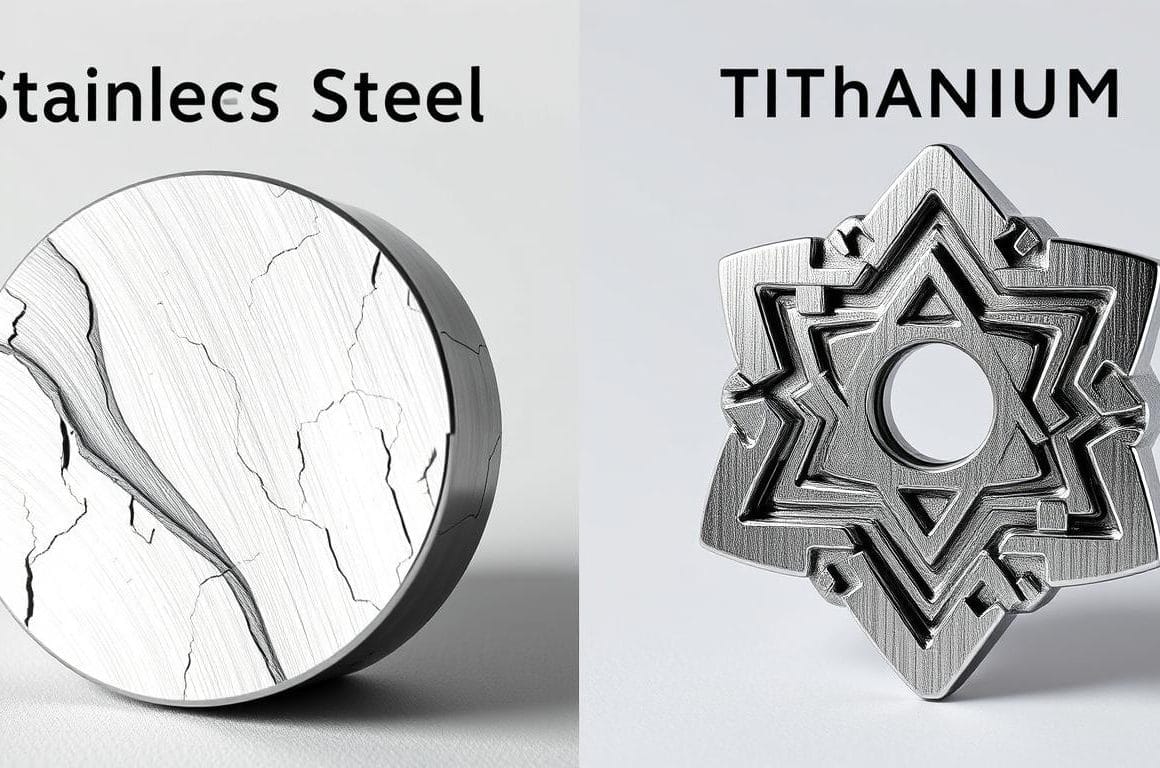
And while it’s super strong, it can be a bit… stubborn to work with. Manufacturing titanium can be a tricky business, like trying to get a cat to wear a tiny hat. It requires specialized equipment and a lot of patience. This also adds to the cost, of course. Because good things, especially shiny, indestructible things, don’t come cheap.
So, to recap: stainless steel is your dependable, everyday hero. It’s strong enough, affordable enough, and looks good enough. It’s the trusty sidekick who’s always there for you. Perfect for your pots, pans, and those sturdy tumblers that have survived more drops than your phone.

Titanium, on the other hand, is the superhero. It’s lighter, stronger, and more resistant to the elements than almost anything else. It’s for when you need the absolute best, the most durable, the most… elite. Think high-performance cookware for the adventurous chef, or gear for serious expeditions where failure is not an option. And yes, for that ridiculously cool water bottle that will outlast your mortgage.
In the end, the “better” material really depends on your mission, your budget, and your willingness to impress your friends with your knowledge of obscure metal properties. Do you need something that will get the job done without breaking the bank? Go stainless. Are you venturing into the wilderness, performing surgery on yourself, or just really, really want the coolest water bottle on the block? Then you might just have to open that (titanium-plated) wallet a little wider.
Ultimately, both are pretty darn amazing in their own right. One is the solid, reliable foundation, and the other is the shimmering, high-flying dream. So, next time you’re faced with a choice, remember this little café chat. And hey, if you ever see a titanium frying pan on sale for the price of a used bicycle, do yourself a favor and buy it. You might just be able to cook your way to the moon with that thing.