
Which Metal Is Stronger Titanium Or Tungsten
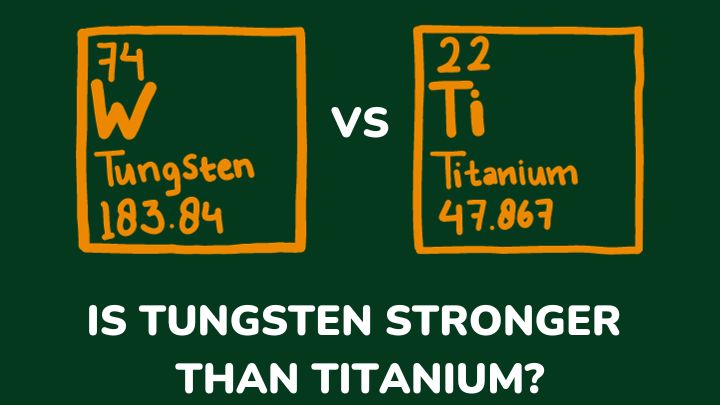
So, you're curious, huh? About which metal is the undisputed champ, the heavyweight contender in the ring: Titanium or Tungsten? It’s like asking if a superhero or a supervillain would win in a fight. A tough call, right?
Let’s grab our imaginary coffee, settle in, and break it down. No fancy lab coats needed, just good old-fashioned curiosity and maybe a sprinkle of scientific common sense. Because honestly, who doesn't want to know which metal is tougher? It's the kind of knowledge that just makes you feel a little bit smarter, doesn’t it?
First up, let’s talk about Titanium. This stuff is pretty cool. You know how they make those super-light, super-strong airplane parts? Yep, that’s often Titanium. It’s like the ninja of the metal world – strong, agile, and doesn’t weigh you down. Imagine a bodyguard who can also do ballet. That's Titanium.
Its big selling point? It’s got this amazing strength-to-weight ratio. Think about it. It’s really tough, but it's not ridiculously heavy. This is why it’s a rockstar in aerospace. We want planes to be strong, but we really don’t want them to be tanks, you know? Every little bit of weight saved is… well, a lot of money saved and fuel burned.
And get this, Titanium is also a champ at resisting corrosion. It’s like it has a built-in Teflon coating, but way cooler. It doesn’t rust like your old garden gate, or get all gunked up by chemicals. This is why you see it in fancy medical implants – think hip replacements and stuff. Your body won't reject it, and it won't get all gross. Basically, it plays nice with pretty much everything, which is a huge win.
Plus, it’s got this lovely, silvery sheen. Not as bling-y as gold, but still got a certain understated elegance. Think of it as the minimalist chic of metals. You’ll find it in some pretty swanky watches and even some high-end bicycle frames. Because why not have a bike that’s both a performance machine and a work of art? Am I right?
Now, let’s switch gears and dive into the world of Tungsten. Prepare yourselves, folks, because this is where things get serious. Tungsten is basically the Hulk of metals. When you think of brute force, of something that can withstand insane pressure and heat, you’re thinking Tungsten. It’s the metal equivalent of a brick house, but one that can survive a meteor shower.

The first thing that blows people’s minds about Tungsten is its absolutely insane melting point. Like, ridiculously high. We’re talking about the kind of heat that would vaporize most other metals before you could even say "ouch." It’s around 3,422 degrees Celsius (that’s 6,192 Fahrenheit for you imperial folks). Imagine trying to melt that. You’d need something way hotter than your kitchen oven, that’s for sure.
Because of this incredible heat resistance, Tungsten is used in some pretty intense environments. Think of the filaments in old-school light bulbs (though LED has taken over, bless their energy-efficient hearts). Those little glowing wires? That was Tungsten. It could get super hot without burning out. Pretty neat, huh?
But here’s where it really shines (or rather, endures): its incredible hardness and density. Tungsten is heavy. Seriously heavy. If you held a chunk of Titanium and a chunk of Tungsten of the same size, the Tungsten would feel like it had a secret anvil hidden inside. It’s dense, like a black hole in metal form.
And hardness? Oh boy. Tungsten is one of the hardest naturally occurring elements. It’s used in things like drill bits, cutting tools, and even armor-piercing projectiles. Yes, you read that right. If you need to cut through something incredibly tough, or punch through something even tougher, Tungsten is your guy. It’s the metal equivalent of that one friend who can open any jar.

So, when we talk about "stronger," we need to be a little more specific, don’t we? It’s not a simple "yes" or "no" answer. It depends on what kind of "strong" you’re talking about. It’s like asking if a marathon runner is stronger than a weightlifter. Both are incredibly strong, but in very different ways.
If we’re talking about strength versus weight, then Titanium takes the crown. It’s the agile warrior, the one who can lift a car with one arm and then do a backflip. That strength-to-weight ratio is its superpower. It’s why it’s the darling of the aerospace industry and why your fancy medical implants don’t feel like lead weights.
But if we’re talking about sheer, unadulterated brute force, about withstanding extreme temperatures, incredible pressures, and just generally being the toughest kid on the block, then Tungsten is your man. It’s the immovable object, the metal that laughs in the face of heat and tries to wear down everything else. It’s the deep-sea submersible of metals, built for the harshest environments.
Think about it this way: a Titanium rod might be able to bend a steel bar, but a Tungsten rod could probably shatter that steel bar. On the flip side, that Titanium rod would be a lot easier to carry around. One is about sophisticated resilience, the other is about pure, unyielding power.
The tensile strength is where things get interesting too. This is basically how much a material can be stretched or pulled before it breaks. Titanium generally has a higher tensile strength than many steels, which is impressive. But Tungsten, when alloyed, can achieve incredible tensile strengths as well, especially under extreme conditions.
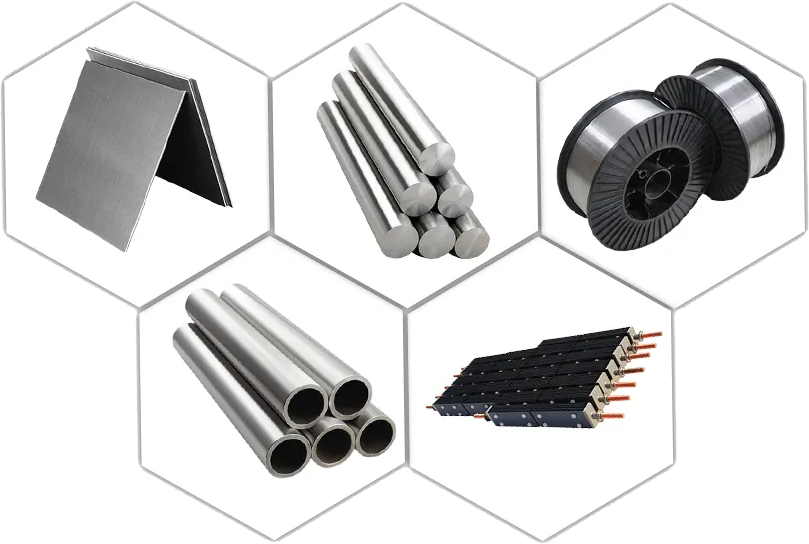
And then there's hardness. This is about resisting scratching and indentation. In this department, Tungsten is the undisputed king. It's so hard that it's often used to make tools that cut other, less hard metals. Titanium is hard, don't get me wrong, but it’s not in the same league as Tungsten when it comes to sheer surface toughness.
So, to recap our coffee-fueled investigation: Titanium is your go-to for strength without the baggage of heavy weight, and it’s a champ at staying corrosion-free. It’s the smart choice for things that need to be light and durable, like your phone case (if it were made of Titanium, which would be awesome, by the way). It’s the athlete who’s strong and agile.
Tungsten, on the other hand, is for when you need to defy the laws of thermodynamics and just be plain, ridiculously tough. It’s the metal that says, "Bring it on!" to extreme heat and pressure. It’s the ultimate defensive lineman. It’s the material that’s going to be there, unyielding, no matter what life (or extreme engineering) throws at it.
It’s like comparing a finely tuned race car to a battle tank. Both are "strong," but for very different purposes. The race car needs to be fast and agile, so it uses lightweight materials. The battle tank needs to withstand explosions and artillery fire, so it’s built like a fortress. And both are incredibly impressive in their own right!

So, is one absolutely stronger than the other? It’s a bit of a trick question, really. If "stronger" means the ability to resist being pulled apart for its weight, Titanium wins. If "stronger" means the ability to withstand incredible heat and not get dented by a hammer (or a meteor), then Tungsten is your champion.
Ultimately, both are amazing materials that push the boundaries of what’s possible. We wouldn’t have our sleek airplanes or our super-durable cutting tools without them. They’re both rockstars in their own right, just playing different genres of "strength" music.
It’s good to know these things, though, right? Next time you see something made of Titanium or Tungsten, you can nod sagely and think, "Ah yes, the strength-to-weight ratio of a ninja, or the unyielding power of a superhero." It’s fun to have that little bit of insider knowledge.
And who knows? Maybe one day they’ll invent a metal that combines the best of both worlds. A metal that’s as light as Titanium but as tough as Tungsten. Now that would be something to write home about. Until then, we’ll just have to appreciate these two incredible metals for the unique superpowers they bring to the table.
So, there you have it. The great Titanium versus Tungsten debate, settled (sort of!) over coffee. Hope you enjoyed the chat! Now, who wants a refill? Because talking about metals this awesome is thirsty work.