
Which Metals Are The Best Conductors Of Heat

Ever found yourself staring at a cooking pot, wondering why some pots get hot faster than others? Or perhaps you've marveled at how a metal spoon left in a hot drink quickly becomes too hot to touch? This isn't magic; it's the fascinating world of heat conduction, and knowing which metals are the champions of this thermal transfer is not just cool trivia, but incredibly useful in our everyday lives!
Think about your kitchen – the heart of many homes. The efficiency of your cookware directly impacts your cooking experience. A pan that distributes heat evenly means perfectly seared steaks and evenly cooked cakes, rather than scorched edges and raw centers. Outside the kitchen, understanding heat conductivity plays a vital role in everything from the cooling systems in your car to the design of your smartphone, preventing overheating and ensuring smooth operation. It's all about moving heat where you want it, or keeping it away from where you don't!
The Heat-Loving Heavyweights
So, which metals are the superstars when it comes to whisking heat away or bringing it in? At the very top of the podium, shining brighter than a polished silver teapot, is Silver. Yep, that's right, the precious metal we associate with jewelry and fancy cutlery is also the undisputed king of thermal conductivity. If you wanted to design the ultimate heat-conducting gadget, silver would be your go-to material. However, its rarity and cost make it impractical for most everyday applications.
Just a hair behind silver, and far more accessible, is Copper. You’ve definitely encountered copper. It’s the silent workhorse in many of your home’s appliances and electronics. Why? Because it's an excellent conductor of heat, second only to silver. Look at the bottom of your favorite frying pan; chances are, there's a layer of copper or a copper alloy for superior heat distribution. It's also widely used in radiators and heat exchangers because it can efficiently transfer heat from one medium to another. Think of it as a highly efficient thermal messenger, quickly relaying heat signals throughout a system.
Next up, we have Gold. While often admired for its beauty and value, gold also possesses impressive heat conductivity. However, like silver, its price tag makes it a less common choice for widespread thermal applications. Still, its good conductivity, combined with its resistance to corrosion, makes it valuable in certain specialized electronic components where heat management is critical.
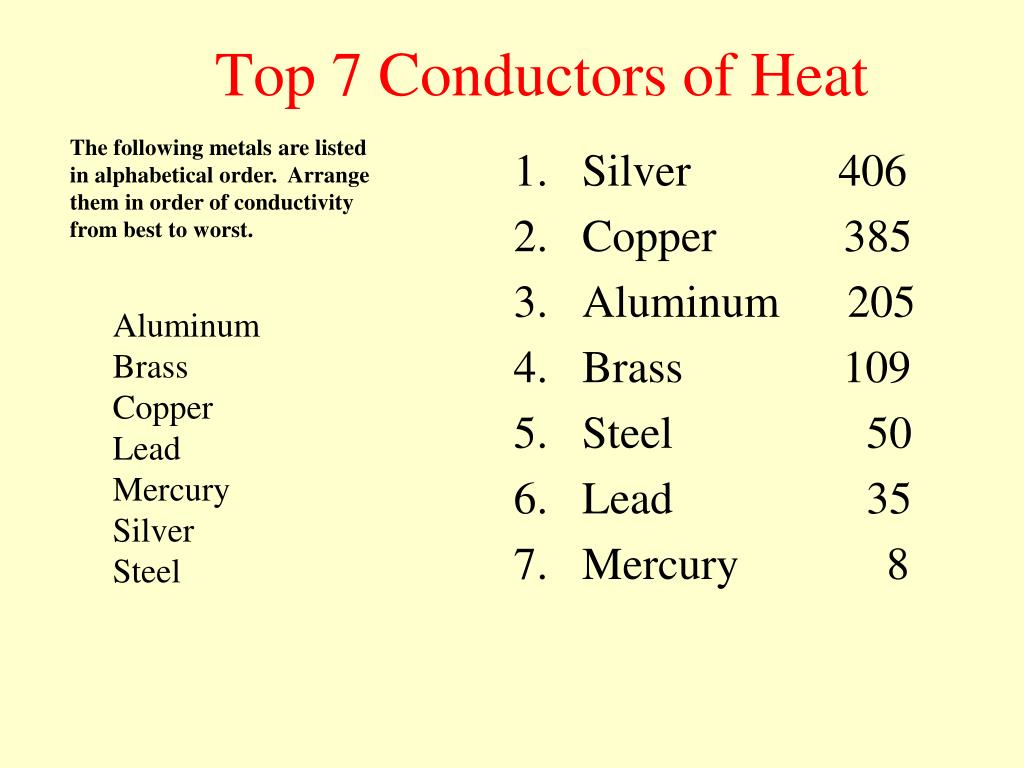
Now, let's talk about a metal you probably use every single day without even thinking about it: Aluminum. This lightweight champion is a fantastic conductor of heat, significantly better than iron or steel, and it’s also relatively inexpensive and abundant. This makes aluminum incredibly popular for cookware. Your baking sheets, many pots and pans, and even foil are made of aluminum precisely because it heats up quickly and evenly. It’s the accessible hero of the heat-conducting world, offering a great balance of performance and affordability.
The Steady Performers and The Insulators
While the metals above are the real show-stoppers, other metals also play important roles. Iron and Steel, while not as conductive as copper or aluminum, are still decent conductors. Their advantages lie in their strength, durability, and lower cost. Cast iron pans, for instance, are famous for their ability to retain and distribute heat evenly once they get going, making them excellent for slow cooking and achieving a beautiful sear.

On the other end of the spectrum, we have metals that are notably poor conductors of heat. These are often referred to as thermal insulators. Metals like Stainless Steel (while it contains iron, the chromium and nickel content affect its conductivity) and Titanium are not as efficient at transferring heat. This is why handles on pots and pans are often made from these materials or coated with plastics and wood, which are even poorer conductors, to prevent you from burning your hands. They act as a barrier, keeping the heat where you want it – in the pan, not in your grip!
So, the next time you're whipping up a meal or marveling at how your laptop stays cool, remember the unsung heroes – the metals. From the dazzling conductivity of silver and the workhorse efficiency of copper, to the everyday brilliance of aluminum, these elements are constantly at work, shaping our experiences and making our lives a little bit hotter (or cooler!) in all the right ways.