
Which Specimen Collection Tube Is Commonly Used For Hematology Tests

Ever been to the doctor and had them draw a little bit of your blood? It’s one of those things, right? Like getting a flu shot or remembering where you parked your car – a necessary evil, or at least, a necessary event. And usually, after they’ve done their thing with the needle (which, let’s be honest, can feel like a tiny, polite vampire doing a pit stop), you’re left with a bunch of these little vials. They’re like tiny, colorful test tubes, each with a different colored cap.
You might have wondered, as you watched the phlebotomist skillfully fill them up, "Why so many colors? Are they collecting different kinds of blood for different purposes? Is one for tracking my cholesterol and another for seeing if I’ve been secretly eating donuts at midnight?" Well, it’s not quite that dramatic, but there’s definitely a method to the colorful madness. Think of it like having different kinds of mailboxes for different types of letters. You wouldn't put a bill in with a love letter, would you? Same idea, but for your precious bodily fluids.
Today, we’re going to dive into one of those colors, the one that’s the undisputed champion of the blood-drawing world when it comes to checking out your red and white blood cells, and all those little platelets that help you stop bleeding when you, say, accidentally nick yourself while shaving or attempting to open a particularly stubborn bag of chips. We're talking about the tubes used for hematology tests. And if you’re thinking, "Hematology? Sounds fancy," don't worry, it's just the science of blood and blood disorders. Basically, they're looking at the microscopic traffic report inside your veins.
So, which tube is the VIP for these specific tests? Drumroll please… it’s the lavender-top tube!
Ah, the lavender top. It’s the quiet achiever, the workhorse of the blood collection world, the unsung hero in the battle against mysterious aches and pains. If your doctor suspects you might be a little anemic, or perhaps has seen you looking a bit paler than usual (maybe you’ve been binge-watching a new show and forgetting to see the sun – we’ve all been there), this is likely the tube that’s going to get filled.

Why lavender? Well, it’s not because it matches the doctor’s scrubs, though that would be a fun coincidence. The color of the cap is a handy visual cue, an international code, if you will, that tells the lab folks exactly what additive is inside. And for hematology tests, that additive is usually EDTA (ethylenediaminetetraacetic acid).
Now, EDTA might sound like something you'd find in a sci-fi movie, a chemical compound designed to, I don't know, reverse aging or something. But in reality, its job is much more practical, and frankly, quite brilliant. Think of it as a tiny, polite bodyguard for your blood cells. Once the blood is drawn, the EDTA gets to work, and its main mission is to prevent clotting.
You see, when blood leaves the cozy confines of your veins, it has a natural tendency to say, "Hey, I’m out! Let’s form a nice, protective clot to stop things from getting messy!" This is super important if you cut yourself, but it’s a real buzzkill for hematology tests. If your blood clots in the tube, the cells get all mashed up and stuck together, making it impossible to get an accurate count or look at their individual shapes. It’s like trying to count individual grains of sand after they’ve been mixed with water and dried into a brick – a bit of a mess.

EDTA is like the ultimate peacekeeper. It binds to calcium ions in your blood. Now, calcium is a bit of a party animal when it comes to blood clotting. It’s like the bouncer at the club, essential for getting the whole clotting process going. By whisking away the calcium, EDTA politely tells the clotting cascade to take a seat and chill out. No calcium, no party, and most importantly, no clotting.
This is crucial because hematology tests need your blood to be in its liquid, free-flowing state. The machines that analyze your blood are incredibly precise. They need to be able to count individual red blood cells, white blood cells, and platelets. They look at their size, their shape, their distribution. It's like a microscopic census! If the blood has clotted, the results would be… well, let’s just say they wouldn’t be very helpful. It’d be like trying to get a head count at a concert when everyone’s just sort of milling around in a giant, lumpy mosh pit.
So, that lavender-top tube is your blood’s little safe haven, keeping it liquid and ready for examination. It’s the designated driver of your blood sample, ensuring it gets to the lab in tip-top shape, ready for its close-up.
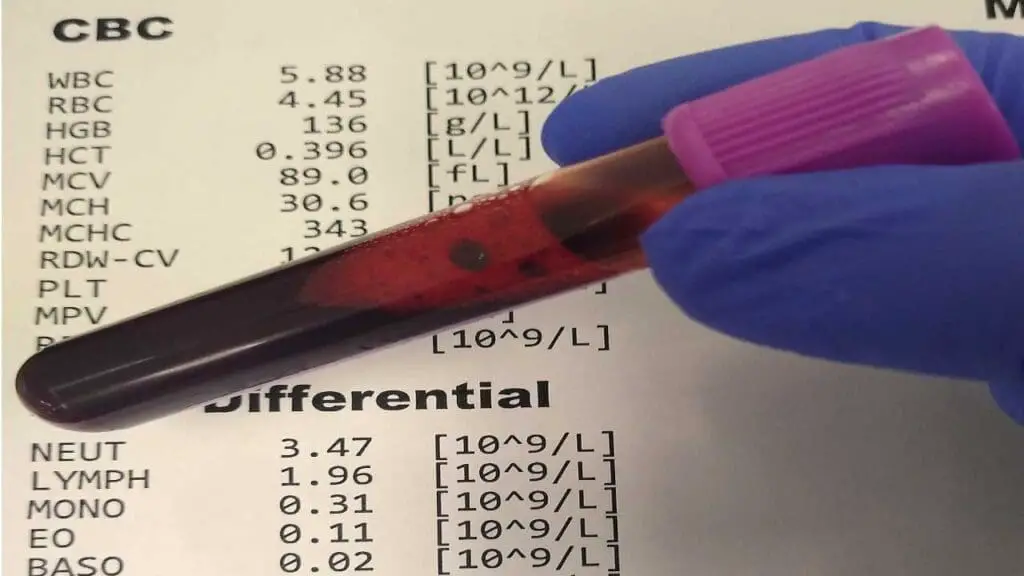
What kind of tests does this trusty lavender tube facilitate? Oh, a whole bunch! Your Complete Blood Count (CBC) is probably the most common one. A CBC is like the all-you-can-eat buffet of blood tests. It gives your doctor a snapshot of your overall health. It checks:
- Red Blood Cell (RBC) count: These guys are the oxygen couriers. If you don't have enough, you might feel tired and sluggish – like your internal delivery service is on strike.
- White Blood Cell (WBC) count: These are your body's defense force, the tiny soldiers fighting off infections. A high count can mean you've got a battle going on, while a low count might suggest your defenses are a bit run down.
- Platelet count: As we mentioned, these are the emergency repair crew. They’re crucial for stopping bleeding. Too few, and you might bruise easily or bleed longer. Too many, and things can get a bit sticky.
- Hemoglobin: This is the protein in red blood cells that actually carries the oxygen. Low hemoglobin is what we call anemia.
- Hematocrit: This measures how much of your blood is actually made up of red blood cells.
And that’s just the tip of the iceberg! The lavender-top tube is also used for many other hematology-related tests, like looking at the specific types of white blood cells (differential), or checking for certain blood disorders. It’s the Swiss Army knife for anything involving counting and analyzing your blood cells.
Think about it this way: imagine you’re sending a fragile cake to a friend across town. You wouldn't just shove it in a regular box and hope for the best, would you? You’d get a special cake carrier, maybe some bubble wrap, to make sure it arrives intact and looking as delicious as it did when it left your kitchen. The lavender-top tube is that special cake carrier for your blood cells. It’s designed specifically to keep them in the best condition for the lab analysis.
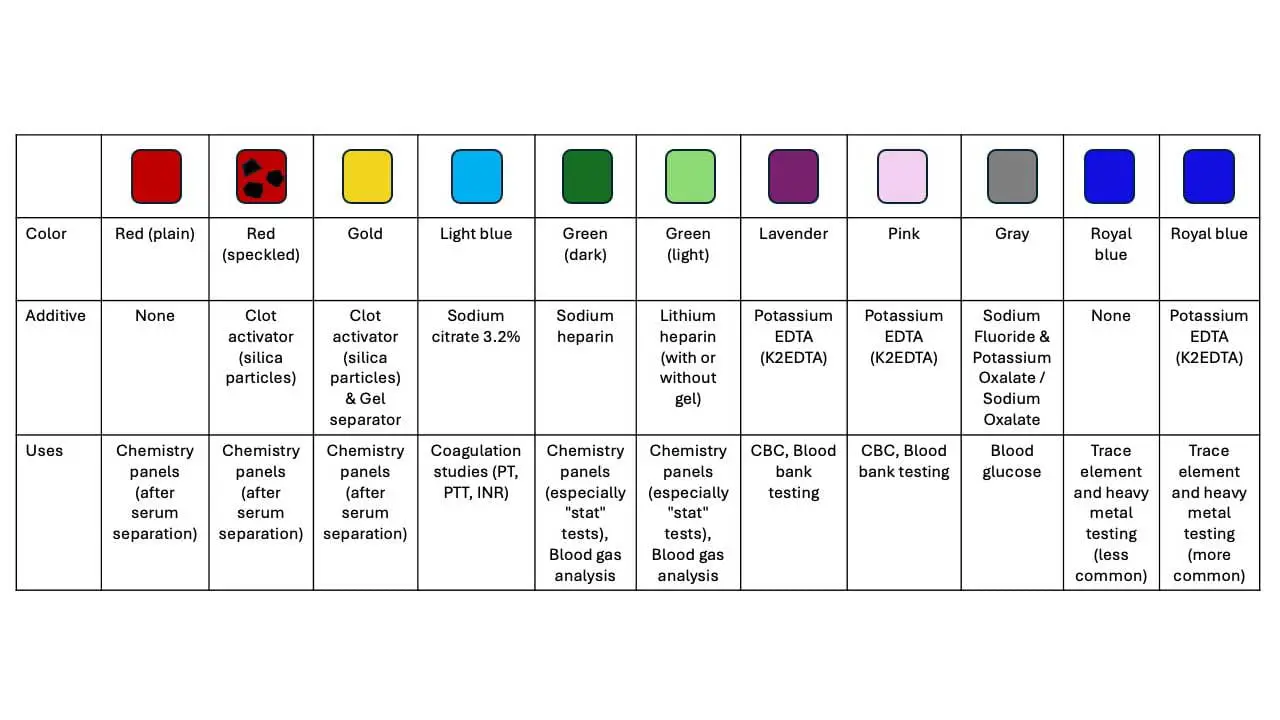
Now, you might be asking, "Are there other colored tubes for blood?" Absolutely! The medical world is a symphony of colors, and each one has its role. You'll see red tops (for serum tests, where the blood is allowed to clot naturally), blue tops (often for coagulation tests, ironically, using a different anticoagulant), and green tops (for plasma tests). It’s like a rainbow of scientific endeavors happening in your veins!
But when it comes to the nitty-gritty of your blood cells – their numbers, their appearance, their general well-being – the lavender-top tube is your go-to. It’s the one that’s silently working to ensure that your CBC and other vital hematology tests can be performed accurately, giving your doctor the information they need to keep you healthy. So next time you see that familiar purple cap, give it a little mental nod of appreciation. It’s doing important work, keeping your blood cells in line and ready for their close-up in the world of medical diagnostics.
It’s a simple thing, really, a small tube with a colored cap. But it’s a testament to the intricate science that goes into understanding our bodies. And while we might not always understand the jargon, or the exact purpose of every little vial, knowing that the humble lavender top plays such a crucial role in keeping track of our internal health is kind of reassuring, isn't it? It’s like knowing your car’s oil is being checked – you might not know how it all works, but you know it’s important for the engine to run smoothly. And for your body, those tiny blood cells are the engine parts that keep everything humming along.