
Which Stainless Steel Is Better 304 Or 316
Imagine your kitchen. That shiny sink? The trusty silverware? Even that fancy water bottle you haul around everywhere? Chances are, a lot of it is made from a superhero material called stainless steel. It’s tough, it’s pretty, and it doesn’t rust its little heart out like regular old iron. But here’s a secret: not all stainless steel is created equal. It’s like comparing a speedy sports car to a reliable family sedan. Both get you there, but they have different vibes and capabilities.
Today, we’re diving into the friendly rivalry between two of the most popular stainless steel characters: 304 and 316. Think of them as siblings in the superhero family. They share a lot of the same awesome genes, but one has a slightly more powerful cape, making it a bit of a superstar in certain situations.
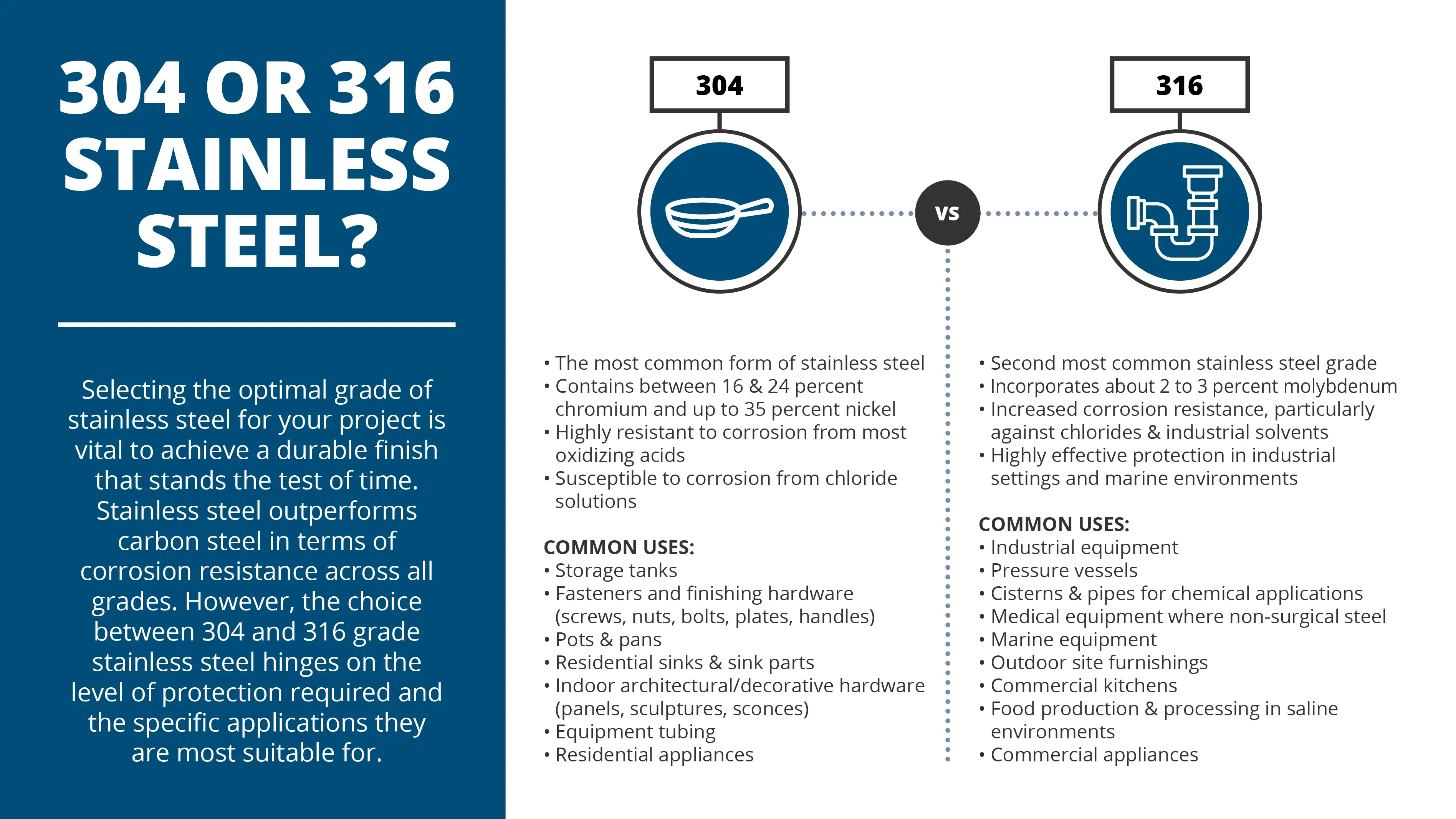
So, who are these stainless steel stars? 304 stainless steel is the everyday hero. It’s the one you see everywhere, the workhorse of the kitchen and beyond. It’s great at resisting rust and corrosion, which is why it’s the go-to for your pots, pans, and that essential colander that’s seen more pasta than a Roman emperor.
It’s a real crowd-pleaser because it’s a fantastic all-rounder. It’s friendly with food, doesn’t impart weird tastes, and can handle the daily grind of dishwashers and errant tomato sauce splatters. If your stainless steel item is just chilling in your home, keeping things clean and looking spiffy, it’s probably 304 having a good time.
Now, let’s meet its slightly more adventurous sibling, 316 stainless steel. This guy has a secret weapon in his arsenal. He’s got a little something extra that makes him even tougher, especially when things get a bit… salty. This secret ingredient is called molybdenum.
Now, molybdenum might sound like a character from a sci-fi movie, but in the world of steel, it’s a real game-changer. It’s like giving our stainless steel superhero a special serum that boosts his powers. This extra power is particularly useful in environments where there’s a lot of salt or other harsh chemicals lurking.
So, where do you usually find 316 flexing its muscles? Think about places near the ocean. That’s right, places where salty air and sea spray are a constant. This is where 316 really shines, preventing rust and corrosion in a way that 304, while still good, can sometimes struggle.
Imagine a boat railing, or even some outdoor furniture that bravely faces the seaside breeze. These are prime spots for 316 to do its magic. It’s the stainless steel that says, "Bring on the salt! I can handle it!" It’s like the surfer dude of stainless steels, totally at home in the ocean.
Think about the heartwarming stories of families using their stainless steel cookware to whip up holiday feasts. The laughter, the aromas, the shared moments – all facilitated by the reliable presence of 304. It’s the quiet backbone of countless happy memories.
And then there’s the slightly more dramatic, but equally heartwarming, story of 316. Picture a research vessel braving choppy seas, its equipment protected by the steadfastness of 316. It’s the unsung hero ensuring vital work can continue, even in the face of nature’s fury. It’s stainless steel with a purpose, protecting what matters.

The difference between them, at its core, is that little bit of molybdenum in 316. It's like the difference between a great handshake and a handshake with a tiny sprinkle of glitter – both are good, but one has that extra oomph. This makes 316 significantly more resistant to pitting and crevice corrosion.
So, what does this mean for you, the discerning consumer? Well, for most everyday kitchen tasks, 304 stainless steel is your perfect companion. It’s cost-effective and does a stellar job of keeping your belongings looking their best and functioning perfectly. Your coffee mug, your mixing bowls, your beloved ice cream scoop – they’re all likely happy being 304.
However, if you’re looking at items that will be exposed to harsh environments, especially those involving salt, chemicals, or extreme temperatures, then 316 stainless steel might be the wiser choice. Think of things like marine hardware, surgical instruments (yes, really!), or even high-end outdoor grills that brave the elements.
It’s a bit like choosing the right tool for the job. You wouldn’t use a butter knife to hammer a nail, and you wouldn’t necessarily need the most robust, high-performance tire for a leisurely stroll in the park. Both 304 and 316 are fantastic, but they have their ideal playgrounds.
Sometimes, the choice between 304 and 316 can feel a little overwhelming, like trying to pick your favorite ice cream flavor when they’re all so delicious. But really, it boils down to where your stainless steel friend is going to live and what kind of adventures it will have.
Most of the time, your trusty 304 will be more than enough. It’s the friendly neighbor who’s always there for you, reliable and unassuming. It’s the stainless steel that makes our daily lives a little easier and a lot more shiny.
But when you need something with a bit more grit, a bit more resilience against the tough stuff, then 316 steps up. It’s the quiet guardian, the one you can count on when the going gets tough, especially when the ocean is involved. It’s stainless steel with a superhero complex, and we’re all the better for it.
Ultimately, whether you’re enjoying a perfectly brewed cup of coffee from your 304 mug or admiring the resilience of a 316 railing against the sea spray, you’re witnessing the quiet magic of stainless steel. It’s a material that enhances our lives, often without us even thinking about it. And knowing a little bit about its different personalities, like 304 and 316, just makes you appreciate it even more.

So next time you see that gleam of stainless steel, give it a little nod of appreciation. It’s probably 304, being its wonderful, everyday self. Or perhaps it’s 316, bravely facing down a salty challenge. Either way, it’s a testament to innovation and a material that makes our world a little bit better, one shiny surface at a time. It’s a story of everyday heroes and the subtle differences that make them shine.
Think of it this way: 304 is like your comfy, favorite pair of jeans – reliable for almost anything. 316 is like that special-occasion jacket – built for when you need a little extra protection and a lot more resilience against the elements. Both are great, but they serve slightly different, equally important, roles in the grand tapestry of life (and kitchenware).
The world of materials can seem technical, but at its heart, it’s about solving problems and making life better. And in the realm of stainless steel, 304 and 316 are two shining examples of how small differences can lead to big impacts. They’re the silent partners in our daily routines, ensuring our food is safe, our kitchens are clean, and our environments are protected.
So go forth and appreciate your stainless steel! Whether it's the ubiquitous 304 or the more specialized 316, know that you're interacting with a material that's been thoughtfully designed to serve you well. It’s a little bit of science, a lot of practicality, and a whole lot of shine, all rolled into one. Isn't that a wonderfully simple, yet endlessly fascinating, aspect of the world around us?