
Which Type Of Rocket Engine Is Used To Maneuver
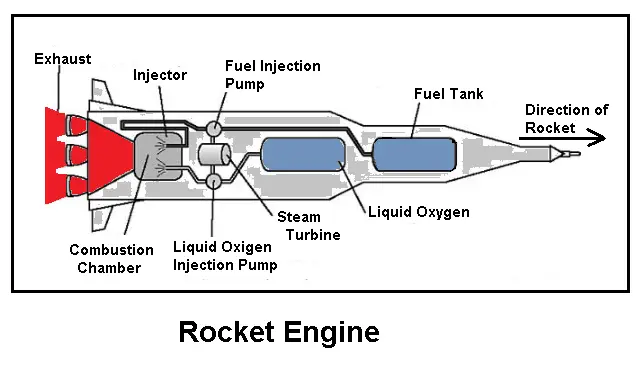
Ever found yourself staring up at the night sky, maybe after binge-watching your favorite sci-fi series, and wondered how on Earth those colossal rockets manage those impossibly graceful turns? It's not just pure Hollywood magic, folks. Turns out, there's a whole universe of clever engineering dedicated to making sure our metallic steeds don't just go straight up, but can also pirouette through the void. So, let's take a relaxed stroll through the fascinating world of rocket engines, specifically the ones that do all the fancy footwork – the maneuvering maestros of the cosmos.
Forget about the giant, fiery beasts that hurl us into orbit. Those are the workhorses, the heavy lifters, the engines that push with the brute force of a thousand suns. But when it comes to nudging a spacecraft, correcting its trajectory, or pulling off those breathtaking orbital dance moves, we're talking about a different breed altogether. These are the unsung heroes, the subtle adjusters, the ones that work with precision and finesse. Think of them as the ballet dancers in a world of sumo wrestlers.
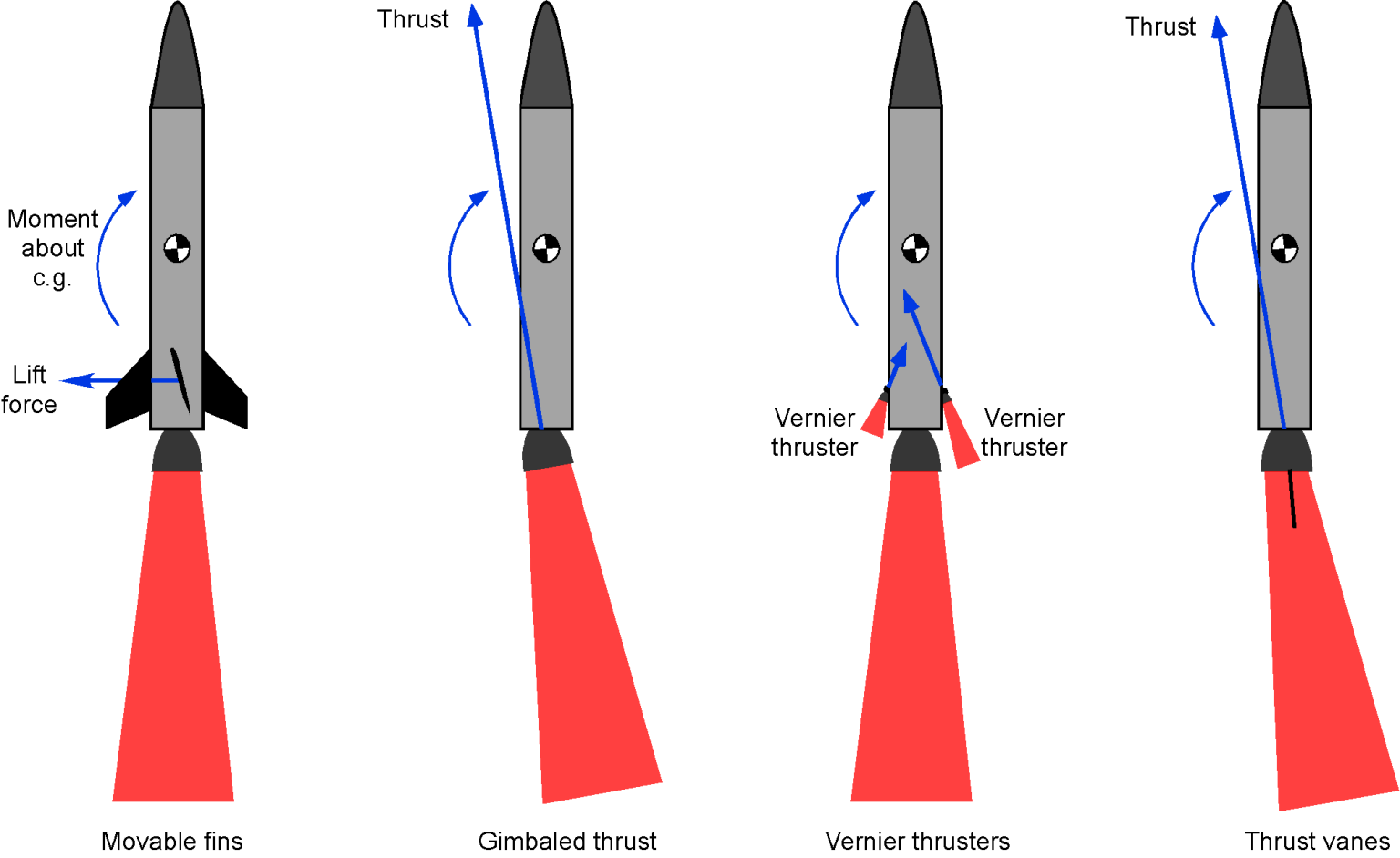
The main players in this maneuvering game are generally a type of engine known as thrusters. Now, "thruster" is a pretty broad term, but in the context of spacecraft maneuvering, we're usually talking about smaller, more localized engines designed for short bursts of controlled thrust. They're not about sustained power; they're about accuracy and responsiveness. It's like the difference between a powerful punch and a gentle tap that can still change the direction of a swing.
The Little Engines That Could (and Do!)
So, what kind of thrusters are we talking about? Well, the most common and probably the easiest to wrap our heads around are monopropellant thrusters. These are the minimalist marvels of rocket science. They work with a single type of fuel, which is pretty neat when you think about the complexity of carrying multiple propellant types. The magic happens when this fuel, usually something called hydrazine, is passed over a catalyst. Think of a catalyst like a helpful friend who makes a reaction happen much more easily and efficiently. In this case, the catalyst breaks down the hydrazine into hot gas, and that hot gas, when expelled through a nozzle, creates thrust. Voila! A gentle nudge.
Why are these so popular for maneuvering? Simplicity, reliability, and relatively low cost. They're like the reliable old bicycle of the space propulsion world – not the fastest or the flashiest, but they get the job done dependably. Space agencies love them because they're less prone to failure, and when you're millions of miles from home, reliability is king. Remember that scene in The Martian where Mark Watney is tinkering with every bit of equipment he can find? He'd probably be a big fan of monopropellant thrusters for their straightforwardness.
These little guys are often found in what are called Reaction Control Systems (RCS). Imagine a bunch of these thrusters strategically placed all over a spacecraft. When the computer needs to make a tiny adjustment, it fires a specific set of these RCS thrusters. Need to rotate the spacecraft? Fire a pair on opposite sides. Need to move it slightly to the left? Fire another set. It’s all about creating controlled forces in different directions to achieve the desired movement. It’s a bit like how you use your own body to balance and adjust your position – a subtle shift here, a gentle push there.
Bi-propellant: A Bit More Oomph
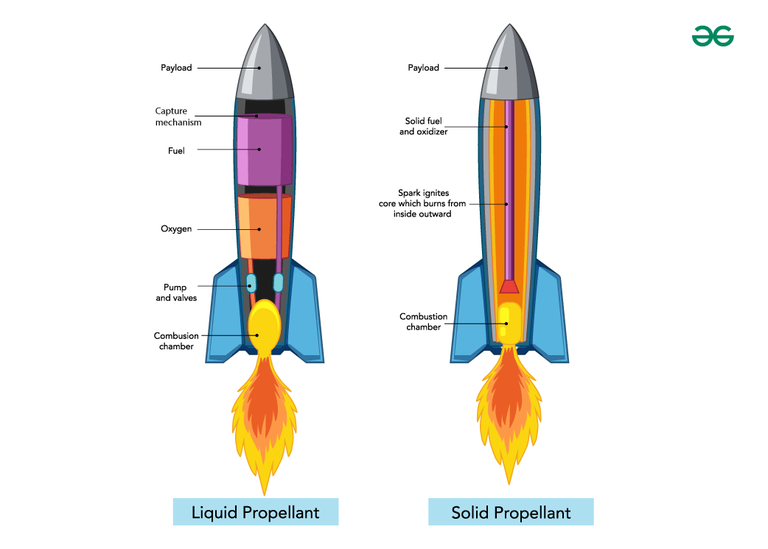
While monopropellant thrusters are great for the everyday nudges, sometimes you need a bit more power, a bit more control, or a longer burn for more significant maneuvers. That's where bi-propellant thrusters come into play. These are a step up in complexity, but they offer greater efficiency and thrust. As the name suggests, they use two propellants: a fuel and an oxidizer. These are mixed and ignited in a combustion chamber, creating a much hotter and more energetic exhaust gas than the monopropellant system.
Think of the difference between striking a match (monopropellant) and a small controlled explosion (bi-propellant). Bi-propellant thrusters provide more "bang for your buck," meaning they can produce more thrust for the same amount of propellant, or achieve the same thrust with less propellant overall. This is crucial for missions where every gram of weight matters, and fuel efficiency is paramount. Imagine a scenario where a spacecraft needs to change its orbit significantly, perhaps to dock with another vehicle or to adjust its path to avoid space debris. A bi-propellant thruster would be the tool for that job.
They're often used for larger attitude control maneuvers or for orbital insertion burns that are too substantial for monopropellant systems. While they are more complex, with two tanks and more intricate plumbing, the payoff in performance is often worth it. It's the difference between a gentle jog and a brisk sprint – both useful, but for different purposes.
Electric Propulsion: The Future is Now (and Gentle!)
Now, let's talk about something truly space-age and wonderfully efficient: electric propulsion. If monopropellant and bi-propellant thrusters are the bicycles and sprints, electric propulsion is more like a high-tech, ultra-efficient electric scooter that can go on for a very, very long time. These engines don't rely on chemical reactions in the same way. Instead, they use electricity to accelerate a propellant, usually an inert gas like xenon, to incredibly high speeds.
There are a few types of electric thrusters, but the most well-known are ion thrusters and Hall-effect thrusters. Ion thrusters work by ionizing the propellant (stripping electrons from the atoms to create charged particles) and then using electric fields to accelerate these ions out of the engine at speeds that are mind-bogglingly fast. Hall-effect thrusters do something similar, using a magnetic field to trap electrons, which then ionize the propellant and create a plasma that is expelled.
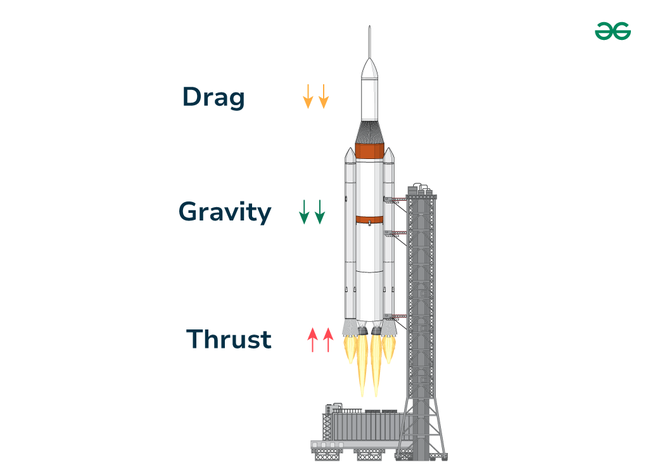
The beauty of electric propulsion is its incredible specific impulse. In simpler terms, it means you get a lot more "push" for each unit of propellant used compared to chemical rockets. The downside? The thrust produced is very small. We're talking about a force that's often compared to the weight of a piece of paper. So, you can't use these for launching from Earth or for quick, dramatic maneuvers. However, for long-duration missions, like journeys to the outer planets, or for making subtle, continuous orbital adjustments, they are absolutely game-changing. They allow spacecraft to gradually change their speed and direction over weeks, months, or even years, with remarkable fuel efficiency. Think of it as a gentle, persistent breeze that can eventually steer a mighty ship.
These are the engines that make those long, ambitious deep-space missions possible without carrying prohibitively large amounts of fuel. The Dawn spacecraft, which visited asteroids Vesta and Ceres, used ion thrusters for its epic journey, proving their worth in exploring our solar system. It's a testament to how sometimes, the most effective approach isn't about brute force, but about sustained, efficient effort.
So, Which Type For Maneuvering?
To sum it up, the type of rocket engine used for maneuvering really depends on the type of maneuver needed. For small, quick adjustments to keep a satellite pointed in the right direction, or to nudge a spacecraft into a slightly different orbit for docking, you'll often find monopropellant thrusters hard at work. They're the nimble dancers, performing the precise, subtle movements.
For larger orbital changes, or when a bit more thrust is needed in a controlled manner, bi-propellant thrusters step in. They're the more powerful dancers, capable of bigger leaps and turns when the choreography demands it.
And for long, drawn-out adjustments, station-keeping in orbit over extended periods, or for deep-space journeys where every drop of fuel counts, electric propulsion reigns supreme. These are the marathon runners of the maneuvering world, offering incredible endurance and efficiency.
It's fascinating to consider how each of these technologies serves a specific purpose, much like how we have different tools for different jobs in our daily lives. You wouldn't use a sledgehammer to hang a picture frame, and you wouldn't use a tiny screwdriver to build a house.
Practical Tips (of a Sort!)
Now, I know what you're thinking: "This is all very interesting, but how does this apply to my IKEA furniture assembly?" While you won't be firing RCS thrusters to align that Billy bookcase, the underlying principles of controlled force and direction are surprisingly relatable.
Think about it: when you're trying to position a large piece of furniture, you don't just shove it. You might gently nudge it, pivot it, or use small, controlled movements to get it exactly where you want it. That's your own personal RCS at work! You're instinctively applying forces to achieve a desired outcome.
And when it comes to efficiency, consider how you pack a suitcase. You might rearrange items multiple times to make everything fit perfectly, optimizing the space. That's a bit like the efficiency of electric propulsion – a lot of small, smart adjustments over time to achieve a bigger goal.
On a more cultural note, the precision of these maneuvering engines is often reflected in the meticulous planning and execution seen in space missions. It's like watching a perfectly choreographed ballet or a complex jazz improvisation – everything has to be just right. This attention to detail, this pursuit of perfect execution, is something we can all appreciate, whether it's in space exploration or in our own creative endeavors.
A fun little fact: some early spacecraft, like those from the Mercury program, didn't have sophisticated RCS systems in the way we understand them today. Astronauts had manual controls to fire small thrusters, giving them a direct, hands-on experience of maneuvering their capsule. Imagine the pressure! It's like being the pilot and the engineer all at once.
A Final Thought
As we gaze up at the stars, it's easy to feel a sense of awe at the sheer scale of space exploration. But beneath that awe lies a world of incredible ingenuity and the careful selection of the right tools for the job. The engines that maneuver our spacecraft, from the smallest monopropellant thruster to the most advanced ion engine, are a testament to human curiosity and our relentless drive to explore. They remind us that sometimes, the most impactful journeys aren't just about going fast or going far, but about going precisely where we intend to go, with grace and control. And in our own lives, whether it’s navigating a tricky conversation or steering towards a personal goal, perhaps we can all learn a little from these quiet, powerful engines that guide us through the vastness, one controlled maneuver at a time.