
Who Did The Cathode Ray Tube Experiment

I remember as a kid, absolutely mesmerized by those old, bulky TVs. You know, the ones that looked like they weighed more than a small car and took up half the entertainment center? There was this satisfying thump when you turned them on, and then… magic. Pictures flickered to life, transforming a blank screen into a window to another world. But how? How did all those images, all that color, actually get onto that glass? It felt like some kind of arcane wizardry, a secret held by the television gods. Little did I know, the answer lay in a rather fascinating, and dare I say, elegant, experiment involving a glass tube and some very curious scientists.
So, who was the mastermind behind the glowing pictures that captivated our living rooms for decades? Well, it wasn't just one person, but a few brilliant minds chipped away at the puzzle, each adding their own piece to the grand design. It’s a bit like a historical detective story, really. You have suspects, clues, and ultimately, a breakthrough that changed the way we consume information and entertainment forever.
The Phantom Beam: What Was This Thing Anyway?
Before we dive into the names, let's get a little context. The cathode ray tube, or CRT as it's affectionately known (or perhaps was affectionately known, given its retirement from most households), is the ancestor of your sleek flat-screen TV. But it was a revolutionary piece of technology in its day. The core idea was to harness the power of electrons. Yeah, those tiny, negatively charged particles that zip around atoms. Sounds a bit abstract, right? But these little guys held the key.
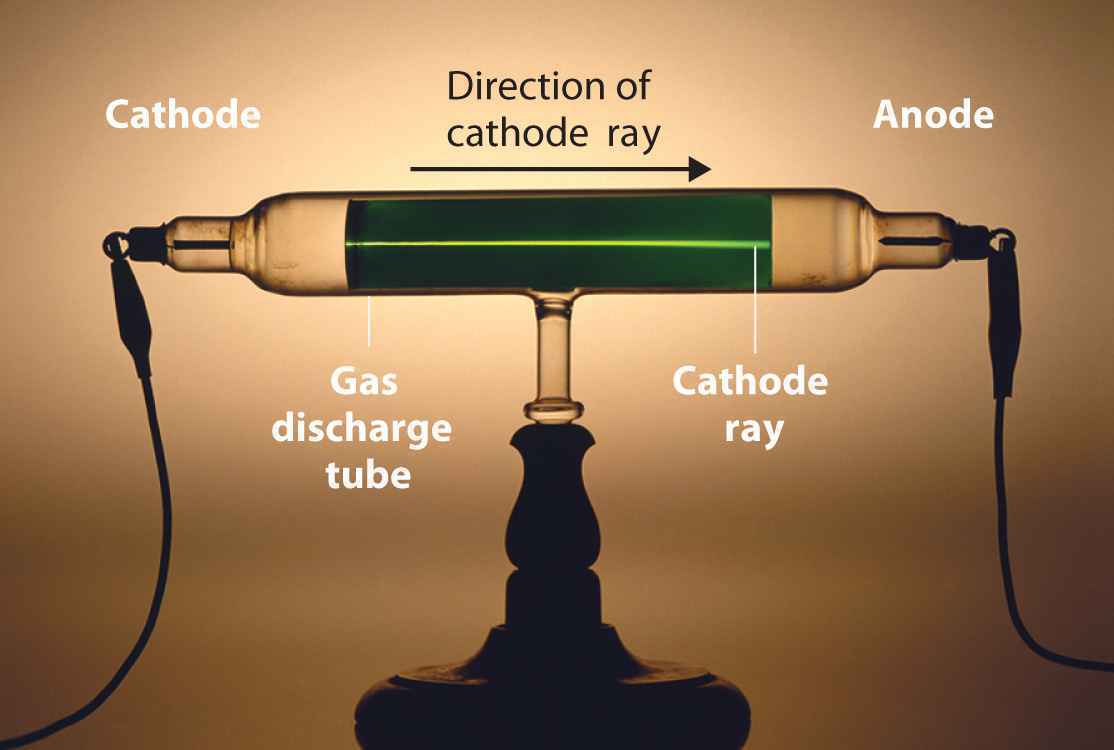
Imagine a vacuum-sealed glass tube. Inside, scientists could control things like electrical currents and magnetic fields. And in this controlled environment, they discovered they could generate a beam of these invisible electrons. This beam, when directed correctly, could interact with a special coating on the inside of the glass screen, making it glow. Pretty neat, huh?
But here’s the kicker: how do you control this glowing beam to create an image? That’s where the real genius comes in. It wasn't about just making a blob of light appear. It was about painting with light, precisely, and incredibly quickly. And for that, you needed a way to steer the electron beam. Enter the experimenters!
Sir William Crookes: The Pioneer of "Cathode Rays"
Our story really kicks off in the late 19th century. And a prominent figure in this early exploration was a British physicist and chemist named Sir William Crookes. Now, Crookes was a busy bee, dabbling in all sorts of scientific endeavors. But he's a crucial player when it comes to understanding what was happening inside these evacuated tubes.
Crookes was investigating what happened when you passed an electric current through a gas in a partially evacuated tube. He observed these mysterious "cathode rays" emanating from the negative electrode, the cathode. He found that these rays seemed to travel in straight lines and could cast shadows. He even showed that they could be deflected by a magnet. This was a pretty big deal! It suggested these rays weren't just some sort of light; they were something more tangible, something carrying momentum.
Think of it like this: before Crookes, people might have seen a glow and thought, "Oh, it's just… glowing." But Crookes was asking, "Why is it glowing? What's actually causing this glow?" He was peering into the unknown, essentially laying the groundwork for understanding the fundamental particles that would eventually power our screens.

He built his own version of these tubes, often called "Crookes tubes," and experimented tirelessly. He proposed that these cathode rays were made up of tiny, negatively charged particles. He wasn't quite sure what these particles were, but he was onto something big. It’s like finding a really interesting, shiny rock and saying, "This is clearly important, but I don't know what it is yet!"
J.J. Thomson: The "Discovery" of the Electron
Now, while Crookes was laying the groundwork, the real "discovery" – or at least, the formal identification – of the electron as a fundamental particle is largely attributed to another brilliant mind: J.J. Thomson. Thomson was a British physicist working at the Cavendish Laboratory at Cambridge University.
In the late 1890s, Thomson took Crookes's experiments and refined them. He was convinced that these cathode rays were indeed streams of particles, and he wanted to figure out their properties. He conducted a series of incredibly clever experiments using modified Crookes tubes.
One of his most famous experiments involved passing cathode rays through electric and magnetic fields. By carefully measuring how much the rays were deflected by these fields, he was able to calculate a crucial ratio: the charge-to-mass ratio of these particles. And what he found was astonishing.
These particles, which he initially called "corpuscles" (later renamed electrons), were incredibly small. They were much, much smaller than any atom known at the time. This was revolutionary because, up until then, scientists generally believed that atoms were the smallest, indivisible building blocks of matter. Thomson's work suggested otherwise. It indicated that atoms themselves had smaller components!

Imagine you're trying to understand how a clock works. You can see the hands moving, but you don't know about the gears inside. Thomson, in a way, opened up the clock and showed you the tiny gears making the hands tick. His work provided the definitive evidence that electrons were real, fundamental particles, and that they were a part of atoms.
This wasn't just some abstract physics discovery; it had enormous implications. It meant that matter wasn't as simple as we thought. It opened the door to understanding atomic structure and the nature of electricity itself. And, of course, it was a direct precursor to the cathode ray tube as we know it for displaying images.
Karl Ferdinand Braun: The Inventor of the Cathode Ray Tube (for Display!)
So, we have cathode rays, and we have the electron. But how do we get from a glowing beam to a TV screen? That’s where Karl Ferdinand Braun comes in. Braun was a German physicist.
In the 1890s, around the same time Thomson was doing his groundbreaking work, Braun was also experimenting with cathode rays. His key innovation was to focus on making the cathode ray beam useful for visualization. He is credited with inventing the first cathode ray oscilloscope.
What's an oscilloscope? Well, think of it as a way to "see" electrical signals. Braun’s tube had a fluorescent screen – meaning when the electron beam hit it, it would glow. He then used magnetic coils to deflect the electron beam. By controlling these deflections with varying electrical currents, he could make the spot of light move across the screen, tracing out patterns.
This was the crucial step! It wasn't just about seeing a glow anymore; it was about using the electron beam to draw something on the screen. His oscilloscope allowed scientists to visualize waveforms, which was incredibly useful for studying electricity and radio waves. It was, in essence, the very first practical application of a cathode ray tube for displaying visual information.
Braun's design included a vacuum tube, a cathode to emit electrons, and anodes to accelerate them into a beam. The real magic was in the deflection system, which used electromagnetic fields to precisely guide the beam. He made the screen phosphorescent, so it would glow when hit by the electrons. He was essentially building the prototype for every CRT television and monitor that would come after him!
It's funny to think that a device designed to visualize electrical signals would eventually lead to the entertainment systems that dominated our homes for a century. It just goes to show how sometimes the most practical inventions stem from fundamental scientific curiosity.
The Evolution: From Oscilloscopes to TVs
Braun’s invention was a huge leap forward, but it was still a scientific instrument. The transition from Braun's oscilloscope to the television set involved further refinements and the integration of new technologies, particularly in broadcasting and signal processing.
For television, you need to scan the electron beam across the screen very, very quickly, drawing the image line by line. This involves a system of horizontal and vertical deflection coils working in harmony. You also need a way to modulate the intensity of the electron beam to create different shades of brightness, and for color TV, you need multiple electron beams and different phosphors for red, green, and blue.

Many scientists and engineers contributed to these advancements over the years. People like Philo Farnsworth, who is often credited with inventing the first fully electronic television system, and Vladimir Zworykin, who developed the iconoscope camera tube and kinescope picture tube, were instrumental in turning the CRT into a viable television technology.
It's a testament to the collaborative nature of science that a concept explored by Crookes, a particle identified by Thomson, and a display device pioneered by Braun, eventually coalesced into the technology that defined mass media for so long.
A Legacy That Lingers
So, who did the cathode ray tube experiment? It's a bit of a trick question, isn't it? It wasn't a single "aha!" moment from one person. It was a journey. Sir William Crookes observed the phenomenon and characterized the mysterious rays. J.J. Thomson identified the fundamental particle responsible – the electron. And Karl Ferdinand Braun built the first practical display device using these principles.
But then, countless others took that foundational work and built upon it, refining the technology until we had the televisions, computer monitors, and even older medical imaging devices we came to rely on.
It’s a beautiful example of how science builds upon itself. One discovery, even if it’s just a curious observation in a glass tube, can lead to entirely new fields of study and technologies that profoundly impact society. The next time you see an old CRT TV gathering dust in someone's attic, or a vintage movie featuring one, remember the curious minds who first harnessed that glowing beam. They were truly painting the future, one electron at a time.