
Why Are Cirrocumulus Clouds Sometimes Called Mackerel Clouds

Ever looked up at the sky and seen those really cool, rippled clouds that kind of look like tiny fish scales? You know, the ones that are way, way up high, like wisps of white lace against the blue? Sometimes, people call those clouds mackerel clouds. And if you've ever wondered why, well, you've come to the right place! Let's dive into the super chill world of cirrocumulus clouds and unravel their fishy nickname.
First off, what exactly are these cirrocumulus clouds? They're a type of high-altitude cloud. Think of them as the sophisticated, distant cousins of the puffy, cotton-ball clouds (cumulus) you might see lower down. Cirrocumulus clouds are made entirely of tiny ice crystals because they hang out in the frigid upper atmosphere. This is key to their delicate appearance.
Now, let's get to the fun part: the name! Why mackerel? It's actually a pretty straightforward comparison, and honestly, kind of brilliant. If you've ever seen a mackerel fish, you'll know they have these amazing, iridescent scales that often have a wavy, patterned look. They shimmer and ripple, especially when the light hits them just right.
Close your eyes for a second (or just imagine it!). Picture a school of mackerel swimming. See those patterns? Those repeating scales? Now, look up at a sky filled with cirrocumulus clouds. Do you see it? The resemblance is uncanny, right?
These clouds often appear as a sheet of small, rounded, white or grayish patches, or ripples, arranged in a regular pattern. They can look like tiny waves, or rows of little clouds. And when you squint just a little, or when the sun catches them at a certain angle, those individual cloudlets start to look a lot like the shimmering scales on a mackerel's back. It’s like nature decided to paint a fish across the sky!

Think about it: ancient mariners and farmers who spent their lives observing the sky would have noticed these patterns. They needed ways to describe what they saw, and often, the best descriptions came from the natural world around them. What else in their world had that kind of patterned, wavy look? Fish scales were a perfect match!
It’s not just the pattern, though. The texture of cirrocumulus clouds can also contribute to the comparison. Because they're made of ice crystals, they often have a very fine, almost granular texture. This can mimic the tiny, individual scales of a fish. Imagine running your fingers over the smooth, cool scales of a freshly caught fish – there's a certain delicate texture there, and cirrocumulus clouds can evoke a similar feeling, albeit from a distance.

So, next time you're out and about and you spot those high, wispy, rippled clouds, take a moment. Are they looking a little… fishy? You might just be witnessing a celestial school of mackerel!
It's interesting to think about how we humans have always tried to find connections between the sky above and the world around us. Naming clouds after things we recognize makes them feel more familiar, more like a part of our everyday lives. Instead of just saying "high, thin clouds with ripples," saying "mackerel clouds" adds a bit of personality, a touch of whimsy. It’s like giving a nickname to a friend.
There are a few other cloud types that get descriptive nicknames too, but the mackerel cloud connection is particularly strong and visual. It’s a great example of how keen observation and a bit of imagination can lead to some really evocative language. It makes sky-watching so much more fun, doesn't it?
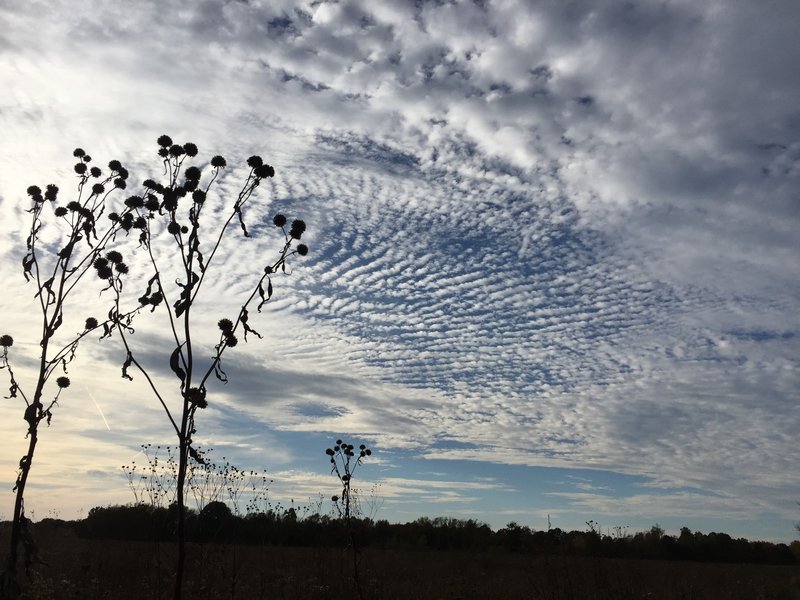
What's also pretty neat is that cirrocumulus clouds, or mackerel skies, are often associated with a change in the weather. Traditionally, a mackerel sky was sometimes seen as an indicator of an approaching storm. While not always a foolproof prediction, the atmospheric conditions that create these clouds can indeed be precursors to unsettled weather. So, in a way, these "fish" in the sky might have been telling our ancestors something important about what was to come.
It’s kind of like how certain bird calls might signal rain, or how the smell of the air can change before a thunderstorm. Nature has its own language, and clouds are definitely a big part of it. The mackerel sky, with its intricate patterns, is just one beautiful dialect in that language.
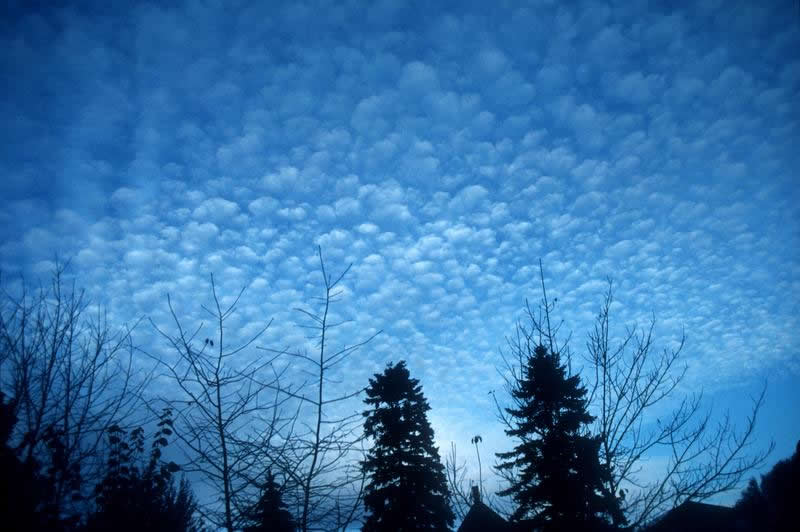
These clouds are also quite transient. They don't usually hang around for ages in their perfect mackerel formation. They can be a fleeting beauty, appearing for a while and then perhaps blending into a more uniform sheet of cirrostratus, or dissipating altogether. This ephemeral quality can make spotting a good mackerel sky feel even more special, like catching a glimpse of something rare and precious.
So, to sum it up: the reason cirrocumulus clouds are sometimes called mackerel clouds is because their appearance – those small, rippled, patterned patches – strongly resembles the shimmering scales of a mackerel fish. It’s a visual metaphor, a bit of sky-high poetry that connects the vastness of the atmosphere to something familiar and tangible from our world.
It’s a charming reminder that even something as grand and seemingly abstract as the sky can be understood and appreciated through simple, everyday comparisons. So next time you’re stargazing, or just enjoying a clear day, keep an eye on the cirrocumulus clouds. You might just see a whole school of celestial mackerel swimming by, a beautiful, icy spectacle painted across the heavens. Pretty cool, huh?