
Why Are The Noble Gases Called Noble Gases
/148550024-56a131543df78cf7726848c2.jpg)
Hey, you know how some people are just, like, super chill? Never get flustered, always seem to have it all together? Well, in the wild world of chemistry, we've got our own version of that: the noble gases.
Yeah, the noble gases! Sounds fancy, right? Like they wear tiny little crowns and sip tea from miniature china cups. And honestly, the name kind of fits their whole vibe. But why noble? What makes them so special? Let’s dive in, shall we?
So, picture the periodic table. It’s like this massive family reunion of all the elements, right? Some are super reactive, always eager to jump into a chemical reaction, like those folks who just have to be the center of attention at every party. Others are a bit more reserved, but still willing to mingle. And then… there are the noble gases.
These guys? They're in their own little corner, looking pretty darn smug. They're the introverts of the elemental world. The ones who are perfectly happy just doing their own thing. And that’s the key to their “nobility,” really. They’re unreactive. Like, ridiculously unreactive.
The "Why" Behind the Name
Imagine trying to get your cat to do something it doesn't want to do. Yeah, good luck with that. Noble gases are kind of like that, but on an atomic level. They have this complete outer electron shell. Think of it as their full set of social security numbers, all locked down and secure. No need to share, no need to borrow, no need to make any awkward chemical friendships.
This full outer shell is like the ultimate chill pill. It makes them incredibly stable. They don’t need to gain, lose, or share electrons to feel complete. They’re already whole. It's like they’ve reached enlightenment, and the rest of the elements are still struggling to find inner peace. Poor things.
This inherent stability means they generally don’t form chemical bonds. I mean, why would they? They’ve got it made! They exist as individual atoms, floating around in their own little bubbles. They’re the ultimate lone wolves, except they’re not lonely because they’re perfectly content being alone. Talk about #selfcare goals.
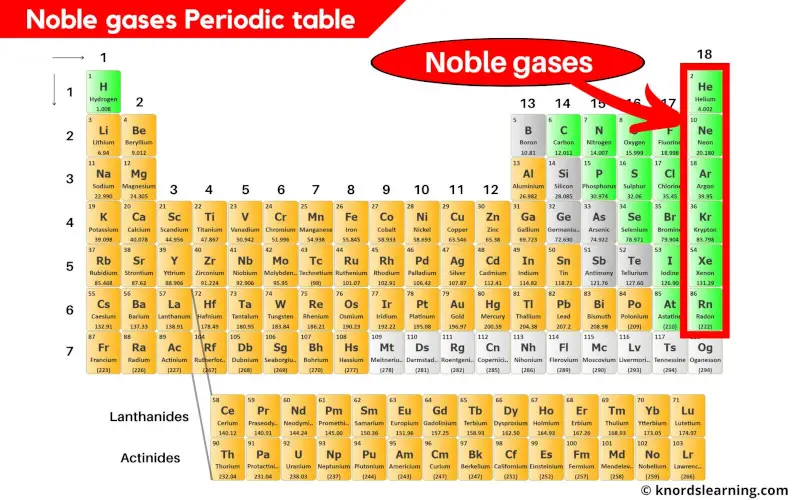
So, back to the “noble” part. Historically, the term “noble” was used for metals that were resistant to corrosion or tarnishing. Think of gold and platinum. They just don’t react with much, keeping their shiny luster for ages. They were considered valuable and prestigious because of this very property. Sound familiar?
The noble gases, discovered much later, exhibited a similar lack of reactivity. They were, in a way, the metalloids of inertness, if you will. They stood apart from the more boisterous and reactive elements, displaying a kind of aloof dignity.
A Brief History of Their "Discovery" (or Lack Thereof)
It’s funny to think that for a long time, chemists didn’t even know these gases existed! The periodic table was filling up, and there were these conspicuous gaps. But it wasn't until the late 19th century that scientists, like William Ramsay, started to suspect there was more to the air than just nitrogen and oxygen.
Ramsay and his colleagues were experimenting with air, trying to isolate all its components. They found this extra bit of gas that just… wouldn’t react with anything. Seriously. They tried bombarding it with electricity, mixing it with other super reactive elements – you name it, they tried it. And this mysterious gas just shrugged it all off. Talk about being stubborn!
When they finally isolated it, they realized it was a whole group of gases with this same unreactive nature. And because of their lack of chemical interaction, their aloofness, their inherent stability, they were given the name "noble gases." It was a perfect descriptor for their distinguished, unbothered existence.
/plasma-ball-115005964-58d27e985f9b581d72b0e51c.jpg)
The first one they identified was argon. It means "lazy" or "inactive" in Greek. Which, let's be honest, is a pretty fitting nickname. Then came helium, which was actually first detected in the sun (hence "helios," the Greek god of the sun). Imagine, being so aloof you're discovered in outer space before anyone even figures you out down here!
After that, they found neon (meaning "new," because, well, it was new!), krypton ("hidden"), and xenon ("stranger"). And then there’s radon, which is a bit more of a troublemaker since it's radioactive, but it's still part of the club, albeit a slightly more volatile member.
So, What's Their Deal?
Their stability is their superpower. It’s what makes them so useful in various applications. Because they don't react, they can be used to create inert atmospheres. You know, like when you want to prevent something from oxidizing or degrading. Think about those potato chip bags. That puff of air isn't just for show; it’s often filled with nitrogen or sometimes even some of the noble gases to keep your chips fresh and crisp. Without them, your chips would be stale before you even opened the bag! The horror!
Neon signs? Yeah, that’s a noble gas at work. When you pass an electric current through neon gas, it glows a brilliant red. Other noble gases produce different colors, which is why we have a whole rainbow of these signs. It's like they’re secretly the world’s most flamboyant artists, just waiting for a little jolt of electricity to show off their true colors.

Helium, of course, is famous for making balloons float and making your voice sound like a chipmunk. Fun fact: they actually use helium in deep-sea diving because it's less soluble in blood than nitrogen, preventing “the bends.” So, while they might seem aloof, they’re actually pretty crucial for keeping divers safe. Who knew?
Argon is used in welding to create an inert shield around the hot metal, preventing it from reacting with the air and becoming brittle. It’s like a bodyguard for your metal, ensuring it stays strong and doesn't get any funny ideas about rusting.
Krypton and Xenon? They're used in high-intensity lighting, like those super bright headlights on cars and in some photography flashes. They're not as common as neon or argon, but they’ve got their own special gigs. Xenon, in particular, is known for its ability to produce a very bright, white light. So, next time you’re blinded by someone’s headlights, you can thank a noble gas!
Are They Really That Unreactive?
Now, before you go thinking they’re completely unassailable, there’s a little asterisk. For a long time, it was thought that noble gases simply could not form compounds. They were the ultimate hermits. But then, in the 1960s, scientists discovered that under certain conditions, and with some very electronegative elements (that's a fancy way of saying elements that are really good at snatching electrons), they could be coaxed into forming compounds.
Think of it like this: even the most introverted person might make an exception for a really, really good friend, or maybe someone offering them an amazing deal on their favorite hobby. Xenon, being the largest and having the most loosely held outer electrons, was the first to break ranks. It formed compounds with fluorine and oxygen. Shocking, right?

This discovery was a pretty big deal in the chemistry world. It challenged long-held beliefs and opened up new avenues of research. It showed that even the most seemingly unreactive elements have their moments of surprising chemical engagement. It’s like finding out your quietest coworker is secretly a rockstar drummer. You just never know!
But even with these exceptions, they are still considered extremely unreactive compared to most other elements. They’re not going to be jumping into reactions with the same gusto as, say, sodium and chlorine, which famously create table salt. That kind of reaction is, like, a full-on party. Noble gas reactions are more like a polite handshake at a formal event.
The Takeaway
So, why are they called noble gases? Because they’re the exclusive club of the periodic table. They're the ones who don’t need anyone else to feel complete. They’re stable, they’re aloof, and they generally prefer to be left alone. Their “nobility” comes from this inherent lack of reactivity, much like the noble metals of old were valued for their resistance to tarnish.
They're essential for modern technology, from lighting to welding to keeping our snacks from going stale. They might be the introverts, but they’ve got some pretty important jobs. They’re the calm in the chemical storm, the steady presence in a world of constant reactions. And honestly, sometimes, don't we all wish we could be a little more like a noble gas? Just floating along, perfectly content, and not bothered by all the chemical drama.
So next time you see a neon sign, or your balloon stays afloat, or you're enjoying a perfectly crisp chip, give a little nod to the noble gases. They’re the chillest elements on the block, and we’re pretty lucky to have them. They’re the definition of “less is more” in the chemical world, and sometimes, that’s just the coolest thing you can be.